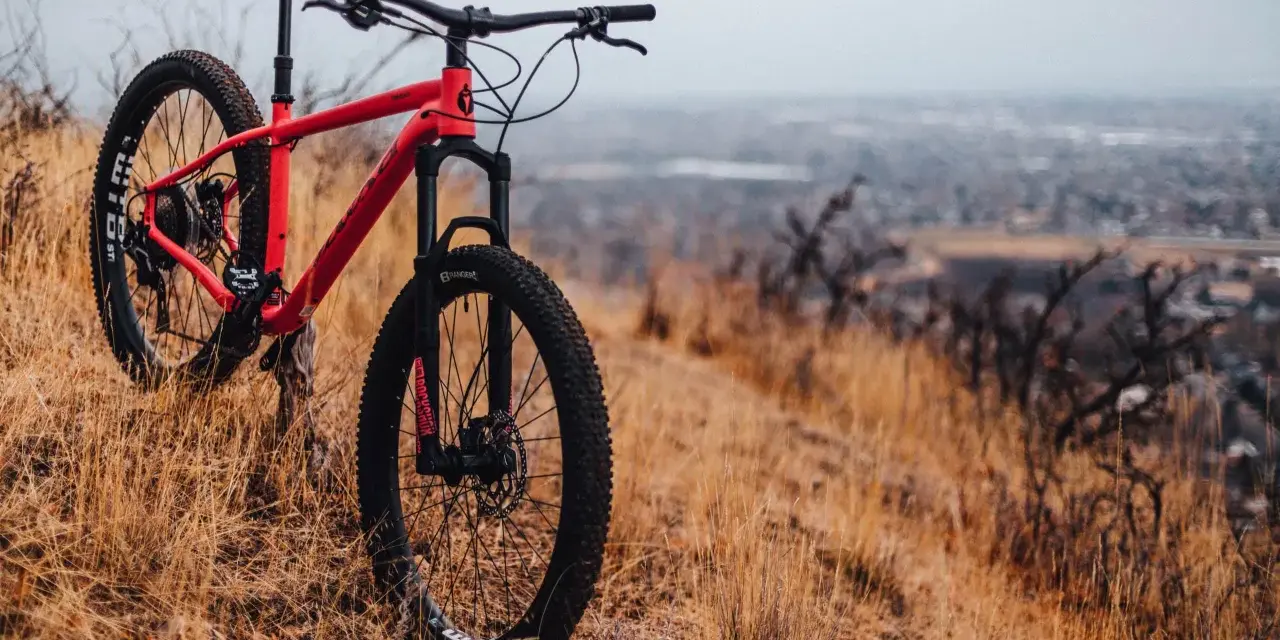
A hardtail is simple by design, but the trade-offs matter on the trail
- A hardtail has front suspension only; the rear triangle stays rigid.
- It usually feels lighter, faster to pedal, and cheaper to own than a full-suspension bike.
- It works best on XC loops, smoother singletrack, fitness rides, and many bikepacking routes.
- It gives less comfort and traction on rough descents, rock gardens, and repeated drops.
- When I buy one, I care most about the fork, brakes, geometry, and tire clearance.
What a hardtail bike actually is
A hardtail is a mountain bike with a suspension fork at the front and no rear shock. The rear of the frame is rigid, which is where the name comes from: the back half is the "hard" part of the bike. That does not mean the ride has to be harsh, but it does mean the bike reacts more directly to trail feedback.
In practical terms, the fork absorbs impacts at the front wheel, while the rear wheel relies on tire volume, rider movement, and line choice to stay composed. That setup is common on cross-country and trail-oriented bikes because it keeps the bike efficient without making it fragile or overly complicated.
| Trait | What it means | Why it matters |
|---|---|---|
| Suspension fork | The front wheel has built-in shock absorption | Helps control braking bumps, roots, and smaller hits |
| Rigid rear triangle | No rear shock or linkage | Lowers weight and maintenance while sharpening pedaling feel |
| Travel | How far the fork can compress | More travel smooths the trail, but too much can feel slow on climbs |
| Direct rear end | The back wheel follows the trail without suspension movement | Rewards clean technique and deliberate line choice |
Once you understand that structure, the next question is obvious: why would anyone choose less suspension on purpose? The answer is in the balance between speed, simplicity, and control.
Why riders still choose hardtails for mountain biking
I still see hardtails as one of the smartest mountain bike categories for riders who care about efficiency and value. They are not just "budget bikes"; they are a deliberate choice for certain terrain and riding styles.
- They climb efficiently. With no rear shock moving under pedaling load, more of your effort goes into forward motion. On smoother climbs and rolling terrain, that difference is easy to feel.
- They weigh less. Fewer parts usually means a lighter bike, which helps when you are carrying speed uphill or loading the bike onto a rack or into a vehicle.
- They cost less to build. In the U.S., Trek’s current Marlin line sits roughly from $630 to $1,400, and Specialized’s hardtail entry points start around $750, which shows how wide the hardtail market still is in 2026.
- They are easier to maintain. No rear shock, no rear pivots, and fewer moving parts means fewer service points and less long-term complexity.
- They teach trail skills fast. Because the bike gives you less forgiveness, you learn line choice, braking discipline, and body positioning sooner.
That last point matters more than many riders expect. A hardtail does not hide mistakes, so it pushes you to ride cleaner. When that clicks, the bike starts feeling quicker rather than limiting.
Those strengths are real, but they only pay off when the terrain matches the design, which is where the limits become just as important as the benefits.
Where a hardtail shines and where it gets punished
Best matches for a hardtail
Hardtails make a lot of sense on cross-country loops, forest roads, flowy singletrack, moderate trail centers, and many bikepacking routes. They are also a strong fit if you spend more time climbing than descending, or if you want a bike that doubles as a fitness tool and an off-road machine.
- XC and training rides: Efficient pedaling and quick acceleration matter more than plushness.
- Smoother singletrack: The bike stays lively without needing a lot of suspension to stay comfortable.
- Bikepacking and mixed-surface use: Simplicity, mounting options, and reliability are real advantages.
- Skill-building sessions: Less suspension feedback forces better balance and cleaner line choice.
Read Also: Downhill vs Enduro Bike - Which Is Right For Your Trails?
Where the limits show up
On rough descents, repeated rock strikes, steep chutes, and wet root webs, a hardtail asks more from the rider. The rear wheel has less ability to stay glued to the ground, so traction drops sooner and fatigue builds faster. You can absolutely ride that terrain on a hardtail, but you will work harder to stay smooth and in control.
- Rock gardens: The rear wheel can get bounced off line more easily.
- Big hits and drops: The bike offers less cushion when landings get rough.
- Long, steep descents: Your legs and upper body absorb more of the trail’s chatter.
- Wet or off-camber terrain: Traction becomes more sensitive to tire choice and body position.
How it compares with full suspension on real trails
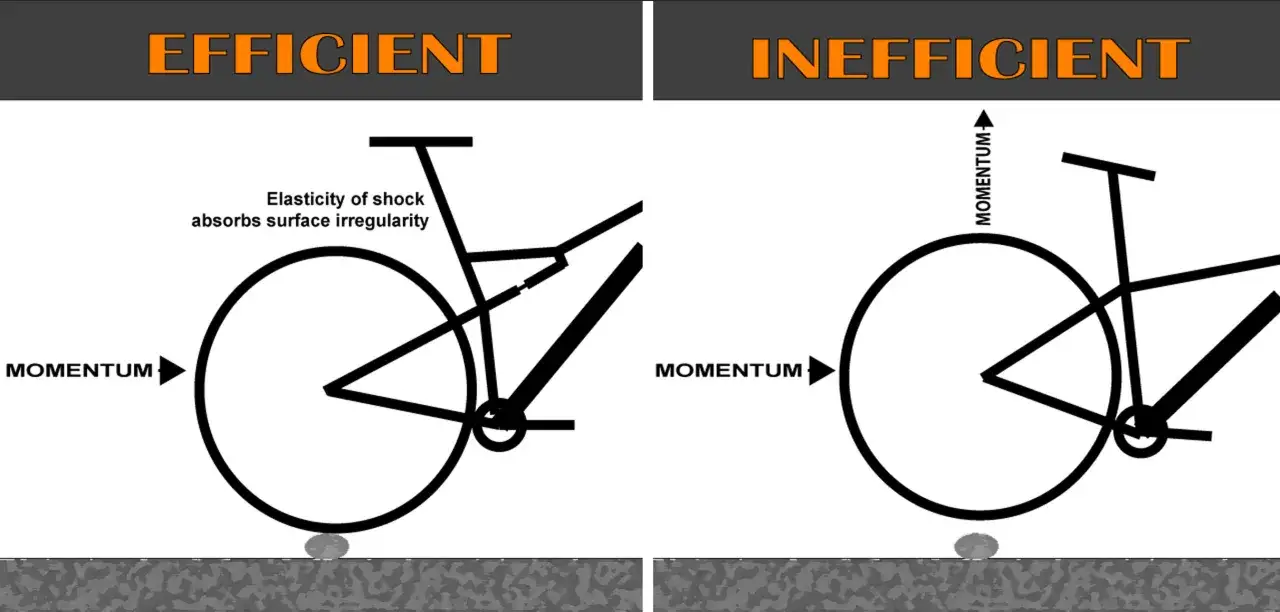
The hardtail-versus-full-suspension debate is less about right or wrong and more about where you ride. Full suspension adds a rear shock, so the back wheel tracks the ground better when the trail gets broken up. That usually means more comfort and more grip when the terrain turns rough, but it also adds weight, cost, and maintenance.
| Category | Hardtail | Full suspension |
|---|---|---|
| Pedaling efficiency | Usually better on smooth climbs and rolling terrain | Slightly less efficient unless the rear suspension is very well tuned |
| Descending control | More demanding on rough, technical trails | More forgiving and composed at speed |
| Comfort | Less plush, more trail feedback | Noticeably smoother on repeated hits |
| Maintenance | Simpler and cheaper to keep in shape | More service points and higher long-term upkeep |
| Price | Typically lower for similar component quality | Usually costs more for the same parts level |
| Best fit | XC, fitness, lighter trail use, budget-conscious riders | Rougher trail riding, aggressive descending, riders prioritizing comfort |
What I think often gets missed is that full suspension is not automatically "better." It is better on certain trails, at certain speeds, and for certain riders. If your local riding is mostly flowing singletrack and climbs, a hardtail can be the sharper tool. If your usual loop includes repeated square-edge hits and big descents, the extra rear travel earns its keep fast.
That trade-off becomes easier to judge once you know what to look for in a hardtail that actually fits the way you ride.
What I look for when buying one in the U.S.
If I were choosing a hardtail in the U.S. market today, I would ignore marketing first and inspect the bike’s fundamentals. The frame, fork, brakes, and fit do far more work than a paint job or a flashy model name.
- Fork quality: An air fork is usually worth paying for because it is easier to tune to your weight and riding style than a basic coil fork.
- Hydraulic disc brakes: This is the baseline I would want for mountain biking. Good braking matters more on a hardtail because the bike gives you less suspension help when the trail gets steep.
- Geometry: A stable head angle, sensible reach, and enough stack height can make the bike feel confident without making it sluggish.
- Tire clearance: Wider tires help comfort and grip, especially on hardtails where the rear end does not have suspension to save you.
- Dropper post compatibility: I consider this close to essential on modern trail hardtails because it changes how safely you can move on descents.
- Frame material: Aluminum is often the best value; carbon can be lighter, but it is not automatically the better choice for most riders.
Price still matters, of course. In 2026, a realistic U.S. hardtail budget often starts around $600 to $900 for an entry-level bike, moves into the $1,000 to $2,500 range for a much better all-around build, and climbs beyond $3,000 if you want premium parts or a race-focused carbon frame. For most riders, the sweet spot is not the cheapest option or the fanciest one; it is the bike that gives you a good fork, reliable brakes, and fit that feels right the moment you stand over it.
Once the bike is set up well, the riding style matters just as much as the spec sheet, and a few small changes can make a hardtail feel dramatically better on trail.
How to ride a hardtail without getting beaten up
A hardtail rewards smoothness, and I would rather see a rider improve setup and technique before chasing an expensive upgrade. The right habits make the bike feel faster, calmer, and much less punishing.
- Use your body as suspension. Keep elbows and knees soft so your arms and legs can absorb chatter before it reaches your torso.
- Look farther ahead. The earlier you read the trail, the easier it is to pick a cleaner line and avoid square-edge hits.
- Keep your weight balanced. On descents, stay centered and let the bike move under you instead of hanging over the rear wheel.
- Lower tire pressure carefully. Many tubeless hardtail riders end up around 18 to 25 psi, then fine-tune by tire width, rider weight, and trail grip. With tubes, pressure often needs to be a little higher.
- Set fork sag correctly. Sag is the amount the fork compresses under your weight. If it is too firm, the front end skips; too soft, and the bike dives and feels vague.
- Use a dropper post on descents. Lowering the saddle lets you move more freely and keeps the bike much easier to manage in steep sections.
The biggest mistake I see is riders treating tire pressure or fork setup as afterthoughts. On a hardtail, those details can change the ride more than many component upgrades. That is why setup is part of the answer, not an afterthought.
The decision rule I use on real trails
When I strip away the jargon, the choice is pretty simple. If your riding is mostly smoother singletrack, climbing, fitness laps, or mixed-surface adventures, a hardtail is often the smarter, cleaner, and more affordable mountain bike. If your local trails are rough, steep, and packed with repeated hits, full suspension usually gives back more control and comfort than a hardtail can.
The useful middle ground is this: buy the bike that matches your actual trails, not the bike you think sounds most advanced. A good hardtail is not a compromise when it fits the job. It is a precise tool, and in the right terrain, that simplicity is exactly what makes it work.