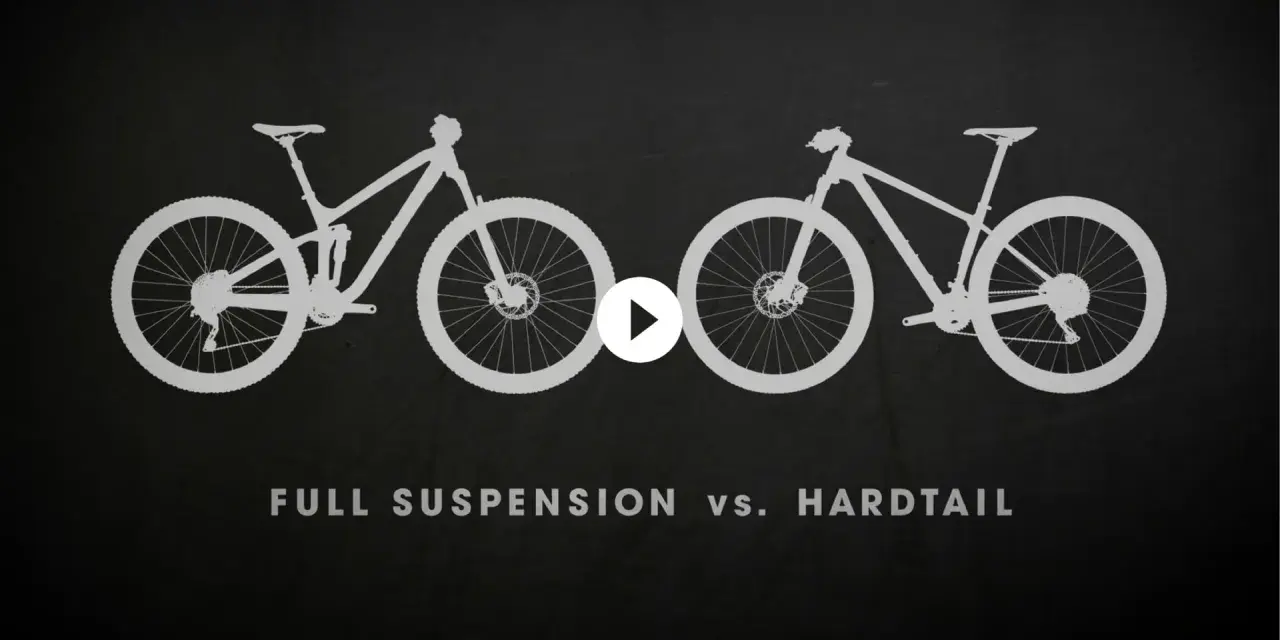
The hard tail vs soft tail decision is mostly about how much rear-wheel support you want and how the bike will behave when the trail stops being smooth. A hardtail keeps the rear triangle rigid, while a softtail-style frame adds a little compliance without going to a true rear shock. I’ll break down where each one makes sense, how they feel on real mountain-bike trails, and which setup I would choose for different U.S. riding conditions.
The right choice comes down to trail roughness, budget, and how much rear-wheel support you want
- Hardtails are lighter, simpler, and usually cheaper, which makes them strong on smoother singletrack and for riders who want to build skills.
- Softtail-style bikes sit in the middle; they soften small hits, but they do not replace a true rear shock on rough terrain.
- Full-suspension bikes give the most traction, comfort, and control when the trail gets rocky, steep, or fatigue-heavy.
- Suspension travel commonly ranges from about 80 to 200 mm depending on discipline, and many trail bikes sit around 120 to 150 mm rear travel.
- Maintenance and cost rise as rear suspension gets more complex, especially once pivots, bearings, and shock service enter the picture.
What these bikes actually mean
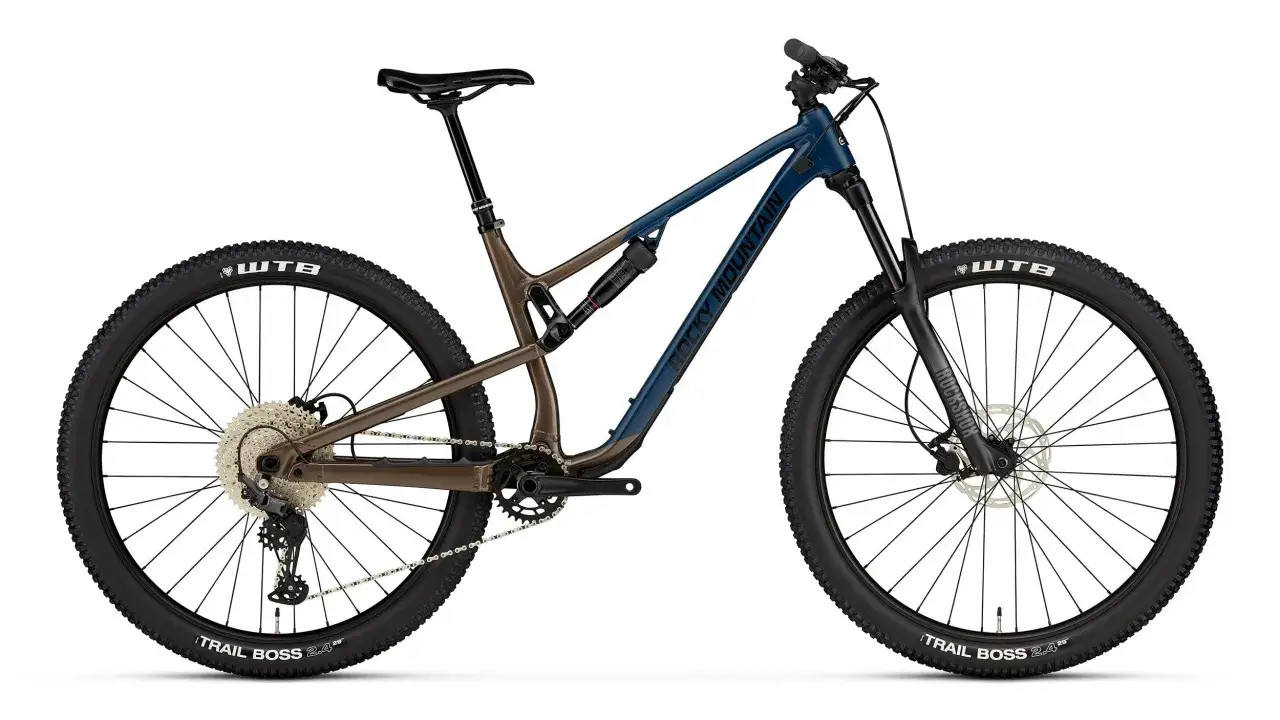
In bike-shop language, hardtail means a suspension fork up front and a rigid rear end. That is the clean baseline for this comparison. A softtail-style bike sits in the middle: it uses frame flex, an elastomer, or another compliance-focused design to take the edge off bumps, but it does not behave like a modern rear-shock bike. Full suspension is the true rear-suspension option, with a shock and linkage built to move through meaningful travel.| Type | What the rear end does | What it feels like | Best use |
|---|---|---|---|
| Hardtail | Rear triangle stays rigid | Direct, lively, and more demanding | Smoother trails, XC, skills, budget builds |
| Softtail-style | Small amount of controlled flex or cushioning | Less harsh than a hardtail, but still fairly direct | Light trail use, niche comfort-focused builds |
| Full suspension | Rear shock and linkage move the wheel through travel | Plusher, calmer, and more forgiving | Rough trail, technical climbs, enduro, bike parks |
For reference, travel is the amount a suspension system can compress and absorb. In mountain biking, the numbers you see typically run from roughly 80 to 200 mm depending on the category, and trail bikes often land around 120 to 150 mm in the rear. That is why “rear suspension” can describe bikes that feel quite different from one another. If a seller uses the softtail label loosely, I would ask whether the frame has real rear travel, flex stays, or just marketing language.
Once that difference is clear, the more useful question becomes how each bike behaves when the trail starts to break apart.
How they feel on real mountain-bike trails
The difference is not just comfort. It changes braking, traction, cornering, and how tired you feel after an hour. A hardtail gives more trail feedback, which is great when the terrain is smooth enough that you can use that feedback to pump rollers and carry speed. On broken ground, though, that same feedback becomes chatter, and the bike can start to feel busy under you.
A softtail-style frame softens small hits, but it still keeps the overall feel fairly lively. I think of it as taking the sting out of repeated little bumps rather than changing the personality of the bike. Full suspension is the only setup here that genuinely isolates the rider from the trail, and that matters when the rear wheel needs to stay glued to the ground through roots, rocks, and off-camber corners.
| Trail situation | Hardtail | Softtail-style | Full suspension |
|---|---|---|---|
| Flow trails and smooth singletrack | Fast and efficient | Very good | Can feel overly muted |
| Rooty or rocky climbs | Demands cleaner line choice | Helps a little | Best traction |
| Descents with repeated hits | More fatiguing | Less harsh | Most controlled |
| Jump lines and pump sections | Direct and playful | Still playful | Smoother but less raw |
That is why riders in rocky parts of the Northeast, steep descents in the Rockies, or technical desert terrain often settle on rear suspension faster than riders on smoother Midwest flow. Trail feel is usually the part of the decision that settles the argument, not the spec sheet.
Once you understand how the bikes feel, the next step is figuring out when the simpler option is actually the better one.
When a hardtail is the smarter choice
I reach for a hardtail when the trail rewards efficiency more than brute force. If your local loops are mostly smoother singletrack, flow trails, fire-road connectors, or moderate XC terrain, the rigid rear frame keeps the bike light and easy to accelerate. It also teaches cleaner technique because you feel every mistake in body position, braking, and line choice.- You are building fundamentals and want the bike to punish sloppy line choice quickly.
- You ride smoother terrain more often than rocky, repeated-hit terrain.
- You care about weight, simpler maintenance, and easier packing for travel or race weekends.
- You want more of your budget to go toward the fork, brakes, tires, and drivetrain.
- You like a direct, responsive bike that feels lively under power.
I do not think hardtails are only for beginners. A well-set-up hardtail can be genuinely fast, and on smoother trails it can be the most fun bike in the garage. The tradeoff is obvious: as the trail gets rougher, the rider’s legs become the rear suspension.
If the terrain is only mildly rough, you can stretch a hardtail surprisingly far by running good tires, sensible pressure, and a modern fork. Once the trail turns into constant roots, square edges, or long descents, though, the bike starts asking more from your body than from the trail. That is where the case for rear suspension starts to get real.
When rear suspension earns its keep
Rear suspension is not only about comfort; it is about control. When the rear wheel can move independently, the tire stays in contact with the ground more often, which helps on loose climbs, braking bumps, and choppy descents. On rough terrain, that means better traction and less fatigue, especially late in a ride when your form starts to fade.
If your local trails have repeated square-edge hits, rock gardens, wet roots, or steep descents that force you to brake hard, a full-suspension bike starts paying for itself quickly. Short-travel trail bikes can still feel efficient on the climbs, while longer-travel bikes bring more calm at speed. Softtail-style frames sit in the middle, but I would not buy one expecting it to replace a real rear shock on demanding terrain.
| Riding scenario | Best fit | Why |
|---|---|---|
| Smooth XC race course | Hardtail or short-travel full suspension | Speed matters more than isolation |
| Rooty East Coast singletrack | Full suspension | Traction and fatigue management matter |
| Steep rocky descents | Full suspension | More control and less deflection |
| Bike park or enduro days | Full suspension | Stability and impact absorption matter most |
| Mixed terrain with a modest budget | Hardtail or softtail-style | Better value if you are not riding hard chunk all the time |
The main mistake I see is riders assuming rear suspension is only for aggressive downhill. In reality, it is often most useful on technical climbs and long, rough rides where staying fresh matters as much as staying fast. Once you think about the bike that way, the choice becomes a lot less emotional.
After comfort and control, the remaining factors are money, upkeep, and how often you want to service the bike.
Cost and maintenance change the answer more than most riders expect
A hardtail almost always costs less to buy and less to keep quiet, smooth, and tight. You are paying for one suspension system instead of two, fewer bearings, fewer pivots, and fewer parts that can creak or wear. That usually means the same budget buys a better fork, better brakes, or a better drivetrain.
Full-suspension bikes ask for more money up front and more attention over time. In the U.S. market, entry-level full-suspension mountain bikes commonly start around the $2,000 mark, and it is easy to climb past $5,000 once the frame and components get more serious. The maintenance gap is just as real: forks and rear shocks need periodic service, and pivot hardware eventually wears. Softtail-style frames can reduce that service load, but they do not necessarily make ownership simple if the compliance system is proprietary or hard to replace.
- Hardtail: easier to wash, fewer creaks, simpler storage, less to service.
- Softtail-style: fewer moving parts than full suspension, but not always as simple as a hardtail.
- Full suspension: more setup time, more wear points, but also more forgiveness when the trail gets rough.
Setup matters too. A poorly tuned full-suspension bike can feel vague or wallowy, and a hardtail with the wrong tires or pressure can feel harsher than it needs to. I always tell riders to judge the frame after the suspension is dialed, not before. That is especially true if you are comparing bikes at a shop or on a demo day.
With those trade-offs on the table, the last step is matching the bike to the way you actually ride.
The simplest way I would choose today
If I had to boil it down, I would use three questions. How rough are your actual trails, not the trails you wish you rode? How much do you value low maintenance and a lighter bike? And do you want the bike to sharpen your skills or smooth the trail underneath you?
- Choose a hardtail if you ride smoother singletrack, want the best value, travel with your bike often, or like a direct and playful feel.
- Choose a softtail-style bike if you want a little extra comfort and you understand that it is a middle ground, not a substitute for full suspension.
- Choose full suspension if your trails are rocky, rooty, steep, or fast enough that control and traction matter more than simplicity.
My practical rule is simple: the rougher and longer the ride, the more rear suspension earns its keep. The smoother and more skill-focused the ride, the more a rigid rear frame makes sense. If you match the bike to the trail you actually ride in the U.S., you will usually end up with a better bike than the one that just sounds best on paper.