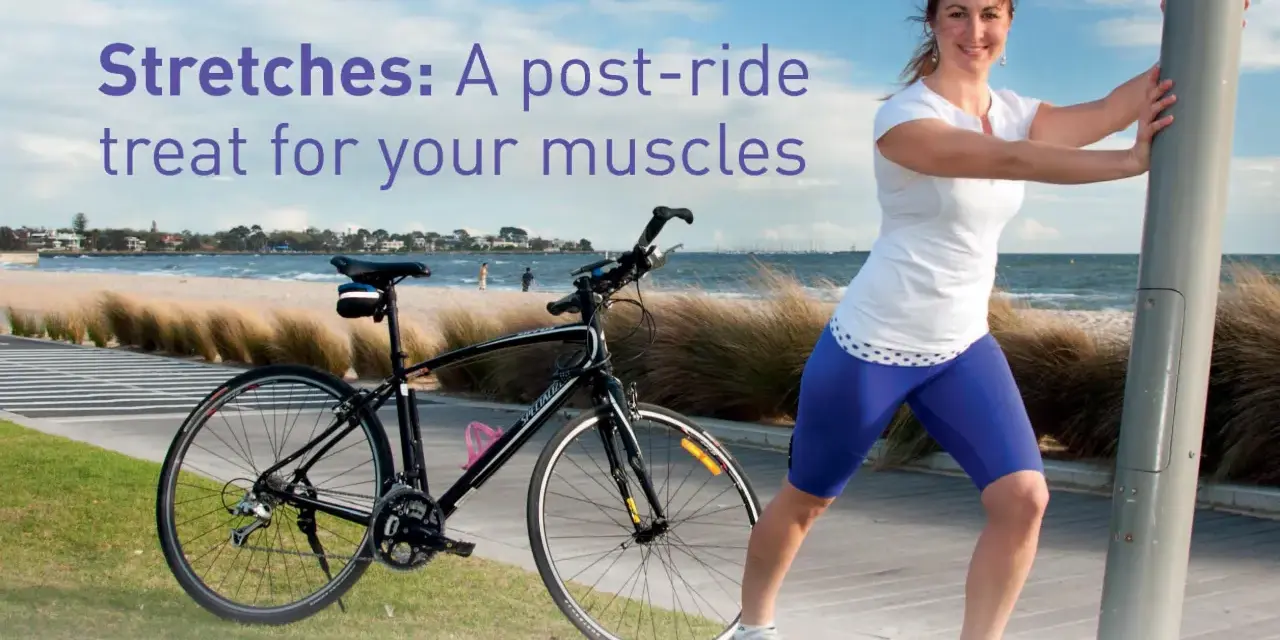
A good bicycle stretch routine is less about chasing flexibility for its own sake and more about keeping your hips, quads, calves, glutes, and upper back ready for the position cycling asks of them. In practice, that means using the right stretches at the right time, avoiding the common mistakes that make riders feel looser for five minutes and tighter the next morning, and building a routine that fits real training days.
Key points for cyclists who want a stretch routine that actually helps
- Use dynamic mobility before a ride and save longer static holds for after the ride.
- Prioritize hip flexors, quads, glutes, calves, hamstrings, chest, and thoracic spine.
- Most post-ride stretches work best when held for 20 to 30 seconds and repeated 2 to 3 times per side.
- A short routine done consistently usually beats a long routine you skip three days a week.
- If one area stays stubbornly tight, the issue may involve bike fit, strength, or load management, not just flexibility.
What cyclists actually need from a stretch routine
Cycling is repetitive. That is the whole advantage of the sport and also the reason certain tissues get irritated over time. The body spends long periods in hip flexion, with the knees moving through a narrow range and the upper body folded forward. If I want a rider to feel better on the bike, I do not start with random full-body stretches. I start with the areas that are actually loaded every time the pedals turn.
The most useful targets are usually the hip flexors, quadriceps, glutes, calves, hamstrings, and the chest and upper back. Those muscle groups help determine whether you can stay comfortable in the saddle, keep your pedal stroke smooth, and hold your position without compensating through the lower back or neck. A stretch routine should support those goals, not just create a brief feeling of looseness.
That is also why stretching alone is not the whole answer. If a rider feels tight all the time, I look at training load, recovery, mobility, and strength in the same conversation. Stretching helps, but it works best when it is part of a broader plan. That leads naturally to which stretches are worth your time.
The stretches that matter most for cyclists
If I had to build a simple routine for most riders, I would keep it focused and repeatable. You do not need twenty movements. You need the right few, done well.
| Stretch | Main area | Best time | Typical dose | Why it helps cyclists |
|---|---|---|---|---|
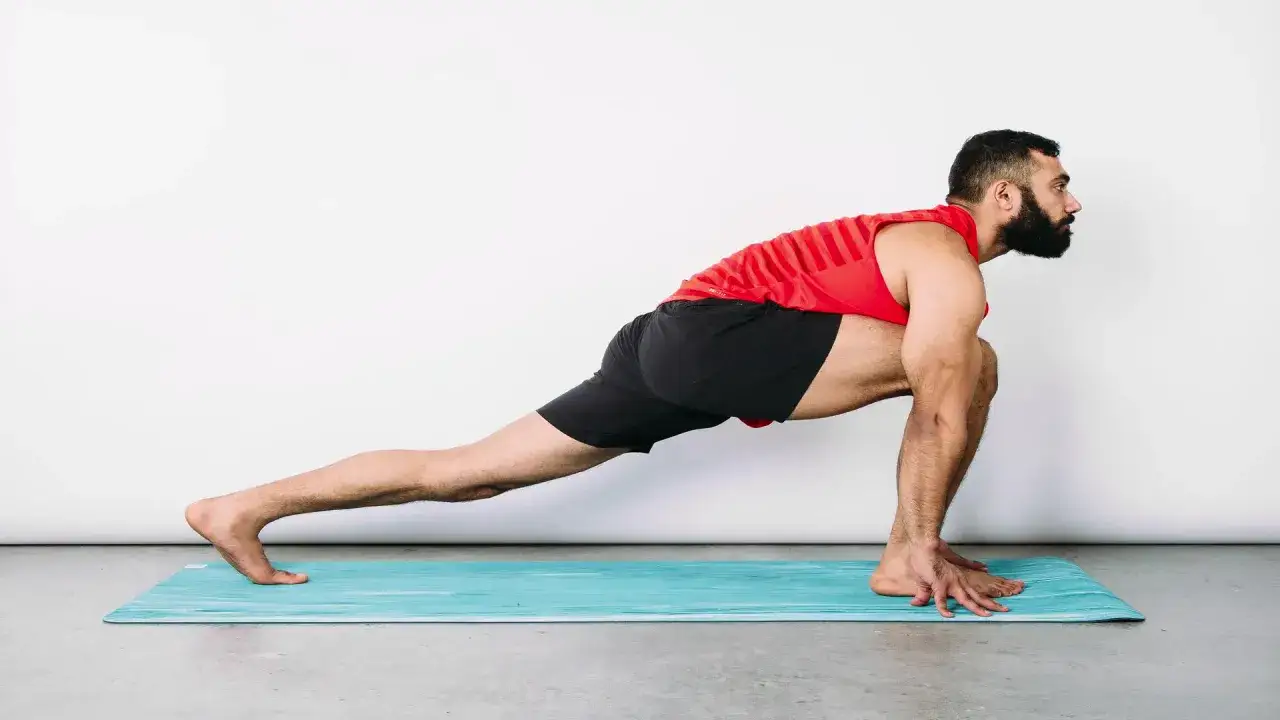
| Half-kneeling hip flexor stretch | Hip flexors and front of the hip | After a ride or on rest days | 20 to 30 seconds per side, 2 rounds | Helps counter long periods in a bent cycling position. |
| Standing quad stretch | Quadriceps | After a ride | 20 to 30 seconds per side, 2 rounds | Useful when the front of the thigh feels locked up after hard efforts or climbs. |
| Figure-four stretch | Glutes and deep hip rotators | After a ride | 20 to 30 seconds per side, 2 to 3 rounds | Often useful for saddle time, low-back tension, and a compressed feel through the hips. |
| Wall calf stretch | Calves and Achilles area | After a ride or after climbing-heavy sessions | 20 to 30 seconds per side, 2 rounds | Can reduce the stiff, shortened feeling that builds at the ankle and lower leg. |
| Doorway chest stretch | Chest and front shoulder line | After a ride or after desk work | 20 to 30 seconds, 2 rounds | Helps offset time spent in a forward-leaning position. |
| Leg swings | Hips and hamstrings | Before a ride | 8 to 12 controlled swings per leg | Warms up range of motion without making the muscles feel sleepy or over-relaxed. |
The table is the short version of the story: lower-body extensors and hip openers matter most, with a little attention to the chest and upper back because cyclists rarely sit tall for long. If you only have time for three movements, I would choose a hip flexor stretch, a glute stretch, and a calf stretch. That covers most of what riders notice first after a hard week.
When to use dynamic moves and when to hold static stretches
This is where a lot of riders get the timing wrong. Before a ride, I prefer movement. After a ride, I prefer longer holds.
Dynamic work is the better choice before cycling because it wakes up the joints and tissues without reducing the snap you want for riding. Leg swings, walking lunges, hip circles, and controlled ankle rocks are good examples. They prepare the body to move. They do not ask it to relax deeply.
Static stretching makes more sense after the ride, when the muscles are warm and you are trying to downshift. That is the time to hold a hip flexor stretch, a quad stretch, or a figure-four position long enough to let the tissue settle. I would keep the pressure mild to moderate. If you are shaking or holding your breath, you are probably pushing too hard.
A simple rule works well in practice: use 5 to 8 minutes of dynamic mobility before riding, and 8 to 12 minutes of static stretching after riding. You can go shorter than that on busy days, but the order matters more than people think. Dynamic first, static later. That sequence is one of the easiest ways to make the routine feel useful instead of random.
How long to hold each stretch and how often to repeat it
Most cyclists do better with consistency than with intensity. A hard stretch is not automatically a better one. In fact, overly aggressive stretching can leave the tissue irritated or make the next ride feel worse.
For static holds, I usually aim for 20 to 30 seconds per side, repeated 2 to 3 times. If a muscle is especially stubborn, you can stay closer to 30 to 45 seconds, but I would only do that when the position feels controlled and calm. Longer is not always better. The goal is to create change without forcing the body to brace.
For dynamic drills, 6 to 12 controlled reps is usually enough. Leg swings, for example, should look smooth, not wild. You are greasing the groove, not throwing the leg around to prove a point.Frequency matters just as much as duration. If you ride often, I like short post-ride mobility almost every day and a slightly longer routine 2 to 4 times per week. Riders who only stretch once a week often miss the cumulative effect. Small doses add up better than occasional hero sessions.
Common mistakes that make stretching feel useless
Most stretch routines fail for one of a few predictable reasons. The good news is that none of them are mysterious.
- Stretching cold - Going straight into deep static holds before the body is ready usually feels worse, not better.
- Forcing the range - If you crank on a stretch, the body responds by guarding. That is not mobility.
- Skipping the hips - Riders often chase hamstrings when the real limiter is the hip flexors or glutes.
- Ignoring the upper body - Tight chest and thoracic stiffness can make a rider feel more compressed than the legs do.
- Using stretching as a substitute for everything else - If the bike fit is off, or the training load is too high, stretching will only do so much.
I also see riders copy a routine from someone else and assume it will solve their issue. That rarely works cleanly. The right stretch depends on where the restriction actually is, whether the problem shows up on climbs or in aero position, and whether the discomfort appears on one side or both. That is why the next step is not just doing more, but doing a routine that fits the week you are actually training through.
A realistic 10-minute routine for training days
When time is limited, I like a routine that can be done without equipment and without overthinking. This version works well after most rides or on recovery days.
- Leg swings, 10 reps per leg.
- Half-kneeling hip flexor stretch, 2 rounds of 20 to 30 seconds per side.
- Figure-four stretch, 2 rounds of 20 to 30 seconds per side.
- Standing quad stretch, 2 rounds of 20 to 30 seconds per side.
- Wall calf stretch, 2 rounds of 20 to 30 seconds per side.
- Doorway chest stretch, 2 rounds of 20 to 30 seconds.
If you only have five minutes, cut the list in half but keep the order. I would rather see a rider consistently do a shorter version than save the full routine for a perfect day that never comes. On heavy training blocks, that practicality matters more than elegance.
One useful adjustment: after long climbs, I often keep the hip flexor and quad work, since those are the areas most riders feel first. After a long endurance ride, I may give a little more attention to the calves, glutes, and chest because the posture stress tends to build gradually over time. That kind of small tailoring makes the routine feel more relevant without making it complicated.
What to do when tightness keeps coming back
If the same spot tightens every week, do not assume it only needs more stretching. Recurrent tightness usually means one of three things: the load is too high, the support muscles are not doing enough, or the bike setup is asking for compensation.
For example, persistent hip flexor tightness can show up when the glutes are underactive, the core is not stabilizing well, or the saddle and cockpit position encourage too much hip closure. Calf tightness can be related to pedal mechanics, ankle stiffness, or simply riding a lot of climbing sessions without enough recovery. Neck and chest stiffness often point to a long, low position that needs a better balance between mobility and strength.
This is the part many riders skip because it is less glamorous than stretching. Still, it is the difference between a temporary fix and a routine that actually changes how you feel on the bike. If stretching helps for an hour and the stiffness returns every ride, that is useful information, not failure. It tells you the issue is bigger than flexibility alone.
The habits I would keep in place all season
During a full training season, I would keep the routine simple and repeat it often. The goal is not to become hyper-flexible. The goal is to preserve movement quality so riding feels smoother, recovery is easier, and you spend less time fighting stiffness that never fully leaves.
- Use dynamic mobility before riding, not deep static holds.
- Keep post-ride stretching short and consistent.
- Focus first on the hips, quads, glutes, calves, chest, and upper back.
- Adjust the routine when your ride type changes, especially after climbs, long endurance days, or race efforts.
- Pay attention to repeating tightness on one side, because that often points to fit or strength issues.
If I had to leave one practical idea with you, it is this: the best stretch routine is the one that fits your riding, not the one that looks longest on paper. Keep it targeted, keep it calm, and keep it regular. That is what makes the work pay off over time.