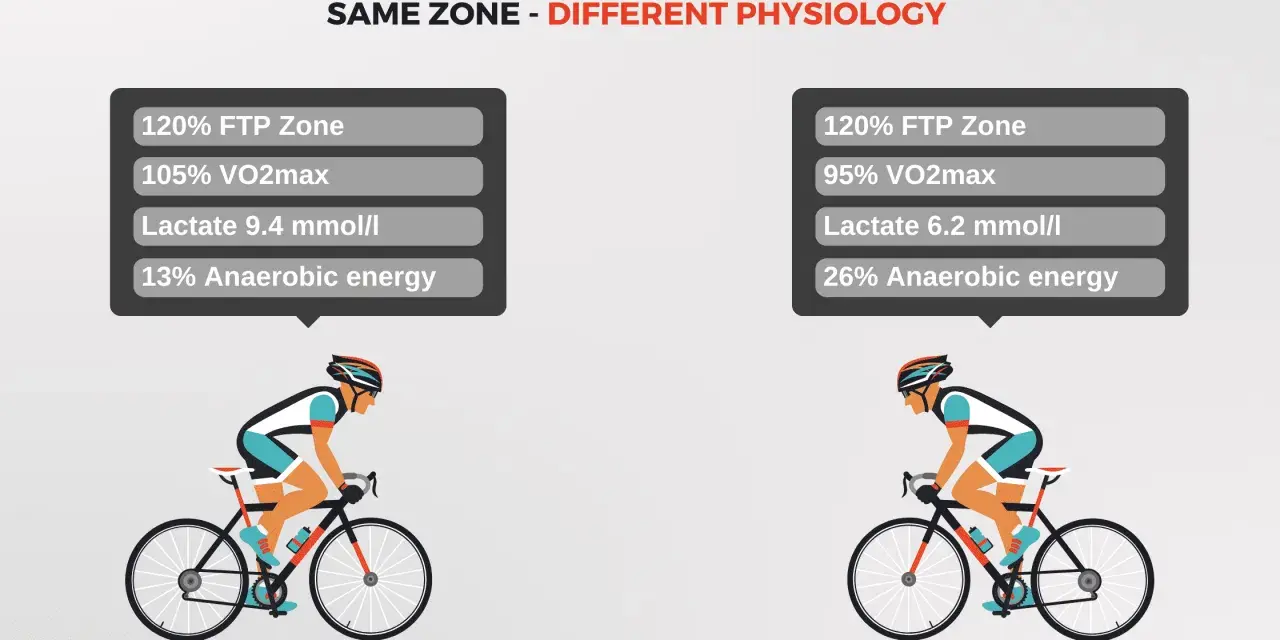
The ftp fitness meaning is simple once the jargon is stripped away: FTP, or Functional Threshold Power, is the hardest power output a cyclist can sustain for roughly an hour. For riders who train with a power meter, it becomes a practical anchor for pacing, zones, and progress tracking. In this guide I break down what FTP really measures, how to test it, where it helps, and where it can mislead you.
The main things to know before you build training around FTP
- FTP is a performance benchmark, not a max sprint or a general fitness score.
- It helps set power zones, pace climbs and time trials, and measure whether your training is working.
- The classic 20-minute FTP estimate is useful, but it is still only a rule of thumb for many riders.
- A good FTP number must be repeatable, or your workout targets will drift in the wrong direction.
- Improving FTP usually comes from a mix of endurance, sweet spot, threshold, and VO2 work, not from hammering every ride.
What FTP really measures
FTP stands for Functional Threshold Power, and in cycling terms it is the highest average power you can hold in a steady, controlled effort without fading badly. In practice, most riders can sit near FTP for somewhere around 45 to 70 minutes, depending on their physiology, pacing, and training history. I treat it as a working benchmark for sustainable effort, not a trophy number.
That distinction matters. FTP is not your sprint power, and it is not the same thing as VO2 max. A rider can have a decent FTP and still be explosive in short bursts, or have a lower FTP and still race well on courses with repeated attacks. FTP is most useful because it sits close to the point where effort becomes hard to sustain, which makes it a clean reference for training.
It is also more useful in watts than in vague effort language. On climbs, in time trials, and on the trainer, power gives you a stable number to work from. When you also look at watts per kilogram, you get a better sense of how that power will feel on hills and in comparison with other riders. That leads naturally to the real reason cyclists care about FTP in the first place.In short, FTP tells me where controlled hard riding begins to break down, and that is exactly what makes it useful for planning training and race pacing.
Why FTP matters for training and pacing
Once you know FTP, you can stop guessing at intensity. Power-based zones become much easier to set, and workouts become more specific. Instead of saying “ride hard,” you can say “ride at 90 percent of FTP” or “hold threshold for 12 minutes,” which creates a far cleaner training target.
That same number also helps with pacing. A rider whose FTP improves from 200 watts to 250 watts can ride the same 200-watt effort at a much lower relative cost. What was once threshold becomes more like tempo. That is why FTP is so valuable over a season: it turns training progress into real riding speed, not just a nicer number on a screen.
There is a second reason I like FTP as a reference point. It makes fatigue easier to manage. If a rider’s threshold is set correctly, a workout should feel appropriately hard but still finishable. If FTP is set too low, intervals turn into junk miles. If it is set too high, the plan becomes a slow grind of missed targets and unnecessary fatigue.
That is also why FTP is most powerful when you use it consistently rather than obsessively. It is there to guide decisions, not to define your worth as a rider.
How to estimate FTP without fooling yourself
Lab testing is still the most precise option, but most cyclists will never use a lab every few weeks. In real training, field-based estimates are usually the better choice because they are repeatable and easy to revisit. TrainingPeaks notes that the classic 20-minute formula works for many riders, but not all of them; some athletes sit closer to 86 percent of their 20-minute power, while others sit closer to 96 percent. That is why I never treat one protocol as sacred.
| Method | Best for | Strength | Limitation |
|---|---|---|---|
| Lab test | Riders who want the most controlled measurement | Highly structured and data-rich | Cost, access, and limited practicality for regular retesting |
| 20-minute field test | Most cyclists with a power meter | Simple and widely understood | The 95 percent rule can over- or under-shoot for some riders |
| Ramp test | Riders who prefer a short, repeatable test | Fast and easy to standardize | Can favor riders with strong anaerobic capacity |
| Guided device test | Riders using a compatible head unit or watch | Structured, practical, and easy to repeat | Still depends on correct setup, pacing, and a good power meter |
| Best hard efforts from real rides | Riders who race or train hard often | Reflects real-world performance | Harder to isolate cleanly if fatigue, terrain, or tactics distort the effort |
Garmin’s guided FTP test, for example, is built as a challenging workout that takes about 30 minutes and uses a mostly flat route with a steadily increasing effort. That kind of structure matters because it reduces pacing mistakes. If you prefer the 20-minute method, warm up well, pace evenly, and do not assume the number is perfect just because a formula produced it.
My rule is simple: choose one method, repeat it under similar conditions, and compare the trend rather than chasing a one-off result. If your test day, terrain, or fatigue level changes every time, the number becomes noisy fast.
That also sets up the next step, because a raw FTP number is only useful once you translate it into actual workout zones.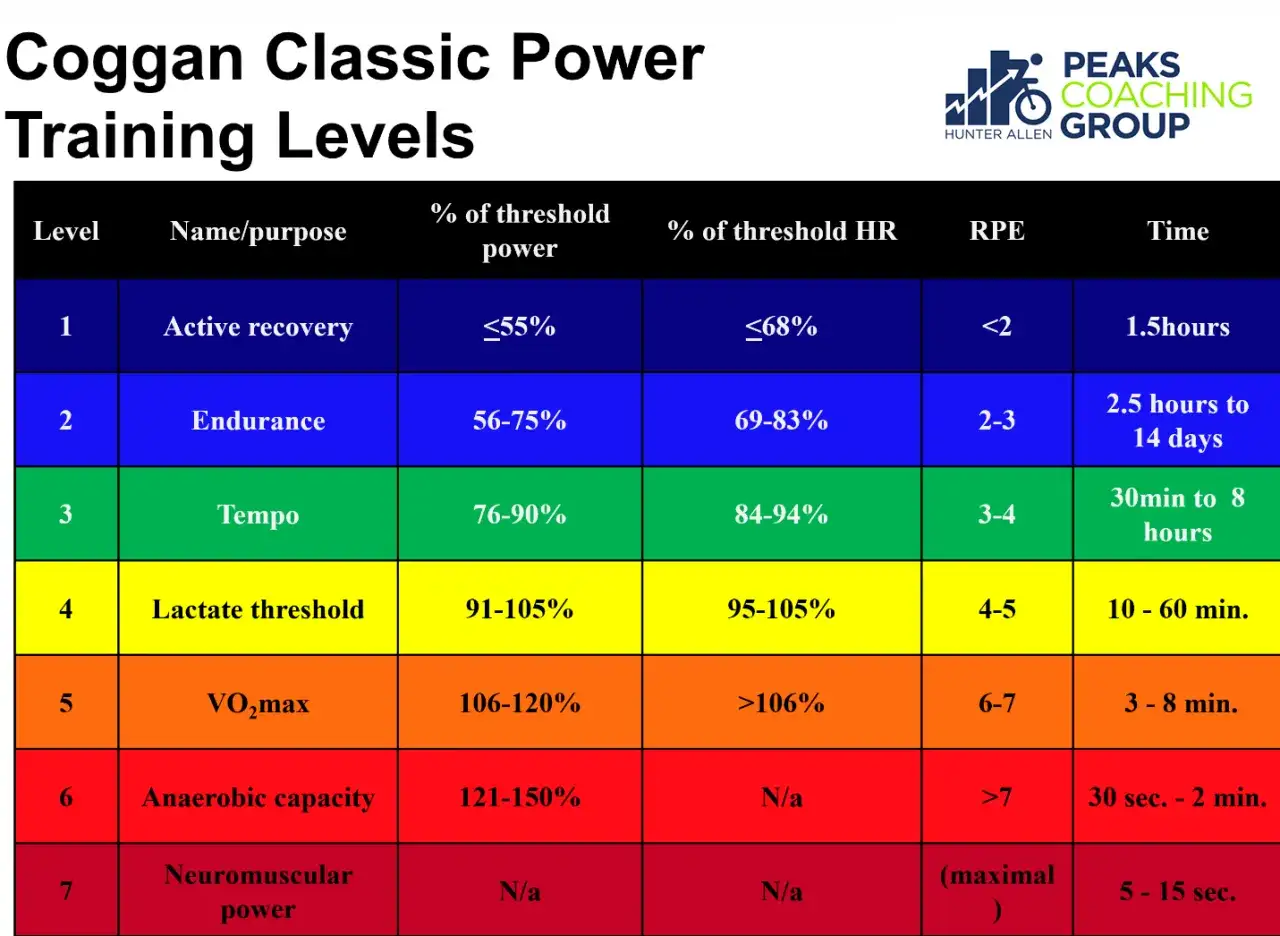
How to turn FTP into training zones
FTP becomes useful when it starts shaping your week. Most power-based systems build training zones from it, so one threshold value can influence endurance rides, tempo work, sweet spot intervals, threshold sessions, and VO2 max efforts. In other words, FTP is the reference point that turns a pile of watts into a plan.
| Zone | Approx. % of FTP | What it feels like | Best use |
|---|---|---|---|
| Recovery | Below 55% | Very easy, almost too easy | Recovery spins and leg flushing |
| Endurance | 56% to 75% | Steady and conversational | Base building, aerobic volume, long rides |
| Tempo | 76% to 87% | Comfortably hard | Durability, all-day riding strength |
| Sweet spot | 88% to 94% | Controlled but demanding | Efficient FTP development when time is limited |
| Threshold | 95% to 105% | Hard and highly focused | Raising sustainable race pace |
| VO2 max | 106% to 120% | Very hard, breathing is the limiter | Increasing aerobic ceiling and repeatability |
| Anaerobic | Above 120% | Short, sharp, messy | Attacks, accelerations, punchy racing |
The practical mistake I see most often is overvaluing threshold work and undervaluing endurance. Garmin’s coaching guidance is in line with what I see in real training: Zone 2, sweet spot around 90 percent of FTP, and occasional high-intensity work all have a place. If you only live near threshold, you collect fatigue faster than fitness.
For most riders, a productive week is not built from endless hero sessions. It usually mixes lower-intensity volume, one or two sustained efforts, and enough recovery to absorb the work. FTP tells you where those pieces sit, but it does not decide the whole plan by itself.
That opens the door to a broader question: how does FTP compare with the other metrics cyclists often lean on?
How FTP compares with heart rate, lactate threshold, and VO2 max
FTP is powerful because it is specific to cycling, but it is not the only number that matters. Heart rate, lactate threshold, and VO2 max all add useful context. I look at them as different layers of the same picture rather than competing scores.
| Metric | What it tells you | Main strength | Main limitation |
|---|---|---|---|
| FTP | How much power you can sustain on the bike | Excellent for pacing and power zones | Depends on the quality of the test and the power meter |
| Heart rate | How hard your body is working internally | Useful when power is unavailable | Lags behind effort and is affected by heat, stress, fatigue, and caffeine |
| Lactate threshold | The physiological point where steady hard effort becomes harder to sustain | Useful for understanding the engine under the hood | Less convenient to measure in everyday training |
| VO2 max | Your aerobic ceiling | Helpful for high-end capacity | Does not tell you what pace you can actually hold for a race |
FTP sits in a useful middle ground. It is grounded in physiology, but it is still practical enough to guide training day to day. Heart rate tells me how the body is responding, while FTP tells me what power the bike is producing. VO2 max tells me how much room there is at the top end, but not how to pace a climb or a time trial.
That balance is why I do not chase a single metric in isolation. A rider can raise FTP, improve heart rate stability, and still underperform if fueling, recovery, or pacing are off. The number helps, but it does not replace judgment.
And judgment matters even more once you start seeing the common mistakes that distort FTP.
Where FTP breaks down and the mistakes that distort it
FTP is useful, but it is not magic. A bad setup can produce a number that looks precise and still leads your training astray. The biggest problem is that many riders treat FTP as fixed when it is actually a moving target.
- Testing when tired can drag the number down and make every future workout too easy.
- Testing when overly fresh can inflate the number and turn threshold work into survival mode.
- Mixing test protocols from month to month makes trend comparison messy.
- Ignoring indoor-outdoor differences can create a false sense that one of your devices is wrong when the conditions are actually different.
- Using the number like race pace is a mistake; FTP is a sustained benchmark, not a promise that you can sit there forever.
- Letting the power meter drift or using a poorly calibrated trainer can corrupt the entire profile.
Another common error is overreacting to one good or bad day. TrainingPeaks suggests reassessing threshold a few times per year, and that makes sense for most riders. If you are in a build phase and fitness is moving quickly, I would check more often. If you are in maintenance, less often is usually better. The point is to catch the trend, not chase daily noise.
FTP also has blind spots. It tells you little about how well you sprint, corner, handle repeated surges, or recover from attacks in a race. A criterium rider, a time trialist, and a gravel racer may all use FTP, but each one needs different support around it. That is why the number works best when it stays inside a bigger training picture.
That bigger picture is where the real payoff lives.
Turn the number into a season-long training tool
If I had to reduce FTP to one practical rule, it would be this: use it to guide the season, not to judge the day. Set a baseline, train from it, and revisit it when the work deserves a new reference point. A stronger FTP should make the same route feel easier, the same interval feel more controlled, and the same climb feel less expensive.
- Set your baseline after a recovery day or a lighter training block.
- Retest every 6 to 12 weeks during a build, or a few times per year if your training is stable.
- Use FTP to set zones, but sanity-check workouts with effort, cadence, heart rate, and how you actually finish the session.
- Build most of your fitness with endurance and sweet spot work, then layer in threshold and VO2 sessions as needed.
- Keep one testing method as your reference so the trend stays meaningful.
That is the cleanest way to use FTP in 2026 training: as a repeatable anchor, not a badge. When the number is honest, it helps you pace better, train smarter, and see real progress. When it starts behaving strangely, the first thing I question is usually the test protocol, not the athlete.