
The difference between runners' legs and cyclists' legs is not cosmetic trivia. It comes from how each sport loads the muscles, tendons, and bones, and that changes both appearance and performance in very predictable ways. If you want to understand why one athlete looks more built through the thighs while another looks lighter and more elastic, the answer starts with biomechanics, not genetics alone.
The two sports build legs in different ways, and the difference comes from loading, not luck
- Cycling usually builds more visible quadriceps size because the pedal stroke is repetitive, forceful, and mostly concentric.
- Running tends to create leaner, springier legs because it adds impact, eccentric loading, and more elastic recoil through the stride.
- Bone loading usually favors running, while cyclists often need extra strength and impact work to cover that gap.
- The final look depends on body fat, training volume, sprint versus endurance focus, and whether you lift weights.
- If you want a specific result, the fastest route is a sport-specific mix of endurance, strength, and recovery.
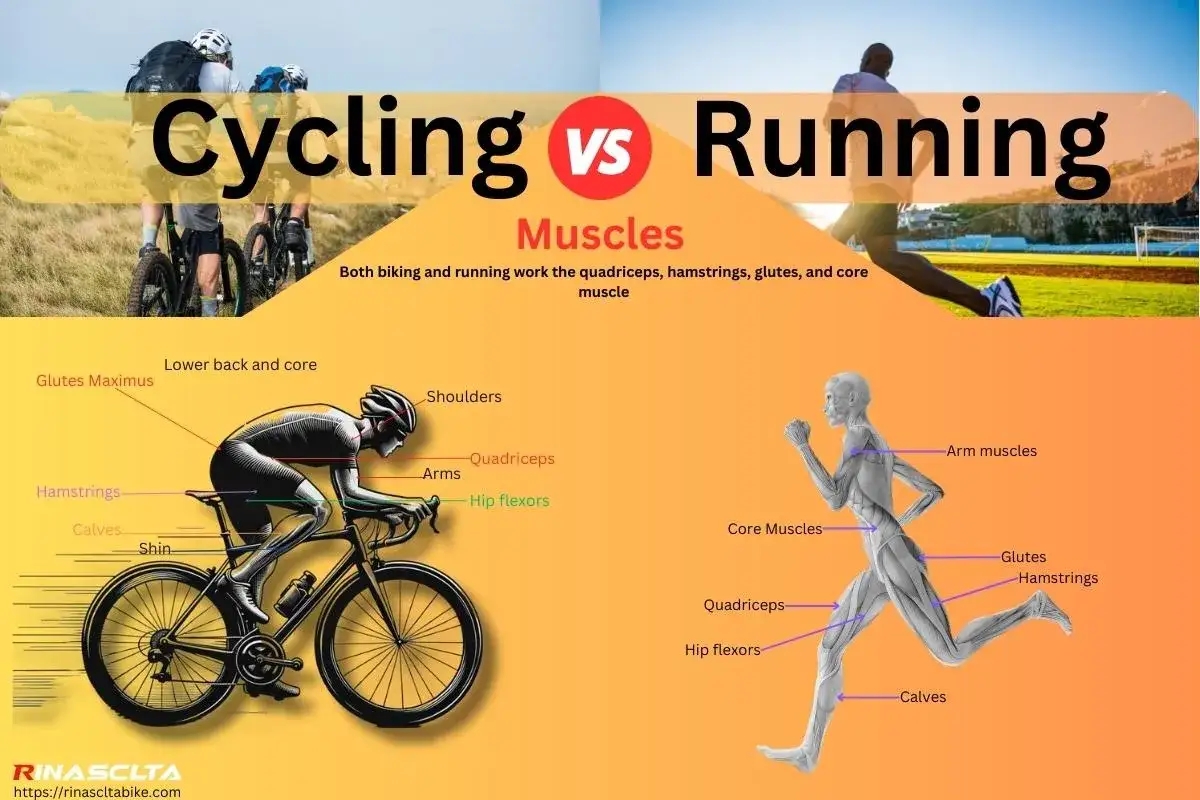
Why the two sports shape legs differently
When I compare these two sports, I start with the type of muscle contraction they ask for. Running uses a mix of concentric work, where the muscle shortens while producing force, and eccentric work, where it lengthens while resisting load. Cycling is much more dominated by concentric force production, especially through the downstroke. That single difference explains a lot of the visual contrast.
Running also relies heavily on the stretch-shortening cycle, which is the rapid loading and recoil that lets tendons and muscles store and release energy like a spring. Cycling does not give the same elastic rebound. It rewards repeated torque production in a fixed path, so the body adapts toward sustained force rather than impact absorption and bounce.
| Aspect | Runners | Cyclists | Why it matters |
|---|---|---|---|
| Muscle size | Usually leaner, with visible definition | Usually thicker quads and more thigh mass | Running rewards low mass and elastic efficiency; cycling rewards repeated force output |
| Main loading | Impact plus eccentric braking | Mostly concentric, repetitive pedal force | Different loading patterns create different tissue adaptations |
| Elastic qualities | Often more spring-like | Often more force-dominant | Runners depend more on tendon stiffness and rebound |
| Bone stimulus | Stronger weight-bearing stimulus | Lower impact stimulus | Bone adapts best to load that is both heavy and frequent |
| Typical performance target | Running economy | Power-to-weight ratio | Each sport optimizes a different metric |
That is why I never treat this as a simple “which legs are better” question. The better question is what adaptation the athlete is paying for, because the body tends to become excellent at the thing it repeats most often. That leads directly to the next difference: what each sport usually does to the lower body in practice.
What running usually does to the legs
Runner legs are often lighter, tighter-looking, and more defined, but that does not mean they are weak. Good runners usually develop strong calves, glutes, hamstrings, and foot-ankle structures, with the whole lower chain trained to absorb impact and then rebound efficiently. In endurance runners, the result is often a lean, durable, spring-like look rather than a bulky one.
There is an important exception here. Sprint runners, hill specialists, and runners who lift seriously can build visibly muscular legs, especially through the glutes, quads, and calves. So when people imagine a “runner’s body,” they are usually picturing a distance runner, not a speed athlete. Distance running also tends to keep body fat lower, which makes the leg musculature look sharper even when the actual muscle size is modest.
The key performance concept for runners is running economy, which is the energy cost of running at a given pace. A runner does not need the biggest thighs in the room; they need the most efficient stride. That is why high-load strength work and plyometrics can help without turning a runner into a bodybuilder. In recent reviews, strength programs for runners commonly lasted about 6 to 24 weeks, and the better-designed ones improved economy without changing the sport-specific movement pattern in a dramatic way.
In plain English, the runner’s leg is built for elastic efficiency first and visual mass second. That distinction matters, because it tells you why the next section looks so different.
What cycling usually does to the legs
Cycling usually builds the most obvious changes in the quadriceps, especially in riders who spend a lot of time climbing, sprinting, or pushing big gears. The glutes and hamstrings matter too, but the bike is especially good at loading the front of the thigh in a repeatable way. That is why many cyclists look more “packed” through the upper leg even when they are not trying to gain size.
The interesting part is that cycling can build strength and muscle without the same impact cost as running. That is great for joint stress, but it also means the bones and connective tissues get a different signal. If a cyclist never adds resistance training or impact work, the legs can become very capable on the bike while remaining under-stimulated in other areas.
If I were coaching a rider who wanted stronger, more muscular legs, I would not rely on riding alone. A recent review of endurance cyclists found that heavy strength training, typically done 1 to 3 times per week for 5 to 25 weeks, improved cycling efficiency, anaerobic power, and overall performance, with meaningful changes often showing up after about 8 weeks. That does not mean every cyclist needs to bulk up. It means the legs respond well when you give them a stronger force stimulus than the saddle alone can provide.
What helps cyclists most
- Heavy squats, split squats, deadlifts, and leg press for raw force production.
- Low-cadence climbing or torque work when the goal is strength-like pedal pressure.
- Single-leg work to reduce left-right imbalances and improve stability.
- Enough carbohydrates and protein to support recovery, because low energy availability makes leg development stall fast.
That is the practical point: cycling is excellent for building strong thighs, but the final shape depends on the kind of riding and whether you support it with strength work. From here, the conversation shifts from appearance to resilience, which is where bone density and injury risk matter.
Bone density, impact, and injury trade-offs
This is where running usually has the edge. Because running is weight-bearing, it provides a strong stimulus for bone remodeling. Cycling is excellent cardiovascular work, but it does not challenge the skeleton in the same way. In endurance athletes, studies have repeatedly shown that cyclists can have lower bone mineral density than runners, especially in the spine.
One long-term comparison found cyclists were much more likely to show spinal osteopenia than runners. I would not use that to scare anyone away from the bike, but I would use it to make a simple point: if cycling is your main sport, you should think about bone health on purpose, not by accident.Running is not automatically safer, either. It creates more impact stress, which is part of why it improves bone loading, but it also raises the risk of stress injuries, tendon overload, and calf or Achilles issues when volume climbs too quickly. The body likes load, but it hates sudden load spikes. In other words, runners often get a better bone stimulus, while cyclists often get a lower joint toll. Each sport pays a different price.
For most athletes, the best compromise is simple: keep the main sport, then add the missing stimulus on purpose. Runners usually benefit from strength work and some hopping or hill work. Cyclists often benefit from strength training and, if appropriate, a little impact exposure. That leads nicely into how to choose the right training mix for the look and performance you want.
How to train for the leg shape and performance you want
If your goal is not just to compare the two sports but to influence your own leg development, I would make the choice based on the outcome you actually want. Bigger thighs, leaner legs, better sprint power, more endurance, or simply more durability each call for a slightly different setup.
If you want more cycling-style leg development
Prioritize heavy lower-body strength work and hard bike sessions that demand force, not just spinning. I would usually start with two weekly strength sessions, then build around them with quality riding. The lifts do not need to be fancy. Squats, Bulgarian split squats, Romanian deadlifts, step-ups, and calf raises cover a lot of ground because they train the same force-producing patterns that matter on the bike.
For performance, the important lever is not just volume. Torque matters, which is the rotational force you produce against the pedals. Low-cadence work feels more strength-like because it raises torque demand per stroke. That is useful for climbing and acceleration, but it should be balanced carefully if you race on hilly terrain, where too much mass can work against your power-to-weight ratio.
Read Also: 12-Week Cycling Training Plan - Get Fitter, Faster
If you want more runner-style leg development
Focus on stiffness, coordination, and single-leg strength rather than chasing size. Research on runners shows that high-load resistance training, plyometrics, and combinations of the two can improve running economy, often over 8 to 12 weeks and with 2 to 3 sessions per week. That matters because a faster runner is usually a more efficient runner, not simply a bigger one.
The best exercises are the ones that make the stride more economical: split squats, calf work, hip-dominant lifts, box jumps, pogo hops, and short hill sprints. Those drills help the leg store and release force more effectively. They also improve durability, which is what keeps runners from becoming the kind of athlete who is always “just one tweak away” from missing training.
I see a common mistake here: athletes assume they need to choose between endurance and strength. In reality, the best version of either sport usually includes both. The ratio changes, but the need does not.
What changes when you train both sports
Hybrid athletes and triathletes live in the middle of this comparison, and that middle is useful because it makes the trade-offs obvious. If you do both sports seriously, the dominant discipline usually wins the visual battle. A high-volume runner who bikes on the side still tends to look more like a runner. A high-volume cyclist who jogs occasionally still tends to keep the more developed thigh profile of a rider.
There is also a practical interference effect to manage. Hard endurance sessions, heavy lifting, and speed work can all coexist, but not if every session is crammed together without recovery. I usually prefer to separate key strength work and key endurance work by several hours when possible, and I keep the hard days hard so the easy days can actually be easy. That approach protects adaptation instead of diluting it.
For riders who want to keep a lean running look without losing cycling power, or runners who want better leg strength without adding too much bulk, the answer is not more random training. It is better sequencing. One or two focused strength sessions, a clear primary sport, and enough recovery usually do more than piling on extra mileage in both directions.
The fastest way to decide what your legs need next
If I had to reduce the whole comparison to a practical decision, I would keep it simple. Choose more cycling if you want quad-dominant force, lower joint impact, and the kind of leg development that supports sustained wattage. Choose more running if you want springier, more impact-hardened legs and a leaner lower-body profile. If you want either sport to look and perform better, add strength training instead of hoping the sport alone will do the job.
Body fat still matters, nutrition still matters, and genetics still matter, but they do not erase the basic adaptation pattern. Cycling tends to build a stronger engine through a narrower force path. Running tends to build a more elastic engine through a broader impact path. That is the real difference behind the look, and once you see it that way, the debate stops being vague and starts becoming useful.