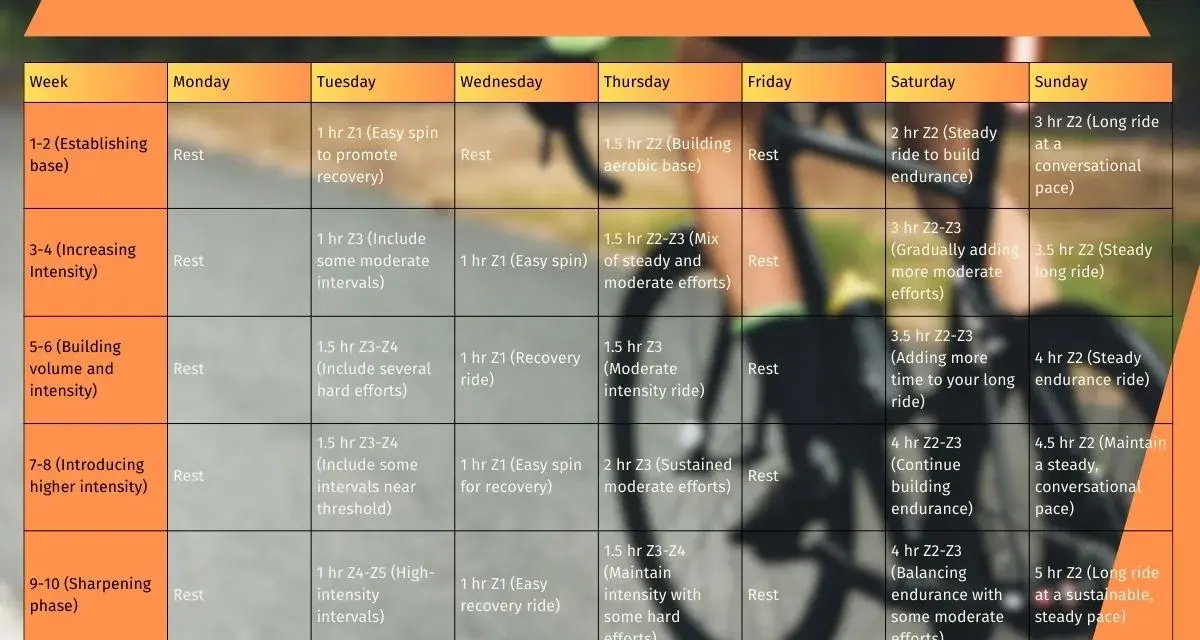
What this block is designed to do
- Build a stronger aerobic base before piling on too much intensity.
- Use one key workout and one longer ride each week instead of random hard efforts.
- Insert easier weeks so the work turns into fitness instead of fatigue.
- Keep effort honest with power, heart rate, or simple perceived exertion.
- Fuel longer rides well enough to train again the next day.
What this block is meant to build
I usually treat a twelve-week block as a bridge, not a miracle. It is long enough to change the aerobic engine if the rider starts from a reasonable base, but short enough that the work has to stay focused. If your goal is a century ride, a stronger group ride, or simply more durable fitness, the block should improve endurance, repeatable power, and recovery speed. If you are coming back after a long break, I would keep the first phase conservative and resist the urge to bolt on hard intervals too early.
- General fitness means more easy riding, steady cadence work, and one controlled harder session each week.
- Event preparation means longer weekend rides, fueling practice, and terrain that resembles the event.
- Speed for group rides means tempo, sweet spot, and short threshold efforts that teach you to hold pressure without blowing up.
That goal-setting step matters because the weekly layout changes depending on what you want the bike to do for you, and that leads directly into the structure itself.
How the weekly structure should look
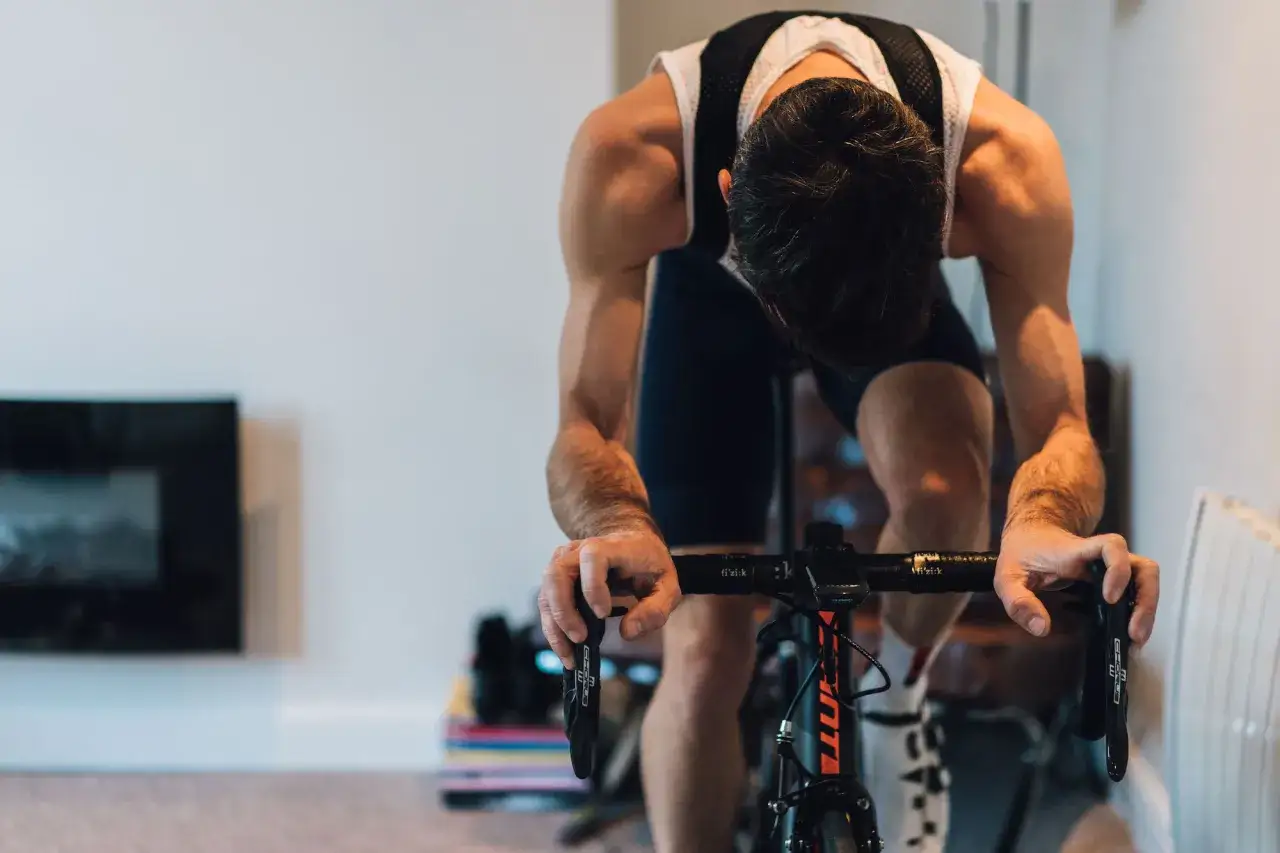
I build most plans around three to five rides per week, plus optional strength work if recovery is holding up. For many riders, the whole block fits cleanly into roughly 4 to 8 hours a week, though an event-focused version can sit higher. The pattern is simple: one long ride, one key workout, one or two easier aerobic rides, and enough rest to keep the hard days useful. An indoor trainer makes weekday consistency easier, but the same structure works outdoors if you keep the sessions focused.
| Session | Typical duration | Purpose | Effort |
|---|---|---|---|
| Easy endurance ride | 45-90 minutes | Build aerobic durability without digging a hole | Conversational |
| Key interval session | 60-90 minutes | Raise threshold, sweet spot, or climbing power | Moderate to hard |
| Long ride | 90 minutes to 4 hours | Teach the body to stay efficient for longer | Mostly easy |
| Recovery spin | 30-45 minutes | Move the legs after a hard block | Very easy |
| Strength session | 20-40 minutes | Support durability and pedaling force | Controlled, not exhausting |
That skeleton works because it keeps intensity concentrated instead of scattered. Once you have the weekly frame, the real value comes from how the load changes from one phase to the next.
A sensible twelve-week progression
I like a 3:1 rhythm for most riders: three weeks of gradual build, then one easier week that lets the fitness settle in. The numbers below are not rigid rules, but they are a solid starting point if you want structure without overcomplicating the block.
| Weeks | Weekly load | Focus | What to do | Long ride target |
|---|---|---|---|---|
| 1-3 | 4-6 hours | Base and rhythm | Keep the rides controlled, add cadence drills, and use one tempo session each week | 90-150 minutes |
| 4 | 3-4 hours | Absorb the work | Cut total volume by about 30-40 percent and keep only short, easy spins plus one light workout | 75-120 minutes |
| 5-7 | 5-8 hours | Build | Introduce sweet spot, low-cadence climbing work, or longer tempo intervals | 2-3 hours |
| 8 | 4-6 hours | Absorb again | Reduce volume, keep one moderate effort, and protect sleep and nutrition | 90-150 minutes |
| 9-11 | 6-10 hours | Specific peak | Shift toward event pace, threshold repeats, or race-like surges if the goal demands them | 2.5-4 hours |
| 12 | 3-5 hours | Taper | Lower the volume, include a few openers, and stop chasing fatigue | 60-90 minutes early in the week |
The trap here is doing too much every week and calling it progress. I would rather see a rider finish week 11 slightly hungry for more than arrive at week 12 carrying stale legs. That is where pacing the effort becomes the difference between fitness gained and fitness wasted.
How to judge effort without overthinking it
If I had to choose only one tool for most riders, I would choose perceived effort first and power or heart rate second. Devices are useful, but the body still needs to learn what different effort levels feel like. That matters on hills, in heat, and on days when fatigue changes the numbers.
| Metric | Best use | What to watch for |
|---|---|---|
| Power | Precise interval control and repeatability | It does not explain fatigue by itself |
| Heart rate | Steady endurance and aerobic work | It lags behind effort and drifts in heat or stress |
| RPE | Every ride, especially outdoors | It is subjective, so it improves with practice |
Here is the version I use when explaining zones in plain language: easy endurance should let you speak in full sentences, tempo should feel firmly working but sustainable, sweet spot should feel like a strong grind you can hold for blocks of time, and threshold should feel close to the edge of control. If you ride with power, FTP, or functional threshold power, is the anchor for those zones; it is roughly the hardest effort you can sustain for about an hour. VO2 max work is harder still and only belongs in small doses. For most riders, two well-executed quality sessions beat four half-hearted ones.
That is also why a plan needs support off the bike. Fitness adapts when the body recovers, not when the workout ends.
Fuel, recovery, and strength work that keep the plan alive
I rarely let riders treat nutrition as an afterthought, because underfueling is one of the fastest ways to flatten a good block. For rides longer than 90 minutes, aim for roughly 30-60 grams of carbohydrate per hour, especially if the session has tempo or interval work. After harder rides, a meal with 20-40 grams of protein and a decent carbohydrate serving helps recovery more than waiting around and hoping it will sort itself out.
- Before long or hard rides, eat a carb-forward meal 2-3 hours ahead, or a smaller snack if you are riding sooner.
- During the ride, sip consistently instead of waiting until you feel dry or flat.
- After the ride, replace fluids, eat within a couple of hours, and do not let the rest of the day drift into low energy availability.
- Strength work should stay simple: squats, hinges, split squats, calf work, and core stability for 20-40 minutes, one or two times per week.
- Hot weather or indoor sessions usually call for more fluid and electrolytes than riders expect, especially when sweat loss is high.
Sleep matters just as much. If a rider only gets 5-6 hours a night, the training plan usually stops being a training plan and becomes a fatigue experiment. In practice, I would rather delete one accessory lift than sacrifice the long ride or the main interval day.
The mistakes that quietly waste the block
I see the same errors again and again, and they are boring precisely because they are so fixable. The problem is rarely a lack of effort. It is usually misplaced effort.
- Riding too hard on easy days turns every week into a smear of moderate fatigue, which leaves no room for the key sessions to stand out.
- Skipping recovery weeks makes the plan look productive for a while and then suddenly feels impossible to hold.
- Chasing mileage instead of time and quality makes riders overvalue long, unfocused rides and undervalue structured work.
- Practicing fueling only on event day is a mistake; the gut adapts when you train it.
- Ignoring contact points like saddle comfort, cleat position, or handlebar reach creates avoidable fatigue that no interval session can fix.
- Copying a plan that is too advanced for your current training age usually ends in missed workouts, not faster progress.
The common thread is that the rider keeps adding stress without improving the way the body absorbs it. Fix that, and the same twelve weeks suddenly produce a very different result.
Make the plan fit your ride, not the other way around
If I were tailoring this block for a century ride, I would push the long ride higher and keep the middle weeks disciplined. If the goal is faster group riding, I would keep one hard interval day and one race-like session with surges, then protect the rest of the week so the quality stays high. Riders coming back from a break should start with less intensity, not more, and anyone training mostly indoors should use a fan, a bottle plan, and a clear workout target so the sessions do not blur together.
In the end, the best version of this block is the one you can repeat week after week without guessing. Keep most of the riding conversational, make the hard work specific, and let the final week sharpen you instead of exhausting you. That is how a twelve-week cycle turns into real fitness, not just a busy calendar.