David Gaudu is one of those riders whose results make more sense when you watch the terrain instead of the stopwatch. He is a lightweight climber with real Grand Tour pedigree, and his best days usually come when the road tilts upward and the group becomes small enough to expose acceleration, positioning, and repeatability. This article breaks down what kind of rider he is, why he still matters in 2026, how to read his recent form, and what road cyclists can learn from him.
What matters most about his profile on the road
- The UCI still lists him with Groupama-FDJ United in 2026, and Groupama-FDJ’s official rider page describes him as a 1.72 m, 53 kg climber with 19 WorldTour podiums and 143 top-10 finishes.
- He is built for mountain stages, selective uphill finishes, and hard stage races rather than flat bunch sprints.
- He has already won Grand Tour stages and has shown he can ride deep into the top tier of GC racing.
- The main question is not talent, but consistency across a long season and across three-week racing blocks.
- For amateur riders, his profile is a good reminder that climbing success comes from power-to-weight, pacing, and recovery, not low body mass alone.
Why he still matters in modern road racing
I see Gaudu as a useful marker for how modern general classification racing works. He is not a one-dimensional mountain specialist, but he is also not the kind of all-arounder who can bluff his way through every profile. When the route gets selective, he can follow hard accelerations, stay calm in a reduced group, and finish well enough to convert a good day into a result.
That matters because modern stage races often come down to a narrow band of differences: a few seconds on a summit finish, a clean position through a crosswind section, or one rider recovering better than the others between hard days. Gaudu has spent enough time near the front of that fight to remain relevant. In practical terms, I would still treat him as a rider who can decide a mountain stage or shape the shape of a GC battle, even when he is not the outright favorite.
For a cycling audience in the United States, that is the right lens: not celebrity, but race value. He is the kind of rider who makes the hardest stages worth watching, because the terrain itself becomes his language. That leads naturally to the more important question of what he actually does well on the bike.
What his riding style looks like in practice
| Trait | What it looks like on the road | Why it matters |
|---|---|---|
| Climbing | Best on sustained climbs and steep uphill finishes | He can survive hard race selection and still finish fast enough to matter |
| Punch | Dangerous in reduced groups at the end of selective stages | He does not need a pure mountain-top solo to win |
| Time trial | Useful, but not the main strength | Long ITTs can limit his GC upside against the biggest all-rounders |
| Recovery | Good enough to stay relevant in stage races when form is right | Three-week consistency separates a stage winner from a top GC rider |
| Flat sprinting | Not built for pure bunch finishes | He needs terrain or fatigue to turn the finale in his favor |
The short version: he wins when the race is hard enough to shrink the field, but not so hard that he is forced into a raw watts-only contest against the biggest time-trial specialists. That distinction is easy to miss if you only look at results without the route profile.
Once you understand that pattern, his biggest results stop looking random and start looking logical. The next step is to separate the ceiling from the day-to-day noise.
The results that built his reputation
His resume is strongest in races that demand climbing skill, race intelligence, and a bit of nerve in the finale. That includes Grand Tour stage wins, strong GC placings, and performances that show he can still answer the best climbers when the road gets steep.
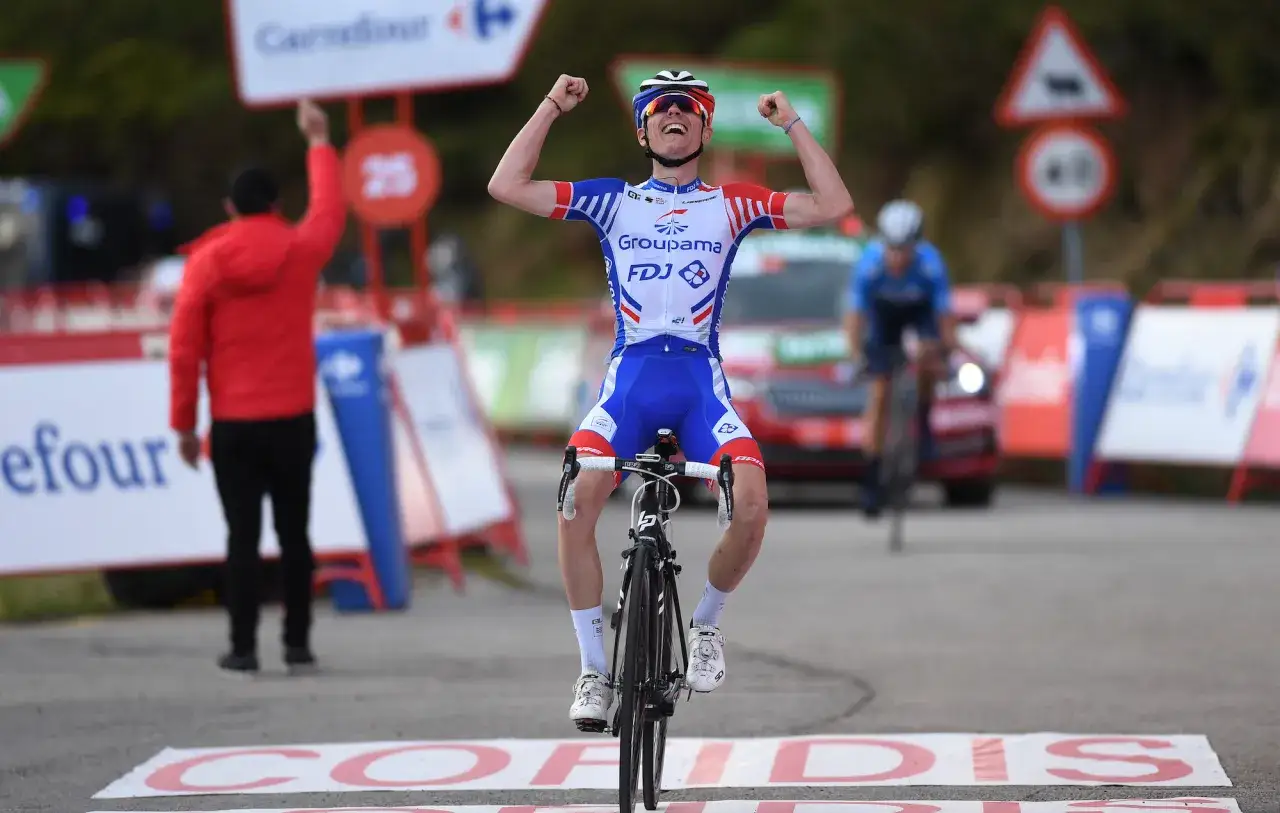
- He has already won stages in the Vuelta, which is important because those wins came in the kind of selective, high-pressure terrain that exposes real climbing ability.
- He finished fourth overall at the Tour de France in 2022, which told the peloton that he was more than a stage hunter.
- He stayed inside the top 10 of the Tour again in 2023, a sign that the GC level was not a one-off.
- He added another high-profile Grand Tour stage win in 2025, reminding everyone that he can still turn a hard uphill finish into a result.
What I take from that list is simple: his best days are not an accident, and they are not limited to one race. He has the body type, the climbing instincts, and the finishing speed to matter at the top level. The challenge is turning that into a clean, repeatable season instead of isolated flashes.
That is where the discussion shifts from talent to context, because 2026 is less about discovering who he is and more about measuring how much of that ceiling he can actually access.
How I read his 2026 context
The honest way to read his current phase is as a search for stability. Recent seasons have shown both the upside and the fragility of his profile: when he is sharp, he can beat elite rivals on selective finishes; when health, rhythm, or confidence slip, the margin disappears quickly. That is common for small climbers, but it still has to be managed carefully.
For a rider like him, the season is often decided by a few invisible variables: body freshness, race days accumulated before the mountains, and whether the team can build his program around the right objectives. I would not judge him on one patch of bad form, and I would not overrate one big win either. The useful metric is whether he can stack good days in a row when the calendar turns climb-heavy.
In other words, 2026 is a consistency test. If he strings together the right preparation, he remains a rider who can trouble the best on hard terrain. If not, he becomes one more example of how narrow the gap is between a genuine climbing star and a rider who only looks dangerous in isolated moments.
What amateur climbers can steal from his approach
There is real training value in watching a rider like this, because his profile rewards habits that amateur cyclists often neglect. I would focus on four lessons rather than trying to copy his exact physiology.
- Train for repeatable climbing power. A useful structure is 4 to 8 minute repeats near threshold, because that is close to the effort pattern of many selective road climbs.
- Practice fast recovery between efforts. In a hard race, the climb is only part of the work; the next 10 minutes after the crest matter almost as much.
- Fuel the work properly. On long, hard rides, practicing 60 to 90 grams of carbohydrate per hour is a better habit than trying to “save” calories and hoping the legs hold up later.
- Use gearing that lets you stay smooth. On steep roads, keeping cadence stable is usually better than forcing a grind, and a compact setup with a 30T to 34T cassette is often the practical choice.
For riders planning a mountain trip or a race weekend in the United States, that same logic applies on the road: save the ego, keep the cadence, and make the final 20 percent of the climb your best 20 percent instead of your worst.
What I would track in his next mountain block
The best way to follow him is to read the route first. If the stage has a long climb, a steep final ramp, or a reduced-group finish after a hard day, he becomes much more relevant. If the day ends in a flat sprint or a long individual time trial, his chances drop because the race stops rewarding the traits that make him dangerous.
That is why I would pay attention to three signals before each key race: the amount of vertical gain, the placement of the decisive climb, and whether the final kilometer is technical or straight. Those details tell you more about his chances than generic pre-race hype ever will.
He remains a rider worth following because his best performances still feel earned rather than lucky. When the route matches his strengths, he can change the shape of a stage in the last few kilometers, and that is exactly the kind of rider who makes road racing worth watching all the way to the line.