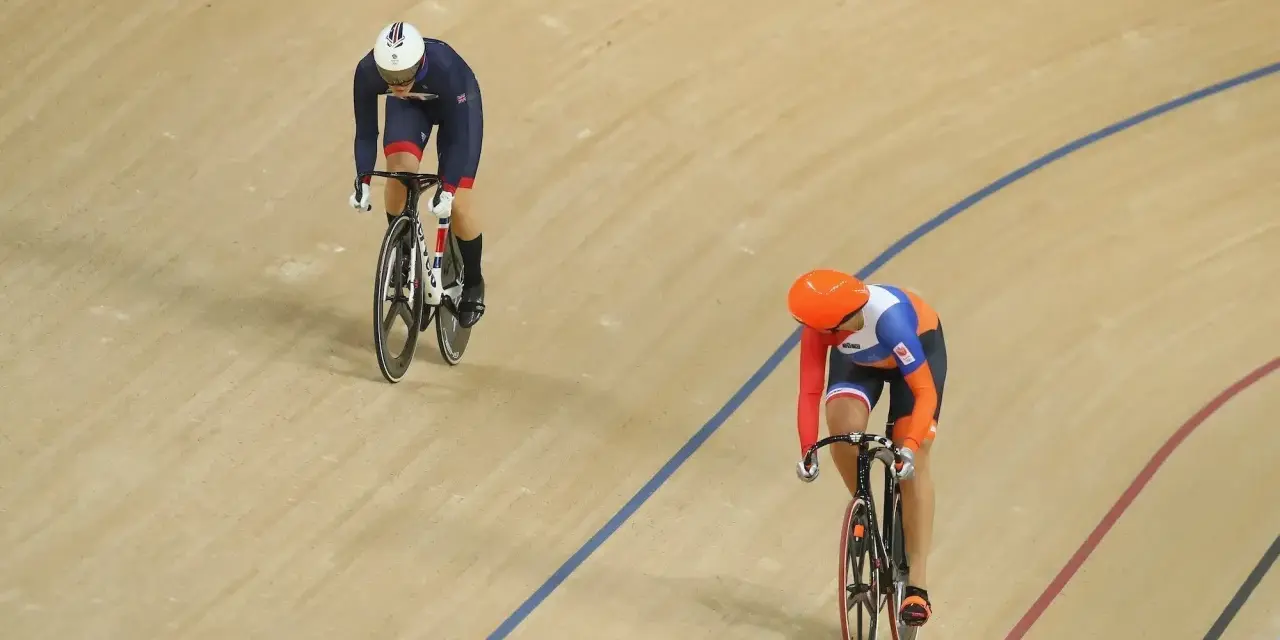
When I talk about sprint racing, I mean one of the cleanest tests of speed in cycling: two riders, a banked velodrome, and a final burst that is decided as much by timing as by raw power. For road cyclists, it is a useful discipline because it sharpens acceleration, bike handling, cadence control, and the ability to stay calm under pressure. In this article, I break down how the race works, what really wins it, how to train for it, and how to get started without wasting time or money.
The essentials before you step onto the boards
- The race is usually seeded by a flying 200-meter effort, then decided in short knockout heats.
- Positioning, timing, and patience matter almost as much as peak power.
- Road riders usually benefit most from the transfer in acceleration, cadence, and race awareness.
- A track bike is fixed-gear and brakeless, so control and coaching matter from day one.
- Beginner sessions at a velodrome are the safest and fastest way to learn the discipline.
How a velodrome sprint really works
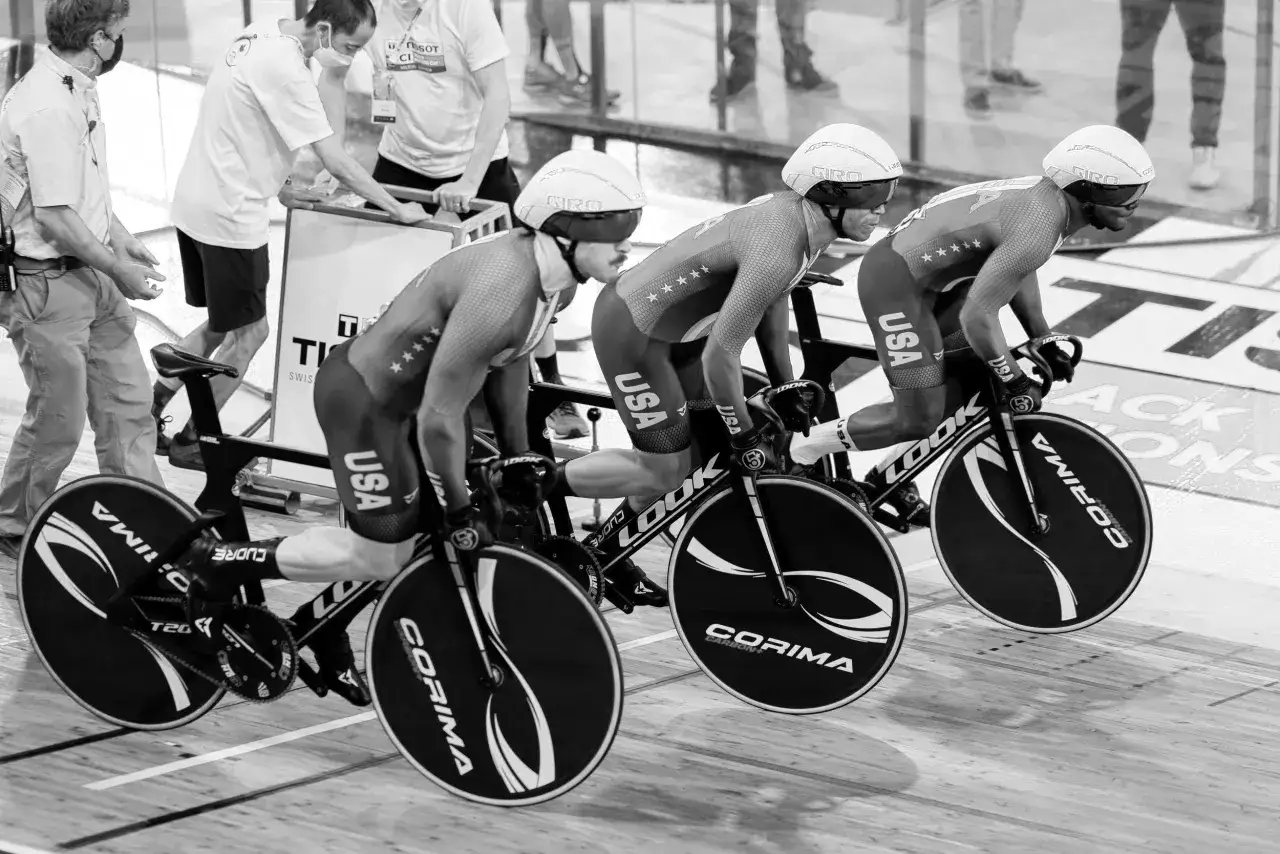
In the standard sprint format, riders first post a flying 200-meter time, then move into knockout heats that are often around three laps long. The UCI describes that structure clearly, and it explains why the sprint is never just a straight-line drag race from the gun. The fastest qualifier gets a better lane in the bracket, but that does not guarantee control once the heat starts.
What makes the event interesting is the fixed-gear bike. You cannot coast, you cannot freewheel through a corner, and you do not have brakes to scrub speed if your line goes wrong. The result is a race that feels part chess match, part explosion. A rider can sit behind an opponent, wait for a mistake, and still win with a move that lasts only a few seconds.
I usually tell road cyclists that the boards reward patience more than they expect. If you go all-in too early, you often hand the race to the rider who is willing to wait.
Why road cyclists should care about it
For a road rider, track sprinting is less about becoming a specialist overnight and more about exposing weaknesses quickly. If your bike handling is sloppy, your cadence falls apart under load, or you panic when another rider closes the gap, the velodrome makes that obvious. That feedback is valuable because it is immediate and measurable.
It also transfers well to the kinds of efforts that decide road races. A bunch kick, a short climb attack, or a late bridge all demand the same ingredients: good positioning, a clean jump, and the ability to produce power while slightly unsettled. The track gives you a controlled place to train those pieces without traffic, wind, or stop-start chaos.
| Feature | Velodrome sprint | Road sprint |
|---|---|---|
| Surface | Banked, predictable, and smooth | Variable, with wind, turns, and road texture |
| Main challenge | Positioning and timing before the final launch | Positioning inside a larger group and a longer effort chain |
| Bike feel | Fixed gear, no braking, no coasting | Multiple gears, braking, and more tactical variability |
| Best transferable skill | Explosive acceleration | Finish speed after fatigue |
| Common mistake | Starting too hard and losing the tactical battle | Arriving out of position before the last corner |
That is why I see the sprint event as a serious training tool for road cyclists, not a side quest. Once you feel how little margin you have on the boards, you tend to handle the final minutes of a road race with more discipline.
The tactics that decide close races
Most people think the winner is simply the strongest rider. In reality, the strongest rider often loses to the one who uses speed more intelligently. The tactical layer is where the event becomes interesting.
- Track stands and slow control matter because a rider who can balance and move slowly without wobbling can force the other rider to lead.
- Draft use is huge. Sitting a half-bike length behind another rider can save enough energy to decide the final 50 meters.
- Tempo changes are often the real attack. A sudden slowdown can be just as dangerous as a hard acceleration because it disrupts rhythm.
- Lane discipline matters on the banking. Holding a clean line keeps your opponent guessing and prevents wasted movement.
- Timing the jump is usually the race. If you launch too early, you die before the line. Too late, and the finish comes too soon.
The best sprint riders also read body language well. Shoulders tighten, hips shift, cadence changes, and a small glance can reveal whether someone is close to empty. That is why sprinting is rarely won by pure instinct alone. It is a skill you learn by repeating race-like situations until the decisions become automatic.
Training that transfers best from the gym to the track
Fast riders need both raw power and the ability to express it repeatedly. The UCI’s training material for sprinters highlights force intervals and high-cadence work, and that matches what I would build into a useful program. You want enough strength to move a big gear, but also enough leg speed to finish the job without bogging down.
For most riders, I would think in three layers:
- Pure acceleration with 4 to 8 all-out efforts of 6 to 10 seconds, with full recovery between efforts.
- Power endurance with 3 to 5 longer sprint efforts of roughly 20 to 30 seconds, with 4 to 8 minutes of recovery.
- Strength work 1 to 2 times per week in the gym, especially squats, split squats, deadlifts, and hip-dominant work.
One detail I rarely skip is heavy-gear work around 60 rpm. That lower-cadence load builds force without turning every ride into a max-effort test. I also like high-cadence spins because sprinters still need the ability to turn the pedals quickly once the gear is moving.
The trap is doing too much volume and not enough rest. Sprint training is neurologically expensive. If the legs are flat, the session stops being sprint training and becomes tired pedaling. I usually want at least 48 hours between true all-out sprint sessions, and sometimes more if the rider is also racing on the road.
Gear and setup that make the first sessions safer
A track bike is not a road bike with the brake levers removed. It is built around a fixed gear, direct power delivery, and a position that keeps you stable on the banking. That means fit matters more than shiny parts. If the bike is too long, too low, or too twitchy, you will feel it immediately when the pace changes.
When I help riders think about setup, I focus on what actually changes the session:
- Helmet that meets the velodrome’s requirements and fits securely.
- Proper shoes and cleats so your foot stays planted during hard starts.
- Clothing that stays tight and does not flap or catch in the wind.
- Track bike fit that gives you enough control to hold a line in the turns.
- Coaching or an experienced mentor before you start buying speed-focused upgrades.
What can wait? Deep-dish wheels, fancy skinsuits, and most of the equipment riders buy to look faster than they are. For a beginner, the most valuable purchase is usually a coached session or a rental bike that lets you learn the movements safely. That is the practical version of spending money well.
How to get started in the United States
In the U.S., the easiest entry point is still a local velodrome with a learn-to-ride or novice program. Many venues provide loaner bikes, structured instruction, and a controlled environment for your first laps. That matters because the first learning curve is not fitness. It is comfort on the fixed gear, confidence on the banking, and the ability to hold your line near other riders.
The path I recommend is simple:
- Book an intro session or rider clinic at a nearby velodrome.
- Arrive with a helmet, basic kit, and shoes that match the pedal system if the venue asks for them.
- Spend the first session learning starts, stopping distance, track etiquette, and how the bike behaves when you accelerate hard.
- Ride a few controlled laps before you think about racing anyone.
- Only then move into novice competition or open sprint sessions.
USA Cycling’s track national calendar is useful once you are ready to race seriously, because it connects local velodromes to a broader competition path from the development level up. But for most riders, the real work starts much earlier: one good intro session, one coach who explains the basics clearly, and enough repetition to make the bike feel natural.
The detail that usually separates fast from merely strong
If there is one thing I would hammer home, it is this: sprint races are often won before the final burst begins. The rider who stays relaxed, controls the tempo, and launches with a useful amount of speed left usually beats the rider who wastes energy trying to look dominant early. That is true on the boards and it carries over to the road.
So I would train the engine, but I would train restraint just as hard. Hold your line, choose your moment, and treat every sprint session as a lesson in judgment, not just power. That is the part most riders miss, and it is usually the part that changes results the fastest.