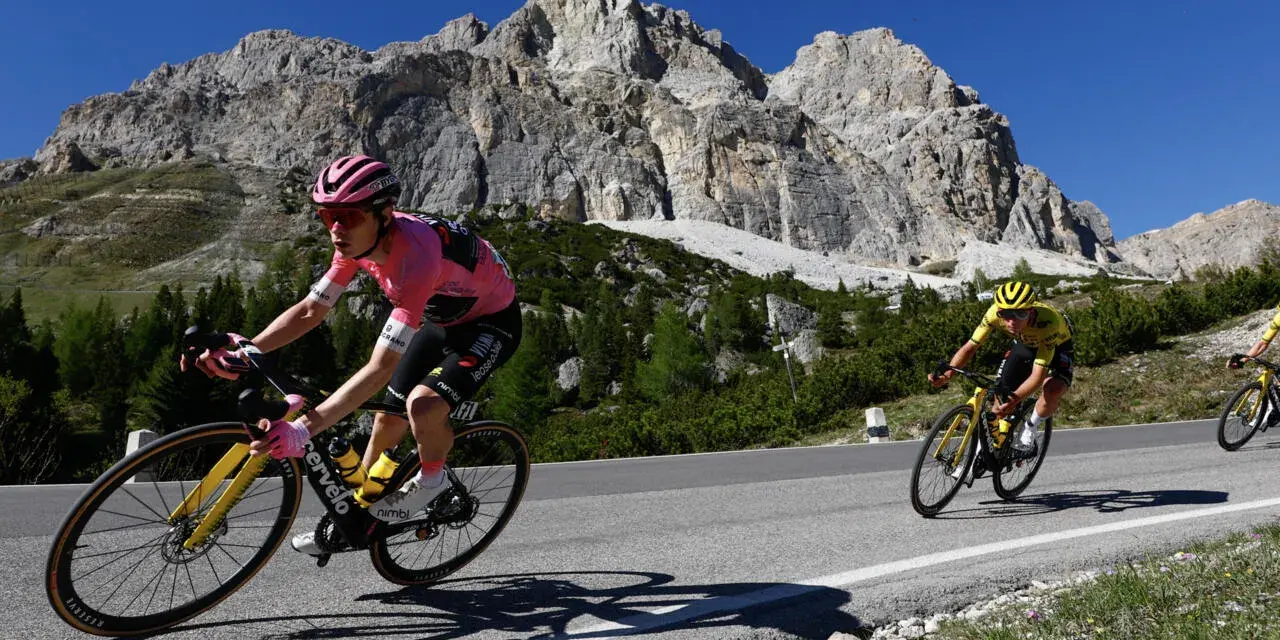
The 2026 Giro d'Italia ended with Jonas Vingegaard in pink, and that is the direct answer most readers want. What makes the result worth a closer look is how he won it: through repeated pressure in the mountains, a calm grip on the general classification, and the kind of consistency that separates a Grand Tour winner from a stage hunter. I’d read this edition as a clear example of why the Giro rewards riders who can keep delivering for three weeks.
The result and the context that matter most
- Jonas Vingegaard won the 2026 Giro d'Italia.
- He became the first Dane ever to win the race, which is a genuine milestone for cycling history.
- Pro Cycling Stats lists Felix Gall second and Jai Hindley third, with Vingegaard finishing 5:22 ahead of Gall.
- The 2026 route covered 21 stages, 3,466 kilometers, and 49,150 meters of elevation gain.
- This was a climber’s Giro, which explains why the final general classification opened up in the mountains.
The 2026 result in plain English
For the 2026 edition, the winner was Jonas Vingegaard. According to the Giro d'Italia, his victory made him the first Dane ever to win the race, and that alone gives the result historical weight. Pro Cycling Stats shows the final podium as Vingegaard, Felix Gall, and Jai Hindley, which tells you something important: this was not a race won by seconds in a sprint finish, but by sustained pressure over the hard days.
If I reduce the whole race to one sentence, I would say this: Vingegaard was the strongest rider when the road pointed upward and the fatigue started to accumulate. That is usually how a modern Grand Tour is decided, and it is why the next question is not just who won, but how he created the gap that held through Rome.
How he built the winning gap on the road
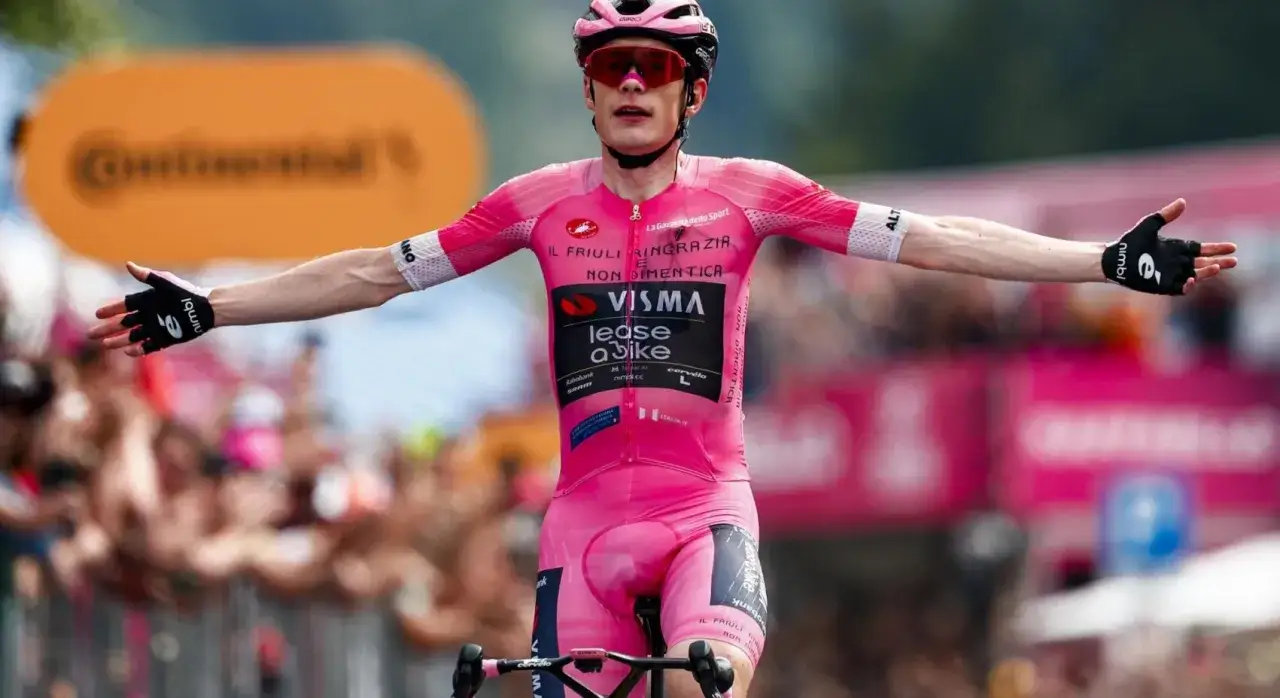
The most useful way to understand a Giro win is to think in terms of general classification, or GC, which simply means the overall standings rather than a single stage result. The maglia rosa, the pink jersey worn by the GC leader, is the symbol everyone chases for three weeks, and Vingegaard steadily turned the race into his kind of contest. He did not need to win every day; he needed to be the rider who kept finding time on the decisive climbs.
What stood out to me in this edition was the pattern rather than one dramatic moment. Mountain stages matter because they expose every weakness at once: climbing power, pacing, recovery, and team support. When a rider can repeat strong performances on summit finishes, the rest of the field has to take risks, and that is when time gaps start to grow. The final margin of 5:22 over Felix Gall shows that this was a controlled victory, not a lucky one, and that kind of control usually comes from good positioning, disciplined effort, and a team that keeps the leader protected when the race gets chaotic.That brings us to the route itself, because the design of the course made this kind of winning ride much more likely.
Why the route mattered so much
The 2026 Giro was built like a test for complete stage racers. It ran over 21 stages, stretched 3,466 kilometers, and included 49,150 meters of elevation gain, plus just one 40.2-kilometer time trial in Tuscany. In practical terms, that means the route asked riders to survive a lot of climbing and only a limited amount of pure against-the-clock racing. For a rider with Vingegaard's climbing engine, that is a favorable balance.That course profile matters because not every Grand Tour rewards the same skill set in the same way. A flatter route can keep more riders in contention deeper into the race, while a mountain-heavy Giro puts a premium on recovery and repeatability. A strong sprinter can still win stages, but the overall winner usually has to be a rider who can stay efficient on long climbs, limit losses in the time trial, and recover fast enough to repeat the process the next day. In 2026, the route made those traits decisive.
When I look at a Giro like this, I do not see a race that can be won by one brilliant afternoon. I see a race that slowly strips away options until only the best climber is left standing, which is exactly why the recent winners tell a revealing story.
Recent winners show the same pattern at the top
The last few editions have not been random at all. They have consistently rewarded riders who can climb, manage effort, and stay composed when the race gets ugly. That is why Vingegaard's win fits neatly into the recent history of the event.
| Year | Winner | What defined the victory |
|---|---|---|
| 2026 | Jonas Vingegaard | Repeated mountain pressure and total GC control |
| 2025 | Simon Yates | Balanced climbing and steady race management |
| 2024 | Tadej Pogačar | All-round dominance across mountains and time trials |
| 2023 | Primož Roglič | Late-race resilience and climbing strength |
| 2022 | Jai Hindley | Deep climbing form and consistency under pressure |
The takeaway is simple: the Giro has recently favored riders who can win the hard days and survive the rest. That is not a coincidence. It is a reminder that modern Grand Tours are rarely won by the flashiest rider; they are won by the one who can stay close to perfect when the race repeats the same stress over and over again.
Once you see that pattern, the final question becomes less about this single result and more about what it teaches anyone who follows road cycling closely.
What this victory says about modern stage-race winning
If I were using this result as a lesson for a cyclist or a serious fan, I would focus on three things. First, the Giro still rewards sustained climbing more than short bursts of power. Second, recovery between stages matters almost as much as raw fitness, because the riders who fade after one bad day often lose more than a minute by the end of the week. Third, equipment and tactics matter, but they do not replace legs that can produce the same quality effort on consecutive mountain days.
- For racers, the takeaway is that threshold climbing, fueling, and fatigue management decide more GC battles than one spectacular attack.
- For fans, the most important stage is often not the loudest sprint finish but the summit day where the top contenders start trading seconds.
- For travelers, the Giro is usually most dramatic in the mountains, so if you ever plan to watch it live in Italy, target the high-altitude stages first.
- For training-minded riders, back-to-back endurance sessions and long climbs at controlled intensity will usually tell you more about stage-race readiness than isolated sprint work.
That is why Vingegaard's 2026 win feels bigger than a single line in a results sheet. It is a clean example of how a modern Grand Tour is actually won: not by one perfect move, but by being the strongest rider on the days that matter most, and by staying strong when everyone else starts to accumulate damage.