Patrick Lefevere is one of the defining team managers of modern road cycling. His career matters because it shows how a team can be built around a clear identity, disciplined recruitment, and a repeatable race philosophy rather than a single superstar.
This article breaks down his background, the structure he created at Soudal Quick-Step, what made his approach effective, and what his retirement at the end of 2024 means for the sport in 2026.
The essential takeaways on Lefevere’s place in road cycling
- He was both a former racer and a long-time team boss, which gave him a practical feel for how road racing actually works.
- He founded Soudal Quick-Step in 2003 and helped turn it into one of the most successful teams in the sport, with more than 1,000 UCI victories.
- His strongest idea was identity: the team was built around the Wolfpack mentality, not just around individual riders.
- He excelled in Classics, sprint wins, and stage races, where structure and timing matter as much as raw talent.
- He became a controversial public voice because he was unusually direct about riders, races, and the direction of the sport.
- As of 2026, he is no longer the day-to-day CEO, but his influence still shapes how many fans talk about team management in cycling.
Why Patrick Lefevere became such a big name in the peloton
What makes Lefevere interesting is that he was never just a backroom executive. He was a racer in the 1970s and early 1980s, then a sports director and manager who learned how to turn racing knowledge into a business model. According to Soudal Quick-Step’s own team history, he founded the team in 2003 and combined cycling insight with an accountant’s understanding of economics and structure.
That combination matters. In road cycling, especially at WorldTour level, success is not only about the strongest legs on the start line. It is about contracts, sponsorship, race calendars, support staff, and knowing which riders can deliver in very specific roles. Lefevere understood that before it became fashionable to talk about “performance systems.” Under his guidance, the team grew into a giant of the sport, with more than 1,000 UCI wins, 22 Monuments, and a reputation that stretched well beyond Belgium.
He also had real racing credibility. He won Kuurne-Brussels-Kuurne and a stage of the Vuelta a España in 1978, which gives his later management career extra weight: he knew the demands of the road from the inside, not just from a boardroom. That foundation helps explain why his next move was not simply to manage riders, but to build a team culture that could survive for decades.
That leads directly to the part of his career that most fans remember best: the Wolfpack identity and the system behind it.
The Wolfpack model was a management system, not just a nickname
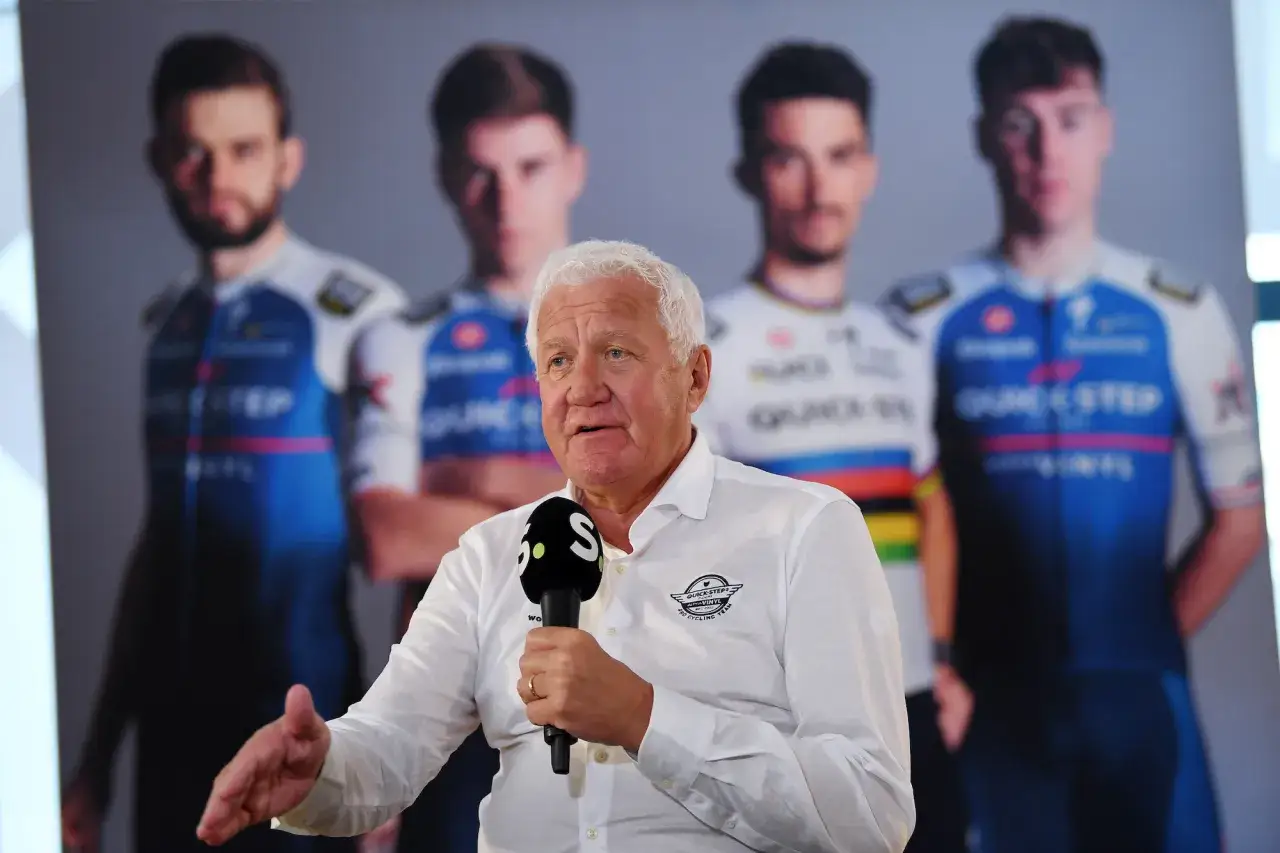
People often reduce Lefevere’s legacy to a slogan, but the Wolfpack was more than branding. It was a practical way of organizing a team so that riders, staff, and management were aligned around the same racing logic. Soudal Quick-Step’s own description of the team emphasizes loyalty, long-serving staff, and a collective mentality. In a sport where rosters turn over quickly, that kind of continuity is rare.
What I find most useful about this model is that it was simple enough for riders to understand immediately. You knew the team’s style before you signed. You knew the expectations. You knew that the team wanted to race aggressively, protect leaders, and create numerical advantage in the moments that matter. That clarity is underrated. A lot of teams talk about identity; Lefevere’s teams usually had one.
| Area | Lefevere’s typical approach | Why it mattered |
|---|---|---|
| Recruitment | Signed riders who could fill a defined role, not just big names. | Made race plans easier to execute and reduced confusion on the road. |
| Team culture | Built loyalty, continuity, and a strong internal hierarchy. | Helped the squad stay stable across long seasons and roster changes. |
| Race selection | Focused heavily on Classics, sprint stages, and targeted opportunities. | Matched the team’s strengths instead of chasing every possible objective. |
| Performance logic | Mixed experienced winners with specialists and developing riders. | Created depth rather than dependence on one leader. |
| Communication | Used direct, sometimes blunt public messaging. | Brought clarity, but also occasional friction with riders, rivals, and organizers. |
The scale of the organization reinforced that model. By 2026, the team had 30 riders from 9 countries, a men’s Devo team, a Junior team, and around 90 staff members. That is not accidental growth; it is the result of a structure that tries to keep the same identity at every level.
Once that identity was in place, the results on the road became easier to recognize.
How his teams won on the road
Lefevere’s teams were not built to win every classification in every race. They were built to win the races that fit their strengths. That is an important distinction for anyone trying to understand road cycling at a serious level. Success can come from dominance in one area, from consistency across many areas, or from a narrow but highly efficient win profile. His teams usually leaned toward the third option.
The best examples were the Classics. These are the one-day races that sit at the heart of European road cycling, and the biggest five are known as the Monuments. Lefevere’s teams were consistently dangerous there because they combined power, positioning, and tactical precision. They also won a lot of sprint races and stage finishes, where a disciplined lead-out train and the right timing can matter more than raw climbing ability.
- Classics were a natural fit because the team prized aggression, positioning, and collective work.
- Sprint stages suited a team that could organize support riders around one fast finisher.
- Grand Tour stages gave the squad flexibility, even when it was not chasing overall victory.
- Time trials and team time trials rewarded the same organization and discipline that defined the broader project.
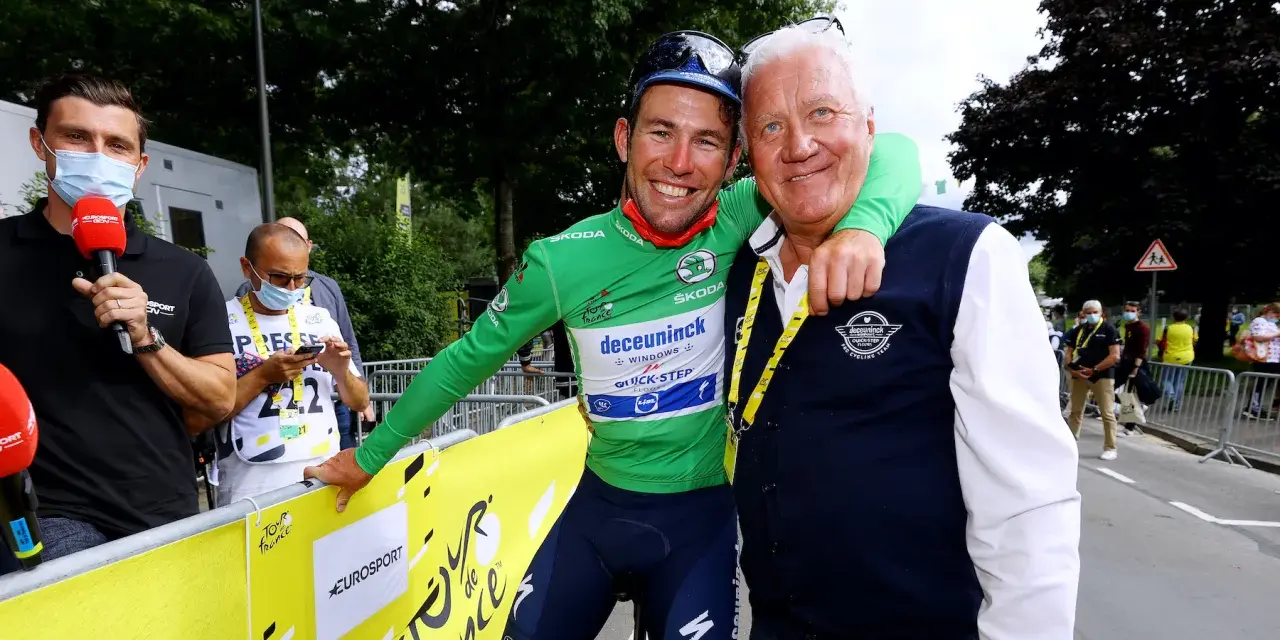
He also managed some of the sport’s best-known riders, including Tom Boonen, Mark Cavendish, Julian Alaphilippe, Tony Martin, and Remco Evenepoel. Those names matter not just because they are famous, but because they show the breadth of his model. He could work with cobbled Classics specialists, pure sprinters, time trialists, and riders with Grand Tour ambitions. That is harder than it looks.
In practical terms, his success was built on one simple truth: if you know what kind of wins you are chasing, you can build a team to chase them very well. The next question is what happened when that directness became a liability as well as an advantage.
The trade-offs behind his direct style
Lefevere’s public image was always sharper than that of many team bosses. He spoke plainly, criticized race organizers when he thought routes were wrong, and did not hide frustration when riders or rivals made decisions he disliked. That kind of honesty can be refreshing. It can also create tension. In cycling, where relationships among teams, sponsors, riders, and media are constant, a blunt voice can harden into a brand of its own.
I would frame the upside and downside like this: directness gives a team a clear center of gravity, but it can also make the environment feel more confrontational than collaborative. That is fine when results are flowing. It is less comfortable when results slow down, or when a star rider wants more independence. The modern peloton gives top riders more leverage than it once did, so the old top-down model is under more pressure than it used to be.
This is why his relationship with high-profile riders has often drawn attention. When a manager is as visible as the riders, every disagreement becomes part of the team’s public identity. That does not automatically make the manager wrong. It just means the cost of candor is easier to see.
He was also not isolated from the wider health of the sport. The UCI included him in a road-racing safety working group, which shows that his influence extended beyond one team’s locker room. Even when people disagreed with him, they still tended to treat him as someone whose opinion mattered. That influence did not disappear when he stepped down from day-to-day control.
What changed is the form that influence takes now.
What changed after his retirement at the end of 2024
At the end of 2024, Lefevere retired as CEO of Soudal Quick-Step and became an honorary member of the team’s executive board. Since the beginning of 2025, Jurgen Foré has been running the team on a day-to-day basis. That is a meaningful shift, because it separates long-term identity from daily operational control.
For the team, this matters in a few ways. First, it reduces dependence on one personality. Second, it forces the organization to prove that the culture was bigger than the man who built it. Third, it changes how the outside world reads the team. The same team name is still there, but the tone is different when the legendary boss is no longer the one making the daily calls.
He is still around the races and still willing to speak his mind, but now he does so more as a veteran observer than as the final authority. That is a subtle but important difference. It means fans should expect the same opinions, but not the same kind of power behind them.
That shift also makes 2026 especially interesting for road cycling readers. The team has had to evolve beyond the era in which one figure could shape every major decision, and that is the final lesson worth taking from his career.What his legacy teaches teams, riders, and fans
If I had to reduce Lefevere’s career to a few practical lessons, I would keep them very concrete. He showed that team identity can be a competitive weapon, that roster construction matters as much as talent, and that a cycling team becomes more durable when its culture is strong enough to outlive a single season or a single rider.
- For team managers, the lesson is to build around roles and clarity, not slogans.
- For riders, the lesson is that the best teams make your job easier by defining it well.
- For fans, the lesson is that road cycling is shaped by organization as much as by watts.
- For anyone studying the sport, the lesson is that personality matters, but systems matter more.
My own read is that Lefevere’s best quality was not simply winning, but knowing what kind of winning he wanted. That sounds obvious until you look at how many teams chase too many goals at once. His teams usually knew who they were, which races fit them, and how they wanted to race those events. That clarity is why his influence still shows up whenever people talk about the modern structure of a pro cycling team.
In 2026, that is the most useful way to think about Patrick Lefevere: not as a nostalgic figure from cycling history, but as a case study in how a road cycling team can build identity, stay competitive for years, and still leave room for the next generation to take over.