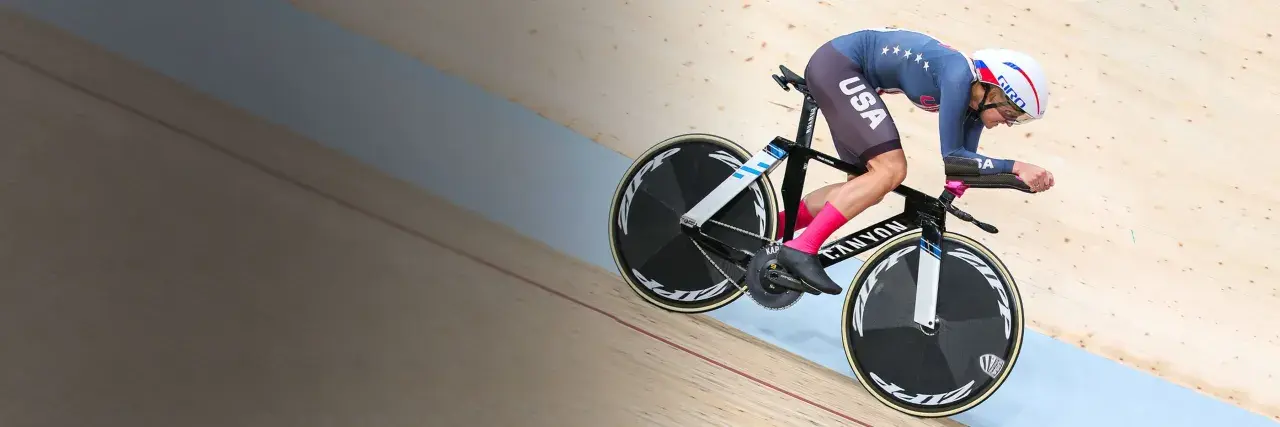
A track cyclist learns to race in a very different environment from the open road: a fixed gear, a banked velodrome, and speeds that demand sharper timing than most riders expect. For road cyclists, that difference is exactly why the track matters, because it builds acceleration, bike handling, sprint discipline, and race intelligence in a way long outdoor miles usually do not. This article breaks down what the discipline actually involves, how it compares with road racing, what to ride, and how to start without wasting time or money.
What a road cyclist needs to know before stepping onto the boards
- Track racing is built around fixed-gear bikes, banked turns, and very short decision windows.
- The biggest gains for road riders come from acceleration, cadence control, positioning, and tactical awareness.
- Different events reward different rider types, from pure sprinters to endurance specialists.
- Bike setup matters, but beginner-friendly coaching and safe technique matter even more.
- In the United States, local velodromes and sanctioned race calendars make it possible to start with clinics and training nights.
What track racing really asks of the rider
On the track, the bike never coasts and the rider never gets to hide from the basics. You are always managing cadence, line choice, and position because there are no brakes to lean on and no freewheel to smooth out mistakes. The environment is controlled, but the racing is not: even a short event can turn on one poor line through a corner or one delayed acceleration out of the saddle.
The modern program is broader than many road riders expect. At the highest level, the event mix includes sprint, keirin, team sprint, team pursuit, individual pursuit, omnium, madison, scratch, points race, elimination, and time trial variants. The UCI still treats track racing as a discipline where raw power and tactical precision matter at the same time, which is why the best riders tend to be technically tidy as well as physically strong.
That combination is the first thing I tell road riders to respect: track racing is not just "short road racing." It is a different skill set, and once that clicks, the rest of the sport becomes easier to read. From there, the natural question is how those demands compare with the road.
Why road cyclists benefit from a few hours on the boards
Track work transfers unusually well to road cycling because it forces cleaner habits. When you are chasing a wheel, launching from a standing start, or holding speed through a banked bend, there is nowhere to waste movement. That is why track sessions often sharpen a rider faster than an extra block of generic intervals.
| Aspect | Road cycling | Track cycling | What it changes for training |
|---|---|---|---|
| Environment | Open roads, traffic, wind, stops | Controlled velodrome, fixed line | Less chaos, more precision |
| Bike | Multiple gears, freewheel, brakes | Fixed gear, no coasting, usually no brakes | Cadence control becomes a core skill |
| Race rhythm | Longer, more variable effort pattern | Explosive bursts, tight tactics, repeated accelerations | Sprinting and recovery improve quickly |
| Positioning | Drafting matters, but errors are easier to absorb | Small mistakes cost speed immediately | Pack awareness gets much sharper |
| Endurance value | Primary performance driver in many events | Important, but often secondary to power and timing | Road fitness helps, but it is not enough on its own |
The important caveat is that track work is not a substitute for every road need. If you race stage events, long fondos, or hilly classics-style rides, you still need aerobic volume and climbing durability. I see the best results when riders use the track to improve top-end execution, then bring that sharper speed back to road racing. That leads naturally to the question of which event types suit which riders.
Which track events suit different rider types
Not every rider needs to specialize immediately. In fact, the smartest approach is usually to match the event to your natural strengths and then build from there.
Sprinters and criterium riders
If you already like short, violent efforts, sprint, keirin, and team sprint are the obvious entry points. These events reward explosive power, fast decision-making, and the ability to hit very high speed without wasting motion. A criterium rider often adapts well here because the repeated accelerations feel familiar, even if the pace and line discipline are different.
Pursuiters and diesel engines
Riders with strong sustained power often gravitate toward individual pursuit or team pursuit. These events still demand speed, but they reward a more controlled effort profile and a deep ability to hold tempo under pressure. If you are the kind of road rider who can sit on a hard pull for a long time and keep producing clean power, this lane may feel natural.
Read Also: Road Cycling for Beginners - Start Strong & Ride Further
All-rounders and tactical riders
Omnium, points race, elimination, and madison suit riders who can read a race quickly and survive repeated changes in rhythm. These events are less about one perfect power number and more about staying calm when the race shape changes. I often recommend them to riders who like pack racing and want to build intuition, because the tactical learning curve is steep but useful.
That event fit matters because it affects the bike setup, the training emphasis, and even the gear choice you should start with. From there, the next step is making sure your equipment does not fight you.
How to set up your first track bike and kit
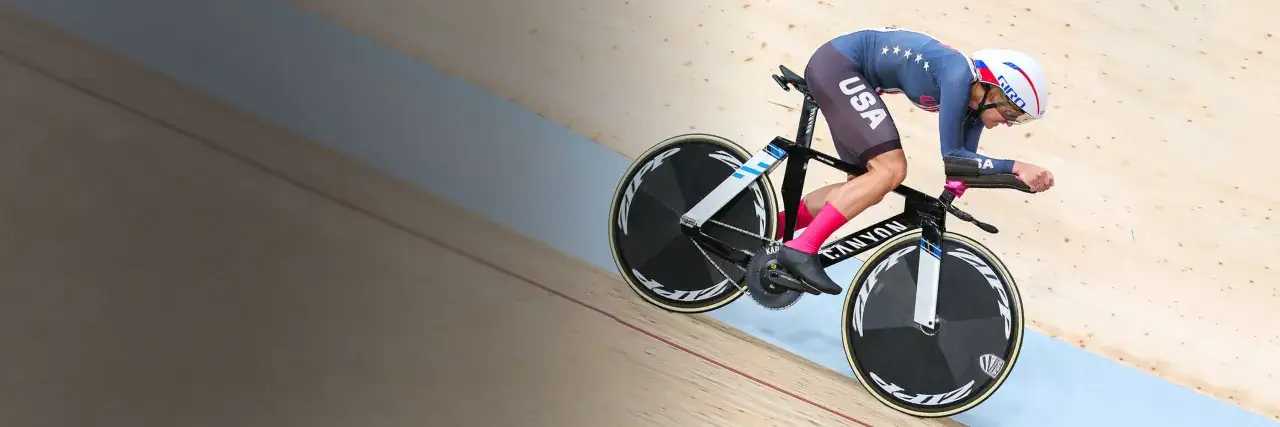
A track bike is simple in the best possible way. It uses a fixed gear, so the rear wheel is always connected to the cranks, and it is usually built without brakes. That simplicity removes clutter, but it also means the setup has to be right from the start, because you cannot rely on mechanical forgiveness when you make a mistake.
For a first session, I would prioritize comfort, control, and repeatability over a race-day setup. The common beginner mistakes are running too big a gear, choosing a position that is too aggressive, or treating the first bike fit like a one-time formality. A slightly easier gear and a stable position will teach you more than an ambitious setup that leaves your legs cooked after two efforts.
- Helmet should fit securely and not shift when you look over your shoulder.
- Shoes and pedals should feel predictable during starts and standing accelerations.
- Shorts or skinsuit should be close-fitting enough to avoid drag and irritation.
- Bar and saddle position should let you spin smoothly without feeling cramped.
- Gear choice should be manageable enough to accelerate repeatedly, not just once.
In practice, many velodromes also make the first step easier by offering rentals, introductory sessions, or coached novice nights. According to USA Cycling, the U.S. track calendar is active enough to connect local velodromes with higher-level racing, which means a rider can move from practice to competition without a long dead end. Once the setup is sorted, the real work becomes training the right qualities.
How to train for speed without losing endurance
The trap for road riders is thinking that every good session has to feel like a road workout. Track racing rewards a different mix: very high-quality bursts, complete recoveries between those bursts, and enough aerobic base to repeat effort after effort. If you try to brute-force the track with tired legs and messy pacing, the session usually becomes noisy instead of productive.
A simple weekly structure works well for many riders who split time between road and track:
- One technical session focused on starts, line holding, and smooth cornering.
- One high-intensity session with maximal sprints or short pursuit-style efforts.
- One aerobic ride on the road to protect endurance.
- One recovery day with very light spinning or complete rest.
For the hard work, I like short efforts with full recovery. Think of efforts measured in seconds rather than minutes when the goal is pure speed, and leave enough recovery to make the next repetition truly fast. That matters because track speed is built from repeatable quality, not from half-dead repetitions that blur together.
Technique work also deserves its own space. Standing starts, smooth exits from the gate, and controlled flying laps are not glamorous, but they are often the difference between looking strong and actually being fast. If you understand that, the common beginner mistakes become easier to avoid.
The mistakes I see most often in new riders
Most first-timers do not fail because they are weak. They lose time because they are tense, impatient, or trying to force the race into a road-cycling shape that the track does not support.
- Overgearing too early makes acceleration clumsy and tires the legs before the race starts.
- Looking down instead of through the turn breaks balance and line control.
- Riding too high or too low on the banking creates unnecessary risk and steals speed.
- Soft pedaling a fixed gear between efforts teaches bad rhythm and poor connection to the bike.
- Chasing the race like a road breakaway wastes energy when patience would work better.
- Skipping warm-up is expensive, because track events demand sharp output almost immediately.
The deeper pattern behind those mistakes is simple: riders try to impose road habits on a discipline that punishes hesitation and sloppy control. Once you accept that the track has its own logic, the learning curve becomes much cleaner. The last step is knowing how to get involved without overcomplicating the process, especially in the United States.
How to start racing in the United States
The easiest entry point is still the local velodrome. Find the nearest venue, show up for a beginner clinic or public session, and spend the first few visits learning the surface, the banking, and the pace of the place. That order matters more than buying equipment first, because confidence on the track comes from repetition and supervision, not from shopping.
In 2026, USA Cycling's track calendar gives American riders a clearer path from local practice to sanctioned competition. That is useful because it means the sport is not limited to a handful of elite venues; there are organized opportunities for developing riders, juniors, masters, and serious amateurs who want a structured season. If your local scene is active, you can often race before you feel fully ready, which is how learning actually happens.
My practical advice is to start with three commitments: one clinic, one coached session, and one low-stakes race or training event. That sequence keeps the risk low while giving you enough exposure to learn whether the discipline suits your body and temperament. After that, you can decide whether you want to stay a road-first rider who uses the track for sharpening, or build a more complete velodrome program around it.
The transfer that matters most when the race starts
The real value of track work is not just speed. It is the habit of making cleaner decisions under pressure, which is why so many road riders come away from the boards with better sprint timing, better pack awareness, and a calmer sense of how to move their bike. Those gains show up in criteriums, town-line sprints, lead-outs, and even in the middle of a long road race when positioning suddenly matters.
If I had to reduce the whole topic to one sentence, it would be this: the track teaches you to turn power into speed with less waste. That is the kind of advantage that translates across disciplines, and it is why a few disciplined sessions in a velodrome can be more useful than another block of unfocused volume.
For road cyclists in the United States, the smartest path is usually to start small, learn the line, respect the fixed-gear demands, and build from there. Do that well, and the track stops feeling like a separate sport and starts becoming one of the best tools in your training.