Wout van Aert’s latest crash became a much bigger story than a single training fall. The elbow injury itself was manageable at first, but the wound later infected, he was forced out of the Tour Auvergne-Rhône-Alpes, and Visma-Lease a Bike had to rethink its whole Tour de France build-up. Here I break down what happened, how the recovery unfolded, and what serious road cyclists can learn from the way the team handled it.
These are the key facts from Van Aert’s latest crash and recovery
- Van Aert crashed in training on his time trial bike before the Tour Auvergne-Rhône-Alpes.
- The elbow injury worsened when infection developed in the wound, turning a normal crash report into a medical problem.
- He still won stage 5 of the warm-up race, then abandoned on stage 6 when the damage became too disruptive.
- Team Visma | Lease a Bike ruled him out of the 2026 Tour de France and chose recovery over a rushed return.
- By late June 2026, he was back on the bike in a charity ride, but his next race target was still uncertain.
- The broader lesson is simple: in road cycling, the crash is only the first event; what happens to the wound after that often decides the season.
What happened in Van Aert’s latest crash
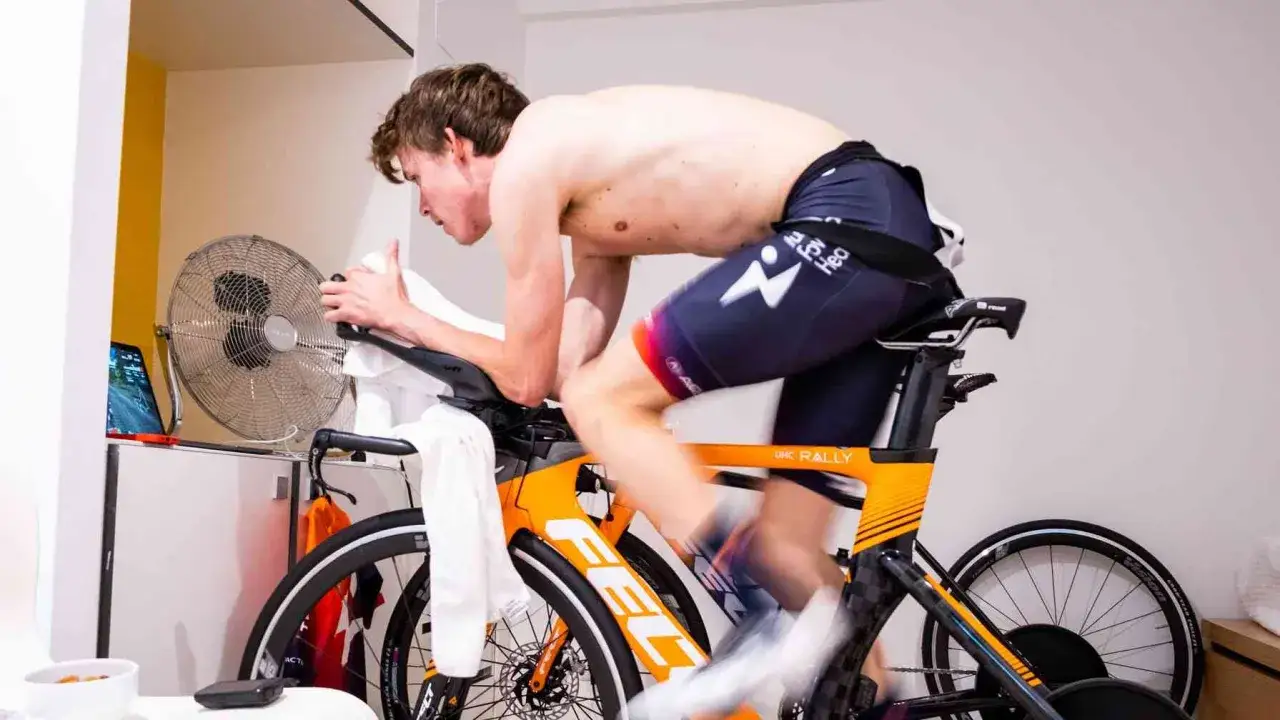
Van Aert fell in training before the Tour Auvergne-Rhône-Alpes, using a time trial bike at the wrong moment and in the wrong place, which is often how these incidents happen. The initial damage centered on his elbow, but the story did not stay that simple for long. He lined up anyway, won stage 5, and then had to stop on stage 6 when the injury stopped cooperating.
| Stage | What happened | Why it mattered |
|---|---|---|
| Training before the race | He crashed and injured his elbow | The wound became the starting point for the later withdrawal |
| Early race days | He kept racing and still won stage 5 | That suggested the problem was survivable, not solved |
| During the event | The wound became infected | The injury shifted from painful to medically serious |
| Stage 6 withdrawal | He abandoned the race | His Tour de France build-up took a major hit |
| Late June 2026 | He returned to a 67.6 km charity ride at 30.6 kph | Recovery was moving forward, but race readiness was still different from fitness |
I read that sequence as a reminder that a crash report on day one rarely tells the whole story. The immediate damage can look manageable, but the real problem often shows up later, once swelling, movement, and wound care start to expose the weak point. That is why the medical part mattered so much, which leads straight into the withdrawal itself.
How the elbow wound turned into a Tour de France withdrawal
Once the wound became infected, the issue stopped being about discomfort and became about risk management. According to Team Visma | Lease a Bike, Van Aert had not recovered enough to start the Tour at the required level, and the team decided that full recovery had to come first. He also spent one night under observation in hospital, and the wound was cleaned surgically, which tells you how seriously the team treated the situation.
That choice makes sense to me. A rider can sometimes race through pain, but infection is a different category altogether. It can drain recovery, disrupt sleep, limit training, and turn every hard effort into a setback. In practical terms, the team was not just protecting one race result; it was protecting the rest of his season. By late June, he had already returned to the bike in a group charity ride near Herentals, which was a good sign, but it was still a long way from being Tour-ready.
This is the part casual fans often miss: in road cycling, the difference between being able to ride and being able to race is enormous. One point leads to the next, and the calendar does not wait, which is why the earlier crashes matter too.
Why earlier crashes make this story feel bigger
Van Aert is not dealing with a one-off accident. He has had a string of hard falls, and that changes the way both fans and teams read every new setback. The 2024 Dwars door Vlaanderen crash broke his collarbone and several ribs, ending his spring Classics campaign in one shot. Later in 2024, another crash in the Vuelta left him with knee trauma and cuts, which cut into his season again.
| Crash | Main damage | Immediate sporting effect | Longer tail |
|---|---|---|---|
| Dwars door Vlaanderen 2024 | Broken collarbone and several ribs | Missed Tour of Flanders, Paris-Roubaix, and Amstel Gold Race | His spring targets collapsed at the peak of the Classics season |
| Vuelta a España 2024 | Deep cuts and knee trauma | Season ended early | Added another physical and mental layer to the year’s setbacks |
| Training crash in 2026 | Elbow injury that became infected | Missed the Tour de France | Recovery became more important than race selection |
Cycling Weekly later noted that Van Aert spoke openly about the mental toll of those 2024 crashes, saying he found it harder to race boldly because he was thinking about falling again. That matters because road cycling is not just physical damage plus healing time; it is also confidence, positioning, and the willingness to commit when the bunch is moving at full speed. Once that changes, the team consequences become much easier to understand.
What it cost Visma-Lease a Bike and Jonas Vingegaard
Van Aert is one of those riders who changes what a team can do on a given day. He can close gaps, protect a leader in crosswinds, do hard pull work, and still deliver elite sprint power if the finish comes down to a reduced group. In practical terms, that makes him more than a helper; he is a tactical multiplier. Losing him from the Tour de France lineup meant Visma-Lease a Bike lost flexibility, not just a name on a list.
For Jonas Vingegaard, the impact is obvious. A Tour squad is built around trust and repetition, and a rider like Van Aert gives a team options in the nervous first week, the transition days, and the moments when a stage is won or lost on positioning alone. Without him, the team has to redistribute work, and that usually means others spend more energy earlier in the race. I would call that a quiet but significant loss, because it affects how the whole squad manages stress before the mountains even begin.
That is why this crash mattered beyond Van Aert himself. The damage spread outward into tactics, selection, and the kind of control a Grand Tour team can realistically expect.
What road cyclists can learn from the recovery process
If I translate Van Aert’s case into everyday road cycling, the lesson is not “crashes are inevitable.” It is that the aftermath deserves the same attention as the fall. A wound on an elbow, knee, or shoulder that looks tolerable at first can become a much bigger issue once infection, swelling, and repeated movement enter the picture.
- Clean the wound immediately and keep a close eye on it for heat, redness, swelling, or increasing pain.
- Do not treat a ride as proof of recovery; being able to pedal does not mean the tissue is ready for hard effort.
- Back off quickly if symptoms change, because infection and inflammation usually punish delay.
- Return in steps: easy spinning, then controlled work, then group riding, then racing.
- Keep basic first-aid supplies close, especially if you train far from home or on roads where a crash can leave you with dirt in the wound.
I would also add one gear note that gets overlooked: fit matters. A position that is too stretched or too aggressive can make it harder to protect an injured arm or shoulder after a fall, especially on a time trial bike where the body is already committed forward. That does not prevent crashes, but it can influence how badly you absorb them and how easily you return to the bike afterward. Those small details are often the difference between a short interruption and a lost month.
Why the real lesson is about risk management, not luck
Van Aert’s crash story is not just a tale of bad fortune. It shows how quickly one training fall can turn into a race withdrawal, then a team selection problem, and finally a confidence issue that can linger well beyond the original injury. The headline is the crash, but the real story is the chain reaction that follows it.
- One wound can be more damaging than the impact itself.
- Racing through the problem is not always bravery; sometimes it is the wrong trade.
- Recovery is faster when the first response is disciplined instead of optimistic.
For me, that is the most useful takeaway from this episode. In road cycling, the smartest comeback is rarely the fastest one. It is the one that respects the injury, avoids turning a simple fall into a bigger medical problem, and leaves enough margin to race hard again when the body is actually ready.