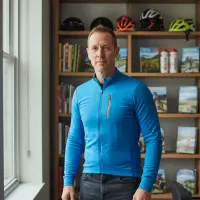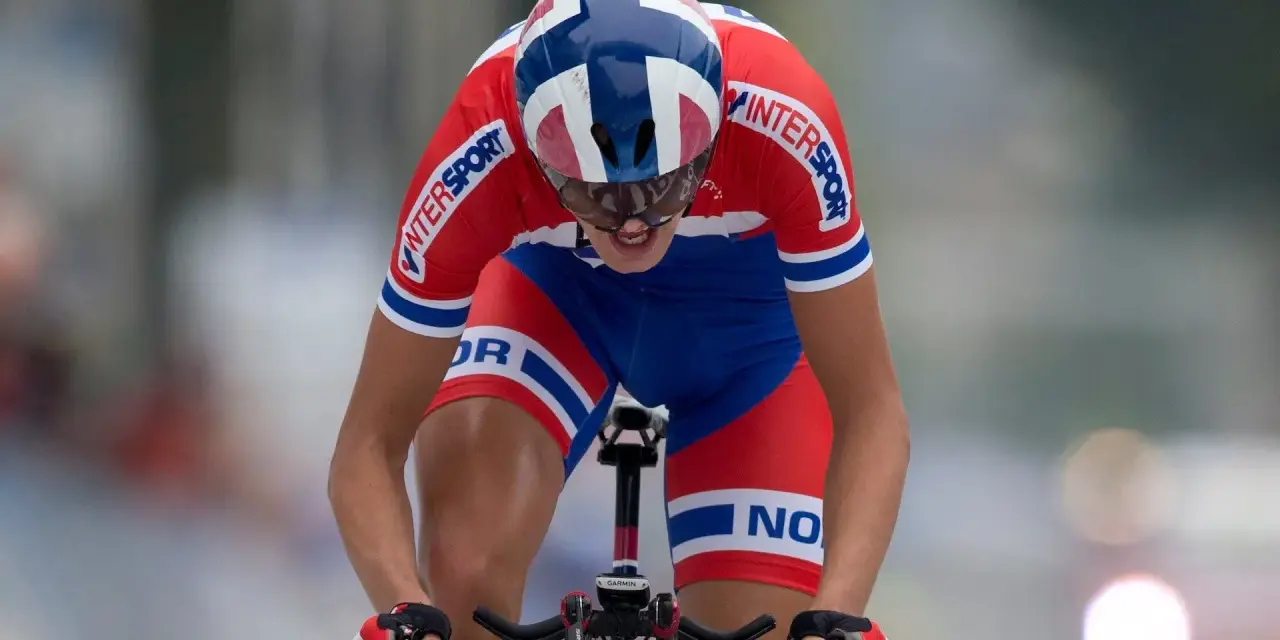
Oskar Svendsen remains one of road cycling’s most unusual cases: a junior world time trial champion with an extraordinary aerobic engine who still walked away from the sport before his career fully settled. What makes his story useful is not the trivia, but the contrast between raw physiology, racecraft, motivation, and the realities of living like a pro. That is the part cyclists, coaches, and fans can actually learn from.
Key facts that frame his place in road cycling
- He was a Norwegian former road cyclist who became junior world time trial champion in 2012.
- His recorded VO2 max of 97.5 ml/kg/min is still one of the most striking numbers in endurance sport.
- He turned professional with Team Joker and showed promise, including a strong Tour de l’Avenir ride.
- He left the sport in 2014, not because the talent was missing, but because the lifestyle did not fit.
- As of 2026, he lives in Oslo, works outside racing, and still stays active on the bike and in other sports.
- His career is a reminder that laboratory data is only one part of becoming a successful road racer.
Why this Norwegian time trial talent still matters
The reason his name keeps resurfacing is simple: he looked like the kind of rider teams dream about. He had the physiological ceiling, the early results, and the kind of junior title that usually points toward a long professional career. On paper, the path seemed obvious. In reality, he became a much better lesson than a template.
As a former alpine skier from Lillehammer, he had not spent his childhood doing the usual slow buildup that most road pros follow. He only started cycling a few years before his breakthrough, yet he adapted quickly and looked unusually efficient in hard efforts. That combination made him feel like a future GC rider or time trial specialist, which is exactly why his early exit still surprises people today.
What makes the story valuable now is that it strips away a common myth in cycling: that a huge engine automatically becomes a huge career. It does not. The next section shows why the numbers made people pay attention in the first place, but also why they were never the whole story.
The numbers that made the cycling world pay attention
Svendsen’s reputation rests on a handful of numbers that are hard to ignore. The most famous is his VO2 max of 97.5 ml/kg/min, a lab result that still sits at the extreme end of what has ever been recorded in an endurance athlete. VO2 max is the maximum rate at which the body can take in and use oxygen during hard exercise, so it gives a rough view of aerobic ceiling, but not of race winning ability by itself.
| Marker | Why it mattered | What it did not guarantee |
|---|---|---|
| 97.5 ml/kg/min VO2 max | An almost unmatched aerobic ceiling | Pack skills, tactics, or mental resilience under pressure |
| Junior world time trial title | Proof that the engine translated into results | That the same form would survive the move to elite racing |
| Strong Tour de l’Avenir ride | Hinted at stage-race potential | Consistency across a full pro calendar |
| Reported FTP above 400 watts | Showed WorldTour-level sustained output | Whether he wanted the lifestyle that comes with elite racing |
Those numbers explain the hype, but they also create a trap. When people talk about talent in cycling, they often stop at physiology because it is measurable and easy to compare. In road racing, though, the rider who survives positioning, heat, pressure, and repeat racing days is usually the rider who lasts. That is where his story turns from impressive to instructive.
Why the pro career never became a long run
His move into the pro ranks was real, not symbolic. He signed with Team Joker and entered the sort of Continental-level racing where the margins get smaller and the demands get less forgiving. Results were mixed. He had flashes of quality, but also the kind of rough days that expose how much more there is to elite racing than power output.
That is the part many fans miss. A rider can have world-class aerobic capacity and still struggle when the race becomes a tactical mess, a heat test, or a repeated-attack survival exercise. A time trial rewards steadiness and pacing. A stage race, especially at under-23 and Continental level, asks for much more: positioning, stress tolerance, recovery, bike handling, and the willingness to keep coming back after a bad day.
His own explanation for stepping away was not dramatic. He simply did not want to commit his entire twenties to the pro lifestyle. To ride at that level, you are usually buying into the sport fully: long training hours, strict routines, travel, race stress, and very little room for a second identity. He decided that trade-off was not worth it.
That decision makes sense to me. Talent is valuable, but so is fit between the athlete and the life the sport requires. The next section turns that idea into something more practical for anyone training on the road today.
What road cyclists can learn from his career
If I were reducing his story to a coaching note, I would write this: train the whole rider, not just the engine. That sounds obvious, but most amateurs still overvalue one shiny metric and underwork the rest of the package.
- Use lab numbers as signals, not verdicts. A huge VO2 max tells you there is capacity to work with, but it does not tell you how the rider handles group stress or tactical chaos.
- Build race skills deliberately. Positioning, descending, cornering, and moving through a pack are learnable. They are not optional extras.
- Test motivation honestly. A rider who dislikes the lifestyle usually breaks later, not never. The cost of forcing it can be a short career and a lot of frustration.
- Value repeatability over one-off hero days. Road cycling rewards the rider who can deliver on Tuesday, Wednesday, and Saturday, not just in one perfect test.
- Respect the difference between training and racing. Strong watts in controlled conditions do not automatically survive heat, fatigue, nerves, and poor positioning.
For U.S. riders, that means one practical thing in particular: do not chase performance culture in isolation. If you are only measuring power, you are missing most of the sport. A good road season depends on pacing, recovery, fueling, and the ability to keep form after the first sign of trouble. That is boring compared with a big lab number, but it wins far more often.
What talent identification should look like in 2026
Modern talent spotting works best when it combines physiology with behavior. I would want to see raw aerobic markers, yes, but also race results, consistency, recovery habits, willingness to learn, and how the rider behaves under pressure. The best junior is not always the best pro, and the best test result is not always the best prospect.
For coaches and teams, his career argues for a broader checklist:
| What to assess | What it tells you | What it misses |
|---|---|---|
| VO2 max and power profile | Physiological ceiling and rider type | Race craft and stress response |
| Junior and U23 results | Whether the numbers translate outdoors | The quality of the field and race context |
| Training consistency | Whether the rider can build form over time | How they react when motivation dips |
| Behavior in races | Positioning, recovery, adaptability | The unseen ceiling in a perfect lab test |
That is why his legacy is bigger than a record. He is a case study in what happens when the most measurable part of performance gets mistaken for the most important part. The final takeaway is the one I would keep closest if I were racing or coaching today.
The real lesson behind the record
Svendsen’s career is not a warning against ambition. It is a reminder that road cycling is a compound sport. You need the engine, but you also need the skill set, the tolerance for routine, and the desire to live inside the sport long enough for talent to mature.
If a rider has huge numbers, I still get interested. But I care just as much about whether they can race smart, recover well, and stay engaged when the novelty wears off. That is the part his story makes impossible to ignore. The record is impressive; the decision to step away is what makes the story honest.
For most cyclists, the smartest response is not to copy the headline. It is to build a rider who can actually use the headline-level fitness when it matters, over and over again, in the real world of road racing.