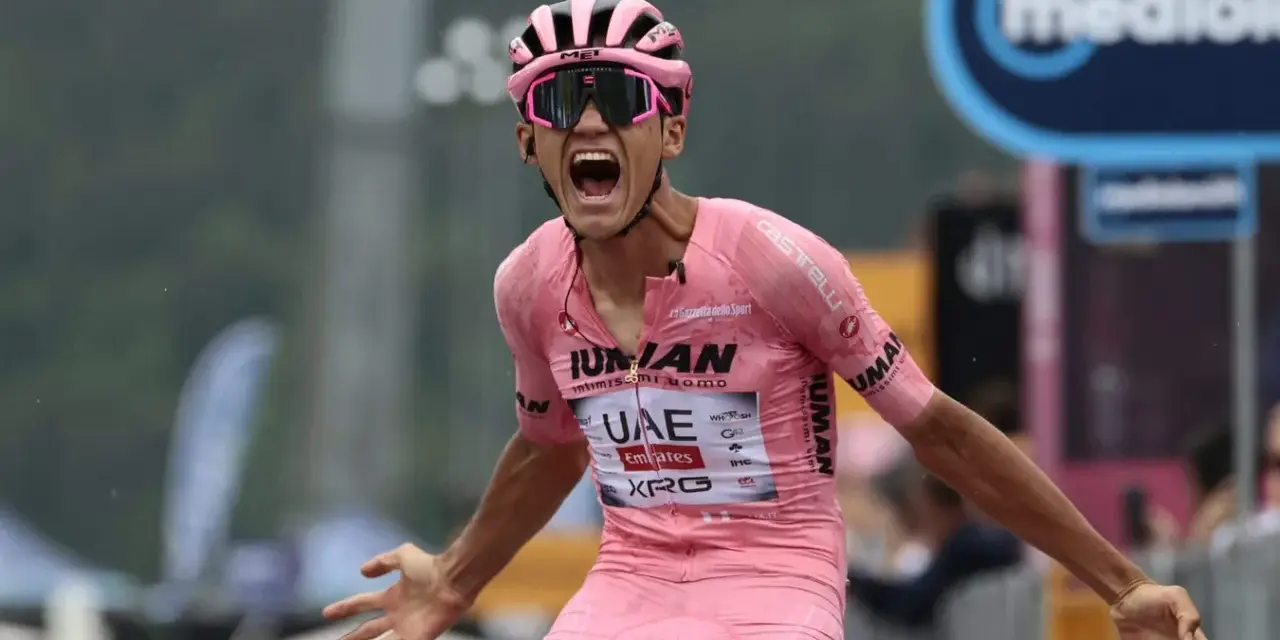
Isaac Del Toro has moved from promising climber to one of the most interesting road racers in the peloton because his results now cover almost every hard scenario a stage-race rider faces: windy reduced sprints, summit finishes, and full general classification control. By late June 2026, he was leading the UCI men's road ranking, and that is not a fluke; it reflects a rider who can win in different race conditions. In this article I break down what his recent performances actually mean, why they matter, and what amateur road cyclists can learn from the way he races.
What Del Toro's rise says about modern road racing
- He has already moved beyond “young talent” status and into genuine race-leader territory.
- The UCI had him first in the men's road ranking on 22 June 2026 with 5,339.71 points.
- His headline 2026 wins came at the UAE Tour, Tirreno-Adriatico, and Tour Auvergne-Rhône-Alpes.
- He wins through timing, climbing strength, and team control rather than pure chaos or luck.
- For everyday riders, his season is a useful template for climbing, positioning, and recovery.
Why Del Toro matters now
What stands out to me is how fast the conversation around Del Toro has shifted. He is no longer being talked about as a rider with potential; he is already delivering results that force rivals to react. UAE Team Emirates-XRG's 2026 campaign has given him wins in stage races that reward control, patience, and the ability to finish hard after a long day of racing.
The bigger point is consistency. Road cycling does not hand out real status for one lucky day. A rider who can win in crosswinds, survive a summit finish, and then defend a jersey through a full race week is showing a repeatable skill set. That is why I see Del Toro as a rider whose current form is more important than any single victory.
That broader context makes the shape of his wins worth breaking down.
What his recent wins actually say about his strengths
His results read like three different race scripts, and that is exactly why they matter. One win came in a reduced sprint after a windy stage. Another came on a long, selective climb where pacing and late acceleration mattered more than bravado. The third came from repeating that level across a whole week, which is where many promising riders start to fade.
| Race | What happened | What it tells me |
|---|---|---|
| UAE Tour | He won Stage 1 in crosswinds, then took the decisive Stage 6 summit finish on Jebel Hafeet, a 10.8 km climb at about 6.6%. | He can win when the race is messy, fast, and selective on the same week. |
| Tirreno-Adriatico | He took the overall title after the Stage 6 summit win and defended the jersey through a chaotic final day. | He stays calm under pressure and recovers well enough to keep attacking late in the week. |
| Tour Auvergne-Rhône-Alpes | He won on the Grand Colombier and then sealed the overall on the Plateau de Solaison. | He can repeat top-level climbing on back-to-back mountain days. |
That mix is rare. A pure puncher usually lacks the climbing depth for the overall. A pure climber can survive the mountains but struggle to win in a reduced group or a wind-ravaged stage. Del Toro is starting to look like a rider who can do both, which is exactly why teams now treat him as a real GC threat.
Once you see that pattern, the habits behind it become easier to read.
The racing habits behind the results
If I were reverse-engineering his form for coaching purposes, I would focus on four habits. First, he rides climbs with patience, which means he does not spend too much too early when the tempo rises. Second, he chooses his moment late, often after other riders have already burned through their best legs. Third, he trusts his team to keep him out of trouble in the wind and in the run-in to key hills. Fourth, he recovers well enough to repeat that pattern two or three days in a row.
- Patience on climbs. He does not panic when the first acceleration goes, which helps him avoid redlining too early.
- Late attacking. He tends to make the decisive move when the race is already under strain.
- Positioning before the climb. Staying near the front saves power long before the final ramp appears.
- Recovery between stages. His weeks suggest strong day-to-day recovery, which is a separator in modern stage racing.
The technical term here is race craft: the ability to spend energy at exactly the right time and in exactly the right place. It is often mistaken for aggression, but the best GC riders are usually conservative until the moment the road narrows or tilts upward. Del Toro's recent wins suggest that he understands that difference well. Still, every real breakthrough has limits, and that is where the conversation gets more interesting.
What still needs proving
I would not overstate the case and pretend the story is finished. His 2026 stage-race wins are impressive, but a three-week Grand Tour is still a harsher exam than a one-week race. The fatigue curve is different, the margins are smaller, and opponents can afford to wait longer before they expose a weakness.
- Three-week durability. Winning over seven days is one thing; keeping the same snap into week three is another.
- Time-trial resistance. If the course tilts toward sustained solo effort, he still has room to prove how far his ceiling goes.
- Constant marking. Once rivals stop giving freedom, every move becomes more expensive.
For me, that does not reduce his value. It simply frames the next step correctly: the challenge is not to look good once, but to keep looking dangerous when the peloton starts racing him as a name, not a surprise. That is also the point where useful lessons for amateur riders become clearer.
What road cyclists can borrow from his season
For riders in the United States, the takeaways are practical. Think about long hill repeats, windy road positioning, and races or fondos where the final climb arrives only after hours of work. Del Toro's season is a reminder that the last ten minutes of a climb are often decided by what happened in the first two hours.
- Train the finish, not just the climb. Include threshold repeats that end with a hard surge so you can attack when your legs are already tired.
- Practice group position. Riding safely near the front in wind or on narrow roads saves more energy than almost any equipment upgrade.
- Respect recovery. If a rider can repeat hard performances across a week, the body is absorbing the work; amateurs should build that same habit with real easy days.
- Use sensible gearing. A compact or sub-compact setup can keep cadence stable on steep American climbs, which matters more than chasing a dramatic looking drivetrain.
- Fuel the work. Hard climbing rides and race simulations go badly when you under-eat, and that is one of the most common mistakes I see.
I would rather see a rider execute those basics well than chase a flashy setup or copy every attack. The right climbing engine, a clean pacing plan, and enough fuel will do more for your road cycling than almost any trend cycle. Those habits are not glamorous, but they are the ones that move the needle on a climb.
The checkpoints I’d watch next
If I were tracking the rest of his season, I would focus on three things rather than just the win column. First, whether he keeps turning hard stage races into overall results. Second, whether he stays healthy and fresh as the summer blocks get longer. Third, whether he can keep producing the same late-race snap when other teams start racing him more defensively.
If those boxes stay checked, Del Toro stops being a breakout story and starts becoming one of the riders who shapes the race calendar itself. For fans, that is the real story; for riders, it is a useful reminder that modern road racing is won by a blend of climbing power, repeatable recovery, and clear decisions under pressure.