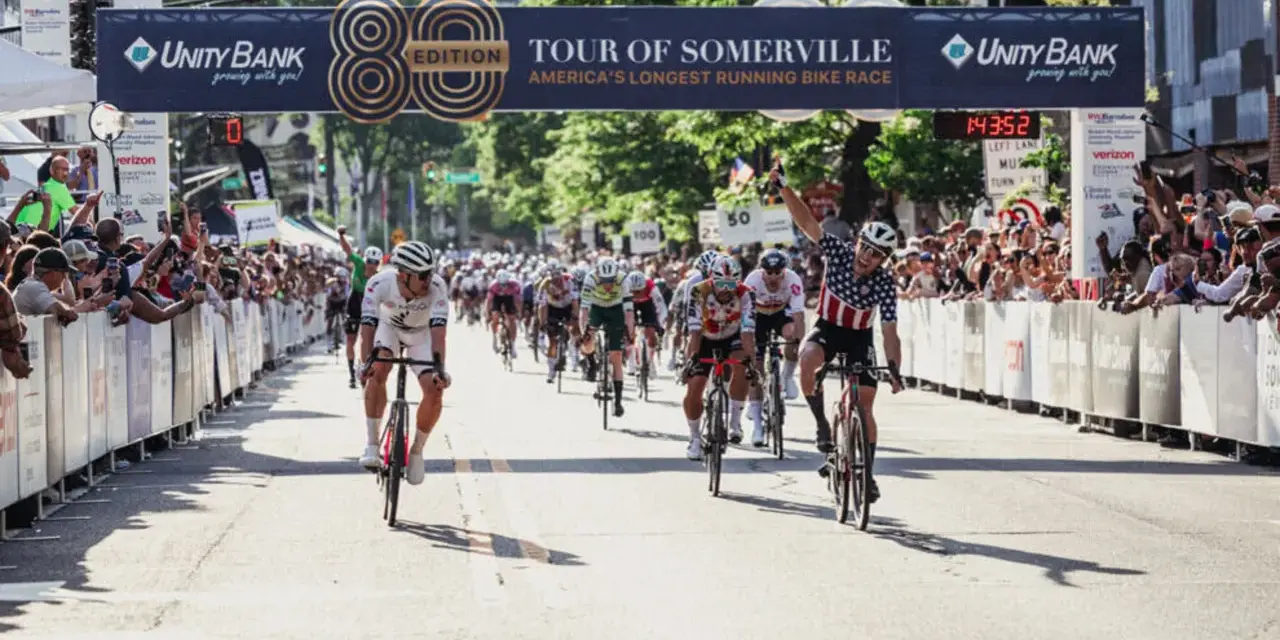
The Tour of Somerville is a rare road race where history, downtown logistics, and pure speed all matter at once. I like this kind of event because it strips racing down to the essentials: corner cleanly, stay calm in traffic, and time the sprint correctly. In the sections below, I break down what the race is, how the flat Somerville circuit behaves, who can enter, and what to watch for if you are planning a race-day visit.
What matters most at a glance
- Format: a flat downtown criterium on a 1.1-mile circuit with four left turns.
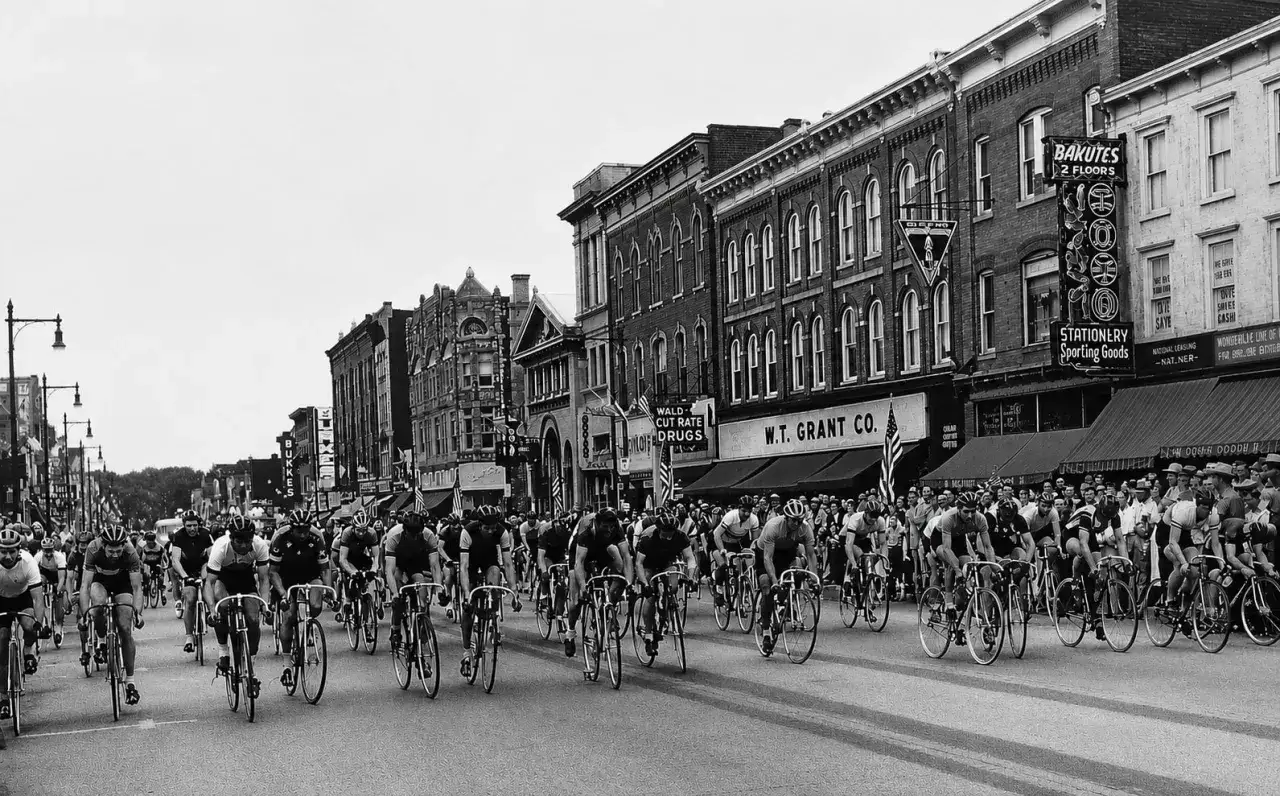
- Scale: the event dates back to 1940 and remains America's longest-running bike race.
- 2026 pro races: both elite fields carried $10,000 purses and ended in fast, tactical finishes.
- Entry rules: riders need a current USA Cycling license; one-day licenses are available during registration.
- Race-day reality: position, corner speed, leadouts, and patience matter more than long solo moves.
- Spectator tip: the start/finish area and Courthouse Lawn community zone give the best all-day view.
Why this race still matters in American road cycling
In 2026, the race reached its 81st edition, and the pro fields still included national champions, Olympians, and some of the strongest criterium teams in North America. That is the kind of field that tells me the event has not become a nostalgia piece; it still matters to riders who care about speed, tactics, and reputation.
The reason is simple. A historic race only keeps its value if it still exposes real skill, and Somerville does that better than most. The course is honest, the finishes are usually explosive, and the winners tend to be riders who know how to stay relaxed while the pace keeps climbing. For me, that is what gives the event its weight: it rewards precision, not just power. History explains the name, but the circuit explains the racing.
How the downtown circuit shapes the racing
The course is compact, flat, and built for repetition: 1.1 miles, no gradient, four left turns. That means the race is not won by a single long effort unless the field is already broken. More often, it becomes a contest of small advantages, where each lap asks the same questions again and again: who is near the front, who enters the corner first, and who still has enough snap left to accelerate out of it.
| Course detail | What it means on race day |
|---|---|
| 1.1-mile lap | Recovery windows are short, so repeated surges matter more than raw top-end speed alone. |
| Four left turns | Cornering skill and positioning decide whether you spend energy or save it. |
| Flat profile | There is nowhere to hide climbing weaknesses, but there is also nowhere for climbers to force selection on elevation alone. |
| Wide downtown streets | The field often stays together longer, which shifts the race toward leadouts, primes, and sprint timing. |
That setup is why primes can change the rhythm so quickly. A prime is an intermediate bonus sprint, and in a race like this it can pull teams into the front of the race earlier than they planned. I would not expect a random attack to survive for long unless the field is tired or disorganized. On a circuit this fast, the smartest move is usually the one that keeps you positioned for the finish, not the one that looks dramatic at lap 8. Once you understand that, the rest of the race becomes easier to read.
Who can line up and what the 2026 schedule looked like
The race is open to riders with a current USA Cycling license, and one-day licenses can be added during registration. Day-of registration was available in 2026 until 30 minutes before the start of a category, but it also came with an extra $20 fee, so pre-registering was the cleaner option. If I were racing, I would not leave that to the last minute.
| Race block | 2026 format | Why it matters |
|---|---|---|
| Junior races | 25 minutes, jersey and medals | Fast, controlled racing that introduces younger riders to criterium rhythm. |
| Masters 55+ | 35 minutes, jersey and medals | Usually tactical, with a premium on experience and clean positioning. |
| Women amateur and novice | 25 minutes, jersey and medals | Short enough that every mistake is expensive, but still very approachable for developing racers. |
| Men elite amateur | 20 miles, jersey and medals | A strong test of repeatability and pack awareness over a longer effort. |
| Women pro | 50 km, $10,000 purse | High-speed racing where teamwork and sprint timing often decide everything. |
| Men pro | 50 miles, $10,000 purse | The marquee race, and usually the most intense tactical battle of the day. |
The 2026 schedule moved from morning juniors to masters and amateur blocks, then into the afternoon pro races. That flow matters because the whole day builds toward the final two fields, and if you are a rider, you need to plan warm-up, food, and staging around that progression. Once the schedule is clear, the spectator experience becomes much easier to plan too.
How to watch it like a criterium regular
If I were watching with family or friends, I would anchor myself near the start/finish on West Main Street and then use the Courthouse Lawn community zone as the rest of the day’s base. That area had grandstands, food trucks, an expo zone, a kids' course, and enough activity to keep the event feeling like more than just a race. It is the kind of setup that works well if some people in your group are there for cycling and others just want a good Memorial Day outing.The practical part is timing. The course roads closed early, so arriving before the morning rush is a lot easier than dealing with detours later. The day also had a clear rhythm: family ride, parade, junior and amateur racing, then the pro women at 3:00 PM and the pro men at 4:40 PM. That late-afternoon block is where the tension peaks, so if you only have time for one part of the day, that is the one I would not miss. From a viewing perspective, the finish area is still the best place to catch the decisive sprint, while the corners reward people who like watching riders take speed out of tight lines without wasting a pedal stroke.
How I would prepare to race it
Training that transfers
For a course like this, I would bias training toward repeated hard efforts rather than long steady miles alone. Think 30 to 60 second surges, short sprint repeats, and sessions that force you to recover quickly before going hard again. Cornering drills matter too. If you can enter a turn smoothly, hold your line, and accelerate immediately out of it, you gain more than a rider who simply has a bigger threshold number.
Bike setup that makes sense
I would lean toward fast-rolling tires in the 25-28 mm range and set pressure for grip and control instead of chasing the highest possible psi. A flat criterium rewards confidence more than vanity weight savings. Clean shifting, reliable braking, and gearing that keeps cadence high in the closing laps are all more useful here than exotic parts. On a circuit this fast, a calm setup is usually a better setup.
Read Also: Patrick Lefevere's Legacy - How to Build a Winning Cycling Team
Race execution
- Stay near the front before every corner so you are not forced to sprint just to hold position.
- Do not chase every move in the first half of the race.
- Keep one or two strong efforts in reserve for the final 10 to 15 minutes.
- Use teammates to cover attacks and organize a leadout if you have one.
- Avoid small positioning mistakes, because they stack up quickly on a short lap.
That is the part newer riders often underestimate. A criterium like this is not won by the rider who suffers the most; it is won by the rider who spends the least energy while staying in the right place. If you can do that, the race starts to open up in your favor.
What the 2026 edition says about winning here
The 2026 pro races were won by Marlies Mejias Garcia and Lucas Bourgoyne, and both results fit the same pattern this event has rewarded for decades: patience, teamwork, and a sprint timed to the last possible moment. That is exactly why this race remains so respected. It does not hand out wins to riders who guess early. It rewards the people who can read the field, trust their support, and explode only when the finish is already in sight.
If you are planning a future visit, the most useful move is simple: stay close to West Main Street, arrive early enough to beat the closures, and treat the day as both a bike race and a downtown event. That combination is what gives the Somerville classic its staying power, and it is also why I would still put it on any serious road cycling calendar.