A good bike tune-up is less about making a bike look polished and more about restoring the small things that decide whether a ride feels calm or irritating: braking, shifting, wheel alignment, and bearing play. REI's bike shop sits in a useful middle ground for riders who want a professional REI bike tune-up without jumping straight to a full rebuild, and it is especially relevant if your bike has sat through a season, started making new noises, or simply feels less precise than it used to. In this guide, I break down what REI typically does, how the pricing works in the U.S., and when a basic service is enough versus when you should ask for something deeper.
What matters most before you book a bike service
- REI's basic bike tune focuses on brake and shifting adjustments, wheel truing, bearing fine-tuning, and a clean inspection pass.
- Pricing varies by store, but 2026 posted examples range from about $124 to $190 for a standard tune and much higher for premium packages.
- Co-op members get 20% off shop services, and bikes bought at REI include one year of free adjustments.
- If your bike needs new parts, a brake bleed, suspension work, or e-bike diagnostics, you are usually beyond a simple tune.
- The best results come when you describe the symptoms clearly and ask for a turnaround estimate before approving extras.
What REI's bike tune-up actually covers
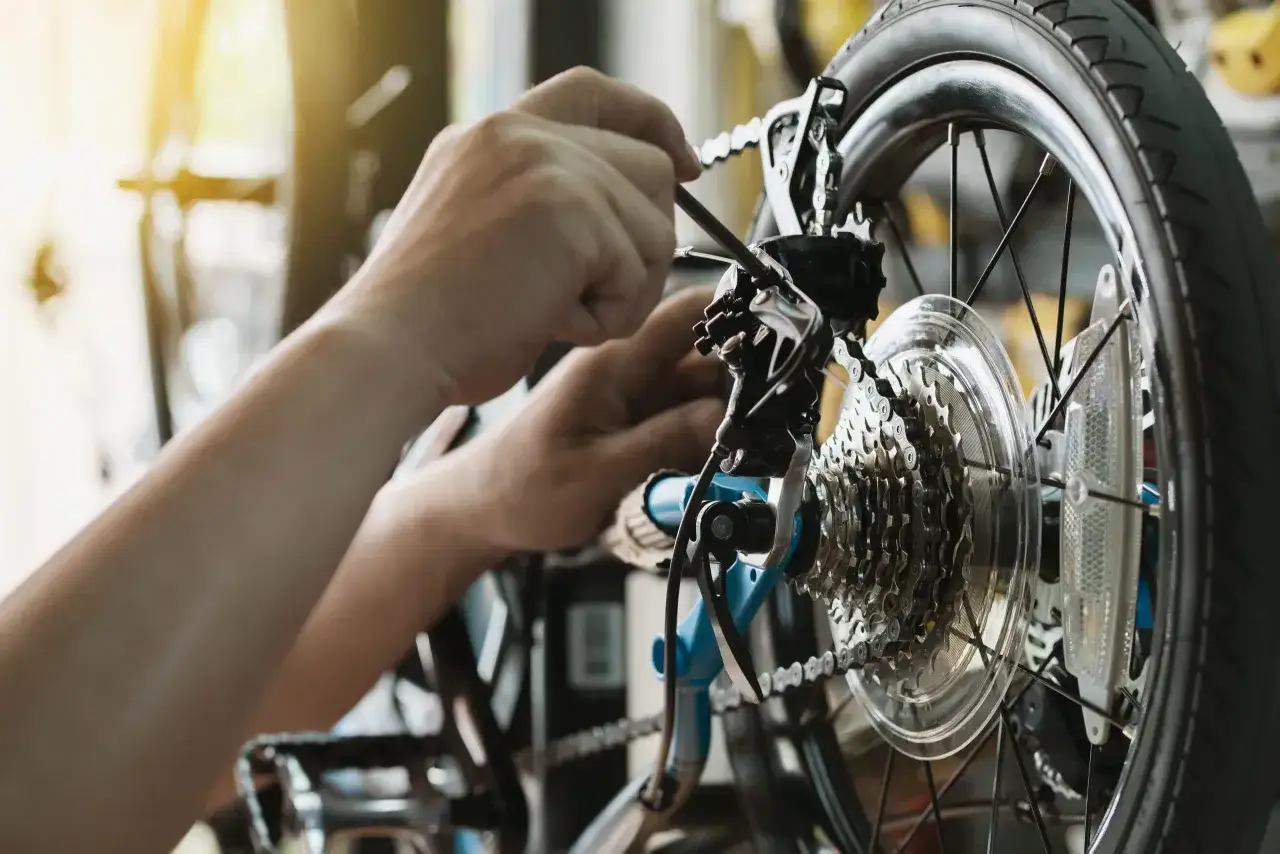
On REI store pages, the standard Bike Tune is not just a fast bolt check. It typically covers brake and gear adjustment, wheel truing, bearing fine-tuning, and a fresh cleaning of the frame and wheels. In plain language, that means the shop is looking for the little losses in efficiency that make a bike feel noisy, vague, or unsafe: a derailleur that hesitates, a wheel that wobbles, or hubs and headset parts that no longer spin smoothly.
I like that REI separates a tune from simpler adjustment work. A lighter Bike Check is aimed at basic safety and small fixes, while premium packages build on the tune with more labor and model-specific work. That distinction matters because a rider with a commuter bike that only needs a seasonal refresh does not need to pay for suspension service, but a gravel or e-bike owner often does.
One technical term worth knowing is wheel truing, which means correcting a wheel so it runs straight instead of side-to-side or up-and-down. Another is drivetrain, the chain, cassette, chainrings, and derailleur system that moves power from your legs to the wheel. Once you understand those pieces, the rest of the service menu is easier to read, and the price list starts to make sense.
Once you know what the service does, the next question is whether the price feels fair for your bike and your location.
How pricing and member benefits change the math
REI's pricing is location-specific, so I would never budget from a single national number. In 2026, posted examples on official store pages show a Bike Check at $100 for members and $125 for non-members in Denver, while a standard Bike Tune appears at $124/$155 in Missoula and $152/$190 in Denver. Premium packages run higher because they add deeper labor and bike-specific work: for example, Road & Gravel Tune, Hardtail MTB Tune, Full Suspension MTB Tune, and E-bike Tune all climb into the $300 to $500+ range depending on the store.
That spread tells me two things. First, REI is not trying to be the cheapest option on the block for every bike. Second, it can still be a very good deal if you value predictable service, want member pricing, or already need several of the jobs bundled together.
Co-op members get 20% off shop services, which can change the calculation quickly on a tune that already includes labor-heavy work. Bikes sold at REI also come with one year of free adjustments, so if your bike is still within that window, I would use that benefit before paying for a fresh tune. That small detail is easy to miss, and it is often the cheapest maintenance money you will spend all year.
If you want the cleanest possible comparison, ask the shop for an estimate that includes likely parts, because cables, brake pads, tires, and chains can push the final bill beyond the posted base price. That leads directly to the more important question: which service tier actually fits the condition of your bike?
Which service tier fits your bike
| Service | What it is best for | What I would expect |
|---|---|---|
| Bike Check | Basic seasonal safety and small adjustments | Brake and shift adjustments, chain lubrication, safety inspection |
| Bike Tune | A bike that feels off but is otherwise healthy | Brake and gear fine-tuning, wheel truing, bearing adjustment, cleaning |
| Premium tune package | Bikes that need deeper labor or model-specific work | Full drivetrain clean, brake bleed, new cables and housing, plus extras by bike type |
My rule of thumb is simple. If the bike still shifts and stops, but it feels a little sloppy, the standard tune is usually the right starting point. If you already know you need a brake bleed, a tubeless refresh, suspension attention, or firmware work on an e-bike, it is smarter to move straight to a premium package and avoid paying twice for labor.
That choice becomes clearer once you know the warning signs that a tune cannot solve on its own.
When a tune-up is not enough
A tune can correct adjustment; it cannot reverse wear. If your chain is stretched, your cassette is hooked, your brake pads are near metal, or your tire sidewalls are cracked, you are in parts-replacement territory. The same is true after a crash if the derailleur hanger is bent, the wheel is badly out of true, or the handlebars and stem no longer sit square.
I also treat certain symptoms as a signal to ask for a more detailed inspection rather than a quick service. A spongy hydraulic brake lever points to air in the system, which usually means a bleed. A knocking front end on a mountain bike can point to headset or suspension issues. A noisy e-bike drivetrain may need cleaning, but it may also need diagnostics if the motor or sensor system is involved.
There is a practical limit here that riders sometimes underestimate: when a bike has been neglected for years, the tune-up often uncovers a list of repairs rather than a single tidy fix. That is not a bad thing. It just means the first job is to ask for a clear estimate and decide whether the bike is worth restoring as-is or deserves a bigger parts budget.
Once you accept that distinction, the drop-off process becomes much less frustrating.
How to prepare your bike before drop-off
Before I hand a bike to any shop, I make the problem easy to diagnose. I note the exact symptom, when it happens, and whether it changed after a crash, long storage, or a wet ride. “The rear gear skips under load in the middle cogs” is far more useful than “it sounds weird.”
- Remove bags, lights, locks, computers, racks, child seats, and any accessories the shop does not need.
- Bring the e-bike charger and any battery or lock keys if the bike uses them.
- Tell the technician about recent impacts, storage conditions, and any parts you have already replaced.
- Ask for a turnaround estimate and a price check before approving extra parts.
- If the bike has been sitting, do a quick ABC inspection first: air, brakes, chain.
The ABC check is basic, but it catches a surprising number of problems before they become shop time. I look at tire pressure and sidewall condition, test both brakes, and inspect the chain for dryness or rust. If I have a torque wrench and know the manufacturer’s specs, I will check major bolts too; if not, I leave tightening to the shop instead of guessing.
That kind of preparation makes the service more efficient, and it also helps you get more value if you are comparing REI with another shop.
When REI is the smarter stop and when I would go elsewhere
I would choose REI when I want a clear service menu, member pricing, and the convenience of dropping the bike at a familiar store while I handle other errands. It is also a sensible choice for newer riders, commuters, and people whose bikes were bought there, because the one-year adjustment window and standardized service path remove a lot of guesswork.
I would look elsewhere when the bike needs highly specialized suspension tuning, vintage or unusual parts, custom wheel work, or a mechanic who lives inside that one bike's history. A strong local independent shop often wins on those jobs because the same technician can follow the bike over time and catch patterns a big retail service desk may not see on the first visit.
The practical takeaway is simple: use REI for clean, well-defined maintenance work; use a specialist when the problem is complex, expensive, or very bike-specific. If you take that approach, a tune-up stops feeling like a generic expense and starts acting like the right maintenance decision at the right moment.