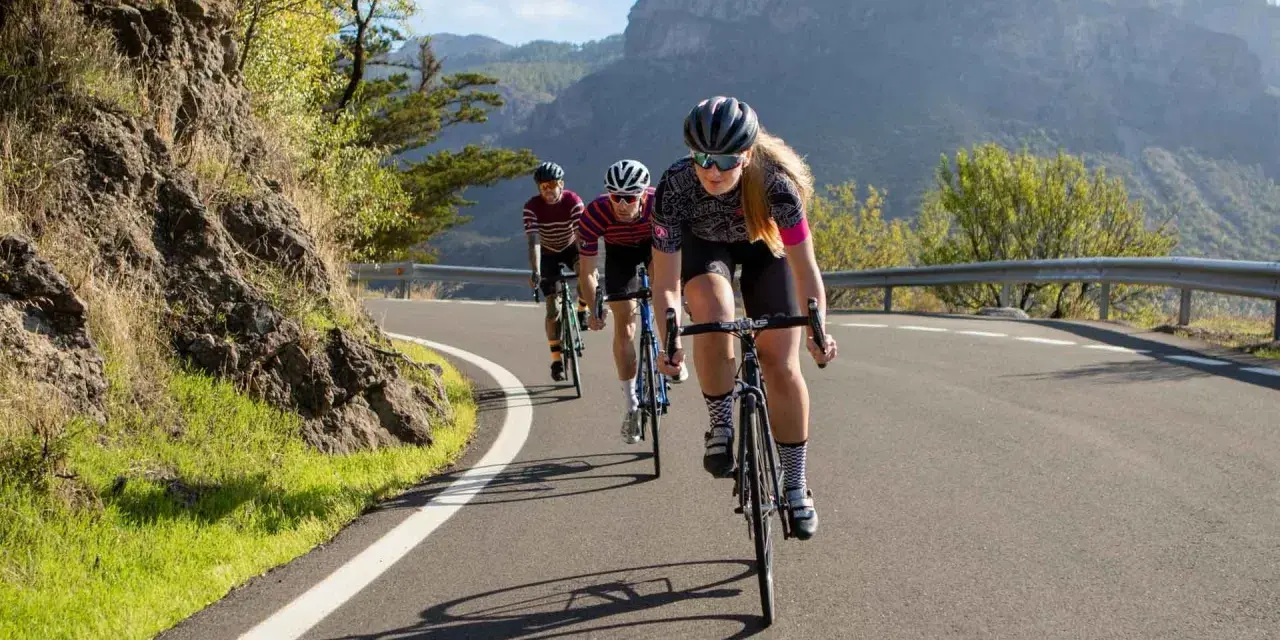
A road-cycling sportive is a supported endurance ride built around a marked route, not a start-to-finish race. In the U.S., you will often see the same idea presented as a gran fondo, usually with multiple distance choices, aid stations, and some form of timing or results. This guide explains how the format works, how it differs from a race or a century ride, and how to prepare for one without turning the day into a test of survival.
A sportive is a supported road ride that prioritizes completion, challenge, and route experience
- Most events are mass-participation road rides with set routes and event support.
- Many U.S. events use the gran fondo label and offer roughly 30-, 60-, and 100-mile options.
- Aid stations often appear every 15 to 25 miles, which changes how you fuel and pace.
- Some events are fully timed, some use timed segments, and some focus mainly on finishing.
- The biggest beginner mistake is starting too hard and underestimating climbing and fueling.
What a sportive really is in road cycling
If I strip away the branding, a sportive is an organized endurance ride on public roads. The organizer chooses the route, marks it or supplies GPS files, and usually provides feed stations, basic mechanical help, and course support so you can focus on pacing and finishing.
British Cycling describes sportives as long-distance organized rides, and that definition still maps closely to what U.S. riders usually know as a gran fondo. The key difference from a race is intent: you are there to complete a demanding route, not to spend the day attacking for position.
- Mass start with riders of mixed abilities on the same course.
- Route choices that often range from short to long, commonly around 30, 60, and 100 miles in U.S. gran fondo-style events.
- Support stops for water, food, and basic repairs.
- Open-road rules unless the organizer has specifically closed the course.
- Flexible timing that may be full-course, segment-based, or just for personal results.
That combination is why the format feels different from both club rides and races, and it is also why the next comparison matters.
How it differs from a race, a century ride, and a gran fondo
The easiest way to see the category is to compare it with the rides people confuse it with most. The label changes from country to country, but the rider experience is easier to understand when you line the formats up side by side.
| Format | Main goal | Timing | Support | Best fit |
|---|---|---|---|---|
| Sportive / gran fondo | Finish a supported endurance challenge | Often timed, sometimes only on segments or for personal results | Aid stations, route marking, and SAG support are common | Riders who want structure, scenery, and a big road day |
| Road race | Win, place, or contribute to a team result | Fully timed from start to finish | Race officials, team tactics, and category rules | Competitive riders who want tactics and speed |
| Century ride | Complete 100 miles | May be timed or untimed | Ranges from fully supported to mostly self-supported | Endurance riders who care more about distance than event format |
A century ride can be a sportive, but it does not have to be one. That is the nuance I want riders in the U.S. to keep in mind: distance alone does not tell you whether the ride is fully supported, partially timed, or more like a self-guided endurance challenge.
Once you know the format, the useful question becomes what the event day actually looks like.
What to expect on event day
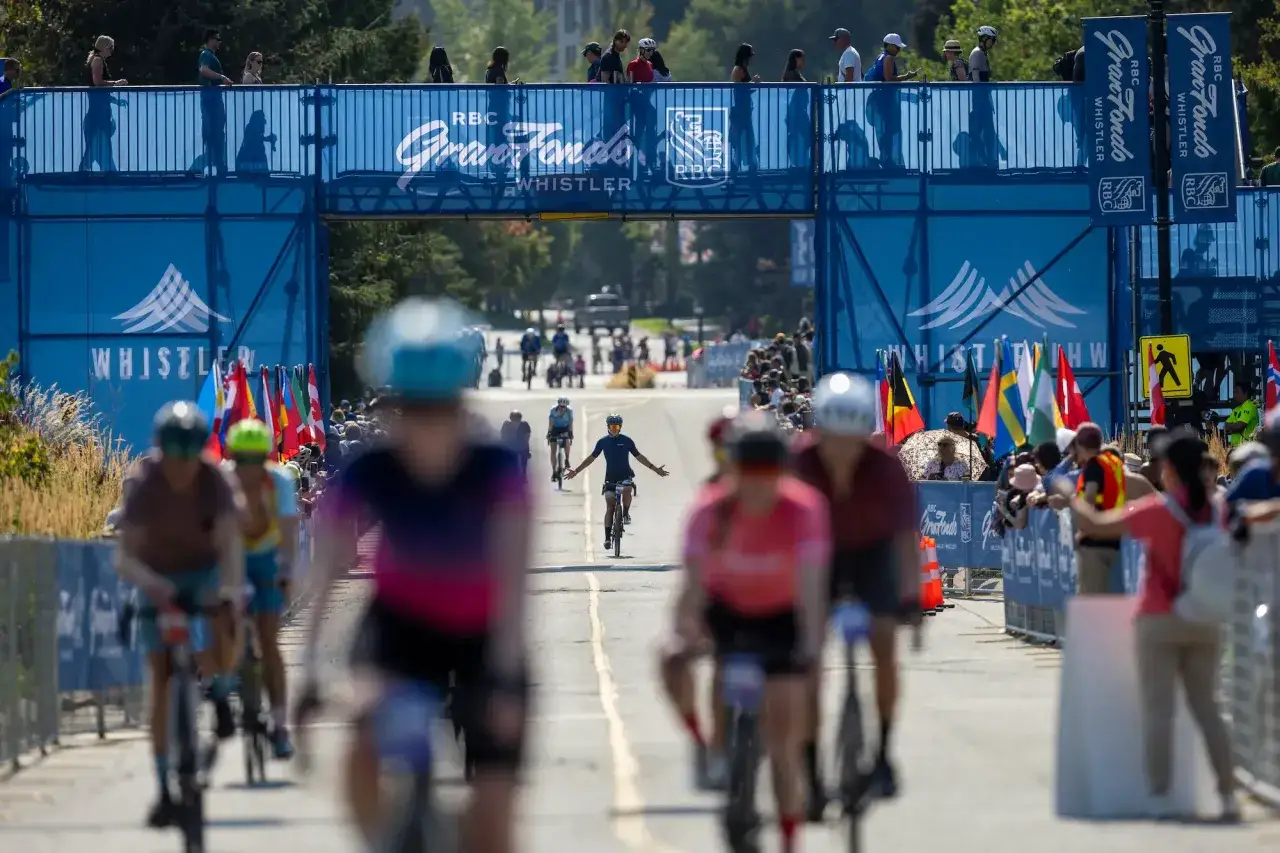
On the ground, a sportive is usually organized to make a long day feel clear rather than chaotic. You start with a mass of riders, follow marked roads or a GPS file, and stop at aid stations where volunteers hand out food, drinks, and sometimes simple repair help.
- Route support often includes arrows, marshals, cue sheets, or GPS downloads.
- Aid stations on U.S. gran fondo-style events commonly show up every 15 to 25 miles, which is soon enough to matter if you fuel early.
- SAG means support and gear, the vehicle or crew that helps with breakdowns or rider drop-off.
- Timing may be chip-based, segment-based, or absent altogether depending on the organizer.
- Traffic rules still matter on open roads, so the safest event is the one that explains the course and support clearly.
If you are used to solo endurance rides, the biggest surprise is usually how much mental energy the support saves. You are still doing the work, but you are not inventing the route, the refuel plan, or the recovery plan from scratch.
That leads straight into preparation, because a well-run event still feels hard if you arrive underdone.
How to prepare without overcomplicating it
I usually tell riders to prepare for the ride they are actually entering, not the one they wish they were entering. A 60-mile sportive with long climbs asks for different preparation than a flat 60-mile charity ride, and the difference shows up fastest when the pace goes up or the road tilts.
Build enough endurance for the route
Use your weekly long ride to stretch time on the bike, not to prove a point. A steady increase of about 10 to 15 percent in distance or duration is a sensible way to build, and it works better than swinging between big efforts and missed weeks.
Practice fueling before you need it
For anything beyond about two hours, I prefer riders to eat before hunger shows up. A simple habit of taking in small amounts every 20 to 30 minutes and drinking regularly does more for finish quality than almost any gadget or upgrade.
Sort out the bike and kit early
- Gearing matters on climbs; compact gearing or an easier cassette can save your legs late in the ride.
- Tires should be reliable, not experimental, with enough tread and no damage.
- Carry the basics: two bottles, a tube or plug kit, a pump or CO2, and a multi-tool.
- Clothing should already be proven on long rides, especially bib shorts and shoes.
- Position should feel sustainable for hours, not just fast for 20 minutes.
Once that is in place, the next step is choosing an event that matches your current legs instead of your ambition.
How to choose the right event and avoid the usual mistakes
I scan event pages for three things first: route profile, support, and cutoff rules. Distance matters, but it is only one piece of the decision, and it is often the least revealing one.
Read the course, not just the distance
A hilly 70 can be tougher than a flat 100, and hot weather can turn an otherwise friendly route into a grind. Look at elevation gain, surface quality, road exposure, and the expected temperature before you commit.
Read Also: Road Time Trial Training - Get Faster Against the Clock
Start with support and distance, not prestige
For a first event, I would rather see a rider choose a shorter, well-supported course than the headline distance with thin logistics. Good signage, frequent feed stations, and a clear sweep policy usually matter more than the event’s reputation.
- Do not register for the longest route just because it sounds impressive.
- Do not assume every event has full-course timing or closed roads.
- Do not bring brand-new shoes, clothing, or nutrition on event day.
- Do not start above your target pace because the first 10 miles feel easy.
- Do not ignore climbing, wind, and heat when you estimate how hard the ride will be.
The mistake I see most often is treating a sportive like a race with nicer scenery. The better mindset is to treat it as a supported endurance day, then ride the first half with enough restraint to still have a second half.
That mindset is also what makes the first event useful in ways that go beyond one finish line.
What your first sportive teaches you for the next one
The first event gives you a lot of feedback that no training plan can fake. You learn how you handle steady pacing, where you tend to fade, which foods sit well, and how much support you actually want between start and finish.
- If you finished strong, you probably chose the right distance and pacing strategy.
- If you faded late, tighten your fueling and hydration before chasing more fitness.
- If the route felt chaotic, look for better signage, clearer support, or a less crowded start wave next time.
For road cyclists, that is the real value of the format: it turns a long ride into a structured test of endurance, judgment, and pacing. Ride it patiently, and the event becomes less about surviving the miles and more about understanding how you ride them.