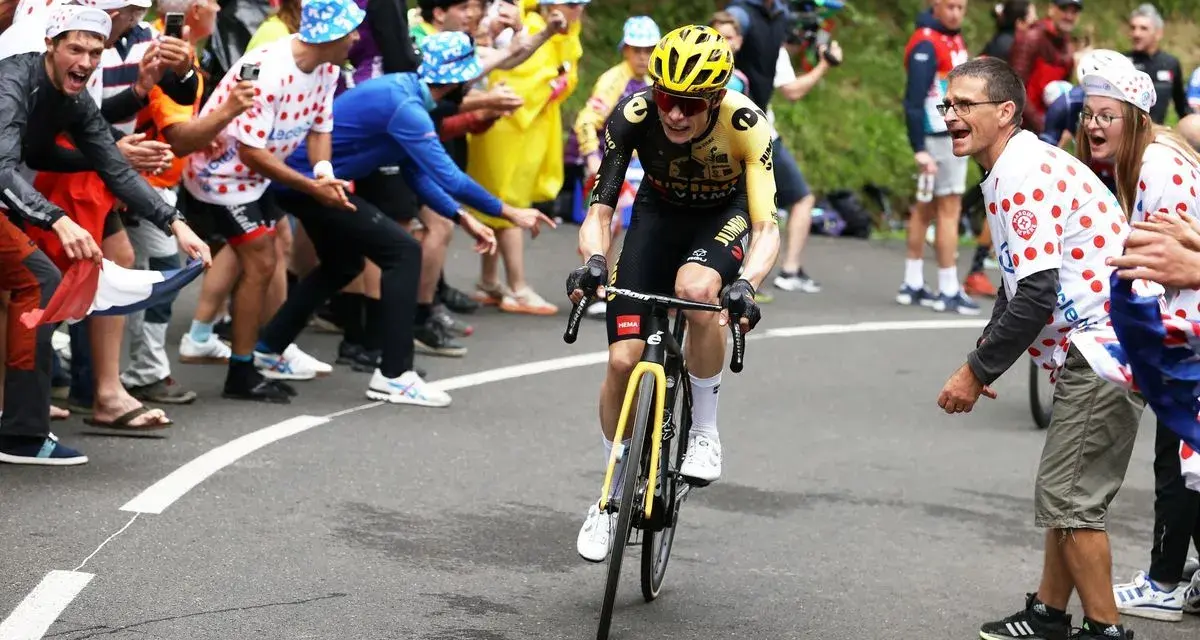
Jonas Vingegaard’s VO2 max is one of the clearest examples of how a single lab number can shape the way we talk about a rider. The reported value is extraordinary, but the more useful story is what that number means, how it was measured, and why it still does not explain everything about Grand Tour performance. I’ll break down the measurement, place it in a road-cycling context, and show what a serious amateur can actually learn from it.
The short version for road cyclists
- The publicly reported figure is about 97 ml/kg/min and was said to come from a test when Vingegaard was 17.
- That number is extreme even by elite cycling standards, but it is still a reported junior measurement, not a current verified team lab release.
- A peer-reviewed study of world-class road cyclists found an average VO2 max of 72.0 ± 1.8 ml/kg/min, which shows how far above the norm the reported value sits.
- VO2 max matters, but threshold, cycling economy, fatigue resistance, and power-to-weight usually decide actual race outcomes.
- For most riders, the most useful data are not a single VO2 max reading but consistent trends in threshold power, repeatability, and recovery.
What the reported number actually is
The headline figure associated with Vingegaard is a relative VO2 max of around 97 ml/kg/min, reportedly measured when he was 17 years old. Cycling Weekly reported that his father described a test result so high that the tester briefly suspected the machine was faulty before checking other riders and seeing normal values again. That is exactly the kind of story that gets repeated because it sounds almost unreal, but I would still treat it as a reported junior measurement, not a current public lab file from his WorldTour team.
That distinction matters. VO2 max is usually expressed relative to body mass, so it tells you how much oxygen the body can use per kilogram per minute. It is useful, but it is not the same as saying a rider is guaranteed to win races, and it is not even the same as absolute oxygen uptake. One number can point to a huge aerobic ceiling without revealing how well that engine is used on the road.
| Reported value | About 97 ml/kg/min at age 17 |
|---|---|
| What it suggests | Exceptionally high aerobic capacity for a teenager |
| What it does not prove | Current form, race durability, or how much of that capacity he can use for 20 to 40 minutes at the end of a stage |
That makes the number interesting, but it also makes the measurement context important, which is where the testing process comes in.
How the measurement is usually obtained
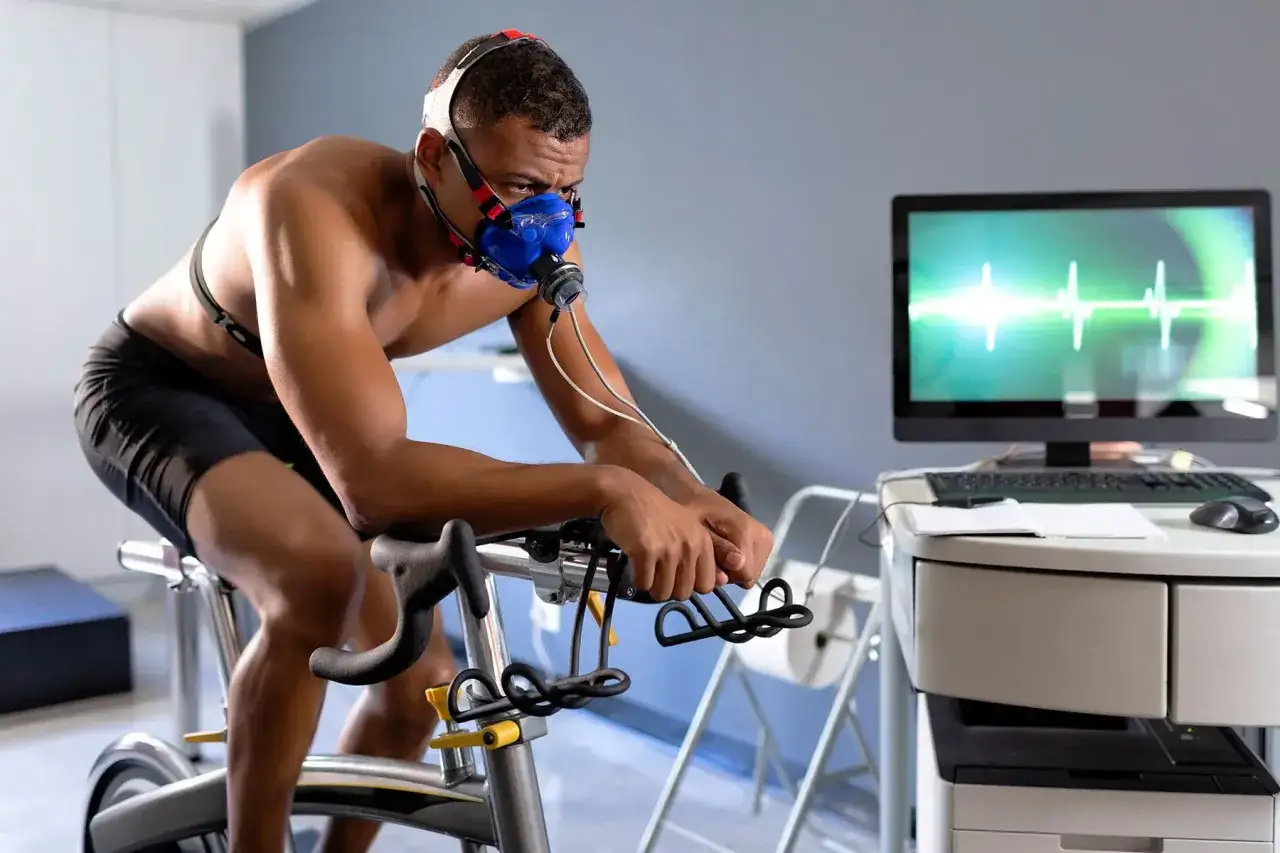
A proper VO2 max test is normally done in a lab with a mask that measures inhaled and exhaled gases while the rider performs an incremental effort on a cycle ergometer. The workload rises in steps or ramps until exhaustion, and the system tracks how much oxygen is being consumed as power increases. In practice, that is the closest thing sports science has to a controlled peak-aerobic test.
There are a few reasons I would not read a single result too literally:
- Different ramp protocols can slightly change the final number.
- Body mass changes the relative value, even if absolute aerobic capacity stays the same.
- Warm-up quality, motivation, and familiarity with testing all matter.
- Some athletes hit a true plateau; others are better described by a VO2peak result, which is very close but not identical.
- A verification test can confirm whether the rider truly reached maximal oxygen uptake.
In other words, the test is real science, but it is not a magic truth machine. Once you understand that, the next question is how unusual 97 really is among road cyclists.
Why that figure stands out in road cycling
The easiest way to see how rare the reported number is comes from the benchmark data. A peer-reviewed study of world-class road professional cyclists found an average VO2 max of 72.0 ± 1.8 ml/kg/min. That does not mean every pro sits there, but it gives a credible reference point for the level at which riders are already world-class. If a teenager is really close to 97, that is not just good; it is off the normal elite curve.
For a road cyclist, that matters because VO2 max helps set the upper limit of what the body can supply during hard climbing, time trialing, and repeated attacks. It is especially valuable in a rider like Vingegaard, whose success depends on long, steady, high-output efforts rather than explosive one-minute surges. A massive aerobic ceiling gives him room to sustain more power before the effort becomes unsustainable.
| Group | VO2 max context |
|---|---|
| World-class road pros in one study | 72.0 ± 1.8 ml/kg/min |
| Vingegaard’s reported junior test | About 97 ml/kg/min |
That gap is large enough to explain why people talk about his physiology, but it still leaves the bigger performance question open, because races are not won on VO2 max alone.
Why vo2 max alone does not win Grand Tours
This is the part that gets lost when fans focus on one number. A peer-reviewed study of world-class cyclists found that cycling economy and gross efficiency could compensate for a relatively lower VO2 max. In plain English, if two riders can take in similar amounts of oxygen, the one who converts more of that oxygen into forward motion can still come out ahead. That is a big reason the best climbers are rarely just the riders with the highest lab reading.
I would group the real performance picture into four pieces:
- VO2 max, which sets the top end of the aerobic system.
- Lactate threshold, which tells you how much of that aerobic capacity can be used for a long time.
- Cycling economy, which is how much power you get for the oxygen you spend.
- Fatigue resistance, which is the ability to keep producing near-top output after hours of racing.
For a Grand Tour rider, that last point is huge. A rider can look ordinary in a short lab test and still become devastating after three weeks because the body holds pace better under accumulated fatigue than the competition does. That is why I never read VO2 max as the final answer; I read it as one strong clue inside a much larger system, which leads directly to the practical lesson for everyone else on the bike.
What road cyclists can borrow from the example
If I were helping an amateur rider learn from Vingegaard’s profile, I would not start by chasing a lab number. I would start by building the qualities that make the number useful on the road. For most riders, that means a combination of structured intensity, steady endurance, and careful body-mass management without underfueling.
The most practical upgrades usually come from these habits:
- Use a power meter or smart trainer so hard efforts are repeatable and measurable.
- Train VO2 intervals in focused blocks instead of guessing at intensity.
- Track threshold power and climbing power-to-weight over time, not just app-estimated VO2 max.
- Keep recovery honest with sleep, fuel, and easier days after demanding sessions.
- Test under similar conditions each time so changes are real, not just noise.
That is also where gear matters more than many riders expect. A consistent setup with a reliable power meter, a stable indoor trainer, and decent heart-rate data will tell you far more about progress than a random watch estimate ever will. The more useful habit is to track the same few metrics consistently, which is what I would trust next.
The metrics I would trust before the headline number
When I look past the headline VO2 max reading, I want to know how the rider performs in the situations that actually decide road races. Can he hold a hard climb after five hours? Can he repeat 3- to 5-minute efforts without a deep fade? Can he stay efficient when the pace changes, the road pitches up, and the legs are already tired? Those are the real-world questions behind every great mountain performance.
If you want a cleaner picture than a single VO2 max figure, watch these instead:
- 20-minute and threshold power, because they show sustainable race pace.
- Repeatability of hard efforts, because stage racing punishes riders who spike early and crack late.
- Power-to-weight trend, because climbing performance is sensitive to both fitness and body mass.
- Recovery after hard blocks, because the best riders can absorb load and still deliver the next day.
That is why the Jonas Vingegaard VO2 max story is best read as a signal of a huge aerobic ceiling, not as the whole explanation for his success. The number is impressive, but the more important lesson is that elite road cycling rewards the full package: oxygen delivery, efficiency, durability, and the ability to turn training into repeatable race performance.