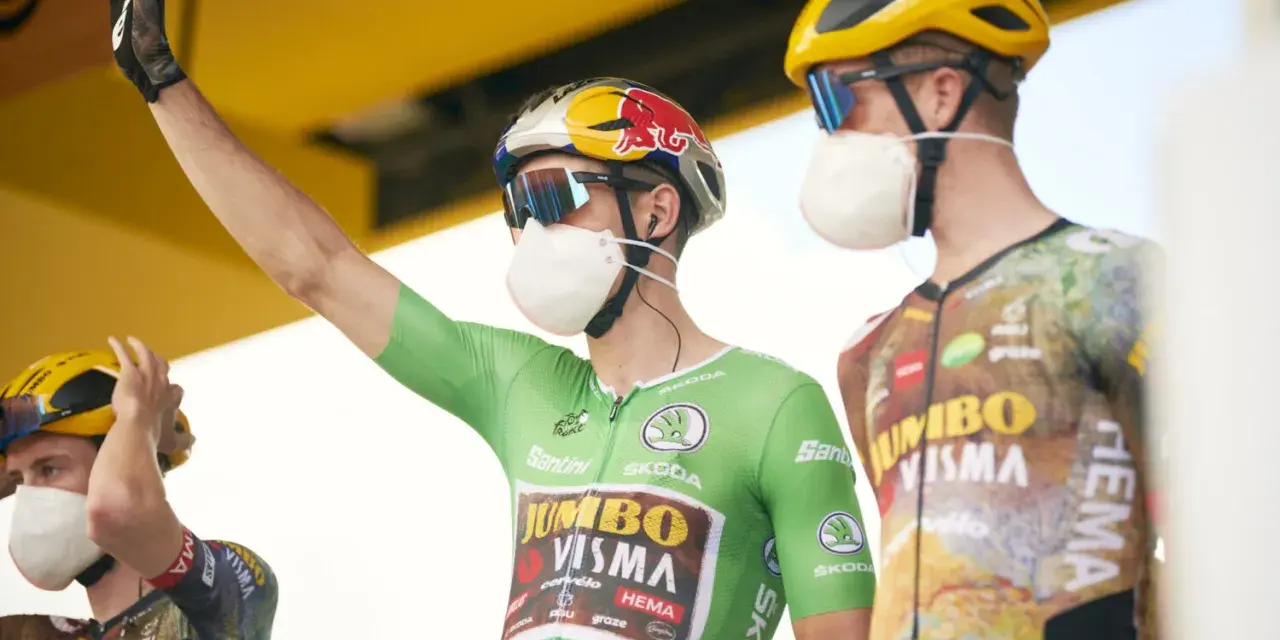
The green jersey in the Tour de France is the race’s points prize, and it says a lot about a rider’s speed, consistency, and tactical discipline. I’m going to break down what it rewards, how the scoring really works, why sprinters usually target it, and what the battle means for teams and for any road cyclist who wants to understand the race beyond the yellow jersey.
The green jersey rewards sprint speed, repeatable effort, and race intelligence
- It goes to the leader of the points classification, not the rider with the fastest total time.
- Points come from stage finishes and intermediate sprints, so positioning matters all day.
- Pure sprinters usually target it, but versatile riders can win it by surviving harder stages.
- It keeps flat and transition stages meaningful even when the general classification is quiet.
- For amateur road cyclists, it is a useful model for sprint training, endurance, and race awareness.
What the green jersey really measures
When I watch the Tour, I treat the green jersey as a race within the race. The official Tour frame is simple: the jersey belongs to the rider leading the points classification each day. That sounds straightforward, but the meaning is deeper than “best sprinter.” It rewards a rider who can keep scoring across three weeks, not just one who can produce one huge effort and disappear the next day.
The jersey was introduced in 1953, and that matters because it was designed to recognize a different kind of excellence from the overall classification. Yellow rewards the fastest total time. Green rewards consistency under pressure. A rider can lose time on mountain stages and still stay in the points hunt if the flat stages, intermediate sprints, and stage finishes go their way.
That is why the green jersey is so useful for reading the Tour. It shows you which riders are built for explosive racing, which teams are controlling the road, and which stages are likely to turn into high-speed, low-margin battles. That becomes much clearer once you look at how the points are actually handed out.
How the points are actually won
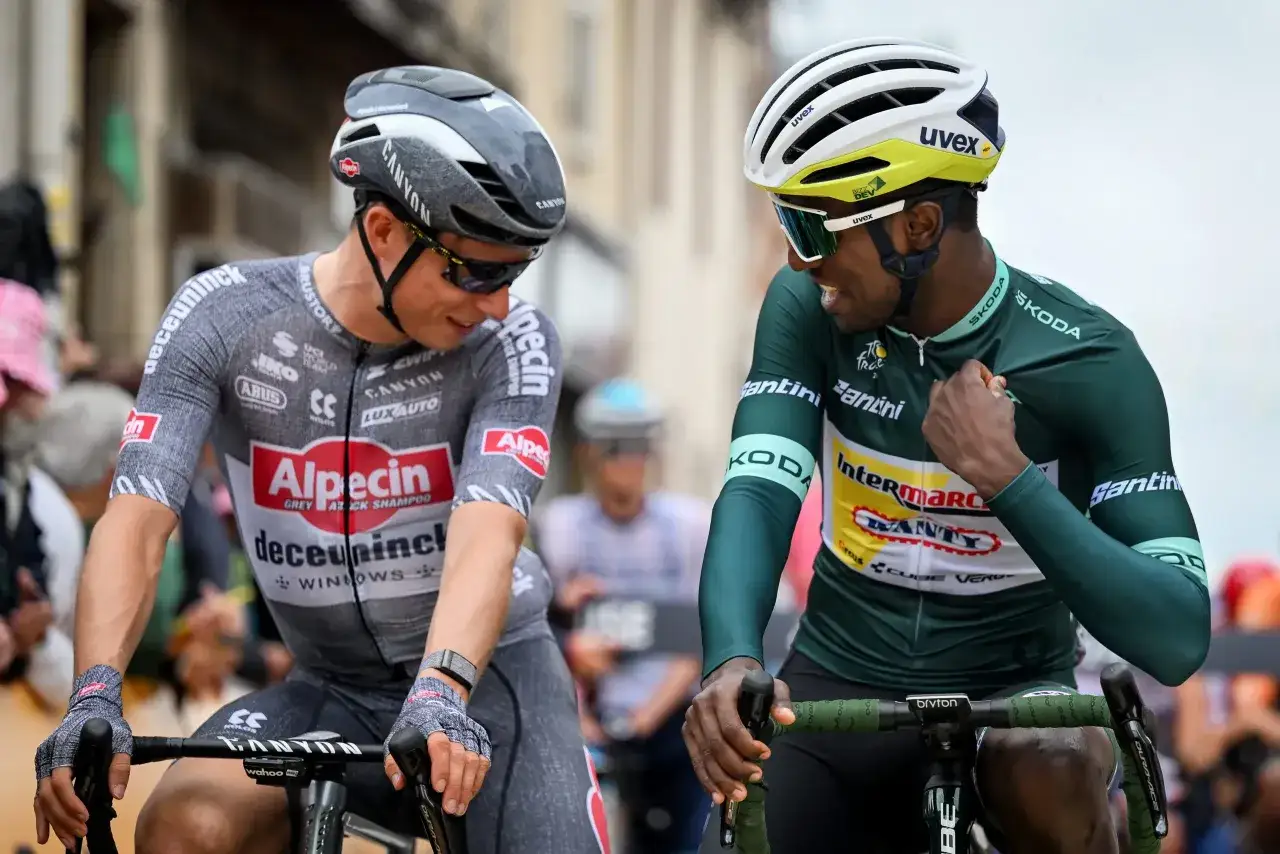
The exact points scale changes with the difficulty of the stage, but the principle is the same: the harder the sprint opportunity is expected to be, the more the stage win is worth. In the current Tour, official stage pages show the winner’s haul ranging from 70 points on the most sprint-friendly road stages down to 50, 30, or 20 points on more selective stages. That spread tells you exactly what the organizers want to reward.
| Stage type | What it favors | Why it matters for green |
|---|---|---|
| Pure sprint stage | Big lead-out trains, top-end speed, fast finishing | The biggest single-day points are available here, so the whole sprint field focuses on it |
| Rolling or hilly road stage | Versatility and timing | Sprinters must survive longer and often earn fewer but still valuable points |
| Mountain or summit finish | Survival and resilience | Fewer points are on offer, but strong all-rounders can still collect them |
| Intermediate sprint | Positioning and timing | These are often the quiet points that decide the jersey by the final week |
Intermediate sprints are the detail casual viewers miss most often. They usually come before the finish and give riders a chance to score without winning the stage. For a green jersey contender, that means the race starts long before the final kilometer. A well-timed attack or a clean move through the bunch can be worth as much as a risky late sprint. That is why the points competition is never just about raw speed.
Once you understand the scoring, the next question is why one rider type usually owns this jersey while others only occasionally threaten it.
Why sprinters usually win it, and why that is not the whole story
Most green jersey winners are sprinters because the jersey is built around repeatable high-speed finishes. A top sprinter can turn one stage into a major points haul, then do the same again two or three days later. The best of them are not only fast; they are also excellent at holding position, staying calm in chaotic finales, and recovering quickly enough to repeat the effort.
That said, the jersey is not reserved for the purest sprinter on the start list. Riders who can handle short climbs, survive the mountain days, and still finish fast have a real advantage. That is why the classification has always had a bit of room for all-rounders. I think that is one reason it stays interesting: it rewards speed, but it does not reduce the race to one metric.
Recent editions have shown the range well. Pure sprinters like Jasper Philipsen and Jonathan Milan have been able to turn bunch finishes into green jersey success, while riders with broader skill sets have also mattered because they can score on more terrain. The classic example is a rider like Peter Sagan, whose success came from mixing speed, endurance, and race reading better than almost anyone else in the modern Tour.
The takeaway is simple: the jersey belongs to the fastest rider only if that rider can stay in the race long enough to keep scoring. That leads directly to the team tactics behind it.
How it changes team tactics and breakaway decisions
The green jersey affects how teams spend energy, and that is one of the reasons it matters so much to the shape of the race. A team chasing the classification has to do more than arrive at the finish with a sprinter. It has to protect that rider, keep the pace under control, bring him or her into the right position, and decide when to chase and when to let a breakaway go.
| Classification | Main objective | Typical team behavior |
|---|---|---|
| Yellow jersey | Fastest total time | Manage the race, save energy, protect GC leaders on climbs and time trials |
| Green jersey | Most points | Build lead-out trains, control sprint stages, chase intermediate points |
| Polka-dot jersey | Mountain points | Send riders into breakaways and target categorized climbs |
| White jersey | Best young rider on time | Race conservatively, protect GC prospects, avoid expensive mistakes |
This is why the green jersey can change the rhythm of an entire stage. A flat day that looks harmless on paper becomes a tactical wrestling match because sprint teams need control. A breakaway can still steal points, which forces the peloton to decide whether the effort is worth it. And on hard mountain days, the sprinter’s team is often racing just to keep its leader inside the time limit and ready for the next opportunity.
For fans, that gives the Tour a second storyline that is easy to follow and often more visible than the GC chess match. For riders, it is a reminder that winning is not only about watts. It is also about timing, positioning, and choosing the right moment to spend energy. That is exactly the lesson amateur road cyclists can steal from the jersey.
What a road cyclist can learn from the jersey
If I were building a rider for a local crit, a road race, or even a fast group ride, I would borrow a lot from the green jersey mindset. The first lesson is that sprinting is a repeatability skill, not just a top-speed talent. One maximal effort is easy to admire; doing that again after 150 kilometers is the real test.
- Train repeated sprints. Short maximal efforts with incomplete recovery teach you to produce power again when your legs are already stressed.
- Practice positioning. A rider who starts the final kilometer boxed in has already lost most of the sprint, even if the legs are strong.
- Respect endurance. Sprint points mean nothing if you get dropped on the approach or fade before the final two weeks.
- Use gearing and aerodynamics intelligently. Equipment matters, but it amplifies good timing more than it rescues poor racecraft.
- Learn to recover between efforts. The best points racers can go hard, settle, and go hard again without panic.
I also think this jersey is a useful reminder that road racing is rarely won by one isolated skill. Even the best sprinters need mountain survival, team support, and a calm head in the chaos. That is a lesson worth carrying into any road event, whether you are chasing a local podium or just trying to finish stronger than you started.
That practical side is why the green jersey still has such a strong place in the Tour’s identity, even in a race where the yellow jersey gets most of the headlines.
How I follow the points race when I watch the Tour
When I want to understand the green jersey battle quickly, I look at three things: the stage profile, the first intermediate sprint, and the number of teams willing to commit riders to a lead-out. If the stage is flat or gently rolling, I expect the pure sprint teams to take control early. If the stage is harder, I watch for opportunists who can score points from a reduced bunch or a late move.
- Check whether the stage suits a bunch sprint or a selective finish.
- Watch the first intermediate sprint, because it often shows who is serious about the jersey.
- Pay attention to team organization in the final 10 to 20 kilometers.
- Notice which riders can survive tougher terrain without losing their sprint.
- Remember that a breakaway can still influence the points even when the sprint teams are in control.
That is the real significance of the green jersey: it makes the Tour more than one race, and it gives fans a clean way to track speed, consistency, and tactical intent from the opening week to Paris. If I had to recommend one classification to follow closely after yellow, this would be it, because it tells you who can keep racing sharply when the road, the fatigue, and the pressure all start to stack up.