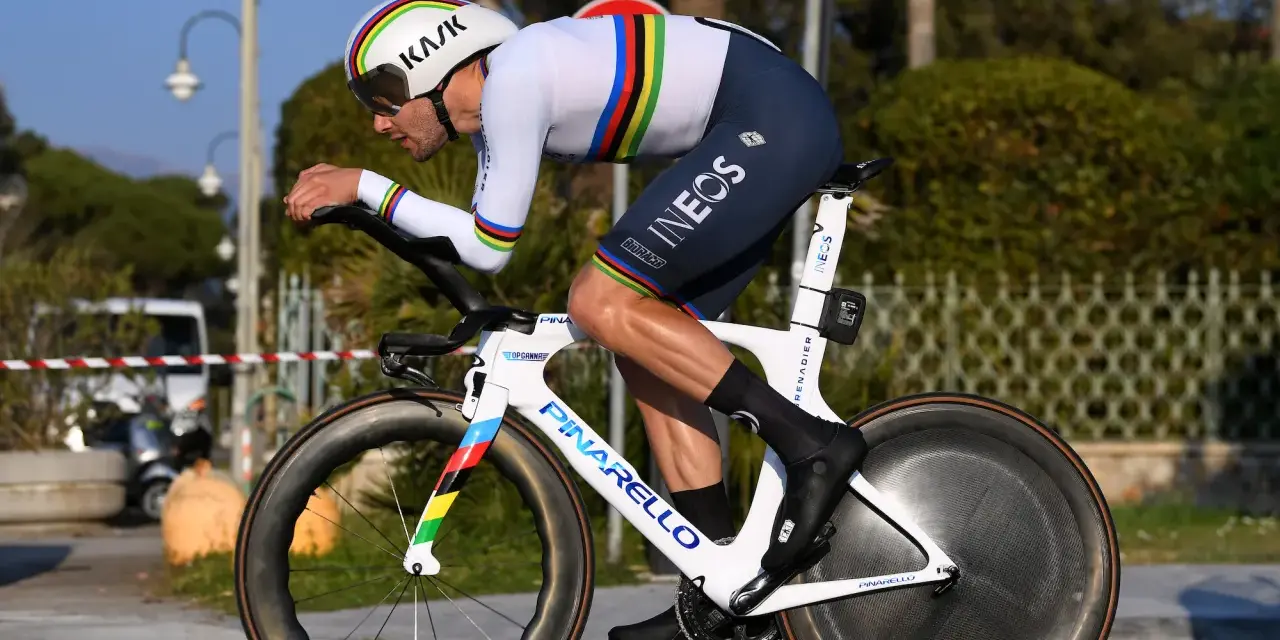
A Tour de France time trial is the race’s cleanest test of speed under pressure: no drafting, no bunch tactics, just one rider or one team against the clock. In the Tour, these stages often create the biggest swings in the overall standings because the gaps come from pacing, aerodynamics, and discipline rather than attacks. This guide breaks down how the stages work, what the 2026 route includes, and what cyclists can learn from the pros.
What matters most in these stages
- Individual time trials are solo efforts, while team time trials reward cohesion and shared pacing.
- The 2026 route includes a 19.6 km team time trial in Barcelona and a 26.1 km individual time trial from Évian-les-Bains to Thonon-les-Bains.
- Flat courses usually favor pure power and aerodynamics, while rolling or uphill courses reward riders who can stay efficient under fatigue.
- The biggest mistakes are starting too hard, choosing an aero position you cannot hold, and ignoring wind or course shape.
- For amateur riders, pacing and fit matter more than chasing expensive parts first.
What a time trial is designed to reveal
I think of a time trial as the stage where the Tour strips away help from teammates and removes the noise of the bunch. What is left is a very direct question: how fast can a rider go while holding a sustainable effort, a clean line, and a stable position?
That is why this format matters so much for the yellow jersey battle. A rider can look strong in the mountains and still lose time if the pacing or aerodynamics are off. The reverse is true as well: a specialist can take back time on a course that looks modest on paper but exposes every small mistake.
Time trial stages are also more varied than many fans expect. Some are flat and wind-exposed, some are technical, some include short climbs, and some are close to uphill tests. That variety is what makes the discipline so useful for race design, and it sets up the next question: how do the individual and team versions actually differ on the road?
How the two formats differ on race day
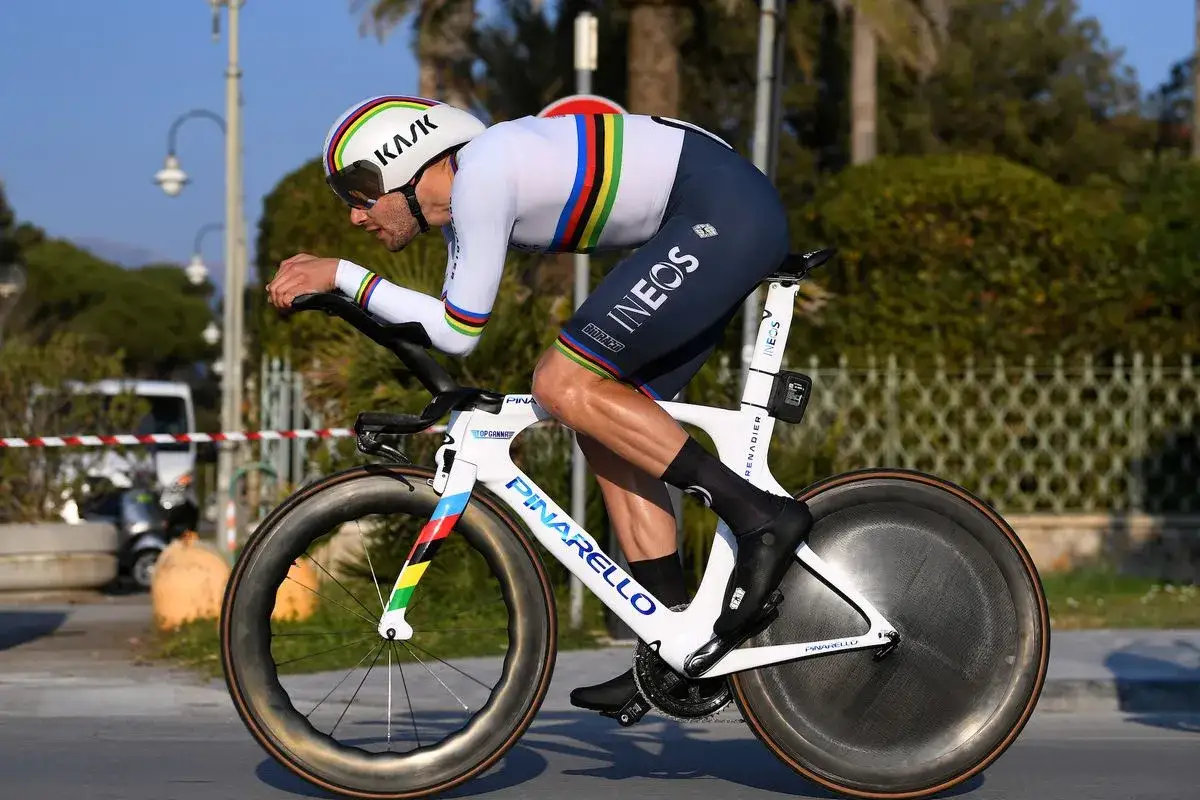
The Tour uses two distinct models, and they feel very different in practice. An individual time trial is the purest version of the discipline: each rider starts alone, and the clock does the judging. A team time trial is more choreographed, with the squad working as a unit to carry the fastest possible pace across the course.
| Format | How it works | What usually wins it | Main risk |
|---|---|---|---|
| Individual time trial | Riders start at regular intervals and race alone. | Aerodynamic position, steady pacing, clean cornering, and power you can hold. | Starting too hard and fading before the final split. |
| Team time trial | The squad rides together; in the 2026 Tour opener, the stage classification is based on the time of the first rider in each team. | Cohesion, smooth rotations, and disciplined pacing. | Uneven pulls or dropping riders too early. |
There is one rule detail that shows how isolated the individual version really is: the UCI keeps the following vehicle at least 25 metres behind the rider in a road individual time trial. That distance may sound small, but it changes the rhythm of the effort because the rider cannot rely on constant in-race shelter or close vehicle support.
The bigger point is that the team event is not just “everyone rides hard.” It is a coordinated effort, and the fastest squad is usually the one that stays organized under pressure. Once you see that difference, the next question is which kinds of course actually favor which riders.
Why course design changes the kind of rider who benefits
A time trial is not one single type of effort. The route decides whether the stage rewards raw power, a perfect aerodynamic position, climbing ability, or all three at once. I always pay close attention to the terrain before I try to predict who has the advantage.
Flat courses reward aerodynamic engines
On a flat route, the rider who can push the most speed through the air without wasting energy usually comes out ahead. There are fewer interruptions, fewer changes in rhythm, and less chance to recover from a bad line. On these days, pure specialists can create meaningful gaps.
Rolling courses shrink the margins
Once the course adds short climbs, technical corners, or exposed sections in crosswind, the gaps often compress. Strong all-rounders can use climbs to their advantage and recover slightly on descents, while less versatile specialists may struggle to keep their rhythm.
Read Also: Sportive & Gran Fondo Explained - Your Ride Guide
Short uphill tests favor riders who climb well in position
When the route tilts upward, the value of a perfect aero tuck drops a little and the value of rhythm rises. That does not turn the stage into a mountain race, but it does reward riders who can hold threshold power uphill without rocking side to side. The 26.1 km individual test in 2026, with 500 m of climbing, fits that middle ground very well.
That mix is exactly why the Tour’s route matters so much. The next section shows how the 2026 edition uses time trials to shape the race rather than simply decorate it.
What the 2026 route tells us about modern Tour time trials
The official Tour de France route for 2026 includes two very different time trial stages, and I like that balance. One opens the race, and one arrives later when fatigue has already started to shape the general classification. That is a smart way to keep the discipline important without making it repetitive.
| Stage | Type | Distance | Why it matters |
|---|---|---|---|
| Stage 1, Barcelona to Barcelona | Team time trial | 19.6 km | Sets the tone early and can create instant gaps if a squad is disorganized. |
| Stage 16, Évian-les-Bains to Thonon-les-Bains | Individual time trial | 26.1 km | Acts as a late GC separator on a course with 500 m of climbing. |
That combination tells me the organizers still see the format as more than a specialist’s bonus stage. The Barcelona opener gives teams a high-pressure collective test right away, while the stage in Haute-Savoie gives contenders another chance to gain or lose time after the mountains have already done damage. Exact timing and shape change from year to year, but that strategic role stays consistent.
It also explains why time trials are so often misread by casual viewers. The bike and kit matter, but the stage is usually decided by execution first. That brings us to the details that separate a fast ride from a merely decent one.
The details that separate a fast stage from a merely decent one
When I watch a top-level time trial, I look at four things before I look at the result sheet: body position, pacing, cornering, and how well the rider manages speed without visible strain. Those are the margins that usually decide the stage.
- Position first. A rider who cannot hold an aero tuck for the full effort loses the advantage of the expensive hardware around them.
- Pacing second. The fastest riders often start with controlled aggression, then build the effort instead of emptying the tank in the first third.
- Cornering matters more than many fans expect. Every awkward brake or sloppy line costs free speed that never comes back.
- Wind changes the script. A rider who reads crosswind and headwind well can protect time without visibly riding harder.
- Equipment helps, but only after the basics are right. Helmet, skinsuit, wheels, and tire pressure matter most when the position and fit are already dialed in.
I would not rank those choices as a shopping list so much as a hierarchy. A perfect aero helmet will not rescue a poor fit, and a deeper wheelset will not fix bad pacing. For amateur riders, that is the most useful lesson of all: buy speed only after you can actually hold the position that creates it.
Once those details line up, the stage becomes much easier to read from the roadside or the sofa. That leads naturally to the question of how to watch one well.
How I read a time trial while watching the Tour
I pay more attention to splits than to finish times, especially when the course has different terrain in the middle and final sections. A rider can look average at the first checkpoint and still produce a very strong overall result if the course suits a negative split or a late surge.
- Check the profile first, because the route tells you whether the stage rewards pure power or pacing over terrain.
- Watch the intermediate times, not just the finish, because the first split often reveals whether a rider went out too hard.
- Compare riders with similar body types and styles, since a heavy rouleur and a climbing GC rider are rarely solving the same problem.
- Pay attention to weather changes, especially wind direction, because a later starter may face a very different race.
- Look for the final kilometer shape, because some riders lose more time in the last technical section than on the open road.
If I were watching in person, I would choose either the start ramp, an intermediate checkpoint, or the final few kilometers before the finish. Those are the places where pacing errors, equipment choices, and race nerves become visible in real time. You do not need a deep technical background to enjoy it; you just need to know what to look for.
That viewing habit matters even more when the clock, not the bunch, is doing the sorting. The last step is translating what the pros do into something useful for your own riding.
What riders at home can steal from the pros
The Tour’s clock races are not just for elite cyclists. They are a good reminder that speed is usually the result of repeatable decisions, not one heroic burst. If you race local TTs, do triathlon, or simply want to ride more efficiently, these are the habits I would copy first.
- Build a pacing plan before the start, even if the effort is only 10 to 20 minutes.
- Practice holding your target position for blocks of time instead of only doing short power bursts.
- Test your kit in advance so race day is not the first time you discover a comfort problem.
- Choose equipment that fits your body and your fitness, not just the fastest-looking option in a catalog.
- Finish strong, but do not confuse a hard final minute with a smart overall ride.
If I had to reduce the whole discipline to one line, it would be this: a good time trial is controlled speed. That is why the Tour’s best specialists look calm even when they are riding at the edge. They are not guessing; they are executing a plan that fits the course, the wind, and the clock.