One of the more interesting American road racers in the 2026 peloton is a rider who can finish a hard day with a sprint, survive rough spring courses, and still matter in a stage race. This article breaks down who Luke Lamperti is, what kind of rider he has become, which results actually define him, and why his move to EF Education-EasyPost matters. I’m focusing on the details that help you understand his ceiling, not just his race record.
What matters most in his profile
- He is an American rider from California now racing for EF Education-EasyPost.
- His best version appears in fast finishes, windy classics, and tough one-week races.
- He developed through junior racing, Trinity Racing, and a WorldTour path that rewarded progression rather than hype.
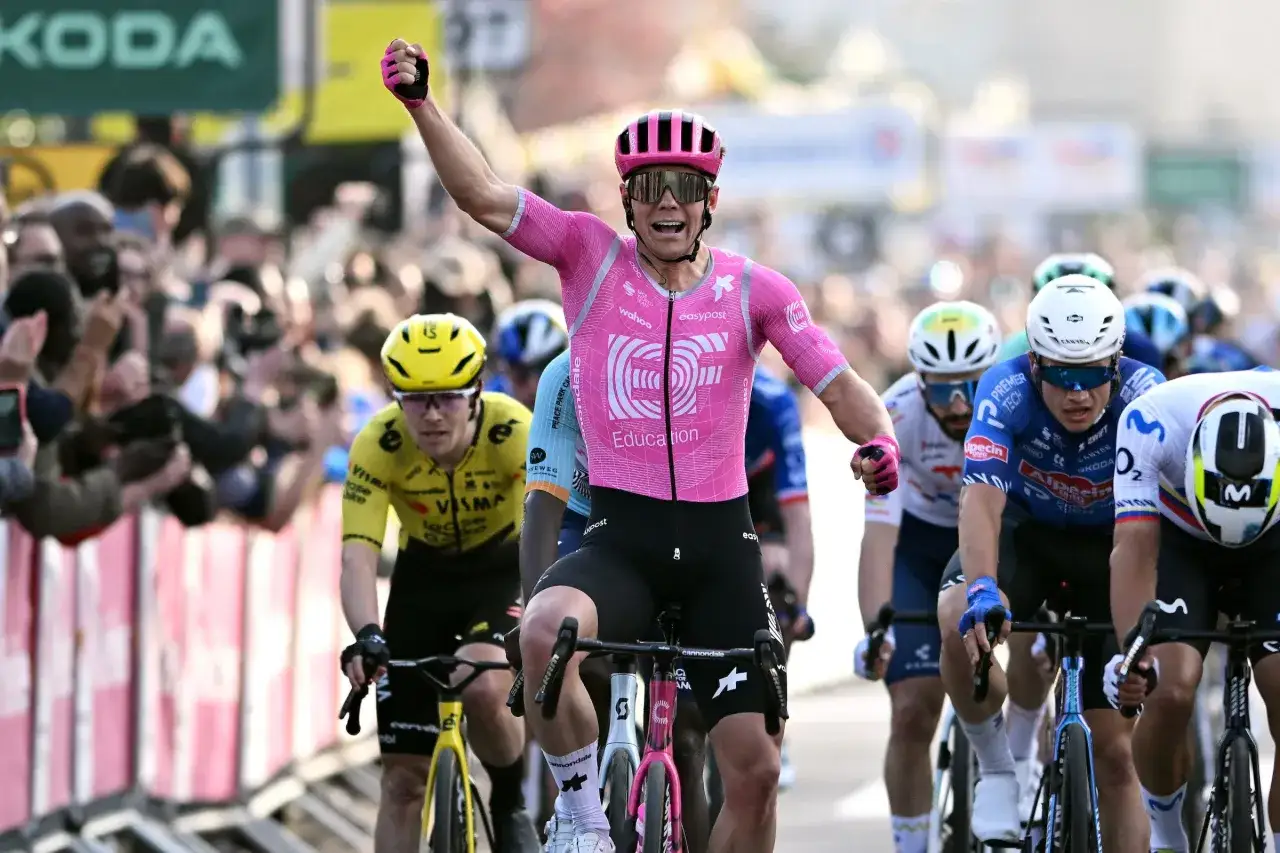
- His 2026 Paris-Nice stage win showed he can convert that profile at the top level.
- He is more than a pure sprinter, which is exactly why teams value him.
Why he stands out in the modern peloton
What makes him interesting is that he does not fit neatly into one box. He is fast, but he is not only a pure sprinter. He is strong on rougher roads, comfortable in chaotic finales, and useful when a race turns selective rather than simply flat and fast.
I see him as a power rider with sprinting ability rather than the other way around. That matters because a rider with that mix can survive more race situations: a wind-blown Belgian one-day race, a punchy finish after repeated climbs, or a stage race where the final kilometers are as much about positioning as raw speed. That is a different skill set from the classic “drop the team off and hope for the best” sprint model.
He has already shown that blend in results against proper competition, including podiums in Belgian one-day races and strong rides in stage races. The next question is where that profile came from, and the answer starts away from road racing entirely.
How motocross shaped his road-racing instincts
Before the road bike, there was motocross. That background is not just an interesting detail; it helps explain why he looks comfortable in messy, high-pressure race finales. Dirt-bike racing teaches balance, reaction speed, and a willingness to stay composed while everything around you is moving fast.
He started cycling to get stronger for motocross, then discovered that road riding gave him a different kind of freedom. From there the progression makes sense: youth racing in the United States, trips to Europe with the national team, a top-10 at Paris-Roubaix Juniors, and then a place at Trinity Racing. That path matters because it shows development through hard racing, not shortcut reputation.
Trinity was the right bridge. It gave him exposure to European racing, better positioning habits, and the kind of repeated stress that reveals whether a rider is really built for the WorldTour. If you want the simplest summary, it is this: his racing instincts were shaped long before he became a headline name.
The results that show his ceiling
The cleanest way to judge him is by looking at the types of results he keeps producing. When I do that, the pattern is stronger than a simple list of wins.
| Result pattern | What it tells me | Why it matters |
|---|---|---|
| Three U.S. criterium titles and two Tulsa Tough wins | He can handle technical, high-speed racing and still finish under pressure | That is the base skill set for any serious sprinter |
| Stage wins at the Czech Tour, Tour of Japan, and Paris-Nice | He can turn speed into results beyond domestic racing | That is the difference between a good finisher and a rider teams trust internationally |
| Podiums in races like Nokere Koerse and Bredene Koksijde Classic | He belongs in Belgian racing, where positioning and toughness are tested constantly | Those races expose weak sprint riders quickly |
| A fourth place overall at the Deutschland Tour | He can stay relevant over multiple stages, not only in one-off finishes | That gives him more uses inside a WorldTour team |
The most important result in 2026 was the Paris-Nice stage win. It was his first WorldTour victory, and it came in a race that punishes hesitation. That kind of win changes how a team uses a rider, because it proves he can deliver when the pace is high and the margin for error is tiny.
I also would not overlook the consistency behind it. By the time he reached this level, he had already built a record in criteriums, one-day races, and smaller stage events. That is why I trust the shape of his career more than any single highlight.
Why EF Education-EasyPost is the right fit
The move to EF Education-EasyPost in 2026 is more than a roster change. He joined a team that wants riders who can race aggressively in the classics, and that gives him a clearer lane than sitting behind a single pure sprinter. In practical terms, that means more opportunities to finish for himself when the course suits him.
I think this part is underrated. Riders like him improve faster when a team trusts them to read a final, not only to pull for somebody else. He can still do lead-out work, which is the job of placing a teammate into the final sprint, but he also has enough speed to be protected on the right days. That dual use is valuable. It makes him useful before the final and dangerous in it.
The American link matters too. A U.S.-based WorldTour structure understands the pressure, travel, and racing culture that come with developing an American rider in Europe. That does not guarantee success, but it removes one unnecessary layer of friction.
What serious road cyclists can learn from his profile
If I strip away the pro context, there are three practical lessons here for everyday racers.
- Train tired speed. A lot of riders can sprint fresh. Far fewer can sprint after repeated accelerations, crosswinds, or a hard climb. That is where his value comes from.
- Practice handling under pressure. Criteriums, cobbled races, and windy finishes reward calm decisions. Corner entry, shoulder checks, and clean positioning matter as much as raw power.
- Build a broader engine. His path shows that a rider does not have to stay trapped in one race type. A strong aerobic base keeps a sprinter alive when the race gets longer and meaner.
For amateurs, the training translation is simple. One or two sessions a week should include repeated short efforts, not only long steady rides. A race-style block of hard efforts after 60 to 120 minutes of riding tells you more about late-race speed than a single all-out test ever will. That is the kind of work that makes a rider dangerous when everyone else is fading.
What to watch from him in the rest of 2026
The next question is not whether he is talented; that part is already clear. The real test is what type of rider he becomes now that he has already won at WorldTour level. The signs I would watch are simple: repeat results in rough one-day races, more confidence in selective sprint stages, and whether he keeps turning team support into personal opportunity.
If he continues to score in races that combine speed, fatigue, and positioning, then he is moving from “promising American sprinter” to a rider teams have to plan around. That is a meaningful jump, and it usually happens before the wider audience notices. For anyone following road cycling closely, that is exactly why his 2026 season is worth tracking.