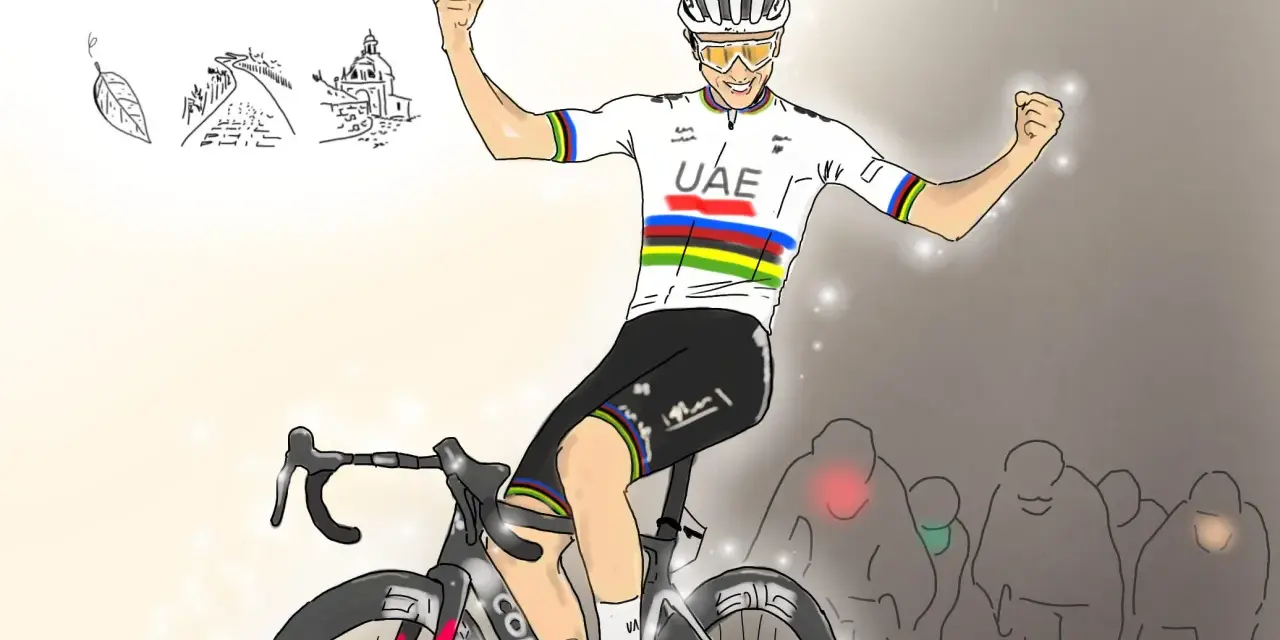
Why Pogačar enters the 2026 Tour as the rider everyone measures themselves against
- As of the June 29, 2026 team announcement, UAE Team Emirates-XRG has named Pogačar as the leader for the 113th Tour de France.
- He already has four Tour victories, which puts him one title away from the all-time record.
- His 2025 Tour was not just a win, but a dominant all-around performance: four stage wins, 13 days in yellow, and the king of the mountains jersey.
- His edge comes from a rare mix of climbing, time-trial strength, recovery, and race instinct, not from one single specialty.
- For amateur riders, the useful lesson is not “train like a pro,” but “copy the structure”: aerobic base, threshold work, smart fueling, and better pacing.
Where Pogačar stands heading into the 2026 Tour de France
As of June 29, 2026, UAE Team Emirates-XRG has made the situation clear: Pogačar leads their eight-rider lineup for the 113th Tour de France, and the team is openly targeting a record-equalling fifth title. That matters because the Tour is not won by a single big day; it is won by controlling risk, energy, and stress for three full weeks. When a team builds around one rider at this level, the entire race can change shape around him.
I think that is the most important thing casual fans sometimes miss. Pogačar is not just entering the Tour as a favorite. He is entering as the rider every rival must plan around, which means the opening week, the mountain days, and even the flat days become tactical battles rather than simple transfers between climbs.
The support around him is also not ordinary. UAE has built a squad with climbers, rouleurs, and experienced protectors, so the race is not just about his legs but about how well the team can keep him fresh, placed, and out of trouble. That team structure leads directly to the bigger question: what exactly does his Tour record tell us?
The numbers behind his Tour dominance
| Tour year | What happened | Why it stood out |
|---|---|---|
| 2020 | Won the overall classification and combined the yellow and white jerseys at the finish. | It announced him as a complete Grand Tour rider, not just a talent for the future. |
| 2021 | Won the Tour again. | It proved the first victory was not a one-off and that he could defend against elite pressure. |
| 2024 | Returned to the top step after the 2022 and 2023 defeats. | It showed resilience, patience, and the ability to reset after losing to the same main rival. |
| 2025 | Won four stages, wore yellow for 13 stages, took the king of the mountains jersey, and won the general classification by 4:24. | It was the most complete version of his Tour ride so far: aggressive, controlled, and almost never under real pressure. |
The official Tour de France results from 2025 show how deep that performance was. He did not just survive the race; he controlled it. He was also able to finish six consecutive Tours on the podium by that point, which is the kind of consistency that separates great champions from riders who only shine on isolated days.
That consistency is impressive on paper, but the more interesting question is why he can keep doing it in July, when fatigue, heat, and bad luck usually expose even the strongest riders.
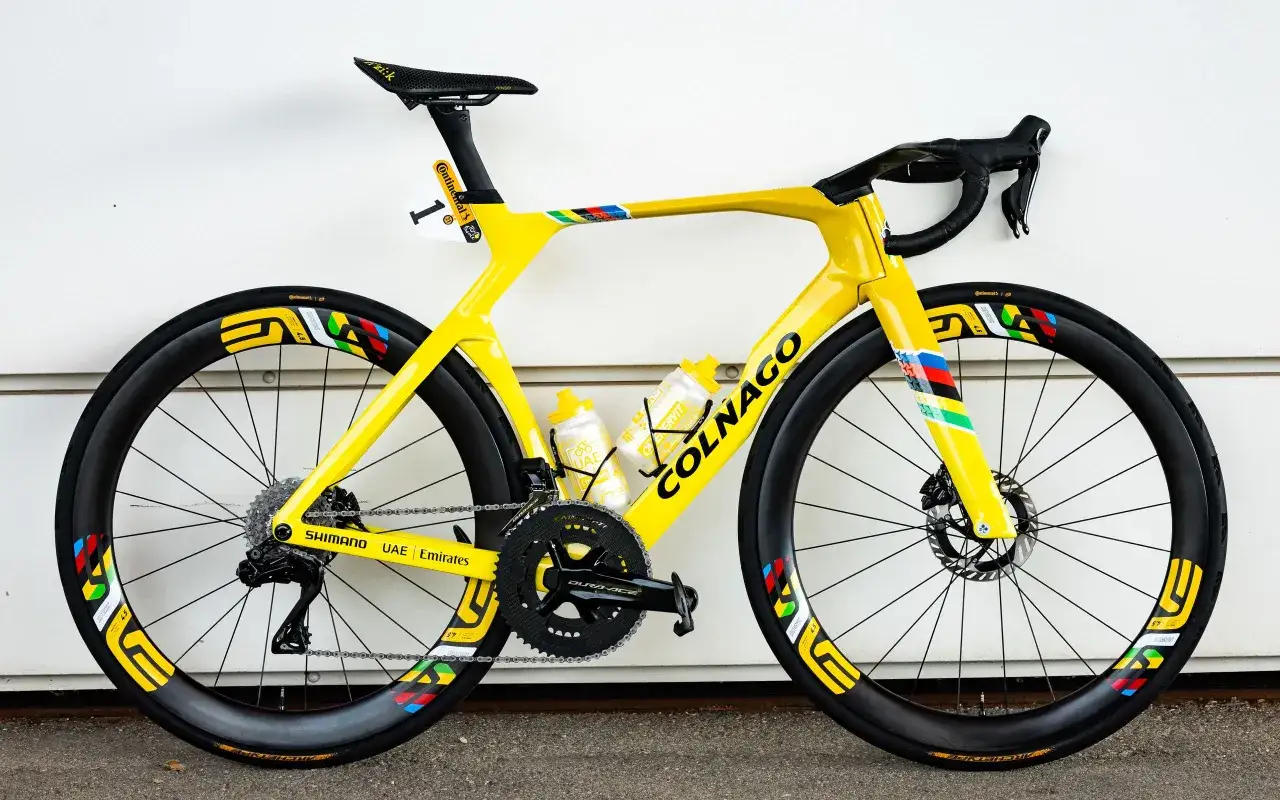
Why he keeps winning in July
When I look at Pogačar’s Tour style, I see a rider who wins because he can solve the race in multiple ways. He can climb with the best pure climbers, he can time trial well enough to create gaps, and he can recover between hard days better than almost anyone else in the peloton. That combination is rare. Most GC riders have one obvious strength and one visible weakness. Pogačar’s advantage is that he reduces the number of places where rivals can attack him.
- He has acceleration, not just endurance. On steep climbs, he can launch a burst that forces rivals to respond immediately, which is often more damaging than a long steady pace.
- He races before the race settles. Some leaders wait for the final climb. Pogačar is comfortable making the day hard earlier, which often puts other teams on the defensive.
- He does not lose much in the time trial. In GC racing, a strong time trial means you do not have to win every mountain stage to control the overall race.
- He recovers like a Grand Tour specialist should. The Tour is about repeating efforts after poor sleep, rain, crashes, and nervous finishes. Recovery is a skill, not a slogan.
One detail from 2025 says a lot: he won on roads, climbs, and in the mountains, including stage wins in Rouen, Mûr-de-Bretagne, Hautacam, and Peyragudes. That spread matters because it shows his success is not tied to one type of terrain. He can win in a Classics-style stage, then do it again in high mountains. That is the sort of versatility that makes rivals nervous from day one.
The next layer is tactical. A rider can be brilliant physically and still lose time if the team around him cannot manage the race.
The team and tactics behind the yellow jersey
A Tour favorite needs more than strong legs. He needs a support system that can protect him from wind, crashes, stress, and wasted effort. In road cycling, a domestique is a support rider who works for the leader, while a rouleur is a strong flat-terrain rider who can control the pace and shield the team from exposure. Pogačar’s 2026 squad is built around both roles.
| Role | Riders | Why it matters |
|---|---|---|
| Mountain support | Adam Yates, Isaac del Toro, Felix Großschartner | These riders help keep the pace high in the climbs so Pogačar does not have to respond alone to every move. |
| Flat and wind control | Brandon McNulty, Nils Politt, Florian Vermeersch | They help protect the leader on exposed roads, reduce stress in crosswinds, and keep him out of trouble. |
| Race management | Tim Wellens, Adam Yates, Brandon McNulty | They can cover breaks, read the race, and force rival teams to spend energy chasing. |
That structure is not cosmetic. In 2025, the team absorbed a crash-related withdrawal and still kept the race under control. That is a good reminder that Tour victories are rarely linear. Even the strongest leader can lose a helper, and the team that adapts fastest usually keeps the yellow jersey in play longer.
This is also where the Tour becomes more than a fitness test. It becomes a systems test. And if you strip away the professional detail, there are still a few things ambitious amateur riders can copy without pretending they are racing for Paris.
What amateur riders can copy from his Tour playbook
If I were building a serious amateur road season, I would not try to copy Pogačar’s volume. That would be the wrong lesson. I would copy the structure of his preparation and the way he avoids empty effort. The best riders are not just strong; they are selective. They put hard work where it pays off most.
| Pro lesson | How to apply it |
|---|---|
| Build a strong aerobic base | Keep most rides conversational and steady, with 2 to 4 endurance sessions per week during base periods if your schedule allows. |
| Use threshold work sparingly but consistently | One weekly session such as 2 x 20 minutes at roughly threshold pace, or 3 x 12 minutes, is enough for many riders. |
| Fuel before you fade | Aim for 60 to 90 grams of carbohydrate per hour on long or hard rides; 90 to 120 grams per hour only makes sense if you have trained your gut for it. |
| Recover like it matters | Prioritize 7 to 9 hours of sleep, eat protein after key rides, and avoid stacking too many hard days in a row. |
| Use data, but do not worship it | A power meter, which measures your output in watts, helps keep training honest, but pacing still has to match how you actually feel on the day. |
The practical takeaway is simple: save energy, train with purpose, and fuel aggressively enough to keep quality high. A good bike fit, reliable tires, and a position you can hold for three hours are often more valuable than another fancy upgrade. For most riders, that is where the real gains live.
That also sets up the bigger question for 2026: if Pogačar wins again, what changes beyond the podium?
What a fifth Tour would mean in 2026
If Pogačar wins the 2026 Tour, he will join Jacques Anquetil, Eddy Merckx, Bernard Hinault, and Miguel Induráin on five titles. That is not just a trivia note. It would place him in the small historical group that defines the race itself. In other words, the Tour would stop being a place where he is trying to catch legends and become a place where future riders are measured against him.
But the hard truth is that no Tour win is automatic, even for a rider this complete. Crosswinds, one bad crash, an illness in the first week, or a brutally timed mountain attack can still change the race. That is why I watch the same pressure points every July: the nervous opening stages, the first serious mountain finish, any individual time trial, and the way the team handles moments when the race becomes chaotic.
So if you are following his campaign as a fan or as a cyclist, look beyond the final result. Watch how he manages energy, how his team protects him, and how often he is the one forcing others to react. That is usually where the real story of Pogačar’s Tour de France campaign is written.