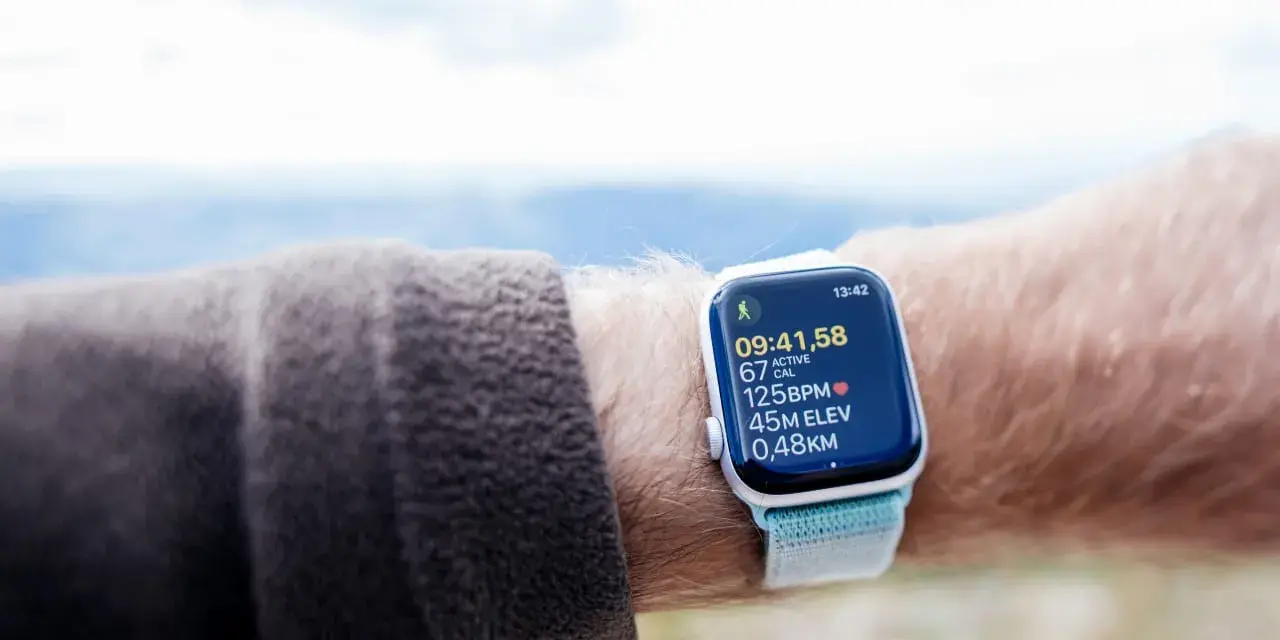
Apple Watch is a solid cycling companion, but it does not treat every ride as cardio-fitness data. In this article, I break down what the watch actually measures during bike workouts, why VO2 max does not update from cycling sessions, and how a cyclist can still get useful fitness signals from heart rate, power, cadence, and occasional off-bike workouts. The goal is simple: use the watch for the right job and stop expecting one number to explain the whole ride.
The short version is that Apple Watch tracks cycling effort well, but VO2 max comes from other workouts
- Apple Watch estimates cardio fitness from outdoor walk, run, and hiking workouts, not from cycling workouts.
- During rides, it still gives you useful data such as heart rate, cadence, power, elevation, distance, and training load.
- The cardio-fitness number is reported in a 14-65 mL/kg/min range, and classifications are available for users 20 and older.
- If you want a better trend line, complete a few steady qualifying workouts and keep your Health profile current.
- For bike-specific training, power zones and heart rate zones are usually more actionable than a single VO2 max figure.
What Apple Watch actually measures on the bike
During Outdoor Cycle and Indoor Cycle workouts, Apple Watch is very good at recording the ride itself. You can see heart rate, average speed, elevation gained, distance, and, with compatible sensors, cadence and power. It can also estimate functional threshold power, which is the highest effort you can sustain for about an hour, and it can surface Power Zones once you have set them up. For cyclists, that makes the watch useful as a training console even before you think about VO2 max.
That distinction matters because ride data answers a different question from cardio fitness. A hard climb, a tempo ride, or a recovery spin may all be tracked well, but those sessions are not what Apple uses to calculate the cardio-fitness estimate. I treat the bike screen as the place where the watch proves its value, and the VO2 max card as a separate layer on top of it. That separation is exactly why cycling workouts do not move the VO2 max estimate, and it is the first thing cyclists need to understand before looking for a workaround.
Why cycling does not update VO2 max
Apple’s cardio-fitness estimate is built around outdoor walk, run, and hiking workouts, not cycling. My read is that the model needs movement patterns, GPS context, and heart-rate response that stay relatively stable, and cycling is simply messier: coasting, traffic lights, drafting, hills, indoor trainers, and frequent changes in posture all make the relationship between effort and movement less predictable. That is an inference, but it matches how the feature behaves in practice. So if you ride five days a week and never go for a brisk walk, run, or hike, your cardio-fitness number may stay flat even while your cycling performance improves. That does not mean the watch is failing or your training is not working. It means Apple has chosen a narrower signal, and cycling is not one of the activities feeding it. Once you accept that, the practical question becomes what cyclists should watch instead.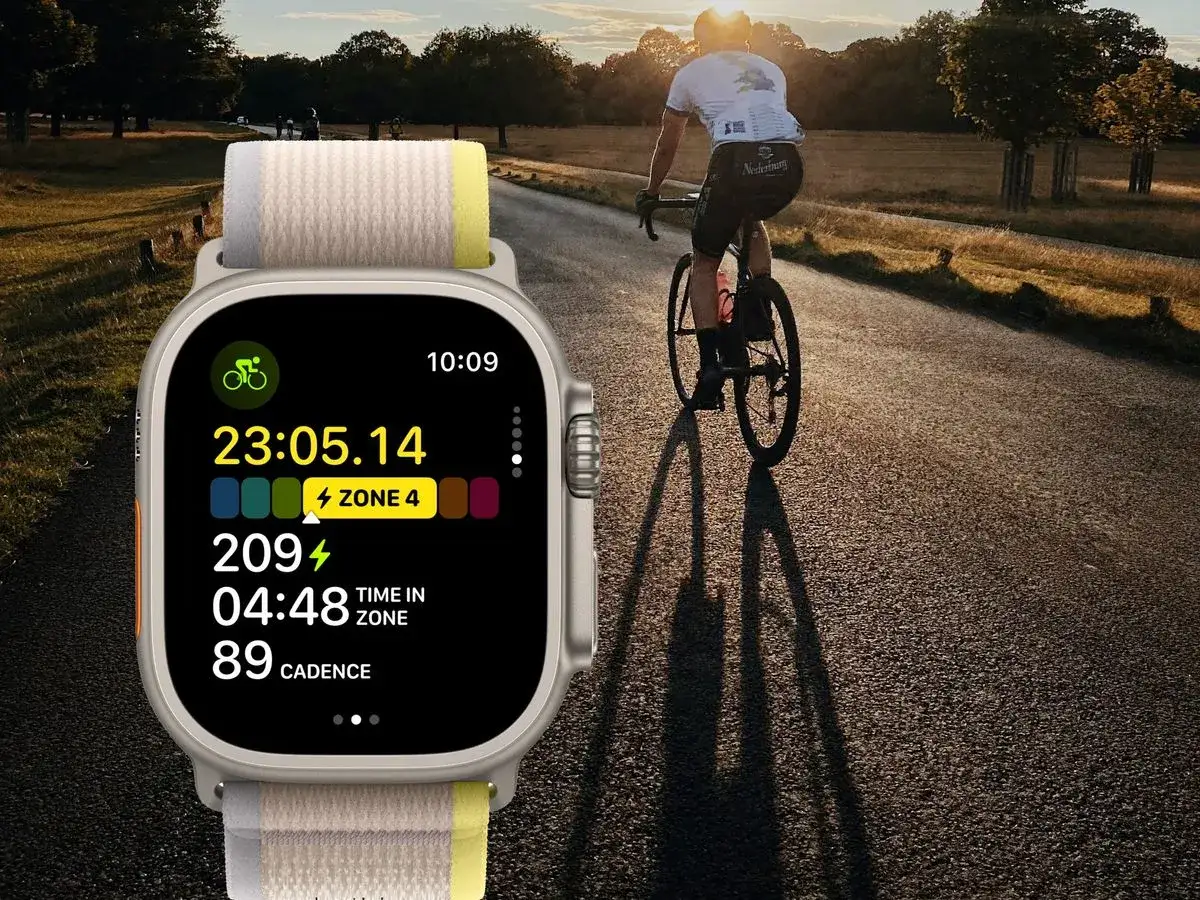
What to track instead on the bike
If I want to judge a bike workout, I start with the metrics the watch already understands well. The cleanest signals are power and heart rate, followed by cadence and route context. Speed matters, but only when conditions are controlled. On a windy day, in city traffic, or on a hilly route, average speed can flatter or punish a ride in ways that have little to do with fitness.
| Metric | What it tells you | Why it matters |
|---|---|---|
| Heart rate zones | How hard your body is working internally | Useful for pacing climbs, intervals, and endurance rides |
| Power and Power Zones | How much work you are producing on the bike | The best cycling-specific measure for intervals and race pacing |
| Cadence | How quickly you are turning the pedals | Helps you spot inefficient gearing or sloppy pacing |
| Elevation and route data | How terrain shaped the ride | Prevents false comparisons between easy and hard courses |
| Training load | How much stress recent workouts have created | Helps you avoid stacking too many hard days together |
How to get a reliable cardio fitness estimate as a cyclist
When you do want Apple’s cardio-fitness estimate to reflect your overall fitness, give the watch the best possible data. Apple says it can take at least 24 hours of wearing the watch, plus several qualifying outdoor walk, run, or hiking workouts, before the first estimate appears. In other words, one hard ride will not do the job, and the estimate improves only after the watch has seen enough consistent patterns.
- Wear the watch snugly, on top of the wrist, so the heart-rate sensor stays close to your skin.
- Keep your Health profile current with age, sex, weight, height, and any medications that affect heart rate.
- Use steady outdoor walks or hikes if you do not run; those are enough to keep the estimate moving.
- Choose routes with good GPS and relatively even effort instead of stop-start efforts.
- Accept update prompts in Health if the app says your previous cardio-fitness data could be more accurate.
I also tell cyclists not to overvalue the absolute number. The trend is usually more useful than the exact value, especially if most of your real training happens on the bike. Cold weather can also make wrist heart-rate readings a little noisier, so I would not judge a winter session too quickly. From there, the next question is whether the watch is enough for your goals or whether you need a different benchmark entirely.
When a cycling-specific test makes more sense than the watch
For general fitness, recovery tracking, and ride logging, Apple Watch is usually enough. For cyclists who want a bike-specific VO2 max or a performance number they can trust as a race benchmark, it is not enough on its own. A lab test on a cycle ergometer, or a coached field test built around cycling, gives you a truer benchmark because it measures the sport you actually perform. That matters if you race, compare seasons, or make decisions about threshold work.That is the line I use in practice: if the question is “Am I getting fitter overall?” the watch can help. If the question is “How has my cycling-specific aerobic capacity changed?” I would rather see a cycling test, a coached field test, or a lab assessment. The watch still has a place in that picture, but it should not be the only source of truth. With that boundary in mind, here is the setup I would actually use.
The setup I would use to make Apple Watch useful on and off the bike
The setup I would use is simple. Start every ride with Outdoor Cycle or Indoor Cycle, connect cadence and power sensors if you have them, and build your workout views around heart rate zones and Power Zones rather than chasing pace. Then add one or two qualifying non-cycling cardio sessions each week if you want the cardio-fitness estimate to stay alive and informative.
I would also review training load weekly, because that tells me whether my body is absorbing the work or just accumulating fatigue. Keep your date of birth, height, and weight current so Power Zones calculate correctly, and wear the watch snugly enough that the sensor has a clean signal. If the watch says your cardio fitness is flat but your power numbers, climbing, or repeatability are improving, I trust the bike data first. Used that way, Apple Watch becomes a strong training tool for cyclists: excellent for logging effort, helpful for trends, and honest about the limits of its VO2 max model.