
High-intensity intervals can turn a normal bike workout into a much sharper training stimulus. The main HIIT cycling benefits show up when you want better fitness in less time: stronger cardiovascular output, better repeat-sprint ability, and a more efficient engine on climbs and hard group rides. I’ll break down what those gains actually feel like, how to build a session that works, and where the method starts to backfire if you use it too often.
The fastest gains come from hard efforts backed by real recovery
- Bike intervals are best treated as a targeted tool, not as every ride.
- Most of the value comes from faster cardio gains, stronger repeat power, and better fatigue resistance.
- Short sessions can be very time-efficient, but they still need a warm-up, cooldown, and easy days around them.
- For most riders, one or two hard interval rides a week is enough to make progress.
- If you have a medical condition, a recent injury, or a long break from training, start with a scaled version and get clearance if needed.
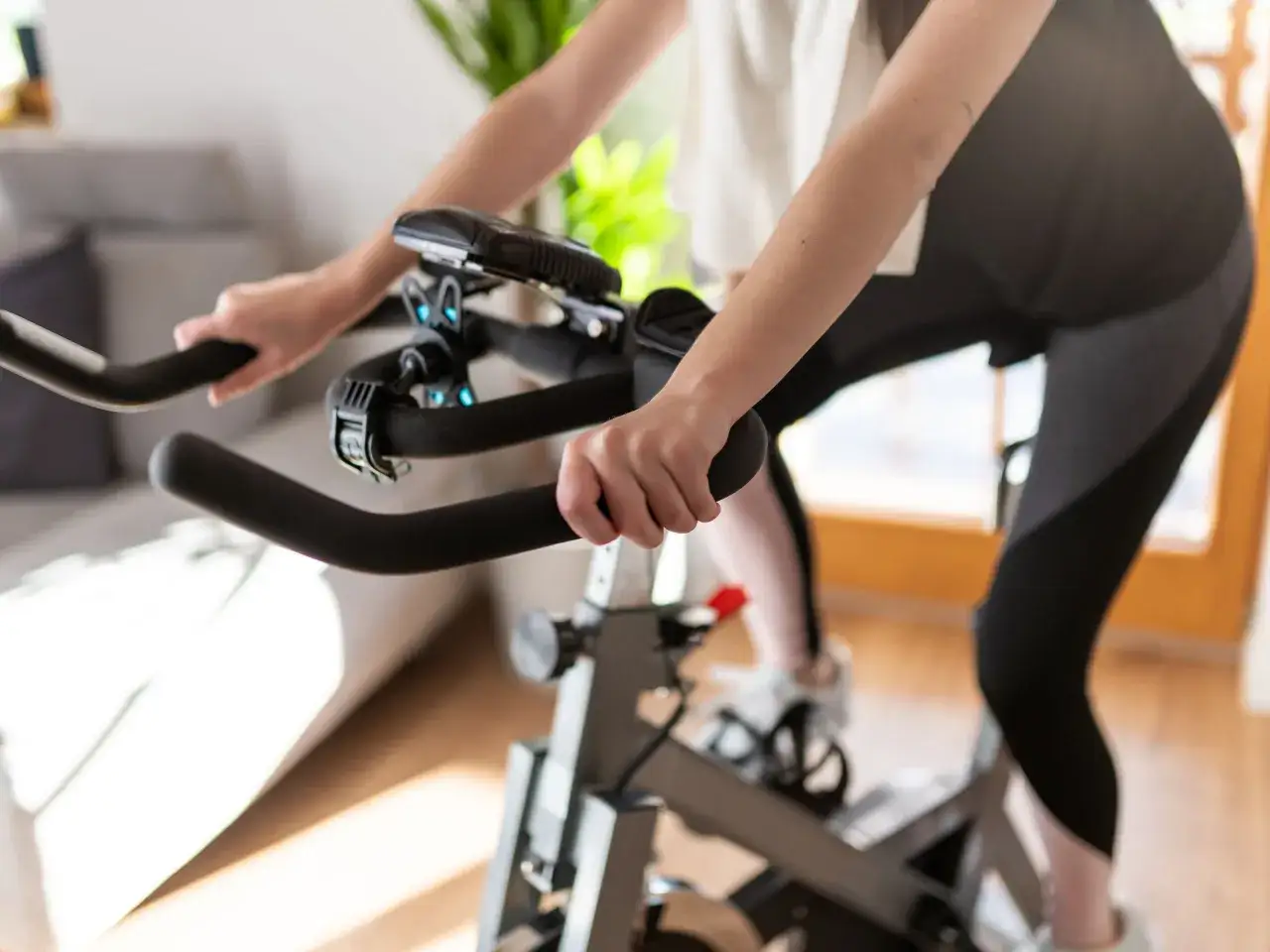
What HIIT on the bike actually trains
HIIT on a bike is simple in concept: short, hard efforts followed by enough recovery to repeat the work with quality. That pattern pushes your heart, lungs, and legs in a way steady riding usually does not. I like it because it lets you create a very demanding workout without the pounding you would get from run-based intervals.
The biggest adaptation is usually aerobic power, which is your ability to deliver and use oxygen when the pace gets serious. It also trains the anaerobic side of cycling, meaning the systems that help you surge, sprint, and climb above a comfortable pace for brief periods. In plain English, you become better at handling hard efforts and recovering from them before the next one arrives.
That matters on the road as much as it does on the trainer. A cyclist who can hold a steady endurance pace is useful; a cyclist who can also respond to attacks, crest hills without blowing up, and clear lactic burn faster is much harder to shake. That distinction matters, because intervals are useful only when you know what they should improve and what they should not replace.
HIIT rides vs steady endurance rides
People often ask whether interval work is better than long, steady riding. My answer is no, but it is better for different things. The best programs usually combine both, because each style fills a gap the other leaves open.
| Training style | Best payoff | Time cost | Main trade-off |
|---|---|---|---|
| HIIT ride | Faster fitness gains, repeat power, VO2 max development | Usually 20 to 40 minutes of work, plus warm-up and cooldown | Higher fatigue, more recovery needed |
| Steady endurance ride | Aerobic base, durability, recovery between hard sessions | Often 60 minutes to several hours | Slower visible change, but easier to repeat often |
For general health, I would not force a false choice here. Harvard Health notes that HIIT can improve cardiovascular fitness faster because you work harder rather than longer, but it is not automatically better for every outcome. If your week already includes a hard group ride, that may count as intensity; you do not need to stack more hard work on top just to feel productive.
The cleanest approach is to use intervals for precision and endurance rides for volume. Once you see that balance, the next question is what the health and body-composition upside actually looks like.
The health upside that people often miss
The obvious benefit is fitness, but the broader payoff is metabolic. Interval work can help improve blood sugar control, support healthier body composition, and create a stronger cardiovascular response in less time than a long moderate ride. That does not make it magic, and it does not erase the need for good nutrition, sleep, or enough total movement across the week.
I think of it as an efficient accelerator, not a substitute for the rest of training. For most healthy adults, the familiar benchmark of 150 minutes of moderate activity or 75 minutes of vigorous activity per week is still a useful anchor. HIIT helps you collect vigorous minutes efficiently, but your body still benefits from the easy rides, walking, mobility work, and recovery days that sit around it.
There is also a mental side that cyclists underestimate. Hard intervals ask you to stay calm when your breathing gets ragged and your legs start to argue back. That is useful practice, especially if you race, ride fast group events, or just want more confidence when the pace changes unexpectedly. Once you know why the work matters, the practical problem becomes how to structure it well.
How I build a HIIT ride that actually works
The warm-up is not optional. I like 10 to 15 minutes of easy spinning, then a few short pickups so the legs know what is coming next. Mayo Clinic points out that a proper warm-up can reduce muscle injuries by as much as 30% to 50%, and in my view that is one of the cheapest performance wins you can buy with time alone.
For the hard parts, I use effort before ego. If you have a power meter, follow it. If you do not, use a rate of perceived exertion, or RPE, which is a simple 1-to-10 scale for how hard the effort feels. For most interval work, the hard sections should sit around 8 to 9 out of 10, while the recovery should feel almost too easy.
| Session | Example | Best for | Notes |
|---|---|---|---|
| Short sprint set | 10 x 30 seconds hard, 90 seconds easy | Leg speed and finishing power | Keep form smooth; do not turn every rep into a sloppy max effort |
| Classic VO2 set | 6 x 1 minute hard, 2 minutes easy | High-end aerobic power | Very effective when you are short on time |
| Longer interval set | 4 x 4 minutes hard, 3 minutes easy | Climbing strength and fatigue resistance | Harder to complete well, but excellent for riders with a base already in place |
I usually finish with 5 to 10 minutes of easy spinning so the body can come down cleanly. If you want the session to keep paying off, progress one variable at a time: add one interval, extend one rep slightly, or shorten recovery a little. Do not push every knob at once, because that is how a useful workout turns into dead legs for three days.
Once the structure is clear, the next thing worth fixing is the list of mistakes that quietly erase the benefit.
The mistakes that erase the benefit
The biggest mistake is treating every interval ride like a test. If you race the workout every time, you lose the ability to repeat quality efforts across the week. The second mistake is skipping recovery because the session felt short. Short does not mean cheap; a hard 30-minute ride can still carry a big recovery cost.- Doing too many hard sessions in a row.
- Starting intervals without a real warm-up.
- Using all-out intensity when your sleep, fueling, or hydration is poor.
- Ignoring bike fit and cadence, then blaming the workout when knees or hips complain.
- Trying to build fitness while carrying pain, illness, dizziness, chest discomfort, or unusual shortness of breath.
That last point matters more than many riders want to admit. Interval training can be safe when it is tailored to the person, but it should be scaled for anyone coming back from injury, managing a heart or blood-sugar issue, or returning after a long break. If the body is already under stress, more intensity is usually not the answer.
The cleanest way to avoid those problems is to place the hard work inside a weekly rhythm you can actually recover from.
A weekly rhythm that keeps progress coming
I usually start riders with one interval day per week, especially if they are busy or still building consistency. Once that session feels controlled and recovery stays good, a second hard day can make sense. I almost never want hard rides stacked back to back unless there is a very specific training reason.
| Rider type | Weekly structure | Why it works |
|---|---|---|
| Beginner | 1 interval ride, 2 to 3 easy rides, 1 longer steady ride, 2 lighter or rest days | Enough stimulus to improve without overwhelming recovery |
| Recreational rider | 1 to 2 interval rides, 1 longer endurance ride, 1 to 2 easy spins, 1 to 2 recovery days | Balances fitness gains with a realistic fatigue load |
| Experienced or racing rider | 2 targeted hard sessions, 1 longer ride, additional easy volume, at least 1 true recovery day | Supports performance without flattening the legs for the next quality day |