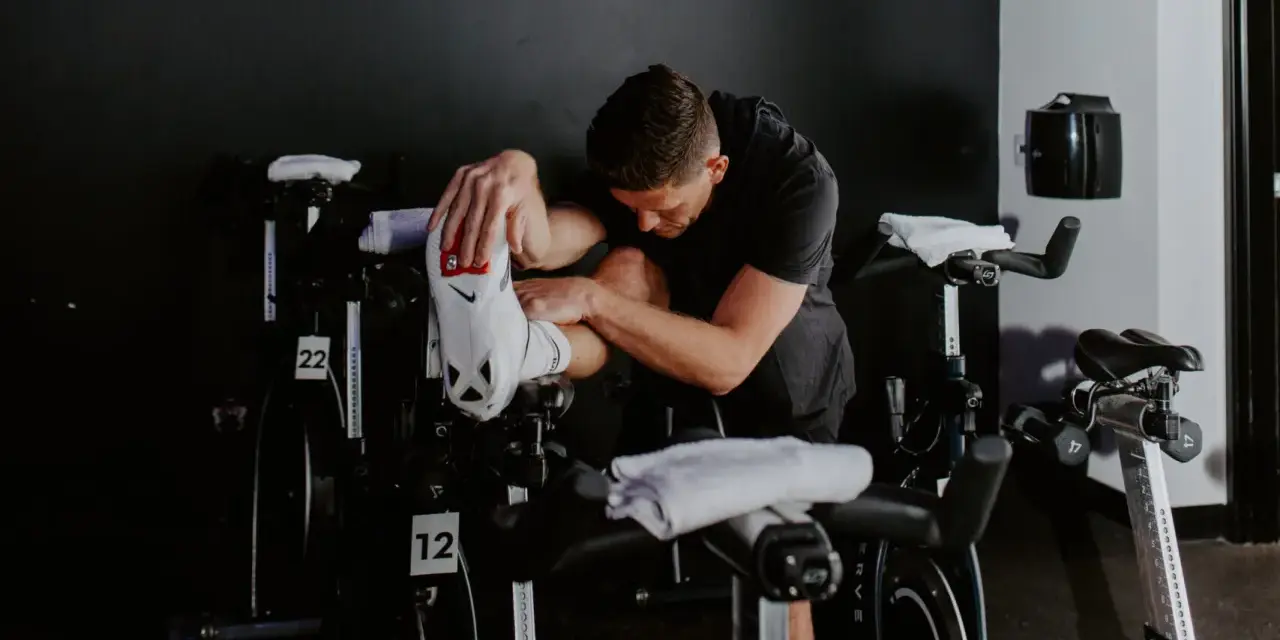
A well-done outer hamstring stretch can help when the outside of the back of your thigh feels stubborn after long rides, long sits, or a hard training block. I’m focusing on the biceps femoris, the lateral hamstring head most cyclists notice first, and on the cues that make the stretch useful instead of vague. You’ll get a practical set of stretches, the best timing for each one, and the mistakes that usually waste time or irritate the knee.
A controlled stretch works better than forcing the outside of the thigh
- The muscle most people mean is the biceps femoris, the outer hamstring head.
- I use short, pain-free holds after riding and dynamic mobility before hard efforts.
- For cyclists, tightness often reflects saddle position, long sitting, or weak glutes as much as flexibility.
- If you feel pain near the sit bone, knee, or nerve-like symptoms, stop chasing a stretch and assess the issue.
What the lateral hamstring is and why it tightens on the bike
The lateral hamstring is the outermost part of the hamstring group, and the key muscle here is the biceps femoris. It sits on the back and outside of the thigh, crosses both the hip and the knee, and that two-joint setup is exactly why it can feel tight so easily. When I see cyclists complain about this area, it is usually not because the muscle is “short” in a simple sense; it is because the muscle is being asked to work in a fixed position over and over.
That can happen for a few reasons:
- Long hours of hip flexion on the bike or in a chair.
- A saddle that is a little too high, which makes the hamstrings reach farther at the bottom of the pedal stroke.
- Weak or underactive glutes, which shifts more work to the back of the thigh.
- Too much intensity, too soon, especially after travel or a break from riding.
I also think it helps to separate tightness from pain. Tightness usually feels like resistance through the muscle belly. Pain that sits high near the sit bone, low near the outer knee, or feels sharp, burning, or numb is a different problem and should not be treated like a normal flexibility issue. Once you know what you are actually feeling, choosing the right stretch gets much easier.
How I set up a stretch so it actually reaches the right tissue
I do not try to “win” a stretch by grabbing farther or rounding harder. The cleaner approach is to line up the hip, knee, and foot, then increase tension until I feel a steady pull in the back of the thigh. I want mild to moderate tension, no bouncing, and no need to grimace. If the effort climbs above a 4 out of 10, I back off and reset.
Supine strap stretch
- Lie on your back and loop a strap, towel, or band around the ball of one foot.
- Keep the other leg bent if that helps your lower back stay relaxed.
- Raise the working leg until you feel tension through the back of the thigh, not a sharp pull behind the knee.
- Keep the pelvis heavy, the ribs quiet, and the knee mostly straight without jamming it locked.
- Hold for 20 to 30 seconds, breathe normally, then repeat 2 to 4 times per side.
This is my default choice because it is easy to control and easy to repeat. If one side feels much tighter, do not force the leg higher. Instead, slow the exhale and let the tissue settle.
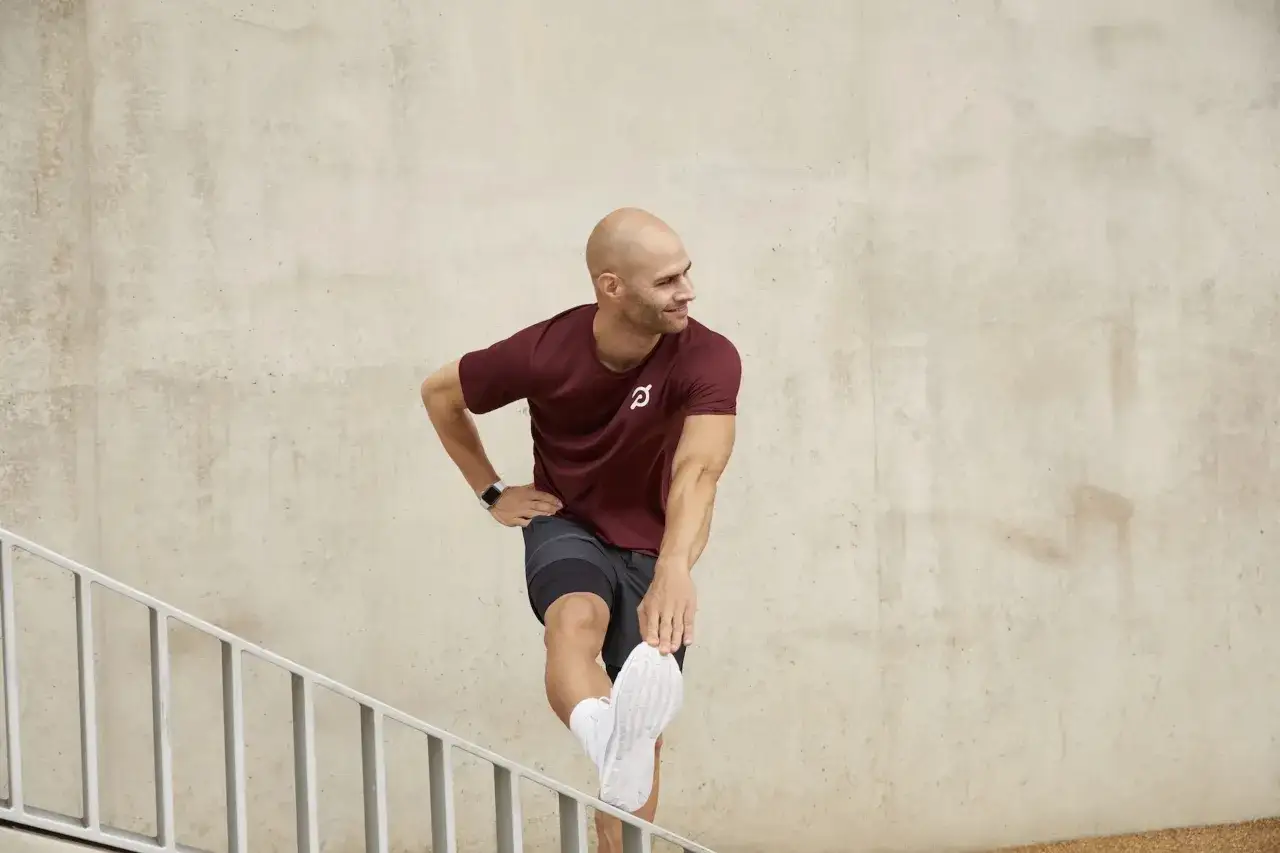
Standing heel-on-step hinge
- Place one heel on a low curb, step, or bench.
- Keep the working leg long but not locked rigid.
- Hinge forward from the hips with a long spine.
- Stop the moment you feel the back of the thigh lengthen without rounding your low back.
- Hold for 15 to 25 seconds and repeat 2 to 3 times.
I like this one for travel days, rest stops, and quick resets between sessions. It is simple enough to do almost anywhere, which matters more than people think. The best stretch is the one you will actually repeat.
Read Also: FTP Fitness Meaning - Maximize Your Cycling Power
Seated single-leg fold
- Sit on the floor or the edge of a firm surface with one leg extended.
- Square your hips as much as you can without twisting hard.
- Reach toward the shin or ankle by folding at the hips, not by collapsing the chest.
- Pause where the back of the thigh feels loaded and keep the neck loose.
- Hold for 20 to 30 seconds, then switch sides.
This version is useful when you need a more deliberate cool-down after an indoor trainer session or a long climb. If your lower back does most of the work, sit up a little taller and reduce the range. Clean form beats a deeper position every time.
Which version I use before a ride and after one
I separate my mobility work into two buckets. Before a ride, I want the tissue warm, elastic, and ready to produce force. After a ride, I care more about length, recovery, and getting rid of that locked-up feeling. The timing matters more than most riders realize.
| Situation | Better choice | Why it fits |
|---|---|---|
| Before intervals or a hard climb | Leg swings, hip hinges, marching drills | They warm the posterior chain without long holds |
| After an easy spin | Supine strap stretch | Low load, easy to breathe through, easy to repeat |
| During a travel day | Standing heel-on-step hinge | Works in a hotel room, parking lot, or rest area |
| If the knee feels sensitive | Bent-knee version with a smaller range | Reduces tension while you still lengthen the muscle |
For warm-ups, I usually keep things moving: 8 to 12 leg swings per side, 8 to 10 hip hinges, then a few easy pedal strokes before I ask for power. For cooldowns, I prefer 2 to 4 static holds of 20 to 30 seconds. If one side stays stubborn, I do not double the force; I double the attention.
The form mistakes that make the stretch feel useless
Most stretch failures are not about flexibility at all. They come from poor setup or from trying to push past the point where the muscle can actually adapt. These are the mistakes I see most often:
- Rounding the lower back to reach farther instead of hinging at the hips.
- Locking the knee hard, which can shift stress away from the muscle and into the joint.
- Bouncing or yanking, which turns a stretch into a small impact event.
- Holding the breath, which makes the whole posterior chain guard and resist.
- Forcing a dramatic foot turn, when a small, neutral change is usually enough.
- Stretching through pain, especially if the pull feels sharp, electrical, or pinchy.
The fix is usually boring, and that is a good sign. Slow the movement down, shorten the range, and hold a position that feels like work rather than threat. If the muscle relaxes a little after the first exhale, you are probably in the right zone. If it gets angrier, you have gone too far.
When tightness is a fit, strength, or injury issue
This is the part people skip, and it matters. A stretch can be useful, but it will not solve everything. If the same side tightens on every ride, I start thinking about the bigger system around it:
- Saddle height or reach may be off if the hamstring is always working at end range.
- Glute weakness may be forcing the hamstrings to stabilize and propel more than they should.
- Proximal hamstring irritation is possible if the pain sits high at the sit bone.
- Lateral knee discomfort is not the same thing as hamstring tightness and should not be stretched blindly.
- Numbness, tingling, or burning points away from a simple mobility problem.
When I want to support the stretch with strength work, I keep it simple: glute bridges, single-leg bridges, and Romanian deadlifts. Those movements teach the hamstrings to handle load at longer lengths, which is useful for cyclists who spend a lot of time in a bent position. If flexibility improves for a day and then disappears, strength or fit is usually part of the story.
The routine I would actually use after a ride
Here is the short version I would use on a normal training day. It takes about five minutes, which is realistic enough to keep doing:
- 2 minutes of easy spinning or brisk walking to bring the temperature down.
- Supine strap stretch, 2 rounds per side, 20 to 30 seconds each.
- Standing heel-on-step hinge, 2 rounds per side, 15 to 20 seconds each.
- 1 set of 8 to 12 glute bridges to remind the posterior chain how to share the load.
If I am traveling, I drop the bridges and keep the standing hinge plus the strap stretch. If I am fresh and the leg feels normal, I stop there. If the outside of the thigh still feels pulled the next morning, I do not chase a deeper stretch; I look at the bike setup, the last week of training load, and whether the tissue is actually irritated. That is the difference between random stretching and a routine that keeps working.