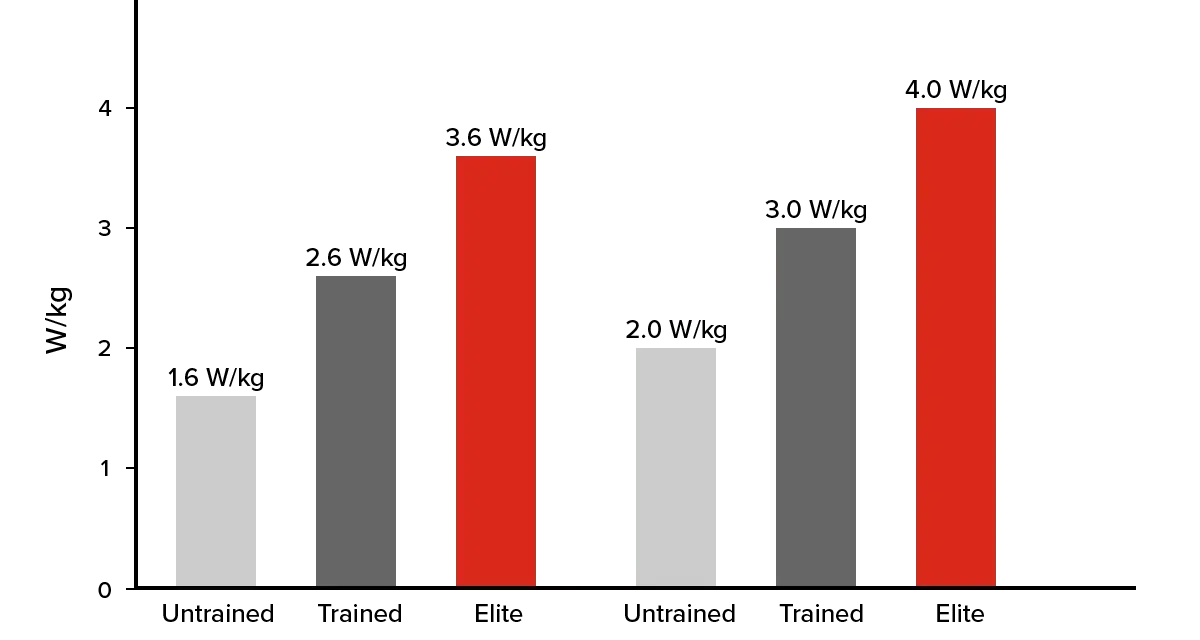
Average watts cycling matters, but only when you read it in context. A steady 180 W on a flat endurance ride says something very different from 180 W on a hilly group ride with repeated surges, and both say something different again from a 20-minute test or an all-out climb. In this guide, I break down what the number really measures, what typical ranges look like for different rider types, and how to improve your output without chasing meaningless noise.
The number is useful only when you read it alongside weight, duration, and route profile
- Average power is a workload snapshot, not a full picture of how hard the ride felt.
- Normalized power is often more useful on stop-start, hilly, or group rides because it weights surges more heavily.
- For many adult riders, steady outdoor averages commonly fall somewhere between 125 W and 250 W, depending on fitness and body size.
- Watts per kilogram is the cleaner comparison metric when climbing or racing on mixed terrain.
- The fastest improvements usually come from structured work: endurance volume, sweet spot, threshold, and recovery.
What average cycling power actually tells you
I treat average power as a summary of the work you produced over a ride. It is useful because it is objective, repeatable, and easy to track over time. But by itself it does not tell you whether the effort was smooth, jagged, efficient, or brutally stop-start.
The key distinction is this: average power tells you what happened overall; normalized power tells you what the ride likely cost you physiologically. A rider can average a modest number on a race or hilly group ride because coasting and soft-pedaling drag the average down. That does not mean the ride was easy. It means the terrain and pacing made the raw average less representative.
Power is also immediate in a way heart rate is not. Heart rate is influenced by heat, stress, sleep, altitude, caffeine, and fatigue, and it lags behind changes in effort. That is why I trust power more for pacing intervals and shorter efforts, while heart rate still has value for checking how a rider is absorbing training over the long run.
So the first mistake to avoid is reading one average number as if it were the full story. Once that is clear, the next question becomes more useful: what is a normal number for a rider like you?
Typical wattage ranges for different rider types
There is no universal “good” wattage. A heavier rider may post a higher raw number at the same relative effort, while a lighter rider may look less impressive in absolute watts but be stronger on climbs. That is why I like to read watts and watts per kilogram together.
| Rider type | Rough steady average watts | What it usually suggests |
|---|---|---|
| New or returning rider | 75-125 W | Easy spins, short commutes, indoor base work, or relaxed outdoor rides |
| Recreational fitness rider | 125-175 W | Comfortable endurance pace that can be held for a decent amount of time |
| Regular club rider | 175-225 W | Brisk, controlled riding on rolling routes or longer steady sessions |
| Strong amateur racer | 225-300 W | Solid race-level or hard training output, especially on sustained efforts |
| Elite-trained rider | 300 W+ | High-level sustained power; sprint peaks can be far higher |
Those ranges are intentionally broad. If you want a cleaner comparison, convert to watts per kilogram. At 75 kg, 2 W/kg is 150 W, 3 W/kg is 225 W, and 4 W/kg is 300 W. That is why a trained rider can look ordinary in raw watts and still be very strong relative to body size.
That also lines up with what training platforms see in practice. TrainerRoad’s athlete data, for example, puts trained riders around roughly 170-225 W FTP and elite riders above that range, which is a reminder that sustained power varies a lot once you account for training age and category. The exact number matters less than whether it fits the type of riding you want to do.
Raw watts are only the starting point, though. The same output can feel completely different once the route, wind, and pacing pattern change.
Why route and pacing change the number so much
This is where people usually overinterpret the data. A smooth, uninterrupted trainer ride, a rolling outdoor route, a hard climb, and a city ride with traffic lights can all produce very different averages even when the rider is equally fit.
- Drafting lowers the watts needed to hold speed, so a group ride average can understate your fitness.
- Hills force more continuous pedaling, which often raises average power and makes the effort feel harder.
- Descents and stoplights drag the average down because you are not producing power while coasting or stopped.
- Indoor trainers remove most coasting, so average power can look higher and more stable than it does outside.
- Heat, fatigue, and underfueling reduce sustainable output even if your motivation is unchanged.
That is why normalized power is so helpful on variable rides. It gives more weight to the harder surges and less to the easy sections, which is often a better reflection of how stressful the session really was. A 200 W average on a stop-start route can be more demanding than a 220 W steady endurance ride.
If you take only one thing from this section, take this: same watts does not always mean same effort. To make the number useful, you need a repeatable way to measure it.
How to measure your baseline without fooling yourself
When I want a number I can trust, I remove as much randomness as possible. That means using the same power source, the same type of test, and the same interpretation rules every time.
- Use one reliable power source. A calibrated crank, pedal, hub, or smart trainer is fine. Just do not compare wildly different devices as if they were identical.
- Warm up first. Ten to fifteen minutes is usually enough to settle the legs and make the output more representative.
- Choose a repeatable test. I prefer a steady 20-minute, 30-minute, or 60-minute segment on a known route, or a structured indoor workout with the same intervals each time.
- Be consistent about time basis. Decide whether you are comparing moving time or elapsed time, then stick to it. Traffic lights and coffee stops can change the meaning of the average.
- Track the same companion metrics. I always look at cadence, heart rate, duration, elevation, and normalized power alongside average watts.
- Retest on a schedule. Every 4 to 6 weeks is a sensible rhythm for most riders who are training consistently.
If you are using a computer or head unit, I also recommend paying attention to the display fields you keep on screen. Average power is useful, but a live power field, lap power, and normalized power give you a much better view of what you are doing in the moment. That matters because pacing errors usually show up before the final average does.
Once you have a trustworthy baseline, the real value is in improving it with training that actually transfers to the road.
How I would raise average power in a way that actually sticks
The fastest path is not random hard rides. It is a mix of aerobic volume, targeted intensity, and enough recovery for adaptation to happen. I prefer simple, repeatable work that can be sustained for months, not a heroic week that leaves you flat for the next three.
Build the aerobic floor first
Most riders need more time at easy to moderate endurance effort than they think. Two or three steady rides per week, even at modest wattage, create the base that lets harder work land properly. If you skip this layer, interval sessions often feel heroic but fail to move your average output much.
Add one or two focused quality sessions
For riders who already have some base, I like a small number of disciplined sessions:
- Sweet spot work such as 2 x 20 minutes at roughly 88-94% of FTP.
- Threshold intervals such as 3 x 10 minutes or 4 x 8 minutes near FTP.
- VO2 max repeats such as 4 x 4 minutes or 5 x 3 minutes at hard but controlled effort.
Those workouts raise different parts of the power curve. Sweet spot helps you hold a stronger tempo for longer. Threshold work raises the ceiling on sustainable output. VO2 max intervals push your aerobic system harder and can lift the whole profile when used sparingly and consistently.
Recover like the training matters
Recovery is not a nice extra. It is part of the program. If you stack hard days too closely, your average watts often stall because you are always arriving at the next session tired. Sleep, easier days, and at least one genuinely light day each week usually do more than another forced interval session.
Do not underfuel hard rides
If you want to produce better numbers, you need to give your body the fuel to do the work. I do not like to chase power on empty. For longer or higher-quality sessions, eating before the ride and taking in carbs during the ride makes a noticeable difference in how much output you can sustain.
Read Also: Zone 3 Cycling - Ride Stronger, Longer. Here's How.
Use strength work as support, not a shortcut
Basic strength training can help with durability and force production, especially in the off-season or early base phase. It will not replace time on the bike, but one or two short sessions per week can support the training you are already doing.
The common thread is simple: train enough, train with purpose, and recover well enough to absorb the work. That is the part that changes the number in a way you can keep.
The benchmark I trust more than a single ride average
If I had to choose just one setup for tracking progress, I would not use a random ride average. I would use a repeatable benchmark built around a known effort, then compare it over time. A 20-minute test, a 60-minute steady climb, or a structured indoor workout all work better than a Sunday ride with no pattern.
From there, I would look at three things together: average power, watts per kilogram, and normalized power. Average watts tells you what you produced. W/kg tells you how that output scales against body size. Normalized power tells you how costly the ride was when the pacing changed.
That combination is much harder to fool. It also gives you better feedback if your goal is climbing, racing, or simply becoming a stronger rider on the roads around home. A rider who holds 190 W in March and 215 W in June on the same test has clearly improved, even if outdoor averages bounce around because of weather or terrain.
If you keep the test consistent and the training honest, the watt number becomes less of a mystery and more of a tool. That is the version I trust: repeatable, contextual, and tied to a plan you can actually follow.