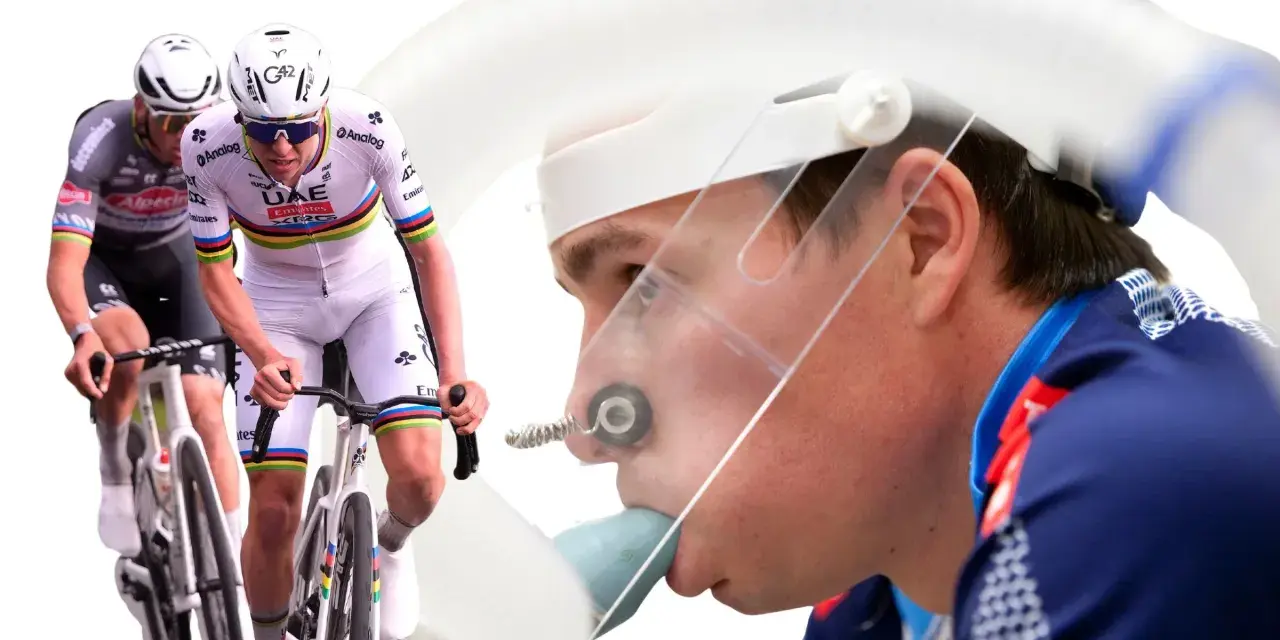
Cycling VO2 max is easy to overvalue because the metric looks decisive, but on the bike it is really only the top of a much bigger performance system. In this article I break down what the number means, how it is measured, how to raise it with training, and why threshold power and cycling economy often decide who actually wins or rides away. If you want a practical way to think about aerobic fitness on the bike, this is the right place to start.
The aerobic ceiling matters most when you connect it to power, threshold, and recovery
- VO2 max is your highest rate of oxygen use during hard exercise, usually expressed in mL/kg/min.
- For cyclists, the number is only one part of performance; threshold power and economy often decide how much of it you can use.
- Lab testing is the cleanest way to measure it, while watches and apps are better for trends than for precise diagnosis.
- One or two VO2-focused sessions per week, done with enough recovery, usually work better than trying to smash every ride.
- Strength work and solid fueling can improve the output you get from the same aerobic engine.
What VO2 max actually means on the bike
When I look at VO2 max in a cycling context, I treat it as the body’s aerobic ceiling. It reflects how much oxygen you can take in, move through the bloodstream, and use in the working muscles during very hard exercise. That matters because cycling is a sport where sustained power is limited by oxygen delivery almost as much as by motivation.
But the number only tells part of the story. Two riders can post the same result and still perform very differently if one has a lower oxygen cost per watt, better pacing, or a stronger ability to tolerate fatigue late in a ride.
| What drives it | What it means on the bike | Why it matters |
|---|---|---|
| Cardiac output | How much blood the heart can move each minute | Sets a large part of the oxygen delivery ceiling |
| Muscle use of oxygen | How effectively the legs extract and burn oxygen | Influences how hard sustainable power feels |
| Body mass | VO2 max is often expressed relative to weight | Important for climbing and for comparing riders |
| Bike economy | How much oxygen it costs to produce a watt | Cheaper watts leave more room above threshold |
That mix is why a climber, a time trialist, and a crit rider can read the same lab result differently. The next question is not just how high the ceiling is, but how much of it shows up in real race power.
Why the number matters less than the system around it
I never read VO2 max in isolation. In practice, cycling performance is usually a combination of aerobic ceiling, threshold power, and economy. VO2 max tells you how much oxygen you can process at the top end. Threshold tells you how much of that ceiling you can hold. Economy tells you how expensive each watt is.
That is why two riders with similar VO2 max values can finish very differently over a long climb or a 40 km time trial. If one rider can hold a higher fraction of the ceiling for longer, or if the same power costs less oxygen, that rider is usually faster where it counts.
| Metric | What it tells you | Where it shows up | Limitation |
|---|---|---|---|
| VO2 max | Highest aerobic capacity | Short climbs, hard attacks, repeatability | It is a ceiling, not a full performance model |
| Threshold power | How much of the ceiling you can sustain | Time trials, long climbs, breakaways | Can improve without a huge VO2 change |
| Cycling economy | How much oxygen each watt costs | Steady efforts, headwinds, fatigue resistance | Easy to miss if you only test max values |
If I had to simplify the whole equation, I would say this: the rider with the bigger ceiling does not automatically win, but the rider who can use more of that ceiling usually does. That is why testing must be standardized before you trust any change.
How to test it and read it honestly
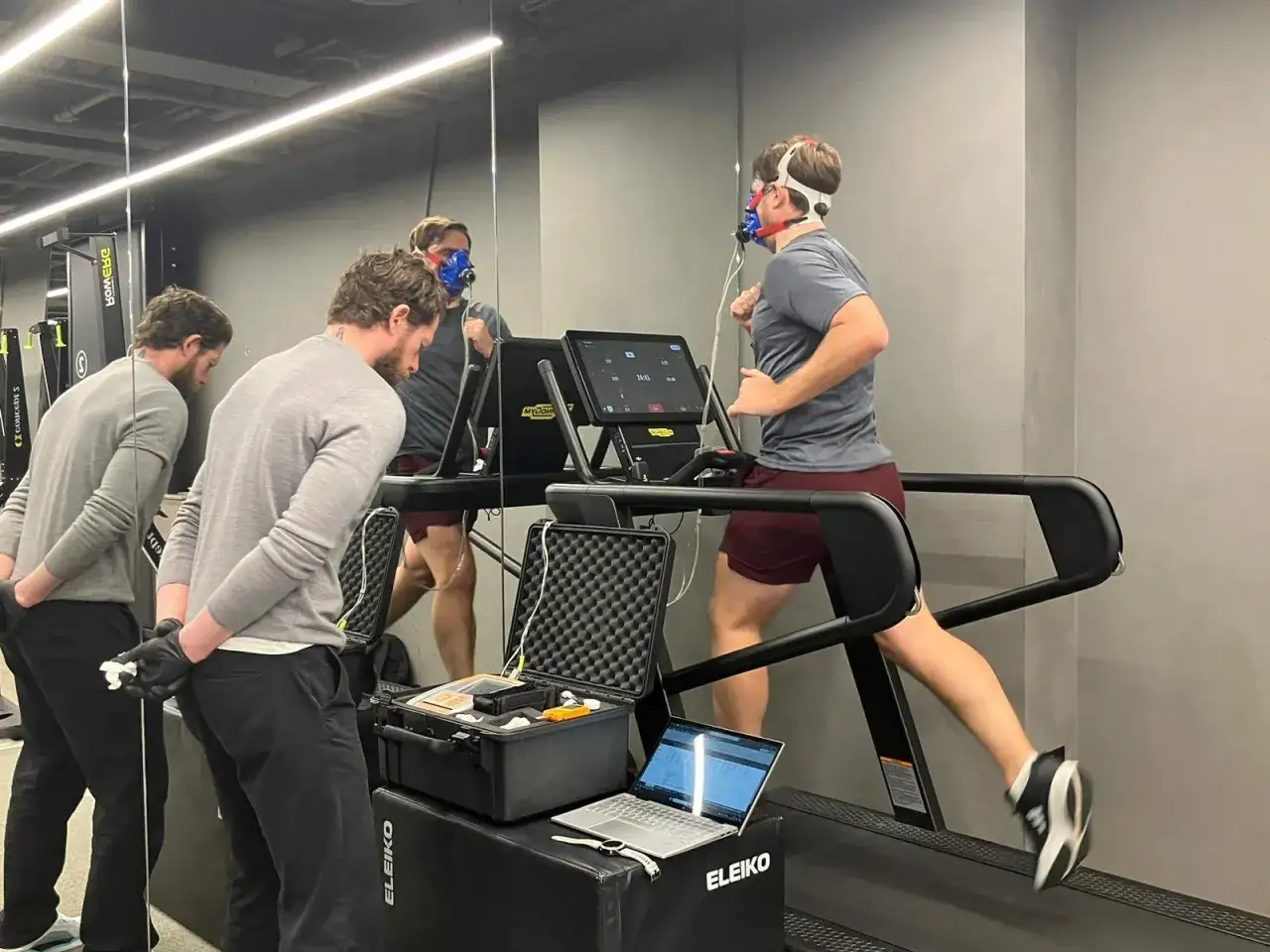
A lab test on a cycle ergometer with gas analysis is still the cleanest way to measure VO2 max. In cycling, some athletes show a clear plateau and others do not, so labs may report VO2peak instead. In practice, that still gives a useful snapshot of aerobic capacity, especially if you repeat the test under the same conditions.
If you do not have lab access, the next best option is a repeatable field setup with a power meter or smart trainer. What matters most is consistency: same bike position, same calibration, same warm-up, similar fueling, similar temperature, and similar rest before the test. Without that, you are often comparing noise instead of fitness.
- Test after an easy day, not after a hard block.
- Use the same trainer, tire pressure, or calibration method each time.
- Keep indoor cooling, hydration, and caffeine intake similar.
- Look at both the oxygen number and the power at which you reach it.
| Method | Strength | Weakness | Best use |
|---|---|---|---|
| Lab gas analysis | Most accurate and most complete | Expensive and harder to access | Baseline testing and major checkpoints |
| Field test from power and heart rate | Repeatable and practical | Less direct than lab testing | Tracking progress across training blocks |
| Wearable estimate | Convenient and always available | Influenced by sleep, heat, stress, and fatigue | Trend watching, not precise diagnosis |
When riders tell me their watch number jumped after a hard week, I usually treat it as a hint, not a verdict. Once the measurement is under control, the next leverage point is training stimulus.
The workouts that raise it
The best VO2 work is brutally uncomfortable, but it should still be controlled. I want enough total time near the top end of aerobic effort to force adaptation, not a session that turns into a survival contest after the second repetition. In most cases, one or two VO2-focused sessions per week is enough, as long as recovery and easy volume are in place.
| Workout | How to do it | Why it helps | Common mistake |
|---|---|---|---|
| 4 x 4 minutes | Ride hard for 4 minutes, recover 3 minutes easy, repeat 4 times | Classic way to accumulate time near VO2 max | Starting too hard and fading badly on the last two reps |
| 5 x 5 minutes or 6 x 3 minutes | Use a hard but repeatable power, often around 110% to 120% FTP depending on rider and interval length | Builds a strong aerobic stimulus with enough control to finish the session well | Choosing a wattage that is too high for all repetitions |
| 30/30s or 40/20s | Alternate short hard efforts with short recoveries for 10 to 15 minutes per set | Keeps oxygen uptake elevated for a long time | Turning every hard effort into a sprint |
| Late-ride VO2 blocks | After a long endurance ride, add a few short hard surges | Builds aerobic durability under fatigue | Using it too often and wrecking weekly volume |
I also like pairing aerobic intervals with a little strength work in the base or early build phase. Heavy lower-body lifting does not magically boost VO2 max, but it can improve cycling economy, which means each watt costs a little less oxygen. That is a real advantage when the race gets long and the legs start to fade.
Fueling matters more than many riders want to admit. For hard sessions, I like to see enough carbohydrate to keep quality high: roughly 30 to 60 g per hour for shorter intense rides and 60 to 90 g per hour for longer, harder rides if the stomach tolerates it. If the tank is empty, the workout often becomes a test of willpower instead of a stimulus the body can adapt to.
When the session structure is right, the body gets the message. The next problem is everything that quietly blunts that message.
Common mistakes that stall progress
The most common training errors are not exotic. They are usually basic, repeated, and expensive.
- Riding every interval like a race - the first two reps look heroic, then quality collapses and recovery gets harder than the workout itself.
- Trusting wearable estimates too much - heat, fatigue, poor sleep, and dehydration can move the estimate without any real fitness change.
- Cutting weight too aggressively - a lower body mass can improve relative VO2 max, but losing power or recovery capacity is a bad trade.
- Underfueling hard days - low glycogen makes VO2 sessions flatter and makes the next day worse.
- Ignoring gearing, cadence, and fit - if the bike setup is wrong, the workout turns into a torque problem or a posture problem instead of an aerobic one.
- Testing too often - a two-point swing can be noise, especially if the test conditions changed.
If you fix those habits, the training effect usually improves before the lab number does. And that matters, because a flat VO2 result is not always a flat performance result.
How I would use VO2 data across a season
In a real training block, I use VO2 max as a compass, not a scoreboard. I re-test every 6 to 8 weeks under similar conditions, then compare the result with interval repeatability, threshold power, recovery between efforts, and how the rider actually feels on race day. If the oxygen number is stable but threshold power is rising, I still count that as progress.
- For climbers, power-to-weight and threshold often matter most once the aerobic ceiling is solid.
- For time trialists, economy and pacing can separate riders who look similar on paper.
- For criterium racers, repeatability and recovery after surges often matter more than a single lab score.
The best cycling progress usually comes from making the ceiling a little higher while making every watt cheaper. If you keep that balance in mind, VO2 max becomes a useful training compass instead of a vanity metric, and the next block of work becomes easier to judge with honesty.