Choosing between cycling and running is less about declaring a winner and more about matching the workout to your joints, your schedule, and the kind of fitness you want to build. The biking vs running debate usually comes down to three practical questions: which one gives you more return for your time, which one your body can recover from consistently, and which one best supports your specific goal. I would not treat them as interchangeable, because they load the body differently and create different adaptations.
The short version is that running is usually more time-efficient, while cycling is easier to recover from
- Running is usually better for bone loading and calorie burn per minute at similar effort.
- Cycling is lower-impact, so many people can repeat it more often with less soreness.
- Intensity matters more than distance when you compare the two workouts.
- A strong cyclist is not automatically a strong runner, and vice versa, because training is highly specific.
- For most recreational athletes, the best plan is often a mix, not a strict either-or choice.
How the two workouts stress your body differently
The biggest difference is impact. Running asks your body to absorb and reapply force with every stride, while cycling supports much of your body weight on the saddle and spreads the effort across a smooth pedaling pattern. That one shift changes how the joints, bones, muscles, and connective tissue respond.
| Factor | Running | Cycling | Why it matters |
|---|---|---|---|
| Impact | High, repeated foot strikes | Low, very limited impact | Running usually builds more impact tolerance; cycling usually feels easier on joints. |
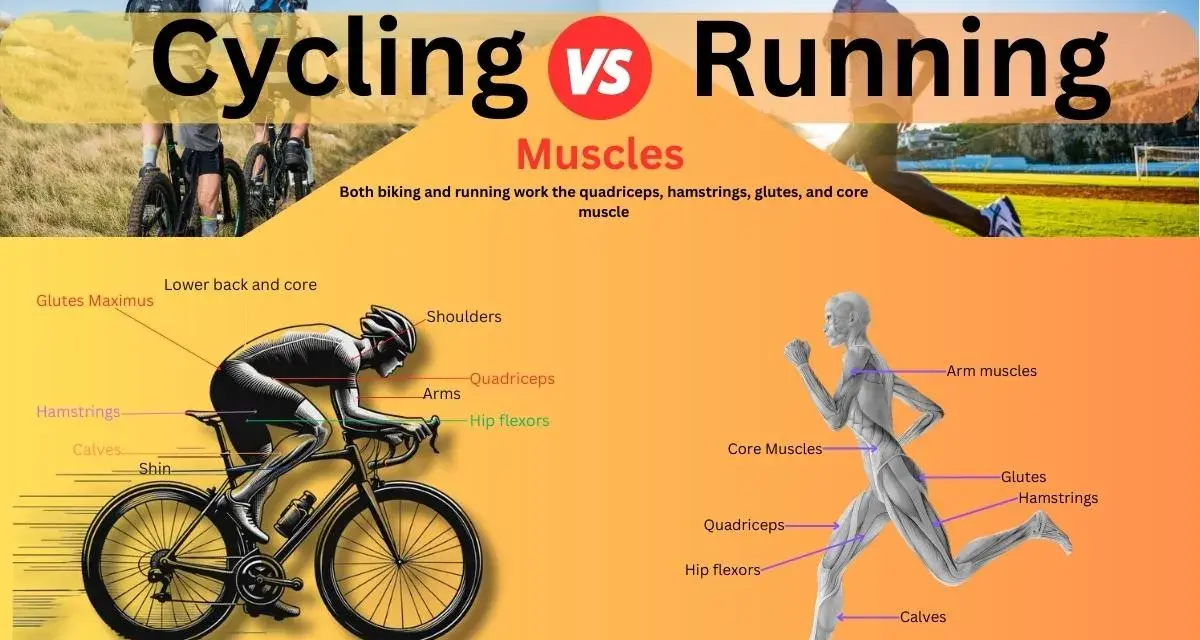
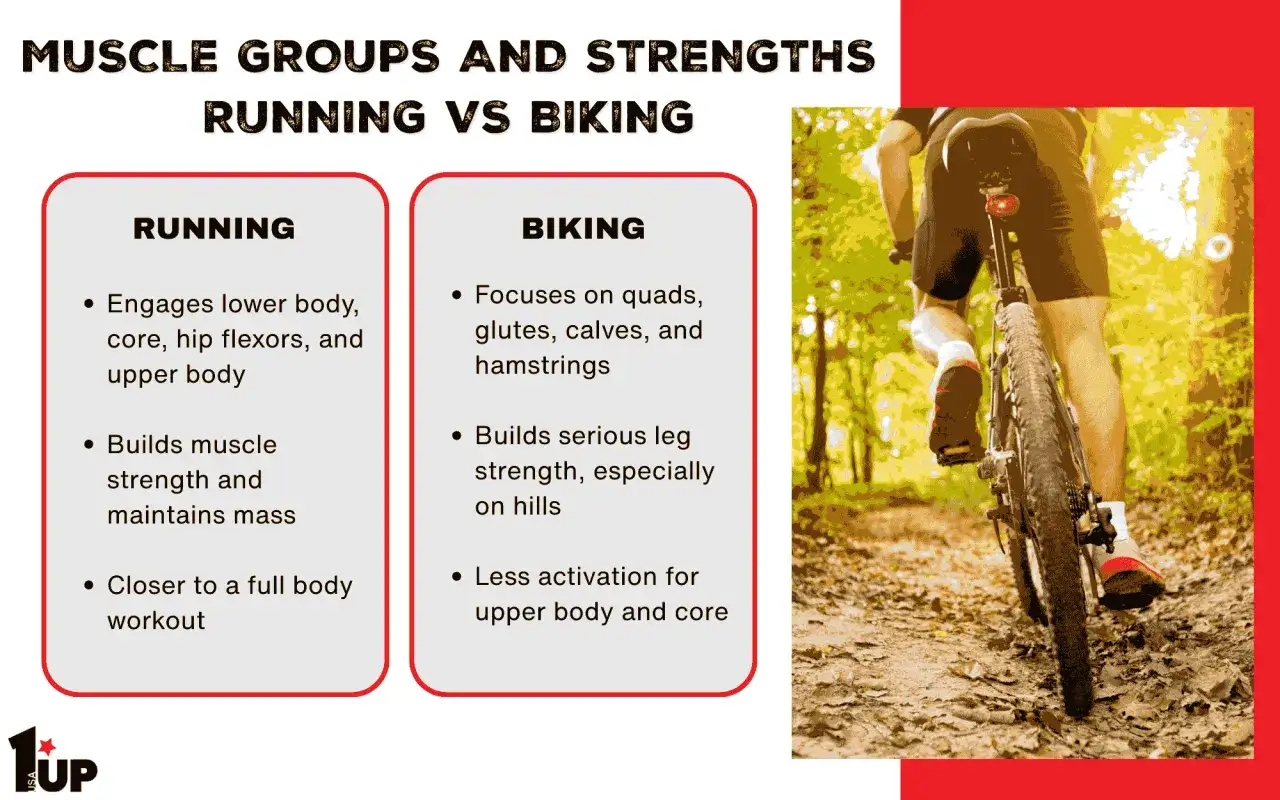
| Muscle emphasis | Calves, glutes, hamstrings, hips, and core stabilizers | Quads, glutes, hamstrings, and core, with strong quad demand at higher torque | Bike fit and pedaling mechanics matter more than many beginners expect. |
| Bone loading | Higher | Lower | Running gives a stronger bone-strengthening signal because impact is part of the movement. |
| Recovery cost | Usually higher | Usually lower | Cycling often lets you accumulate more weekly volume without feeling beaten up. |
If you have a history of shin splints, plantar fascia flare-ups, Achilles irritation, or just a body that hates pounding, that difference is not academic. I tend to think of cycling as the cleaner aerobic tool and running as the sharper stressor. Once you understand that split, the calorie question becomes much easier to interpret.
Calories and fat loss depend more on intensity than on the sport
The calorie comparison is where people often oversimplify things. Running usually burns more energy per minute at comparable effort, but cycling can close the gap fast once the pace rises. The Compendium of Physical Activities still shows that intensity matters more than the label on the workout, and the CDC’s weekly guideline of 150 minutes of moderate activity or 75 minutes of vigorous activity is a good reminder that total work is what counts.
| Example workload | Approx. calories in 30 minutes for a 155-pound person | What it suggests |
|---|---|---|
| Running at 6 mph | About 345 | A steady run is usually the most time-efficient option for calorie burn. |
| Cycling at 12 to 13.9 mph | About 280 | A moderate ride burns less per minute, but can still add up quickly if you stay on the bike longer. |
| Cycling at 14 to 15.9 mph | About 352 | A hard ride can match or slightly exceed the calorie cost of that run. |
The important detail is that those numbers are only estimates. Heavier people burn more, lighter people burn less, and efficiency matters too. I also would not compare a relaxed spin with a hard run and call the result meaningful. If you want a fair comparison, compare time and effort, not miles. A 20-mile ride and a 5-mile run are not the same workload, no matter what your watch says.
Injury risk and recovery are not the same conversation
This is where the decision stops being theoretical. Running tends to expose weak links quickly because every step sends force through the feet, ankles, knees, hips, and lower back. Cycling usually spares those structures from impact, but it introduces its own problems if the bike is set up badly or the rider pushes too much torque for too long.
Running usually punishes sudden jumps in volume
The common mistake is to increase mileage, pace work, and long-run length at the same time. That is how runners earn calf strains, Achilles flare-ups, knee pain, and stress reactions. In my view, running rewards gradual progression more than almost any other cardio choice. A small increase done consistently beats a big leap done once.
Read Also: How to Choose a Mountain Bike - Your Ultimate Guide
Cycling usually punishes poor setup
A bad bike fit can turn a low-impact workout into a knee or back complaint. Saddle height, reach, cleat position, and even pedaling style matter. Cadence, which is the number of pedal revolutions per minute, is one of the first things I would adjust if a rider feels too much strain. Spinning too slowly with heavy resistance often loads the knees more than most people realize. When the fit is right, though, cycling is usually far easier to repeat several days a week.
That recovery advantage is one reason many athletes use the bike to keep aerobic fitness high while the body absorbs less damage. The next question is what each workout actually builds best, because cardio fitness is not one single quality.
What each workout actually builds best
I think of running and cycling as overlapping but not identical tools. Both improve cardiovascular fitness, but they do not build the same movement skill or the same tissue adaptations. Training specificity matters here: the more you want to improve at a task, the more that task needs to appear in your training.
| Goal | Better first choice | Why |
|---|---|---|
| Bone loading and impact tolerance | Running | Weight-bearing impact gives bones a stronger stimulus. |
| Long aerobic volume with less soreness | Cycling | You can usually stay out longer and recover faster. |
| 5K, 10K, or half-marathon performance | Running | Running economy, stride mechanics, and tissue tolerance are sport-specific. |
| Road, gravel, or indoor cycling performance | Cycling | Pedaling mechanics, torque, and bike handling all matter. |
| Rebuilding after a flare-up | Cycling first | It keeps the engine on while lowering impact stress. |
This is also where VO2max confusion shows up. A better engine is useful, but the body still adapts in a sport-specific way. I can get a runner fitter on the bike, but that does not make them a better runner overnight. Threshold, which is the hardest effort you can sustain for a long stretch before fatigue rises sharply, is also highly specific to the movement pattern you train.
How to choose based on your goal and current body status
If I were making the choice for a real person, I would start with the body they have today, not the workout they wish they could tolerate. The same principle applies whether you train indoors, on country roads, or from a front door in a typical U.S. neighborhood where bike access and traffic safety may vary a lot.
| Situation | I would lean toward | Reason |
|---|---|---|
| You want the most calorie burn in the least time | Running or hard bike intervals | Intensity drives the result more than the sport itself. |
| Your knees, Achilles, or feet are irritated | Cycling | It keeps you aerobic with less impact. |
| You need to build volume without breaking down | Cycling | You can often train more often and recover faster. |
| You want stronger bones or better run performance | Running | Impact and specificity both favor the run. |
| You want the simplest, cheapest entry point | Running | It needs less gear and less setup. |
| You have access to a well-fitted bike and safe roads or an indoor trainer | Cycling | It becomes a very efficient way to build aerobic fitness with less joint stress. |
For most people, the best answer is not to choose one forever. It is to choose the one that fits the current block of training. If your goal is general fitness and body composition, I would usually bias toward the workout you can repeat most consistently without pain, then layer in the other one when you want variety or more total work. That is especially true if you are trying to stay active through a busy workweek, bad weather, or a minor niggle that is not serious enough to stop training but serious enough to deserve respect.
The smartest answer is to give each workout a different job
If I were building a year-round plan for a healthy adult, I would not ask which discipline wins. I would ask what each one is doing for the week. Running can handle impact, bone loading, and race specificity. Cycling can handle aerobic volume, recovery, and extra training minutes without the same pounding.That split is why many athletes feel better when they stop forcing one workout to do everything. Use the run when you need sharpness, use the bike when you need more minutes with less punishment, and keep strength work in the background so either choice is easier to sustain. The most effective plan is usually the one that lets you show up again next week without bargaining with your knees, calves, or back.