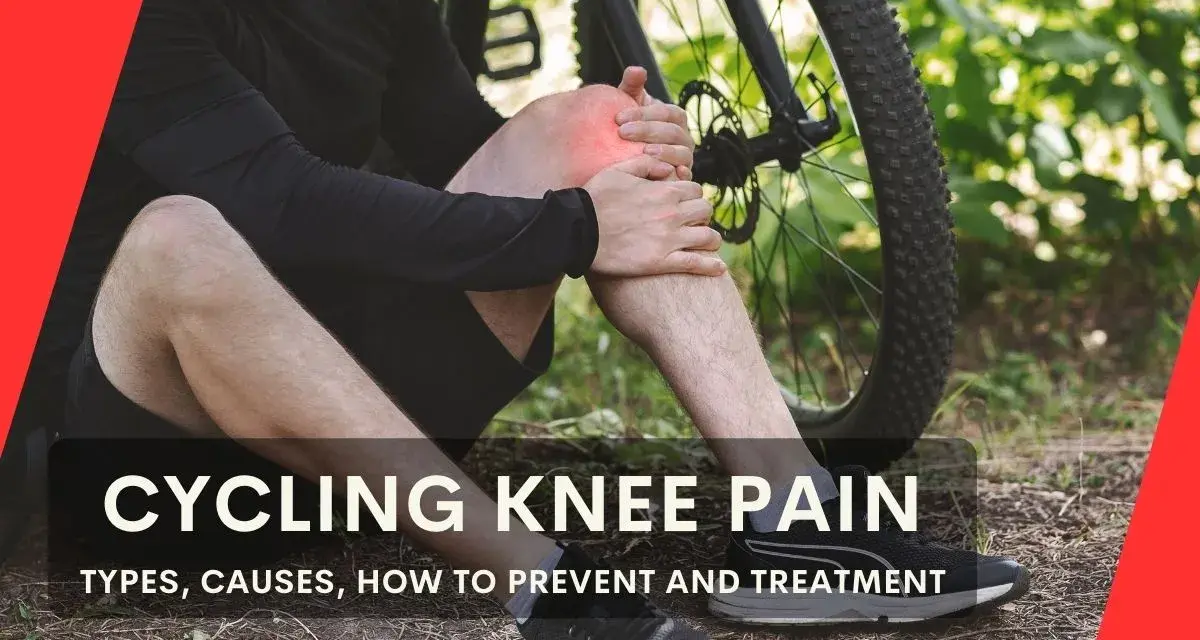
Knee swelling changes the goal of training fast: I am less interested in pushing fitness and more interested in keeping the joint moving without feeding the irritation. Cycling can be a smart low-impact option because it gives the knee a repetitive, controlled range of motion, which often helps stiffness and circulation. The catch is simple: it helps some kinds of swelling and aggravates others, so the setup and timing matter more than the miles.
What matters most before you ride with a swollen knee
- Gentle cycling can ease stiffness and help mild swelling linked to overuse, arthritis, or a stiff, non-hot knee.
- It is not a fix for sudden swelling, a twisting injury, infection, or a knee that feels hot and unstable.
- A stationary bike is usually the safest place to start because resistance, posture, and duration are easier to control.
- Begin with 5 to 10 minutes at very low resistance, then watch the knee for the next 24 hours.
- If swelling gets worse after the ride, the session was too hard, too long, or too soon.
- Seat height, gear choice, and hills matter more than most riders expect.
When cycling can reduce swelling, and when it cannot
So, does cycling reduce knee swelling? Sometimes, but only when the swelling is mild and the ride is truly easy. I think of cycling as a way to keep the joint moving, support circulation, and limit deconditioning while the knee calms down. It is not a magic drain for fluid inside the joint. If the swelling comes from a fresh injury, an inflamed bursa, gout, infection, or a significant effusion, the bike may be the wrong tool.
That is why I separate stiffness from active irritation. Stiffness often improves with motion; active irritation often flares when you add load. Mayo Clinic and other rehab-focused sources consistently place stationary or recumbent biking in the low-impact category for arthritic joints, which is exactly the kind of movement that can help a knee feel looser without pounding it. The idea is to move enough to help, not enough to provoke the tissue.
The next question is not whether cycling is good in theory, but which type of swelling is likely to respond in practice.
When cycling is more likely to help than hurt
The same ride can be helpful on one day and counterproductive on another. I look at the pattern, not just the symptom.
| Situation | Why cycling may help | Best way to use it |
|---|---|---|
| Mild stiffness after sitting or sleeping | Repetitive motion helps the knee warm up and move more freely. | Start with 5 to 10 easy minutes and keep the resistance very light. |
| Wear-and-tear irritation or osteoarthritis without warmth or redness | Low-impact aerobic work often improves function and pain without the pounding of running. | Use a stationary bike first and keep the spin smooth, not forceful. |
| Post-workout puffiness that settles with rest | Controlled movement can maintain fitness while you back off from the load that caused the flare. | Shorten the ride and reduce resistance before you stop all activity. |
| Rehab after a clinician has cleared cycling | Motion can help restore range of motion and confidence in the knee. | Follow the rehab dose rather than your usual training habit. |
That lines up with the Arthritis Foundation’s view that low-intensity stationary biking can be a practical option for people with knee osteoarthritis. The key phrase there is low-intensity; once the ride starts to feel like work, the knee is often getting more torque than it wants.
Once the knee is hot, suddenly swollen, or tied to a twist or impact, the logic changes completely.
When to skip the ride and get the knee checked
I would not try to “ride through” a knee that is suddenly swollen, visibly deformed, or unable to bear weight. Mayo Clinic also flags intense pain, a popping sound at the moment of injury, and sudden swelling as reasons to seek urgent evaluation. Those are not signs of a knee that needs better conditioning; they are signs that something may be structurally wrong or medically important.
- Heat or redness around the joint, especially if the knee feels warmer than the other side.
- Sudden swelling after a fall, twist, collision, or loud pop.
- Locking, giving way, or inability to fully bear weight.
- Fever or feeling ill along with the swollen knee.
- Swelling that keeps returning even when training volume is low.
If any of that is happening, the bike should wait. The next step is medical evaluation, not a better interval plan.
How to set the bike so the knee stays calm
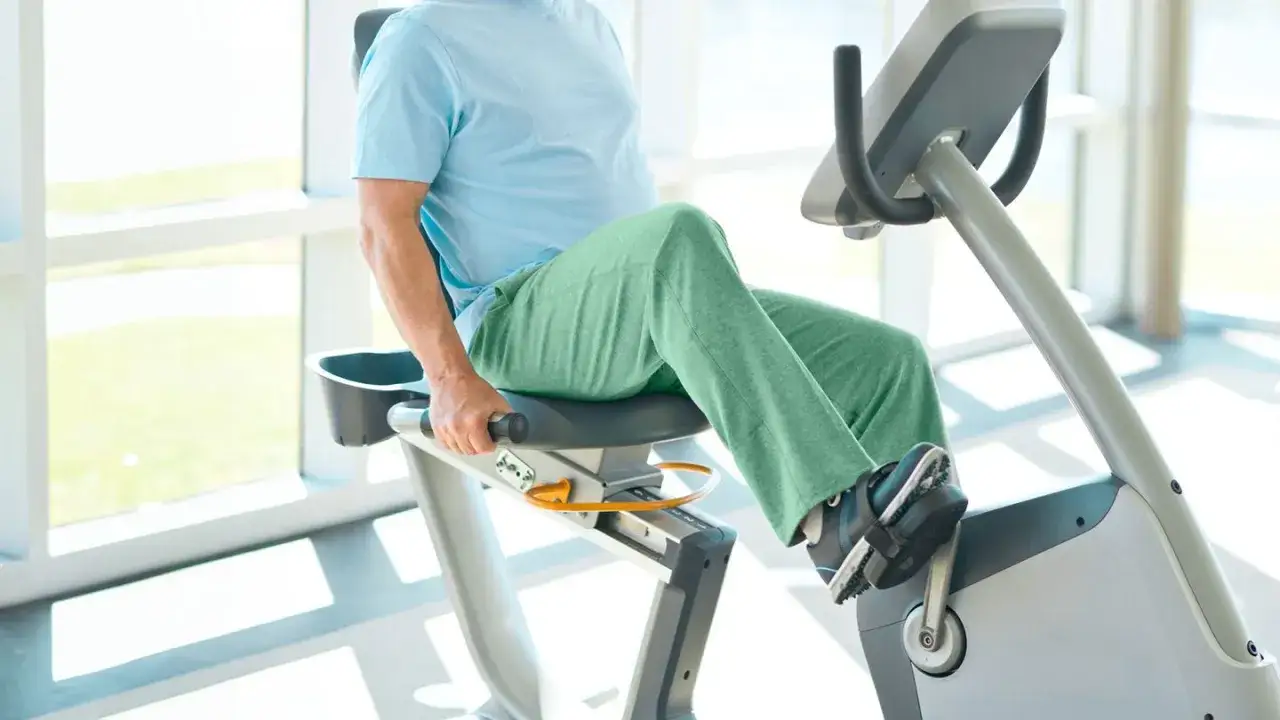
I usually prefer a stationary bike first because it removes the two things that most often irritate a swollen knee: surprise effort and uncontrolled terrain. Hills, hard starts, and standing climbs all raise joint load quickly. Indoors, you can keep the effort steady and give the knee a fair test.
| Adjustment | Why it matters | Practical cue |
|---|---|---|
| Resistance | Heavy gears increase torque at the knee. | Start with very light resistance, then add load only if the knee stays quiet. |
| Session length | Long rides can trigger swelling even when the first few minutes feel fine. | Begin with 5 to 10 minutes, then build toward 20 to 30 minutes only if symptoms stay stable. |
| Bike height | A saddle that is too low tends to crowd the knee and make each stroke more compressed. | At the bottom of the pedal stroke, the leg should still have a slight bend. |
| Route choice | Outdoor surges and climbs add force you may not notice until later. | Choose flat roads or a trainer before you test real-world hills. |
One useful technical term here is torque, which simply means the twisting force you apply through the pedal stroke. A swollen knee often tolerates motion better than force, so the goal is easy spinning, not grinding. If the front of the knee starts complaining, the saddle is usually too low, the gear is too heavy, or both.
That setup gives you a clean test, which matters because the next 24 hours tell you more than the first five minutes.
A simple return-to-riding progression I trust
When a knee is sensitive, I like a gradual test instead of a heroic workout. The progression below is conservative on purpose; it is designed to tell you whether cycling is helping or quietly adding fuel to the problem.
- Days 1 to 2: 5 to 10 minutes, no or very light resistance, flat pedal stroke, no standing.
- Days 3 to 4: 10 to 15 minutes only if the knee feels the same or better the next morning.
- Days 5 to 7: 15 to 20 minutes if swelling has not increased and the knee is not warmer or stiffer afterward.
- After a stable week: move toward 20 to 30 minutes, then add resistance slowly, not both time and load at once.
My rule is simple: if the knee swells more, feels hotter, or starts to ache later that day, reduce the next ride by 20 to 30 percent in either time or resistance. If it still reacts badly, you are not dealing with a conditioning problem anymore; you are dealing with a load problem that needs a different plan.
That is where the most common mistakes come in, because they often look harmless from the saddle.
The mistakes that keep swelling coming back
The biggest mistake I see is treating a swollen knee like a fitness problem instead of a tissue-tolerance problem. People keep the same weekly mileage, the same gears, and the same hills, then wonder why the knee never really settles.
- Grinding in a big gear because it feels productive. It usually just increases joint stress.
- Using hills too early. Climbing is one of the fastest ways to turn a “good” ride into a swollen next day.
- Sitting too low on the saddle, which compresses the knee and crowds the top of the stroke.
- Ignoring the 24-hour response. The knee’s next-day reaction is often the real verdict.
- Skipping strength work entirely. Cycling moves the joint, but it does not automatically fix weak quads, glutes, or hamstrings.
If you clean up those errors, cycling becomes a far better tool for managing knee irritation rather than feeding it. The final piece is knowing what to change when the swelling keeps showing up anyway.
What I would change first if the swelling keeps returning
If the knee keeps swelling, I would not add more intensity. I would reduce the weekly load by roughly 20 to 40 percent for a short block, keep the rides easy, and remove hills or interval work until the joint settles. Then I would add two things back in parallel: basic lower-body strength work and a bike fit check, because weak support muscles and poor setup often show up as repeated irritation on the same side.
- Keep rides easy until the knee stays quiet for several sessions in a row.
- Add strength work for quads, glutes, hamstrings, and calves two times a week.
- Use ice, compression, and elevation after riding if they reduce your symptoms, not as a substitute for load management.
- Review saddle height and cleat position if one knee keeps reacting more than the other.
- Get assessed if swelling lasts more than 1 to 2 weeks, keeps returning, or follows a clear injury.
In other words, cycling can absolutely belong in a knee-friendly training plan, but it works best when it is matched to the knee you actually have today, not the one you wish you had. If the ride leaves the joint calmer, you have the right tool; if it keeps the swelling alive, the smarter move is to back off, adjust the setup, and treat the cause.