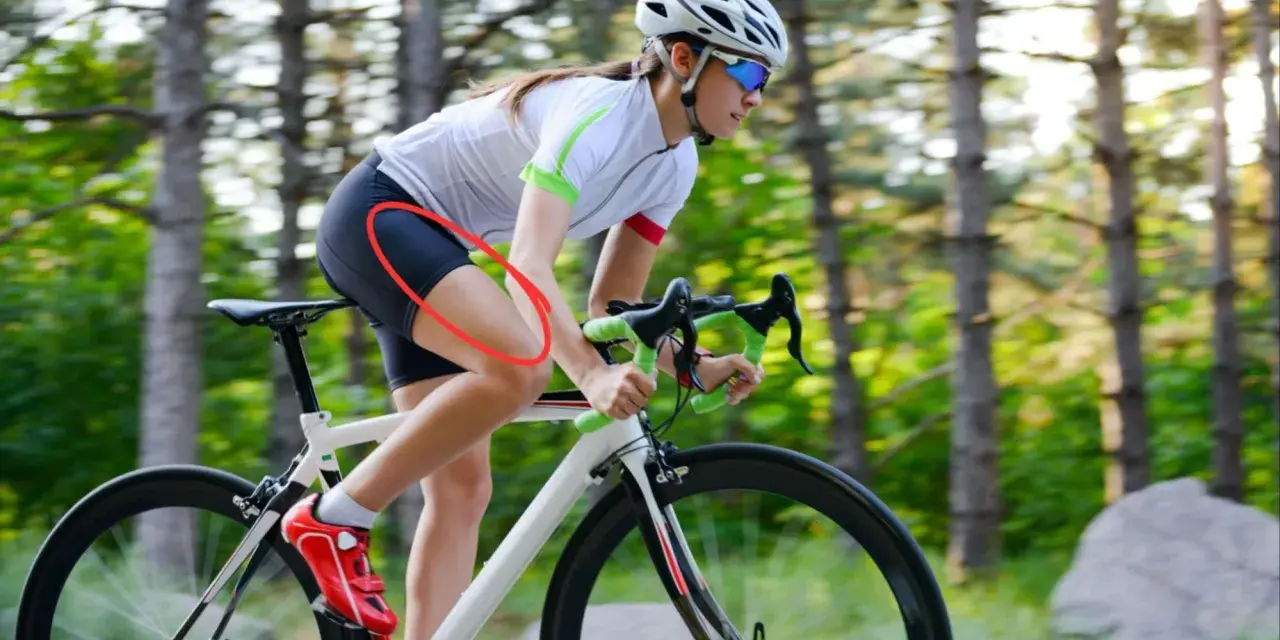
Front-thigh pain on the bike usually shows up when the quads are doing more than their share of the work: too much torque, too many hills, a saddle that is slightly off, or a sudden jump in training load. This guide breaks down quad pain cycling, how to separate normal soreness from injury, and the bike and training changes that usually help first. I’m keeping it practical so you can decide what to change, what to monitor, and when to stop pushing through it.
Quick things to know before your next ride
- Dull, symmetrical soreness that eases as you warm up is often load-related fatigue, not a serious injury.
- Sharp, one-sided, or worsening pain is a different problem and should not be trained through.
- The first things I check are saddle height, riding gear, hill work, and recent training spikes.
- Most riders improve fastest by reducing torque, spinning easier, and sharing the load with glutes, hamstrings, and core.
- Swelling, bruising, a pop, or trouble straightening the knee means you should get assessed.
What quad pain usually means on the bike
When I look at front-thigh pain in cyclists, I usually sort it into three buckets: normal muscle fatigue, overuse irritation, or a true strain. The difference matters because the right fix changes completely. If the quads are simply tired, you adjust load and recovery. If the tissue is irritated, you need to reduce the trigger. If it is a strain, you need to stop treating it like a training problem and start treating it like an injury.
The most common reason is simple: the rider is asking the quadriceps to produce too much force for too long. That happens when you grind a big gear, attack climbs out of the saddle, or make a sudden jump in volume after a quieter period. It also happens when the bike position pushes the knee into a more demanding range, so the quads work harder on every pedal stroke. In other words, the pain is often a load problem before it is a fitness problem.
I also see riders blame the quads when the real issue is poor force distribution. If the glutes, hamstrings, and trunk are underdoing their share, the front of the thigh picks up the slack. That is why quad pain in cyclists often improves more from better mechanics and smarter progression than from more stretching alone. That distinction matters, because the next step is figuring out whether you are dealing with routine fatigue or something that needs a harder stop.
How to tell fatigue from a real quad injury
Not every sore thigh needs treatment, but not every sore thigh is harmless either. Delayed onset muscle soreness, or DOMS, is the dull ache that shows up after unfamiliar work and usually settles within a day or two. A strain or tendon issue behaves differently: it is more local, more stubborn, and often sharper during the pedal stroke.
| What you feel | What it often means | What I would do first |
|---|---|---|
| Dull ache in both thighs that eases after warming up | Normal fatigue or DOMS | Back off intensity for a ride or two and monitor the trend |
| Sharp, one-sided pain that gets worse the longer you ride | Muscle strain or tendon irritation | Stop hard efforts and reduce riding load immediately |
| Pain mainly on climbs or when pushing a big gear | Too much torque, usually with low cadence | Shift easier and keep pressure smoother through the stroke |
| Swelling, bruising, a pop, weakness, or trouble straightening the knee | More serious injury | Get evaluated by a sports clinician |
If the pain is only there when you start a ride and fades as you warm up, that leans toward stiffness or load management. If it gets sharper with each pedal revolution, or if you start protecting the leg subconsciously, I would treat that as a warning sign. Cleveland Clinic notes that severe pain and swelling, bruising, and trouble straightening the knee can point to a more serious quad injury, and that is not the kind of pattern I would try to ride through. Once you know the pain pattern, the next place to look is the bike itself, because a small setup error can keep the quads overloaded no matter how fit you are.
The fit changes that usually help first
Bike fit is where I start if the pain shows up on most rides, especially if it is worse on climbs or longer efforts. You do not need to rebuild the whole position to make a difference. In many cases, one small adjustment reduces the amount of work the quads have to do on every stroke.
Saddle height
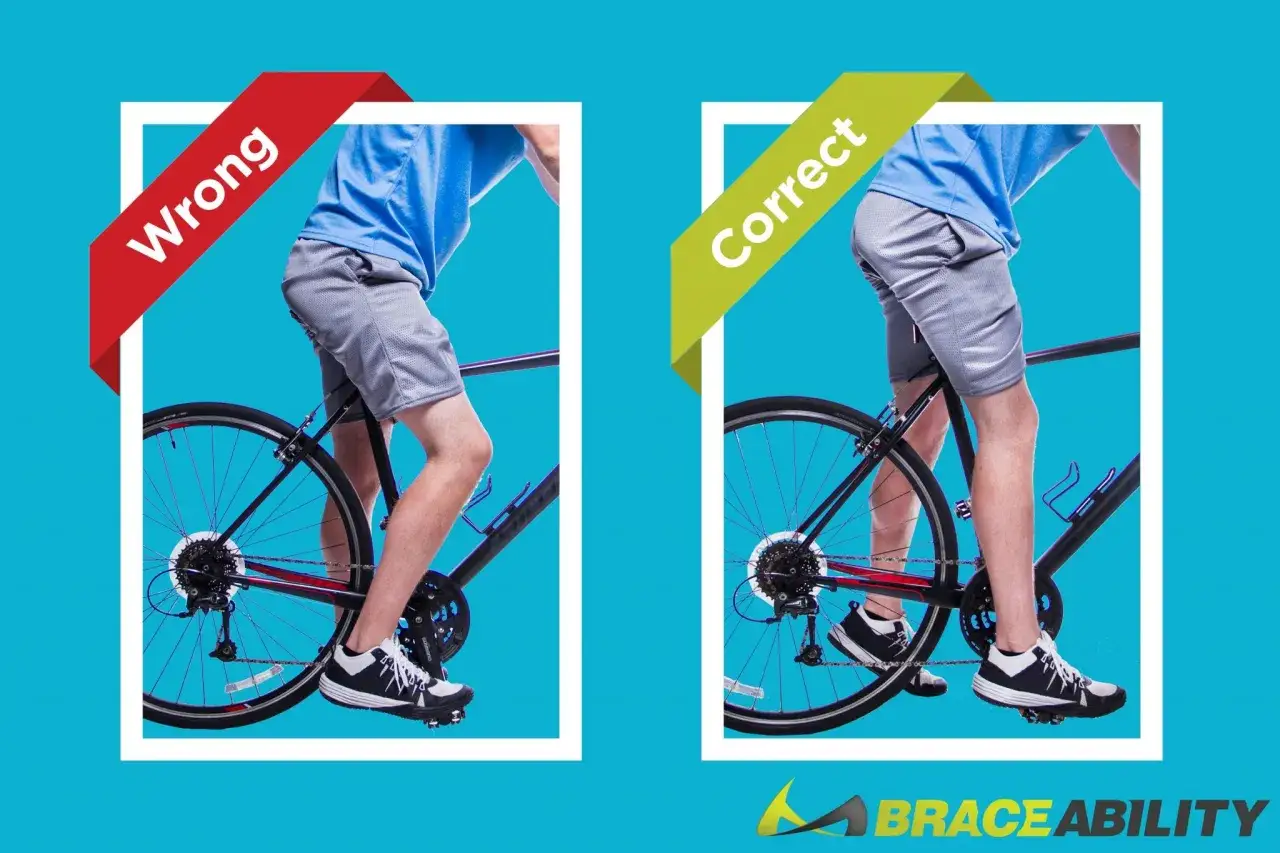
A saddle that sits too low keeps the knee more bent at the bottom of the pedal stroke, which can increase front-thigh demand. A saddle that is too high can make you rock your hips and create a different set of problems, so I prefer small changes. Move the saddle in 2 to 3 mm steps, then test it over two or three rides before changing anything else. That is slow enough to be precise, but fast enough to find a useful direction.
Saddle fore-aft
If the saddle is too far forward, the front of the leg often feels busier than it should. Moving it slightly back can reduce the sense that you are pedaling with the quads alone. The tradeoff is that fore-aft changes affect reach and weight distribution, so keep them modest. I would rather make one controlled adjustment than chase comfort with a big shift that creates another issue somewhere else.
Cleats and cockpit
Cleat position matters more than most riders expect. If the foot is forced into a twist or the knee tracks awkwardly, the leg has to stabilize before it can produce force. A cramped cockpit can do something similar by making you brace through the front of the body instead of staying relaxed. If you are not sure what is off, a professional fit is worth it, because guessing at cleat and cockpit changes can create new pain faster than it solves the old pain.If the bike setup is close enough but the thighs still flare up, the next place I look is how the rider is loading the pedals in training. That is usually where the long-term fix lives.
Training habits that overload the quads
Some riders are fit enough for the mileage they are doing, but not for the way they are doing it. That is an important distinction. You can have strong legs and still irritate the quads if every session is built around force instead of flow.
Mashing big gears
Low cadence with high resistance is a classic quad overload pattern. In plain English, that means pushing hard against the pedals instead of turning them smoothly. It is useful in small doses, especially for strength-specific work, but it becomes a problem when it is the default. If your thighs burn mostly on climbs or during hard accelerations, I would shift to an easier gear first and let cadence rise naturally.
Too much hard work too soon
A sudden jump in hills, intervals, or total volume is a reliable way to light up the front of the legs. The tissue may not be injured, but it is getting more stress than it is ready to absorb. I usually advise riders to change only one major load variable at a time: mileage, intensity, or climbing, not all three in the same week. That keeps the cause of the pain visible instead of muddying the picture.
Read Also: Apple Watch Cycling - Why VO2 Max Isn't Updating
Weak support muscles
If the glutes, hamstrings, and core are undertrained, the quads become the default engine. That does not mean the quads are weak; it means they are overused. A stronger posterior chain helps spread the work out, especially on longer rides and repeated climbs. This is one of those cases where adding a little off-bike strength work is more effective than trying to “stretch the pain away.”
Those habits are fixable, and the short-term response is simple enough that you can start it on the next ride, which is where I would go next.
What to do over the next few rides
If the pain is mild and clearly tied to recent training load, I would not stop all movement unless the leg is truly irritated. The goal is to reduce torque, keep blood moving, and avoid making the problem worse.
- Remove the trigger. Skip hard climbs, standing sprints, and heavy gear work for a few rides.
- Spin easier. Choose flat routes or indoor work with light resistance and smooth pressure.
- Watch the first 10 to 15 minutes. If the pain eases as you warm up, that is one thing; if it builds, stop.
- Check the recent change. Look back at the last two weeks and ask what changed first: bike setup, hill volume, intervals, or recovery.
- Return one variable at a time. Reintroduce climbing, then intensity, then longer rides, instead of bringing everything back at once.
For a simple rule of thumb, I like easy spinning for 20 to 45 minutes only if the pain stays mild and predictable. If walking, stairs, or normal daily movement are painful, that is a stronger sign that the issue is not just post-ride fatigue. After the acute phase, the goal shifts from calming the pain to building a more balanced engine.
Build more durable legs without making the quads do everything
The best long-term fix is not “stronger quads at any cost.” It is a better power-sharing pattern. I want the quads to be strong enough to handle climbing, but not so dominant that they absorb every demand the bike creates.
Two short strength sessions per week are enough for most riders to start making a difference. Focus on movements that improve control and spread the work across the hips and trunk.
- Split squats to build single-leg control without relying on momentum.
- Step-ups to mimic the drive phase of pedaling while teaching stability.
- Romanian deadlifts to strengthen the hamstrings and glutes.
- Glute bridges to improve hip extension, which helps the quads stop doing everything alone.
- Planks and side planks to keep the pelvis quieter on the bike.
- Calf work so the lower leg helps stabilize force transfer instead of leaking it.
I also like basic mobility work after warm muscles, especially for the hip flexors, quads, and ankles. Tight hips can alter pelvic position and make the front of the thigh feel busier than it should. The key is not to chase flexibility for its own sake; it is to restore enough range that the pedal stroke feels smooth instead of forced. That leaves the red flags, because not every front-thigh ache is safe to solve with rest and a lighter gear.
When the pain needs a clinician
Some signs point beyond ordinary cycling soreness, and I would not wait around on those. If you have a pop or tearing sensation, visible bruising, rapid swelling, an indentation in the muscle, trouble straightening the knee, or the leg is giving way, get assessed. Severe pain that is getting worse after a day or two of backing off also deserves attention.
- Swelling or bruising that appears quickly
- A popping or tearing feeling at the time the pain started
- Weakness that changes your gait or pedaling stroke
- Numbness or tingling
- Pain that is not improving after about 1 to 2 weeks of reduced load
- Repeated flare-ups even after fit and training changes
If any of those are present, I would think less about training tweaks and more about an exam from a sports medicine clinician or physical therapist. If none of them apply, the final piece is simply keeping the load and the setup honest over time.
The simplest long-term approach that keeps riding enjoyable
The pattern that works best is boring in a good way: keep the saddle in the right zone, avoid grinding big gears all the time, build climbing load gradually, and support the bike work with a little strength training. That combination solves more front-thigh pain than heroic stretching ever will.
- Check fit before you chase fitness fixes.
- Keep most rides smooth and mostly aerobic.
- Use hard gear work as a tool, not a habit.
- Give the quads backup from the hips and trunk.
- Respect pain that is sharp, one-sided, or worsening.
If I had to reduce the whole topic to one sentence, it would be this: make the quads work hard enough to get stronger, but not so hard that they become the only thing holding the ride together. That balance is what keeps riding comfortable, sustainable, and actually enjoyable.