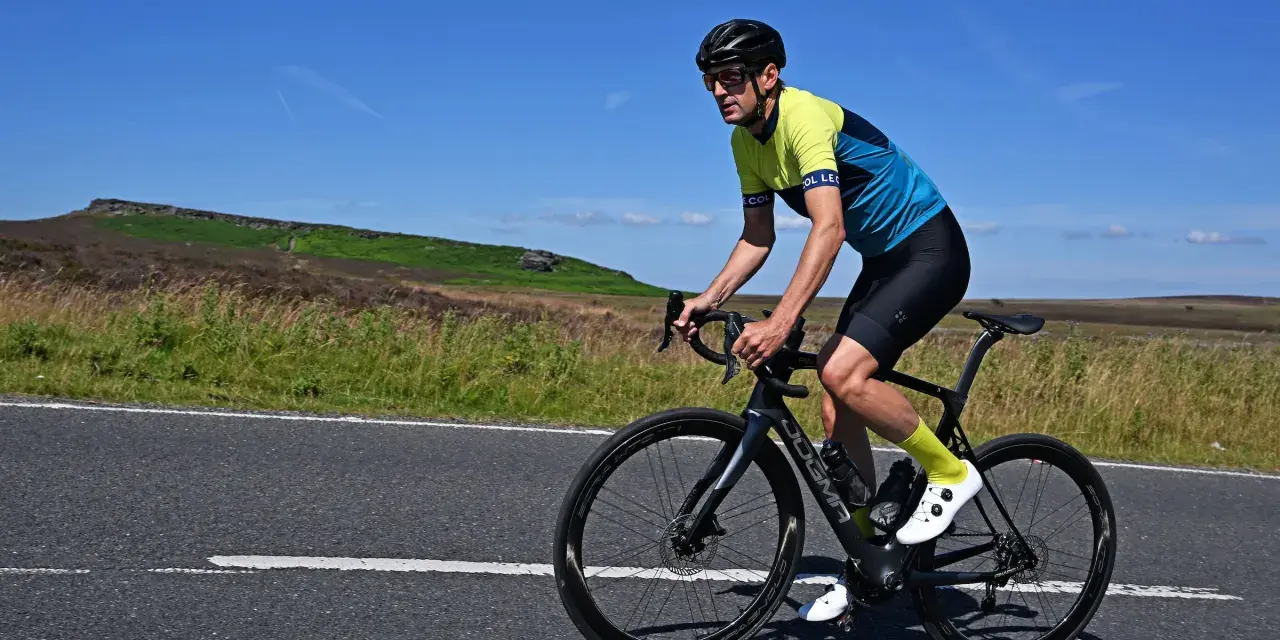
Cycling on max only makes sense when "max" means a deliberate effort, not a random redline ride. In practice, that means knowing which ceiling you are testing, how long you can hold it, and how to recover so the work actually improves fitness. This guide breaks down what all-out riding really is, how to structure hard sessions, which metrics matter, and how to keep one brutal ride from turning into wasted fatigue.
The main things to know before you ride at the limit
- Max effort is not one thing; sprint, VO2 max, and threshold work stress different systems.
- One well-built hard session usually beats several sloppy ones.
- Power is best for short intervals, heart rate helps with longer efforts, and perceived exertion still matters.
- Most recreational riders do better with 1 to 2 quality sessions per week, not more.
- Recovery, fuel, and cooling decide whether the session adds fitness or just drains you.
What max effort really means on a bike
I break max-effort cycling into three buckets, because the body does not adapt the same way to a 10-second sprint and a 5-minute climb. Sprint power lasts only a few seconds and is about explosive recruitment, torque, and bike control. VO2 max work usually lives in the one to five minute range and pushes oxygen use close to the top of your aerobic system. Threshold riding is the hardest steady pace you can hold for a long time, often anchored to FTP, or functional threshold power, which is the highest power you can sustain for about an hour.
- Sprint power is the top-end ceiling, useful for accelerations and short bursts out of corners.
- VO2 max work is the hard, uncomfortable middle ground that lifts aerobic capacity.
- Threshold riding builds the ability to hold strong effort without fading late.
That distinction matters because treating every hard ride like one generic test is where a lot of riders stall. Once you know which ceiling you are chasing, the next question is whether the effort is worth the recovery cost.
When the hard work actually pays off
I treat max-effort cycling as a tool, not a personality trait. It makes sense when a rider needs more top-end speed, better response to attacks, or stronger climbing on short rises where repeated surges decide the day. It also helps when an athlete already has a decent endurance base and needs more race-specific sharpness.
- It is useful for criteriums, punchy road races, Zwift races, and rolling terrain.
- It is useful when you want more fatigue resistance at high speed, not just more easy miles.
- It is less useful when sleep is poor, work stress is high, or the previous ride already left deep fatigue.
For many recreational riders, one true max-effort session a week is enough. More trained cyclists can sometimes handle two, but only if the rest of the week is mostly easy and the hard days are separated by real recovery. If you are still building your base, a threshold or tempo block will usually give you more return than repeated all-out work. When the purpose is clear, the session itself needs structure, not just enthusiasm.
How I structure a session so it is hard for the right reasons
A max-effort day should feel intense, but it should also feel planned. My default order is warm-up, main set, cool-down, because skipping the middle pieces is how people end up either underperforming or overcooking the day.
- Warm-up: 10 to 20 minutes of easy spinning, then 2 to 4 short openers of 10 to 15 seconds.
- Main set: one clear objective, such as sprint, VO2 max, threshold, or mixed over-unders.
- Cool-down: 10 minutes or more of easy riding to bring the system back down.
| Session type | Typical work | Recovery | Best use |
|---|---|---|---|
| Sprint set | 6 to 10 x 10 seconds all-out | 2 to 5 minutes easy | Top-end speed and acceleration |
| VO2 max set | 4 to 6 x 3 to 4 minutes very hard | About equal rest | Climbing, race surges, aerobic ceiling |
| Threshold set | 2 to 4 x 8 to 15 minutes near threshold | 3 to 5 minutes easy | Sustained power and fatigue resistance |
| Over-under set | 3 to 5 x 8 to 12 minutes alternating slightly above and below threshold | 3 to 5 minutes easy | Race realism and steady hard pacing |
I like this format because it forces a choice. You do not need every kind of suffering in one ride. You need one stimulus that is hard enough to matter and repeatable enough to train from. That leads naturally to the question of how to pace the effort without guessing.
How I pace the effort without blowing up
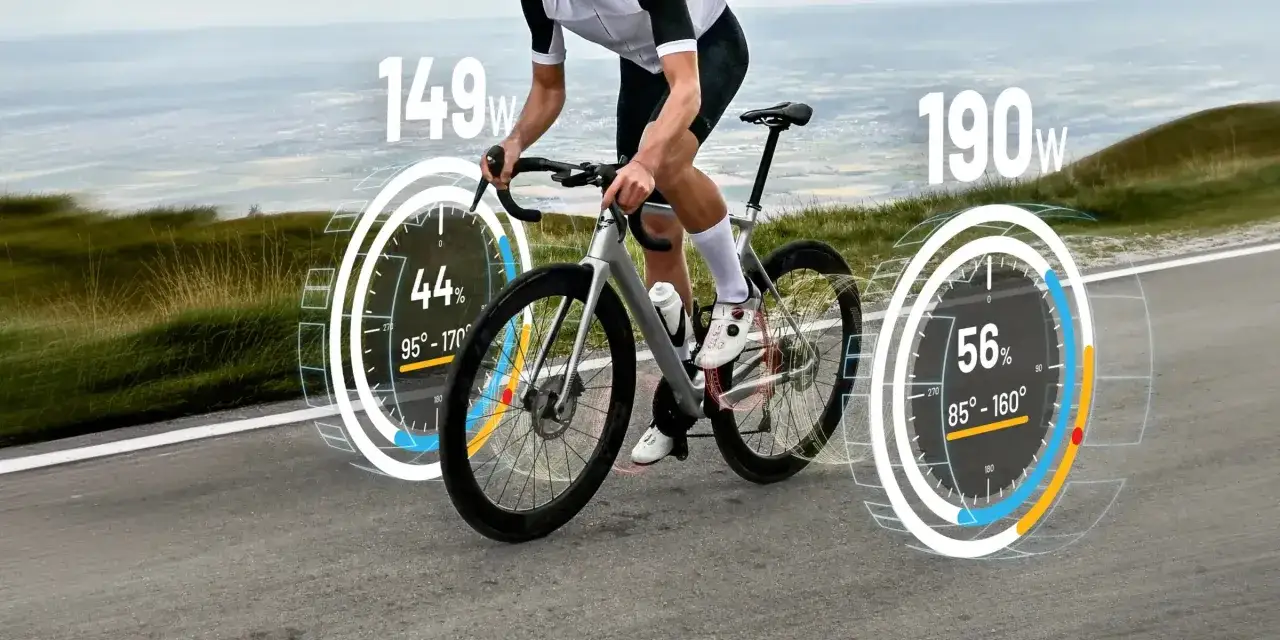
For short sprints, I trust RPE and power more than heart rate, because heart rate lags behind the work. For efforts longer than a couple of minutes, all three numbers become more useful together. RPE, or rate of perceived exertion, is simply how hard the effort feels in the moment, and it still matters even if you train with a meter.
| Metric | What it tells you | Main limitation |
|---|---|---|
| Power | How much work you are actually producing | Needs a meter or smart trainer |
| Heart rate | How your system is responding over time | Lags on short efforts and drifts in heat |
| RPE | How hard the ride feels in the moment | Subjective, so it needs honest practice |
If you use a power meter, the number to respect is not the peak spike on the screen. It is the average you can repeat without form collapsing. I pay attention to cadence, breathing, and whether the upper body starts bouncing around on the bike. Once those details go, the set is no longer doing what I want it to do. That is why equipment and setup matter more than many riders expect.
Gear and setup that keep the effort honest
A hard ride exposes weak points fast. A poor fit that is tolerable on an endurance spin can feel awful when you are hammering, and a sloppy setup can make the data less useful than you think.
- Power meter or smart trainer if you want precise pacing on structured intervals.
- Heart-rate strap if you want a more reliable read than wrist optical tracking.
- A strong fan indoors because heat build-up can wreck the quality of the session.
- Correct tire pressure and a clean drivetrain so you are not wasting watts for no reason.
- Comfortable contact points because saddle, bar, and shoe issues get worse when force rises.
In much of the U.S., heat and humidity are the hidden variables that turn a good plan into a bad one. On hot days, I would rather move the workout indoors or lower the target slightly than pretend the conditions do not matter. Good gear does not make the ride easier; it makes the effort more honest. Once the session is over, the real adaptation happens in the recovery window.
Recovery and nutrition after a max session
Recovery is not the afterthought. It is the part that converts one painful ride into better fitness.
- Give yourself at least one easy day after a hard session, and more if the workout was sprint-heavy.
- Eat within 1 to 2 hours if you can, with carbohydrate plus about 20 to 30 grams of protein.
- Hydrate early, especially if the session was indoors or the weather was hot.
- Protect sleep because a late hard ride followed by short sleep is a common way to blunt progress.
The rules I use before another full-gas ride
I do not schedule the next hard session just because the calendar says so. I look for a few practical signals first.
- I can warm up without feeling flat.
- My legs feel responsive, not dead.
- Sleep and hydration have been decent for at least a day or two.
- The previous hard ride has stopped producing soreness that changes my pedal stroke.
- I can name the purpose of the session in one sentence.
When one of those pieces is missing, I usually choose recovery or a lower-intensity session instead. That is not being conservative for its own sake; it is how I keep high-intensity work useful instead of turning it into background fatigue. The best version of max-effort cycling is precise, recoverable, and tied to a specific goal, and that is the version that actually moves fitness forward.