
The fastest gains come from a small number of well-paced hard sessions
- Most riders improve fastest with one or two hard days per week, not a daily intensity habit.
- The best intervals are hard enough to raise breathing and heart-rate demand, but controlled enough to repeat.
- A noticeable change often shows up in 4 to 6 weeks; 8 to 12 weeks gives a deeper shift.
- Recovery, carbs, sleep, and easy rides are part of the training load, not extras.
- If power falls by more than about 5% across the set, the workout is usually too aggressive for that day.
What this training is actually trying to change
VO2 max is the ceiling on how much oxygen your body can use when the effort gets very hard. On the bike, I do not think about it as a number to chase in isolation; I think about it as the engine that lets you climb, attack, and hold speed without falling apart in the last third of a ride. A good block is designed to spend enough time near that ceiling to force adaptation, without turning every session into a race.
The adaptations are both cardiovascular and muscular. You want a stronger heart, better blood delivery, and better oxygen use inside the working muscles themselves. That is why a serious block needs hard repeats, but it also needs easy days so the body can absorb the stress. If every ride feels like a test, the plan is usually too noisy to work well. Once that principle is clear, the next question is which interval shape gives you the best return.
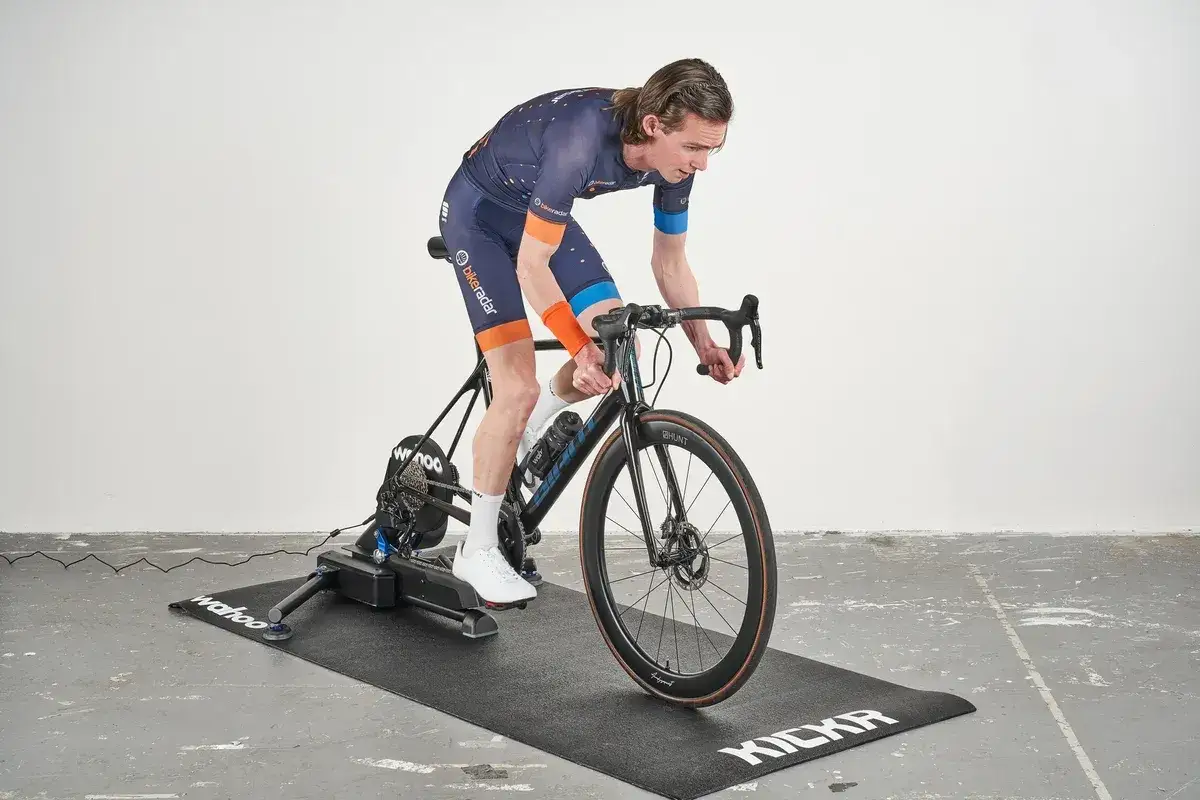
The interval shapes that work best on the bike
I usually narrow VO2 work into a few repeatable formats. The right one depends on your current fitness, how much fatigue you are carrying, and whether you ride indoors or outside. If I want a session to improve aerobic power without becoming sloppy, I pick one of these and stick with it for the block instead of mixing six different “hard workout” ideas together.
| Format | Example | Why I use it | Main limitation |
|---|---|---|---|
| Long repeats | 4 x 4 minutes at roughly 110-115% FTP, with 4 minutes easy between | Classic aerobic-power builder; easy to pace and easy to compare week to week | The first rep can go too fast, which ruins the last two |
| Middle repeats | 5 x 3 minutes at roughly 115-120% FTP, with 3 minutes easy between | Good blend of power and repeatability; often a strong first choice for recreational racers | Requires a solid warm-up and honest pacing |
| Micro-bursts | 3 sets of 10 x 30 seconds hard / 15 seconds easy | Very time-efficient and great for pushing oxygen demand quickly | Easy to turn into a sprint session if you lose control early |
| Short repeats | 6 to 8 x 2 to 3 minutes hard, with equal recovery | Useful when you need a hard aerobic hit without a huge total session | Can create more muscular fatigue than expected, especially outdoors |
That gives you the workout itself, but the real question is how to arrange a week so the work lands instead of leaking into fatigue.
How I would structure a six-week block
If I were building this for a committed recreational cyclist, I would keep the week simple: one true VO2 session, one supportive endurance ride, one longer aerobic ride, and the rest easy or off. I would also keep at least 48 hours between the two harder days. The block below is not magic; it is just a clean way to accumulate quality without burying yourself.| Week | Main workout | Support work | Goal |
|---|---|---|---|
| 1 | 4 x 3 minutes hard / 3 minutes easy | Mostly zone 2 riding, 60 to 90 minutes | Introduce the load without chasing hero numbers |
| 2 | 5 x 3 minutes hard / 3 minutes easy | One longer aerobic ride | Add a little more total time near VO2 effort |
| 3 | 4 x 4 minutes hard / 4 minutes easy | One endurance ride with a few relaxed tempo minutes | Stretch the time at high aerobic demand |
| 4 | 3 x 3 minutes hard / 3 minutes easy | Easy endurance only, with more rest if needed | Deload and absorb the first three weeks |
| 5 | 5 x 4 minutes hard / 4 minutes easy | One easy ride plus one longer zone 2 ride | Highest workload of the block |
| 6 | 3 x 5 minutes hard or 2 sets of 6 x 30/15 | Short openers and easy spinning | Sharpen, then assess response |
On the other days, I keep the riding mostly easy. A simple weekly rhythm works well: one hard day, one supportive moderate day only if recovery is good, one long endurance ride, and the rest truly light. I would rather see a rider finish week three with sharp legs than limping into week five because they kept adding intensity to impress themselves. The best sign that the block is working is not that you survive it; it is that the same workload starts to feel more controlled.
That only happens if recovery keeps up, and this is where many good-looking plans quietly fail.
Recovery, fueling, and strength work that keep the block useful
I treat recovery as part of the training load, not as a reward after training. A hard VO2 session is expensive, so I want the day before it to be light, the session itself to be fueled, and the day after it to be easy enough that the nervous system and legs can reset. If your life already includes long work hours, commuting, or extra stress, I would reduce block volume before I would try to “push through” by force.
- Eat before the session. A carb-rich meal 2 to 3 hours ahead usually beats trying to train flat.
- Use carbs during longer work. If the ride runs past 75 minutes, a little carbohydrate during the session can keep output steadier.
- Recover with food, not just water. I like to see 20 to 30 grams of protein plus carbs after the workout.
- Sleep like it matters. Seven to nine hours is not a luxury when the block is intense.
- Keep strength work simple. One or two 30 to 45 minute sessions a week with compound lifts is enough for most cyclists.
I also try to keep gym work away from the hardest bike session when possible. Heavy leg lifting right before VO2 intervals is a common way to make a good program feel mysteriously bad. The theme here is consistency, not punishment. Once recovery is protected, the next problem is avoiding the mistakes that make the block look harder than it should be.
Mistakes that make VO2 work look harder than it is
The biggest mistake is starting every rep like it is the final minute of a race. If the first interval is dramatically faster than the rest, the session stops being VO2 training and becomes a pacing failure. I would rather see even power across the set than one heroic rep and three damaged ones.
- Turning the first rep into a sprint. This spikes fatigue before the real work starts.
- Chasing heart rate too early. Heart rate lags, so it is a poor target in the first minute or two of each effort.
- Stacking too many hard days. For most amateurs, more than two true intensity days per week becomes a recovery problem.
- Skipping the deload week. Adaptation happens after stress, not just during it.
- Using too many interval styles at once. Pick one primary format and let the body learn it.
- Training under-fueled. A workout that feels “mysteriously impossible” is often just a fueling issue.
A rider who can complete 4 x 4 minutes with even power, stable form, and only a modest fade is usually getting more from the block than the rider who keeps inventing new pain. Once you remove those errors, the question becomes how to carry the gains forward instead of resetting to zero.
What I would do after the first block
After six weeks, I look at repeatability first. If the same power now feels easier, if the last interval is closer to the first, and if recovery is clean, I know the block did its job. In that case I would repeat the same structure with either a tiny increase in total hard minutes or a small power bump of about 2% to 3%.
- If the block felt productive, repeat it with slightly more total work or a small increase in target power.
- If fatigue lingered, keep the same targets and cut total work by 10% to 20% next time.
- If you are returning from a layoff, spend 2 to 4 weeks rebuilding aerobic volume before another hard block.
- If you race often, rotate VO2 blocks with threshold and endurance phases instead of staying in high-intensity work all season.
The cleanest version is rarely the most dramatic. The best plan is the one you can recover from, repeat, and build on without feeling cooked, because that is what actually raises maximal oxygen uptake and keeps it useful on the road.