A VO2 max of 50 is one of those numbers that sounds simple but only becomes useful when you put it in context. In this article, I break down what that score usually means, how age and sex change the interpretation, what it says for cyclists specifically, and how to improve it without wasting training time.
The practical read on a score of 50
- A score of 50 mL/kg/min points to a solid aerobic engine, but it is not automatically “good” or “bad” without context.
- For many young men it lands around average to good; for many women it is clearly above average.
- For cyclists, the number matters most when you pair it with threshold power, climbing ability, and recovery between hard efforts.
- The fastest path upward is usually one focused VO2 session, one threshold-style session, enough easy volume, and honest recovery.
- Use the same testing mode and the same device when you track progress, or the trend gets noisy fast.
What a score of 50 really means
VO2 max is measured in milliliters of oxygen used per kilogram of body weight per minute, so a score of 50 means your body can use 50 mL of oxygen per kg each minute during maximal effort. That is a meaningful aerobic marker, but it is not a trophy by itself. I usually read it as a sign that the engine is there, then I ask how that engine compares with the athlete’s age, sex, sport, and test method.
In plain English, 50 is a strong number for many recreational athletes and a very respectable number for endurance-focused riders. It does not automatically mean you are race-ready, and it does not mean you are undertrained. The real question is where 50 sits relative to the population you care about.
| Situation | How I read a score of 50 | What to check next |
|---|---|---|
| Man in his 20s | Usually around average to good, not automatically exceptional | Threshold power, climbing speed, repeatability |
| Woman in her 20s | Usually very strong and well above the everyday range | Power-to-weight, endurance durability, recovery |
| Rider in their 40s or 50s | Often an excellent result if the test was clean | How much of that capacity you can hold for long rides |
| Bike-based test | More relevant for cyclists than a run-based estimate | FTP, interval tolerance, climbing output |
The main takeaway is simple: the number only becomes useful when you stop treating it as a universal grade and start treating it as a context-based marker. That leads straight into the bigger question of why two people can both show 50 and mean very different things.
Why age, sex, and test mode change the answer
One of the best ways to avoid overreading VO2 max is to compare like with like. In Mayo Clinic Proceedings reference data, the median VO2 max for men aged 20 to 29 was about 49.5 mL/kg/min, while the median for women in the same age band was about 40.6. That does not make one result “better” in a vacuum; it shows how much age and sex shift the meaning of the same score.
A broad rule of thumb is that VO2 max tends to decline by about 9% per decade after young adulthood, although regular training can slow that drop. So a 50 at 25 and a 50 at 45 do not tell the same story. The older athlete may be holding onto a much stronger aerobic base relative to age, while the younger athlete may simply be sitting near the center of the distribution.
- Age matters because aerobic capacity usually trends down over time.
- Sex matters because average values differ before training status even enters the picture.
- Test mode matters because a treadmill and a bike do not stress the body in the same way.
- Body mass matters because VO2 max is reported relative to weight, not as raw oxygen use.
- Training history matters because former endurance athletes often keep a higher ceiling than sedentary adults.
I also keep the testing mode in mind. A cycle test and a treadmill test are not interchangeable, because they create different physiological demands and do not always return the same number. That matters a lot if you ride more than you run, which is where cyclists need a more specific reading.
What it means for cyclists
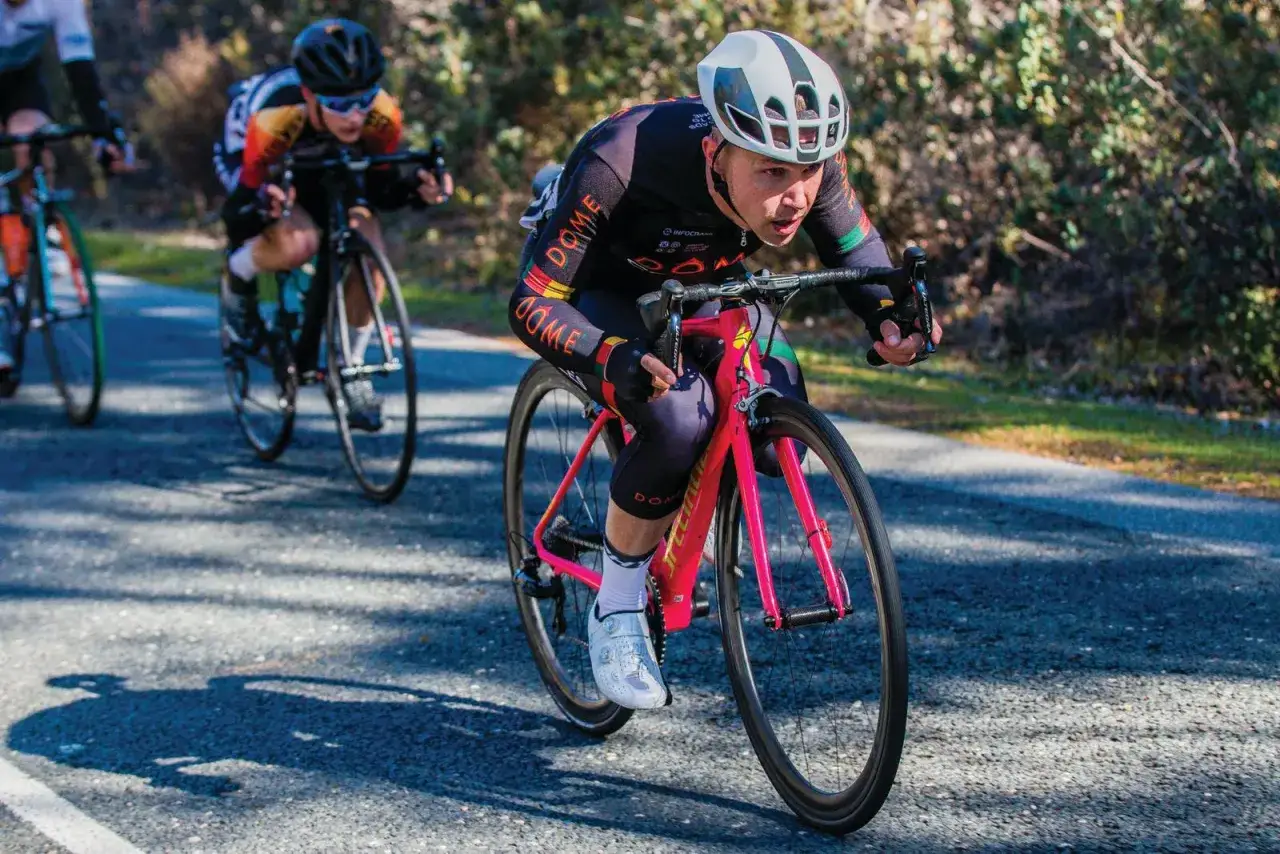
For cyclists, a VO2 max of 50 is usually a useful base rather than a final destination. It suggests you have enough aerobic capacity to support decent climbing, hard pulls, and repeated efforts, but it does not tell me whether you can convert that capacity into sustained speed on the bike. In real riding, threshold power, fatigue resistance, fueling, and position on the bike often matter just as much as the ceiling itself.
That is where the metric gets misunderstood. A rider can test at 50 and still struggle on long climbs if their functional threshold power is low, if body mass is carrying too much dead weight, or if they fade after one hard attack. Functional threshold power, or FTP, is the best practical estimate of the hardest power you can hold for roughly an hour. A rider with a slightly lower VO2 max can still be faster if they hold more of it in real race conditions.
- Climbing depends heavily on power-to-weight, which is watts per kilogram.
- Road racing rewards the ability to repeat hard surges without blowing up.
- Time trials lean more on sustained threshold power and pacing discipline.
- Gravel and endurance events care a lot about durability, fueling, and recovery, not just top-end oxygen use.
In a local amateur field, a score around 50 can absolutely support strong riding if the rest of the profile is balanced. The key is not chasing the headline number alone; it is making sure the number matches the demands of the riding you actually do. From there, the next question is how to move it up without turning every week into a fatigue contest.
How to raise it without wasting training time
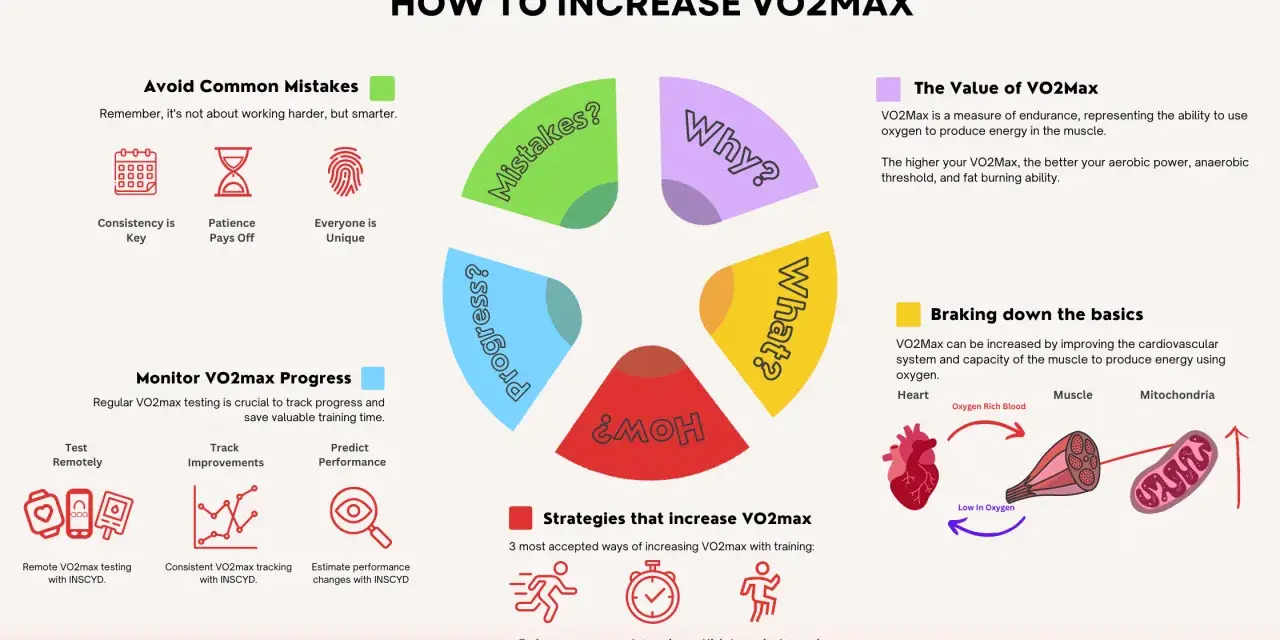
Harvard Health notes that interval work is one of the fastest ways to improve VO2 max for people who are already active, and that matches what I see in coaching. The mistake is not doing intervals. The mistake is doing too many, too hard, too often, while the rest of the week is a mess.
Use one true VO2 session each week
Pick a format that is hard enough to push breathing near the limit but short enough to keep quality high. I like 4 x 4 minutes, 5 x 3 minutes, or 6 x 2 minutes, with equal or slightly longer recovery. On the bike, that should feel controlled and repeatable, not like random all-out sprinting. If the final rep collapses completely, the workout has probably crossed from productive to sloppy.
Pair it with threshold or sweet-spot work
VO2 intervals raise the ceiling. Threshold work raises the amount of time you can sit under that ceiling. Sweet spot sits just below threshold and gives you a lot of aerobic return without the same recovery cost. That is why I rarely want a cyclist doing only maximal intervals. You need one session that pushes the top end and one that teaches you to use it.
Keep enough easy volume
Low-intensity riding builds the base that lets the hard sessions actually work. It also helps you recover from the hard days. A simple structure that works for many riders is one VO2 session, one threshold-focused session, one longer endurance ride, and the rest easy riding or rest. That is not flashy, but it is effective.
- VO2 session: about 15 to 25 total hard minutes, such as 4 x 4 or 5 x 3.
- Threshold session: about 20 to 40 minutes of sustained work, such as 2 x 20 or 3 x 12.
- Endurance ride: about 90 to 240 minutes at conversational pace.
- Strength work: 2 sessions of 30 to 45 minutes in a normal week, especially useful in the off-season.
Read Also: High-Intensity Cycling Intervals - Maximize Your Power
Use strength work as support, not the main act
Two short strength sessions a week can improve durability, sprint mechanics, and injury resistance. I would not expect lifting alone to move VO2 max dramatically in a trained cyclist, but it can make the rest of your training more productive. In other words, strength work is a force multiplier, not the headline.
If you stay consistent for 8 to 12 weeks, keep the hard work focused, and avoid under-fueling your rides, the trend usually moves in the right direction. That brings us to the part that saves a lot of frustration: making sure the number you are chasing is actually trustworthy.
How to trust the measurement before you build a plan around it
Before you reorganize training around one reading, make sure the reading is stable enough to trust. A wearable estimate is useful for trends, but it is still an estimate. The most accurate setup is a lab test with gas analysis inside a cardiopulmonary exercise test, or CPET, where a mask measures oxygen intake and carbon dioxide output while the workload rises.
- Use the same device, the same mode, and the same protocol every time you compare results.
- Test when you are rested, fed, and not coming off a hard block or a recent illness.
- Expect small swings from sleep, heat, dehydration, caffeine, and accumulated fatigue.
- For cyclists, a bike-based test is usually the more relevant benchmark.
- Do not let one weird reading override several weeks of training data.
I trust the trend more than the exact headline number. If your score stays near 50 for months while your climbing power, repeatability, and recovery all improve, that is still a win. The next step is to use the trend intelligently over the next training block instead of chasing every small fluctuation on a screen.
The most useful way to read the number over the next 12 weeks
If your score is around 50 now, I would not obsess over whether it is flattering enough. I would ask better questions: can I hold more power at threshold, can I recover faster after hard efforts, and can I keep building aerobic volume without feeling wrecked? Those answers matter more for cyclists than the number by itself.
- If you are a newer rider, aim for clean consistency and one hard interval day each week.
- If you are already trained, keep the hard days focused and let the easy days stay easy.
- If your events are long, spend more time on endurance, fueling, and durability than on repeated all-out work.
- If climbing is the goal, watch power-to-weight and FTP alongside VO2 max.
A score of 50 is not a finish line. It is a snapshot of your current aerobic capacity, and for most riders the real value is in what it tells you to do next: train a little smarter, test more consistently, and judge progress by the way you ride, not by a single number on a screen.