A 10-minute ride can be a surprisingly useful fitness block, but the calorie total is never fixed. Pace, body weight, resistance, hills, and bike type all move the number, so the real answer is a range rather than a single figure. I break down that range below and show how to estimate it for your own body and bike.
The calorie count rises quickly once pace, resistance, and body weight go up
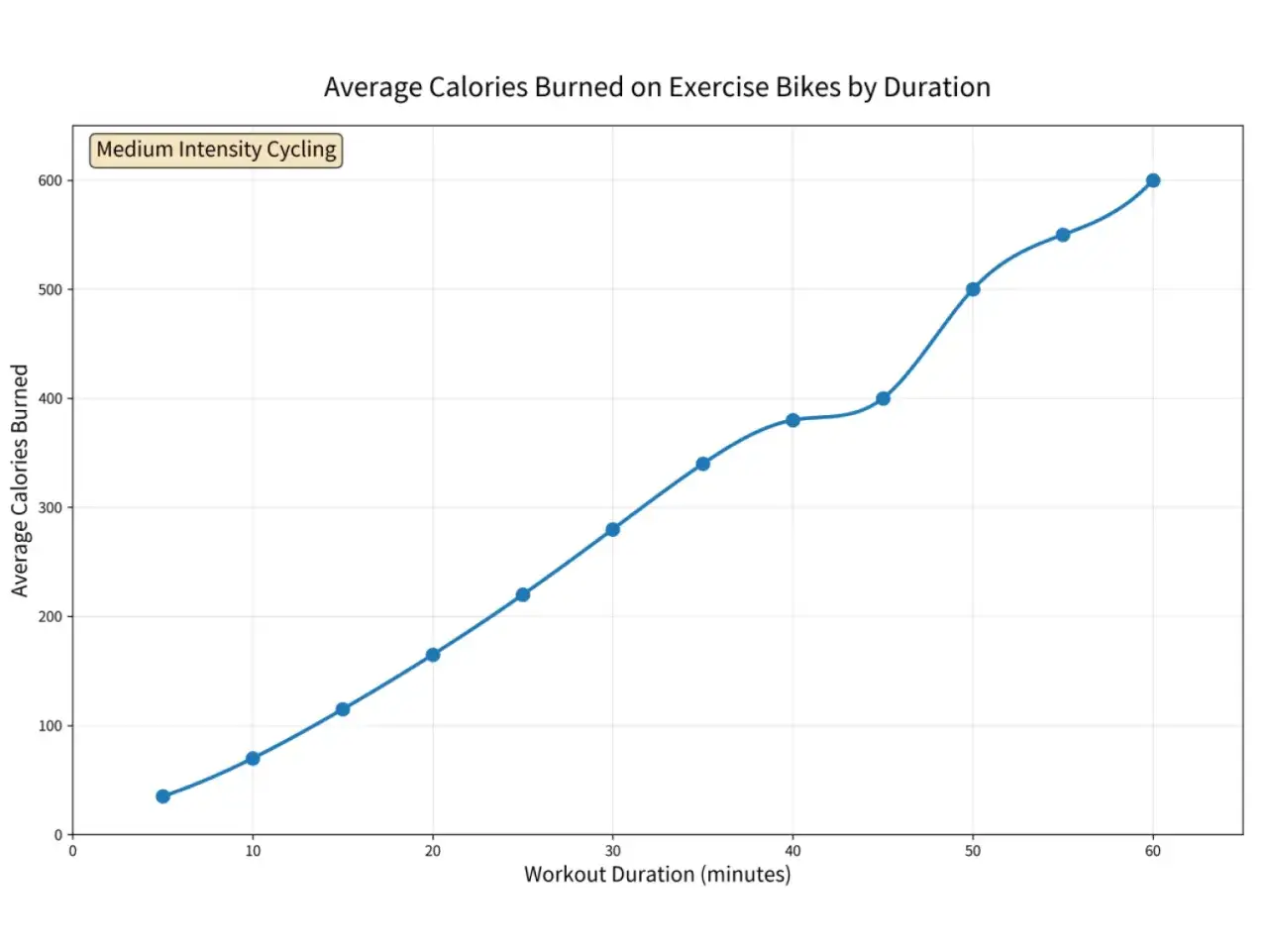
- An easy 10-minute spin often lands around 40-60 calories.
- A steady ride is usually closer to 80-100 calories.
- A hard effort can push a 10-minute block above 120 calories.
- Heavier riders usually sit near the top of each range, lighter riders near the bottom.
- Indoor bikes are more predictable; outdoor rides vary more with terrain and traffic.
How many calories a 10-minute ride usually burns
My practical answer is this: for a 155-pound rider, 10 minutes of cycling can burn roughly 50 calories at an easy pace, around 80-100 calories at a steady effort, and 120 calories or more when the effort gets genuinely hard. I base that estimate on the 2024 Compendium of Physical Activities, which uses MET values to standardize exercise intensity, and it lines up with the ballpark Harvard Health Publishing gives for a leisurely 10- to 12-mph ride. The useful part is not a single number; it is knowing which range your ride actually belongs to.
I estimate it with a simple formula: MET x body weight in kilograms x 0.0175 = calories per minute. If you want the short version, higher MET means higher effort, and a heavier rider burns more calories at the same pace because the same workload costs more energy.
| Ride style | Typical MET | 125 lb rider | 155 lb rider | 185 lb rider |
|---|---|---|---|---|
| Easy outdoor cruise, under 10 mph | 4.0 | 40 calories | 49 calories | 58 calories |
| Steady outdoor ride, 10-11.9 mph | 6.8 | 67 calories | 84 calories | 100 calories |
| Moderate ride, 12-13.9 mph | 8.0 | 79 calories | 98 calories | 118 calories |
| Fast outdoor ride, 14-15.9 mph | 10.0 | 99 calories | 123 calories | 147 calories |
| Spin class or hard indoor session | 9.0 | 89 calories | 111 calories | 132 calories |
Rounded numbers are easier to use day to day, but the pattern matters more than the exact digit. If you move from a relaxed cruise to a true tempo effort, you can add 40 to 60 calories in the same 10-minute window, which is why speed and resistance matter more than the stopwatch alone. Once you know the range, the next step is understanding why two identical rides can burn very different amounts.
Why the number changes more than most riders expect
The biggest variable is not the bike itself, but the work you ask it to do. Body weight is the first obvious factor: a 185-pound rider will usually burn more than a 125-pound rider at the same cadence and resistance. After that come terrain, wind, traffic, and how hard you are pushing on the pedals.
- Resistance or hills increase power output, which is the real engine of calorie burn.
- Cadence, the number of pedal revolutions per minute, matters less than output if the resistance is too low.
- Stops and coasting pull the average down fast, especially on city routes with lights and intersections.
- Bike setup and posture affect efficiency, but they do not override effort.
- Fitness level changes how hard a pace feels, although calorie estimates are still based mostly on the external workload.
If you use a power meter, watts are the cleanest measure of work because they reflect actual output rather than speed, which gets distorted by wind and terrain. That is one reason two riders can finish the same 10-minute segment with very different calorie totals even if they appear to be moving at the same pace. That is also why an indoor session, a road ride, and an e-bike commute should not be treated as the same workout.
Indoor bikes, outdoor rides, and e-bikes do not burn the same amount
Indoor bikes are easier to compare because the machine controls most of the variables, but the burn still changes a lot with resistance. Outdoor rides add wind, corners, coasting, and micro-pauses, so they often look impressive on a map while producing a lower average workload than a steady trainer session. E-bikes sit in a different bucket again: the more support the motor gives, the lower your own energy cost.
| Ride type | Typical effort | Approx. calories in 10 minutes for a 155-lb rider | What it usually means |
|---|---|---|---|
| Outdoor easy cruise | 4.0 MET | 49 calories | Good for recovery or a light commute |
| Stationary bike, general | 6.8 MET | 84 calories | A solid middle-ground estimate |
| Spin class or hard indoor session | 9.0 MET | 111 calories | More resistance and less downtime |
| Fast outdoor ride, 14-15.9 mph | 10.0 MET | 123 calories | Real tempo effort, not casual pedaling |
| E-bike with high support | 4.0 MET | 49 calories | Motor assistance lowers your share of the work |
If your ride includes lots of coasting or stoplights, use the lower end of the range rather than the top. On a flat, uninterrupted route, the estimate is cleaner; on a stop-and-go commute, the average drops quickly. If you want the higher end of the range without wasting time, the way you structure those 10 minutes matters.
How to make 10 minutes count without turning it into sloppy effort
If the goal is to make 10 minutes worthwhile, I would focus on power, not just speed. A short warm-up, a few minutes at a strong but controlled effort, and a brief cool-down usually beats mindless spinning at low resistance. That approach raises the calorie burn and gives the session a real training purpose.
- Start with 2 minutes of easy pedaling so your legs are ready for harder work.
- Increase resistance until breathing is clearly elevated but form still feels clean.
- Use short surges or hill efforts if you want to push the average calorie burn higher.
- Keep cadence smooth; frantic legs with almost no resistance do less work than they seem to.
- Stop chasing maximum effort if your knees, hips, or lower back start to compensate.
For cyclists who track workouts with a smart trainer or bike computer, this is where gear matters: stable resistance and consistent data make short rides much easier to interpret. In practice, I prefer a 10-minute session that you can repeat tomorrow over a hero effort that leaves you too cooked to ride again. Even so, the real value of short rides is not just the calorie count.
What 10 minutes really does for training and fat loss
Ten minutes is not enough to replace a full training block, but it is absolutely enough to move the needle when you use it consistently. For general fitness, short rides can improve cardiovascular conditioning, raise daily activity, and make it easier to build a longer habit later. For fat loss, the session helps, but the bigger levers are weekly volume, nutrition, and how often you repeat the ride.The mistake I see most often is treating a short ride like it should either be meaningless or miraculous. It is neither. A 10-minute ride is small enough to fit into a busy day and strong enough to matter when it happens often, especially if it becomes part of a commute, a warm-up, or a recovery routine. That makes the last step simple: use a rule of thumb instead of chasing a pretend exact number.
A simple rule of thumb I would use for planning short rides
My rule of thumb is straightforward: count on about 40-60 calories for an easy 10-minute spin, 80-100 calories for a steady ride, and 120-150 calories for a hard effort, with heavier riders landing toward the top of each range. If you want more precision, use a power meter or a bike computer that tracks effort consistently, then compare rides under similar conditions instead of reading too much into one number. That gives you a more honest picture of how cycling fits into your training and calorie goals.
For most riders, the best use of a short ride is not to obsess over the exact calorie count. It is to turn ten minutes into a repeatable habit that can become a warm-up, a commute, recovery work, or a hard interval block depending on the day.