Calf pain on the bike is rarely random. More often, it is a sign that the lower leg is compensating for a fit issue, a training jump, or both, and saddle height is one of the first variables I check. In this article, I break down how seat height affects the calf and Achilles tendon, how to tell whether the bike setup is really the problem, and what adjustments usually help without creating new discomfort.
The fastest path to relief is usually a small fit correction, not a major overhaul
- A saddle set too high often forces toe-pointing, ankle overwork, and subtle hip rocking.
- A saddle set too low can still create lower-leg discomfort, but it usually changes the load pattern rather than creating classic calf strain.
- Cleat position, foot support, cadence, and a sudden increase in training load can look like a saddle-height problem.
- A commonly used fit target is roughly 25 to 35 degrees of knee bend at the bottom of the pedal stroke.
- Make changes in small steps, then test them on a real ride before deciding what to do next.
Why saddle height changes calf load so quickly
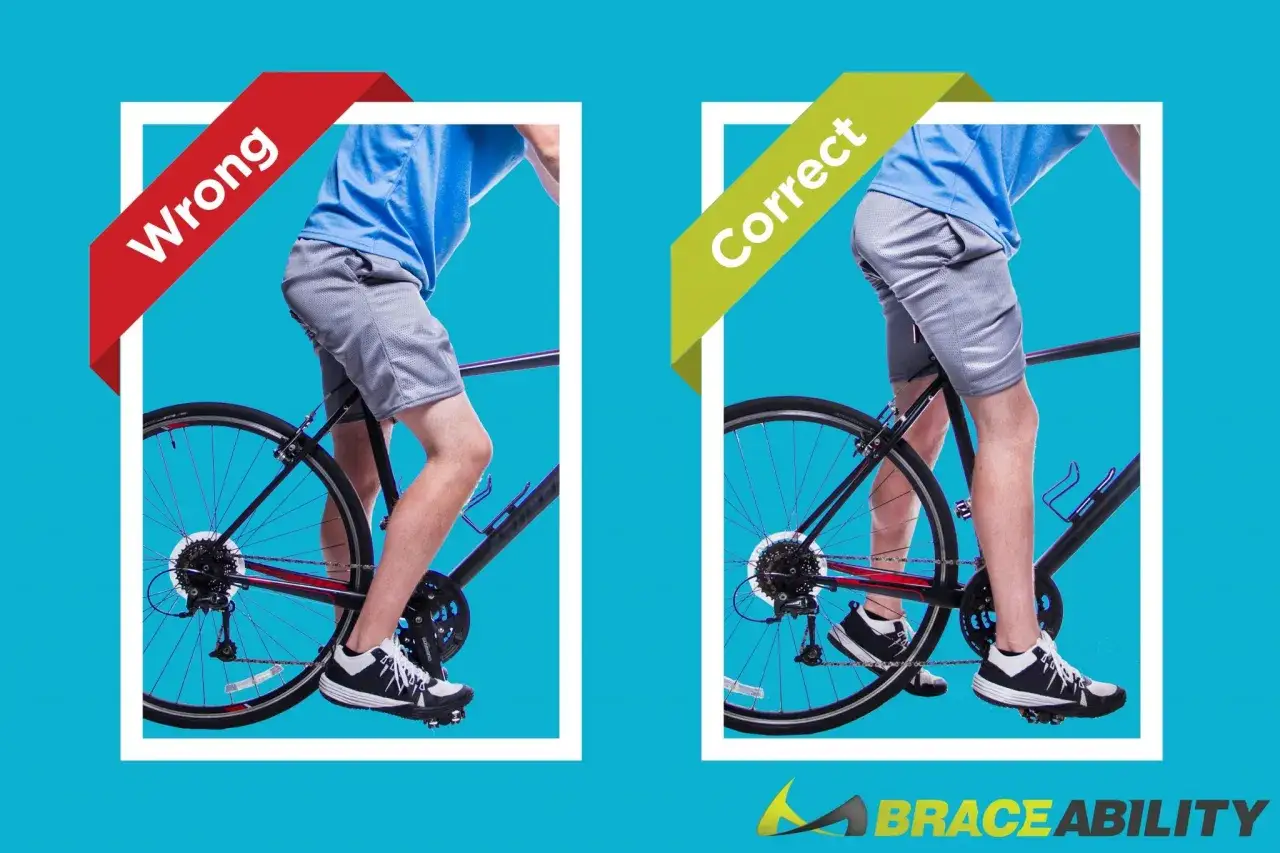
The calf is not just along for the ride. When the saddle sits too high, the body often cheats to reach the bottom of the pedal stroke: the heel drops, the toes point, and the ankle starts doing extra work to complete the circle. That is where calf and Achilles irritation often begins. I see this pattern most often when a rider feels a tight, pulling sensation high in the calf, especially after a longer ride or a climb-heavy session.
A saddle that is too low is less likely to create the classic overreach pattern, but it can still bother the lower leg by changing how force is shared across the stroke. The rider may feel cramped, sit too closed at the hip, or push in a way that feels heavy and inefficient. In practical terms, the calf pain is usually the body’s warning that the whole pedaling chain is out of balance, not a sign that the calf itself is the only problem.
The number I keep in mind is not a magic formula, but a reference point: many fitters aim for about 25 to 35 degrees of knee bend at the bottom of the stroke. That range gives you enough extension for power without forcing the leg to reach or the pelvis to rock. Once you go outside that window, the calf often becomes the first place where the mismatch shows up.
That is why the first diagnosis I make is simple: is the rider reaching, or is the rider compressed? The answer tells me whether to lower the saddle, leave it alone, or keep looking elsewhere.
How to tell whether the saddle is the problem
I like to separate symptoms by pattern, because calf pain has a habit of borrowing blame from other parts of the setup. A saddle issue usually leaves clues in the stroke itself, while a training or cleat issue tends to show up only under certain efforts or after a recent change.
| Clue | What it often points to | Why I care |
|---|---|---|
| Pain started after you raised the saddle | Saddle too high | The lower leg is reaching more than it should, which increases calf and Achilles load. |
| You feel yourself pointing the toes at the bottom of each stroke | Saddle too high or cleats too far forward | Both can make the calf work harder to finish the pedal stroke. |
| Hips rock side to side or you slide forward on the saddle | Saddle too high | That usually means the body is searching for length instead of staying stable. |
| Pain shows up mainly on hard climbs or big-gear efforts | Training load or pedaling style | Grinding a heavy gear can overload the lower leg even when the fit is close. |
| There is swelling, redness, warmth, or pain at rest | Not a fit issue | That pattern needs medical attention rather than another saddle tweak. |
Another clue I use is timing. If the pain is present only after long rides, hard intervals, or a sudden increase in weekly volume, I become more suspicious of load management than pure fit. If the pain appears within minutes of getting on the bike, or if it started right after a saddle change, I look at height first. The story the symptom tells matters as much as the symptom itself.
A practical saddle-height reset you can do yourself
When I adjust saddle height, I do not make big jumps. I start from the current position, because the current position tells me what the body has already adapted to, and it is often only a few millimeters away from workable. Trek recommends using hip-bone height as a rough starting point while standing beside the bike, which is a useful baseline, but the real answer comes from on-bike testing.
Set a clean baseline
- Mark the current saddle height before touching anything.
- Check that the saddle is level, because nose-up or nose-down tilt can change how the leg tracks through the stroke.
- Note when the calf pain starts, for example on easy spins, tempo work, climbs, or only after longer duration.
Adjust in small steps
If the saddle feels too high, lower it in 2 to 5 mm steps and test again. That sounds tiny, but in bike fit, tiny is usually enough. I would rather make two controlled changes and learn something from each one than make a dramatic move and lose the original signal. A big drop can also move the complaint from the calf to the knee or hip, which only creates a different problem.
- Ride after each change, not just around the block.
- Keep the rest of the setup unchanged while you test.
- Stop as soon as the pedal stroke feels quieter, more stable, and less forced.
Know when to stop lowering
If lowering the saddle improves the calf but creates knee pressure, cramped hips, or a less efficient stroke, you have probably gone too far. At that point, the issue may not be saddle height alone. Crank length, fore-aft position, or cleat placement may be contributing, and I would rather solve the whole chain than keep chasing one variable.
The goal is not the lowest possible saddle. The goal is a position that lets you ride repeatably, with no need to reach, no side-to-side rocking, and no sense that the ankle is doing the job of the hip.
When cleats, shoes, or pedaling style are the real cause
Seat height gets blamed early because it is easy to change, but calf pain often starts somewhere else. I pay close attention to cleat placement, because a foot that sits too far forward on the pedal can push more work into the calf and Achilles tendon. I also look at shoe fit and foot support, since instability under load can make the lower leg work overtime just to keep the foot quiet.
Pedaling style matters more than many riders expect. If you spend a lot of time on the toes, mash heavy gears, or climb with a very forceful ankle action, the calves can become the stabilizers of last resort. That does not mean the technique is wrong in every context, but it does mean the lower leg may be paying for the way force is being applied.
Read Also: 5-Minute FTP Test - Get Accurate Zones Fast!
What I check next
- Cleat position, especially if the ball of the foot sits too far ahead of the pedal axle.
- Foot support, because a foot that rocks or collapses under load often irritates the lower leg.
- Cadence and gearing, since grinding a heavy gear increases calf tension for many riders.
- Ankle mobility, because tight calves or stiff ankles can force compensation even on a decent setup.
If the discomfort shows up only during intervals, steep climbs, or the first week back after time off, I do not assume the saddle is the whole story. In those cases, I usually treat saddle height as one piece of the puzzle, then look at cleats and training load before making more changes. That order saves a lot of unnecessary tinkering.
When calf pain needs medical attention
Most cycling-related calf soreness is mechanical and improves when the load is reduced, but I do not ignore red flags. Cleveland Clinic advises prompt evaluation for sudden or severe calf pain, especially if it comes with swelling or discoloration. I also become cautious if the calf is hot, very tender, visibly swollen, numb, or painful at rest, because that is not the pattern I want to solve with a bike adjustment.
- Stop riding and get checked if the pain is sudden, sharp, or rapidly worsening.
- Get medical advice if the calf is swollen, red, warm, or discolored.
- Do not treat one-sided swelling or pain at rest as a simple fit issue.
Once the medical concerns are ruled out, you can go back to the bike fit with a much clearer picture of what is actually happening.
What I would change first before blaming the calf itself
If a rider came to me with lower-leg pain, I would not start with a dramatic setup overhaul. I would first check whether the saddle is slightly too high, whether the cleats are forcing extra ankle work, and whether the recent training block simply outran the rider’s current tolerance. That order matters, because the right fix is usually the smallest change that makes the stroke smoother and the pelvis quieter.
In my experience, the best long-term result comes from a position that feels almost boring: stable hips, even pressure through the pedals, and no need to reach at the bottom of the stroke. If you keep that standard in mind, calf pain stops being a guessing game and becomes a useful signal that helps you fine-tune both fit and training.