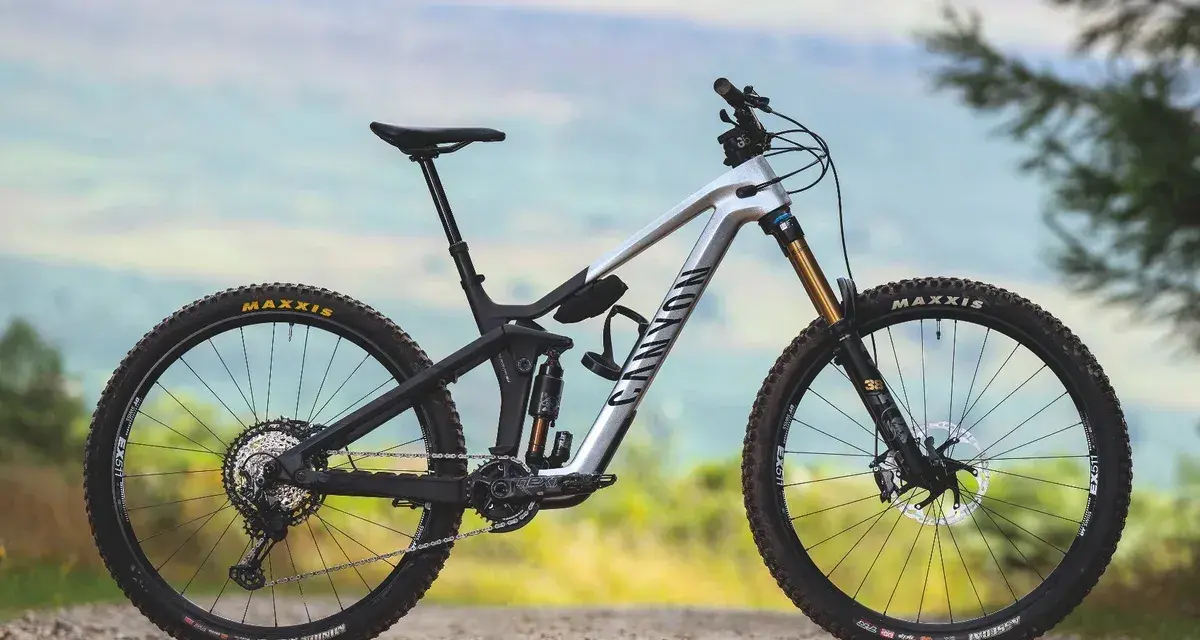
That matters because the label is not just marketing. If your local riding includes rocky descents, bike-park laps, alpine loops, or a lot of repeated braking and cornering under load, an enduro setup can feel far more stable and confidence-inspiring than a lighter all-around trail bike.
The short version is that enduro bikes are built to descend fast without making the climb miserable
- They are usually long-travel full-suspension bikes, most often in the 150-170 mm range front and rear.
- The geometry is typically longer, lower, and slacker than a trail bike, which improves stability on steep terrain.
- They climb better than a downhill bike, but they are heavier and less nimble than a trail bike.
- They make the most sense for rough descents, bike-park riding, shuttle laps, and aggressive all-mountain routes.
- The right brakes, tires, suspension tune, and fit matter almost as much as the frame itself.
What an enduro bike is built to do
The term comes from enduro racing, where timed downhill stages are linked by untimed climbs. That racing background still shapes the bikes today: they are expected to handle repeated hard hits, steep lines, loose rocks, roots, and jumpy terrain, then still pedal well enough to reach the next descent.
I usually explain it this way: a trail bike is meant to be versatile, while an enduro bike is meant to be versatile in harsher terrain. It gives up some climbing snap and low-speed agility so that it can stay calmer, more planted, and more forgiving when the trail turns ugly.
That distinction is why the category is so useful, and why it leads directly into the trade-offs with trail and downhill bikes.
How it compares with trail and downhill bikes
Bike categories blur more than many riders expect, but the broad differences still matter when you are choosing a frame. Enduro sits in the middle on climbing efficiency and near the top on descending confidence.
| Bike type | Typical suspension travel | Handling feel | Best use | Main compromise |
|---|---|---|---|---|
| Trail | About 120-150 mm | More agile, easier to accelerate | Mixed terrain, long rides, general singletrack | Less composed on very steep, rough descents |
| Enduro | About 150-170 mm | Stable, planted, confidence-first | Technical descents, bike-park laps, aggressive all-mountain riding | Heavier and slower to change direction |
| Downhill | About 180-200 mm | Most forgiving at speed, least versatile uphill | Lift-served parks and shuttle days | Poor pedal efficiency and limited all-day use |
The useful part of that table is not the numbers alone; it is the job each bike is built to do. Enduro is the one that still expects you to pedal for your descent, which is exactly why it feels so different from a pure downhill rig.
The frame, suspension, and geometry that define the category
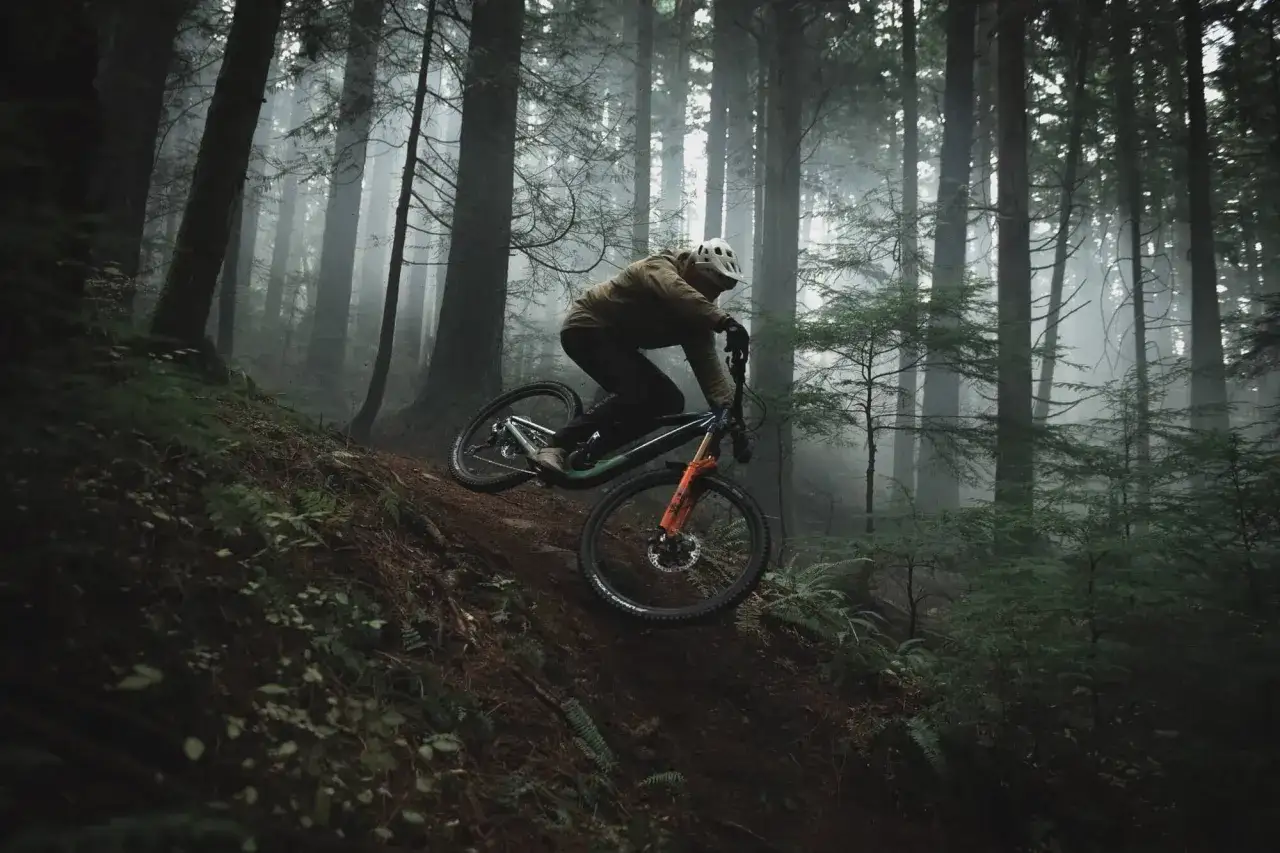
When I look at an enduro bike, I start with the chassis. Most current builds use around 150-170 mm of rear travel, with a similarly stout fork up front, because that amount of suspension is enough to smooth repeated big hits without making the bike feel too plush.
The geometry is just as important. A slack head angle, often around 63-64 degrees, slows the steering down a little so the bike feels calmer on steep terrain. A longer reach and wheelbase add stability, while a steeper seat tube, often around 76-78 degrees, helps keep your weight in a sensible position when you have to climb.
Several other parts complete the picture:
- Big single-crown forks are standard because they give stiffness without the weight and travel penalty of a dual-crown downhill fork.
- Powerful brakes matter because repeated hard braking can overwork weak systems on long descents.
- Wide handlebars and short stems help with leverage and control on technical ground.
- Dropper posts let you lower the saddle instantly, which is almost mandatory on this kind of terrain.
- Tougher tires and wheels resist pinches, sidewall cuts, and rim strikes when the trail gets sharp or square-edged.
Some modern bikes also come in mixed-wheel layouts, and that can make sense if you want a more playful rear end without giving up the rollover speed of a larger front wheel.
Those design choices are not random; they are what make the next question worth asking, which is who actually benefits from the category.
Who gets the most from one
An enduro bike makes the most sense if your riding includes steep, technical descents that would beat up a lighter trail bike. That includes bike-park days, rough backcountry loops, shuttle laps, and any local trail system where braking bumps, rock gardens, and fast corner exits are a regular feature.I also think it suits riders who value confidence over liveliness. If you like to stay centered, push into the bike, and let the suspension work while you keep the speed up, enduro geometry feels reassuring rather than lazy. That is a real advantage on unfamiliar terrain, especially when fatigue starts to blur your line choice.
It is less compelling if your rides are mostly smooth, rolling, or climbing-heavy. In that case, the extra travel and stability can feel like carrying a heavier tool than you need.
That is why the category is best matched to the way you actually ride, not to the kind of bike that sounds toughest in the showroom.
The trade-offs people underestimate
The biggest mistake I see is buying an enduro bike for the idea of enduro rather than the terrain. The category is excellent when the trail is steep and rough, but on mellow singletrack it can feel sluggish, especially if you are used to a lighter trail bike that snaps through corners more readily.
There are a few other compromises worth spelling out:
- Climbing takes more effort even when the bike pedals well for its class, because weight and travel still add up.
- Fit matters more than ego; a longer frame is not automatically better if it stretches you too far or makes the front end feel vague.
- Setup changes the personality; a poorly tuned shock can make an otherwise excellent bike feel harsh, wallowy, or dead.
- Parts cost more; bigger tires, stronger wheels, and heavier-duty brakes usually wear faster and cost more to replace.
- Maintenance is less forgiving; more travel and more aggressive riding generally mean more frequent attention to pivots, suspension service, and tire casing health.
If a rider expects enduro hardware to feel light and playful everywhere, disappointment usually follows. The bike is built for control, and control always has a cost.
Once you understand that cost, choosing the right build becomes much easier.
How to choose the right enduro bike for your riding
My buying process is simple: start with terrain, then fit, then component spec. The frame may be the headline, but the suspension tune, brake power, tire choice, and cockpit shape will decide whether the bike feels like a weapon or a compromise.
- Match the bike to the trails. If your local riding is mostly rough and steep, 160 mm of rear travel is a sensible baseline. If your terrain is extremely aggressive, a little more can make sense, but only if you also have the fitness and the terrain to use it.
- Check the geometry, not just the size label. Reach, wheelbase, and seat angle matter more than a generic medium or large. A bike that feels calm in a parking lot may feel too stretched once the trail points down.
- Pay for the brakes and wheels first. On this kind of bike, weak brakes and fragile wheels ruin the experience faster than a modest drivetrain.
- Budget for suspension setup. A proper shock service, the right spring or air pressure, and the correct damping tune can change the bike more than a cosmetic upgrade.
- Think in real U.S. budget bands. In the U.S. market, many alloy complete bikes start around $3,000-$4,500, solid carbon builds often land around $5,500-$10,000, and race-level setups can climb well beyond that.
There is one more detail I always check: whether the bike encourages me to ride actively or makes me fight its size. The right enduro bike should feel composed, not cumbersome.
The smartest way to think about enduro before you buy
If I had to reduce the category to one sentence, I would say this: an enduro bike is the best choice when your descents are technical enough that a trail bike starts to feel undergunned, but you still need to pedal back up for the next lap. That is why the category has lasted. It solves a real problem for riders who care about speed, control, and durability on rough ground.
For a lot of U.S. riders, the best decision is not to chase the longest travel or the slackest head angle. It is to choose the bike that matches the steepest, roughest trails you actually ride most often, then tune it so it climbs well enough to keep the day fun. When you get that balance right, enduro stops being a buzzword and becomes a very practical tool.
And if your rides are mostly smooth and fast, I would still steer you toward a trail bike first; the better bike is the one that fits your terrain, not the one that looks most serious in the parking lot.