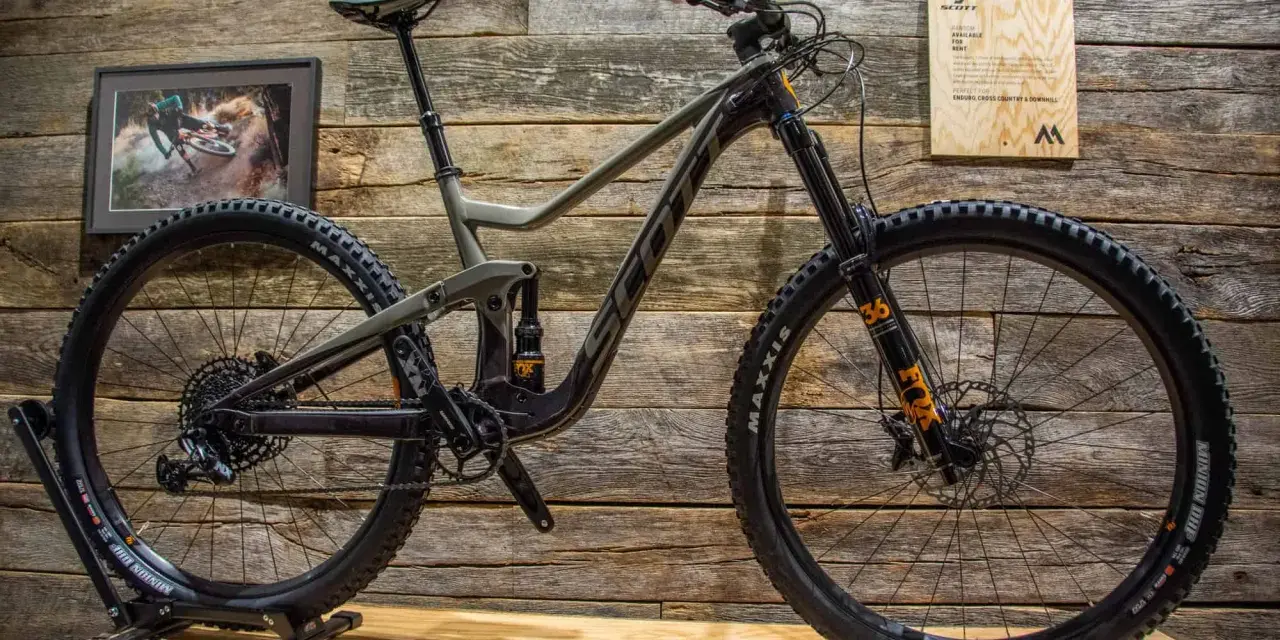
Downhill bikes and enduro bikes solve similar problems, but they do not solve them the same way. The downhill vs enduro bike decision is really about whether you want the most stable machine possible for lift-served descents or a bike that can still climb, connect trail systems, and survive rough downhills. I’m going to break down the differences that matter on real trails, what they cost, and which type makes the most sense if you ride in the US.
The choice comes down to terrain, climbing, and how often you use the lifts
- Downhill bikes usually run about 200 mm of travel and are built for lift or shuttle access, not long pedaling days.
- Enduro bikes usually sit around 160-170 mm of travel and are meant to climb well enough to get you to the descent.
- If most of your riding is bike parks, shuttle laps, or steep resort terrain, a downhill bike makes sense.
- If you need one bike for mixed trails, backcountry access, and occasional park days, enduro is the safer buy.
- Current US pricing shows serious enduro builds often starting around $3,000-$5,000, while downhill bikes commonly begin around $5,500 and can climb past $10,000.
What each bike is built to do
Downhill bikes are purpose-built for the descent. They use long-travel suspension, very slack geometry, and stout parts so the bike stays composed when the trail gets steep, rough, and fast. Enduro bikes keep much of that descending confidence but trim enough weight and add enough climbing efficiency to be pedaled all day.
The easiest way I explain it is this: a downhill bike assumes gravity is doing most of the work, while an enduro bike assumes you still need to earn your laps. Enduro started as a race format where the descents are timed and the transfer sections are not, and that idea still shapes the category today. Once you see that split, the rest of the comparison starts to make sense.
The comparison that matters on the trail
On paper, the split is simple. In real riding, the differences show up in how the bike climbs, how hard it is to move around, and how much margin it gives you when the trail turns ugly. I look at the comparison below first because it stops the debate from turning into brand loyalty.
| Factor | Downhill bike | Enduro bike | Why it matters |
|---|---|---|---|
| Suspension travel | About 200 mm front and rear | Usually around 160-170 mm rear with a roughly 170 mm fork | More travel gives more forgiveness on hard hits, but it also adds weight and reduces climb efficiency |
| Pedaling | Built around lift or shuttle days | Built to pedal to the descent | Determines whether the bike fits your local trail access |
| Geometry | Very slack and very stable | Still slack, but more balanced | Stability versus agility is one of the biggest handling differences |
| Parts spec | Heavier-duty brakes, tires, and wheels | Strong parts, usually a step lighter | Changes how the bike feels and how much maintenance it needs |
| Typical price | Commonly around $5,500-$11,000+ for current complete builds | Commonly around $3,000-$9,000+ depending on build | Budget often decides the category as much as terrain does |
The numbers matter, but they do not tell the whole story until you look at how the bikes are shaped and how that changes the ride. That is where the real separation becomes obvious.
Geometry and suspension are the real separators
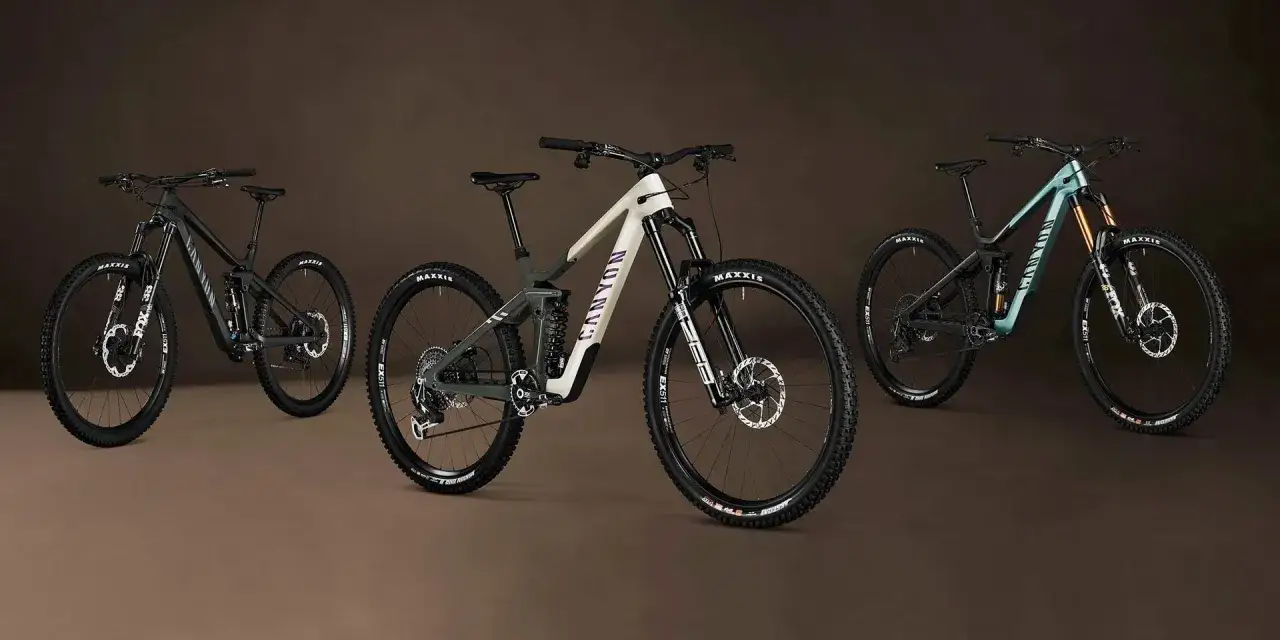
The travel number gets the headline, but geometry is what changes the feeling. A downhill bike usually has a very slack front end and a longer wheelbase, which keeps the bike calm when you are pointed into brake bumps or blind drops. An enduro bike still favors descending, but it keeps the rider position more balanced so you can pedal, corner, and move the bike around tighter terrain.
Travel and damping
Most current downhill bikes sit at about 200 mm of travel front and rear. Many enduro bikes live around 160-170 mm rear with a 170 mm fork. Damping is the part of the fork or shock that controls how quickly that travel moves, and the better the tune, the less the bike feels like it is either blowing through its travel or packing down run after run.
Front-end stiffness and bike feel
Some downhill bikes use extra-stiff front ends, including dual-crown forks on certain models, to stay precise at race speed. That rigidity is valuable when the trail is rough enough to deflect a weaker bike, but it also makes the bike less forgiving when you are trying to maneuver in slow, tight, or awkward spots. Enduro bikes trade a bit of that brute force for a ride that feels more alive off the lift and less tiring when the trail includes connectors.
Read Also: Hardtail vs Softtail - Which Mountain Bike is Best for You?
Brakes, tires, and wheels
Downhill bikes usually get larger rotors, tougher tires, and heavier-duty wheels because repeated hard braking and square-edge hits punish equipment. Enduro bikes are still serious, but they often land one step lighter and a little less expensive to keep in rotation. That is why a clean spec sheet can still hide a very different ownership experience.
Once you understand those hardware choices, the best use case starts to separate itself pretty quickly.
When a downhill bike is the right tool
I would choose a downhill bike when the ride starts at the top and stays steep almost the whole way down. That means lift-served bike parks, shuttle days, race tracks, and resort terrain where the bike will see repeated high-speed laps rather than long climbs.
- Best match: riders who spend most weekends at bike parks or on shuttle access.
- Terrain: steep chutes, big berms, jumps, rock gardens, and brake-bump sections.
- Why it works: the bike stays calm when the trail gets violent, and that calm is worth a lot when your line choice gets messy.
- Where it fails: long climbs, trail connectors, and days when the descent is only half the ride.
In other words, a downhill bike is brilliant when gravity does the work and annoying when you have to do it yourself. If that sounds too specialized for the kind of trails you ride, enduro is usually the better middle ground.
When an enduro bike is the smarter pick
Enduro bikes are the better answer for most riders because they keep the aggressive descending feel without turning every pedal stroke into a compromise. I think of them as the bike for people who still want to attack rough terrain but also need to ride to the good part.
- Best match: mixed riding, big mountain days, and trail systems where the climb is part of the ride.
- Terrain: rocky descents, technical singletrack, chunk, and moderate to long climbs.
- Rider goal: one bike that can handle aggressive descending without making uphill links miserable.
- Practical bonus: many enduro bikes are easier to demo, transport, and use outside a bike park.
Brands have moved hard in this direction for a reason. Trek describes its enduro lineup as combining downhill capability with trail endurance, and current models like the Slash and Specialized Enduro still carry about 170 mm of travel, which is plenty of bike for most real-world descents. The next question is what that flexibility costs.
What it costs to buy and maintain
Price is where the market gets blunt. In current US listings, serious enduro builds often start around $3,000 to $5,000 and climb toward $9,000, while downhill bikes commonly begin closer to $5,500 and can exceed $10,000. Trek’s Slash range stretches from about $3,000 into the high-$8,000s, Specialized’s Enduro sits at $4,999.99, Trek’s Session 8 29 GX is $5,499.99, and Specialized’s Demo 11 reaches $10,999.99 in a current complete build.
The hidden cost is service cadence. Park riding chews through brake pads, tires, seals, and wheel trueness faster than mixed trail use, so the expensive part is often the maintenance you do not notice until the season is already busy. That is one reason I would rather see a rider on a well-set-up enduro bike than a badly matched downhill bike that only feels great on paper.
For a lot of riders, the right choice is not the most aggressive bike in the catalog. It is the one that stays usable after the first wave of excitement fades and the riding calendar gets real.
The rule I trust before buying
Here is the rule I use: choose downhill if at least 70 percent of your riding is lift-served, shuttle-served, or park-focused; choose enduro if you still need to pedal to most of your descents or want one bike for everything from trail rides to occasional park days. That is not a scientific cutoff, but it keeps you from buying too much bike for the climbs you actually ride.
- If you are within driving distance of a bike park and plan to use it often, downhill starts to make sense.
- If your local trail network mixes climbing, traversing, and descending, enduro is usually the safer bet.
- If you are on the fence, demo both on the same kind of trail and pay attention to how tired you feel after two or three laps.
- If you buy enduro, spend some of the budget on brakes, tires, and a proper suspension setup before chasing the fanciest frame.
That approach is the one I trust most in the US market: buy for the terrain you actually have, not the terrain you hope to visit once a month.