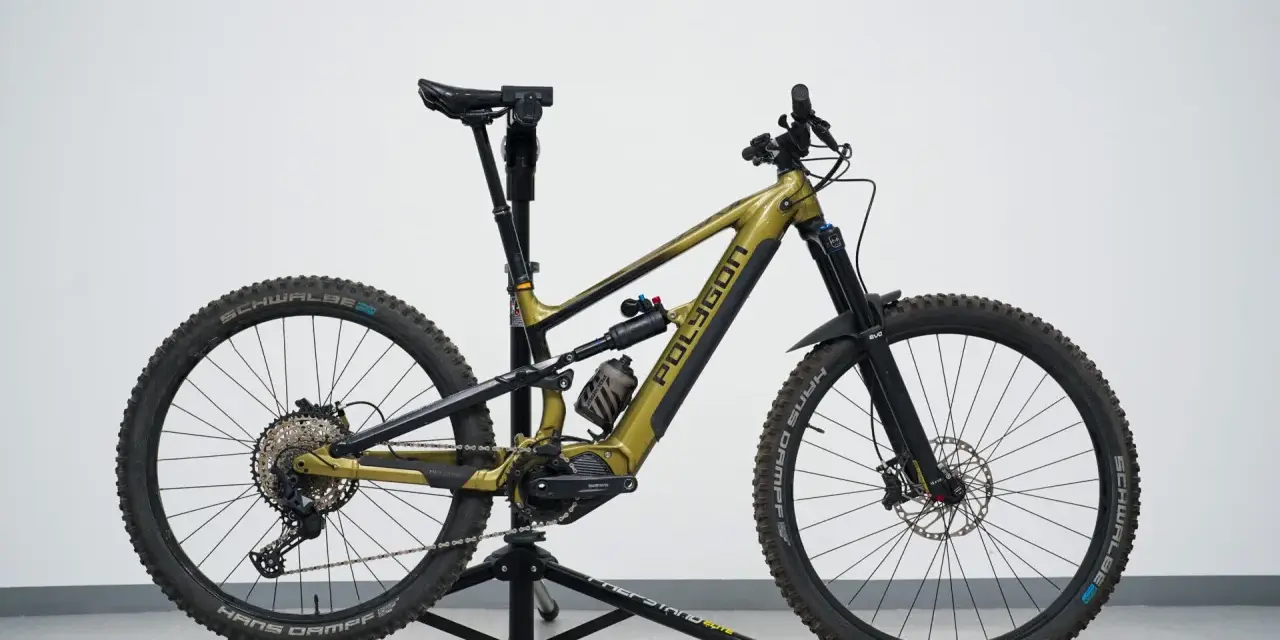
A mullet bike pairs a 29-inch front wheel with a 27.5-inch rear wheel, and the appeal is straightforward: more rollover and calm steering up front, more agility and body clearance out back. I treat it as a handling choice, not a fashion choice, because the setup only makes sense when the trail and the frame are working with it. This article breaks down what changes on the trail, when mixed wheels beat a full 29er, and how to decide whether the format fits your riding.
Key takeaways before you decide
- The big front wheel improves stability, rollover, and confidence in rough terrain.
- The smaller rear wheel makes the bike easier to lean, turn, and move around on steep descents.
- The format is strongest for enduro, downhill, and aggressive trail riding, not pure cross-country speed.
- A frame designed for mixed wheels usually feels far better than a conversion done just because the parts are available.
- If your local trails are smoother or your rides are long and climb-heavy, a full 29er may still be the smarter call.
What the mixed-wheel setup really changes
The term is borrowed from the haircut joke, but the effect on the trail is completely mechanical. The front wheel does most of the work when the trail gets ugly, while the rear wheel affects how easily you can lean the bike, load the rear tire, and get room behind the saddle on steep ground.
That is why the format feels more intentional than a random parts swap. A bike built around mixed wheels usually has the geometry, suspension, and clearance tuned for that wheel split, so the handling feels balanced instead of odd. When the frame is not designed for it, the compromise shows up fast in cornering, bottom-bracket height, or rear-end room. That distinction matters, because the real question is not what the setup is, but how it feels when the trail gets rough.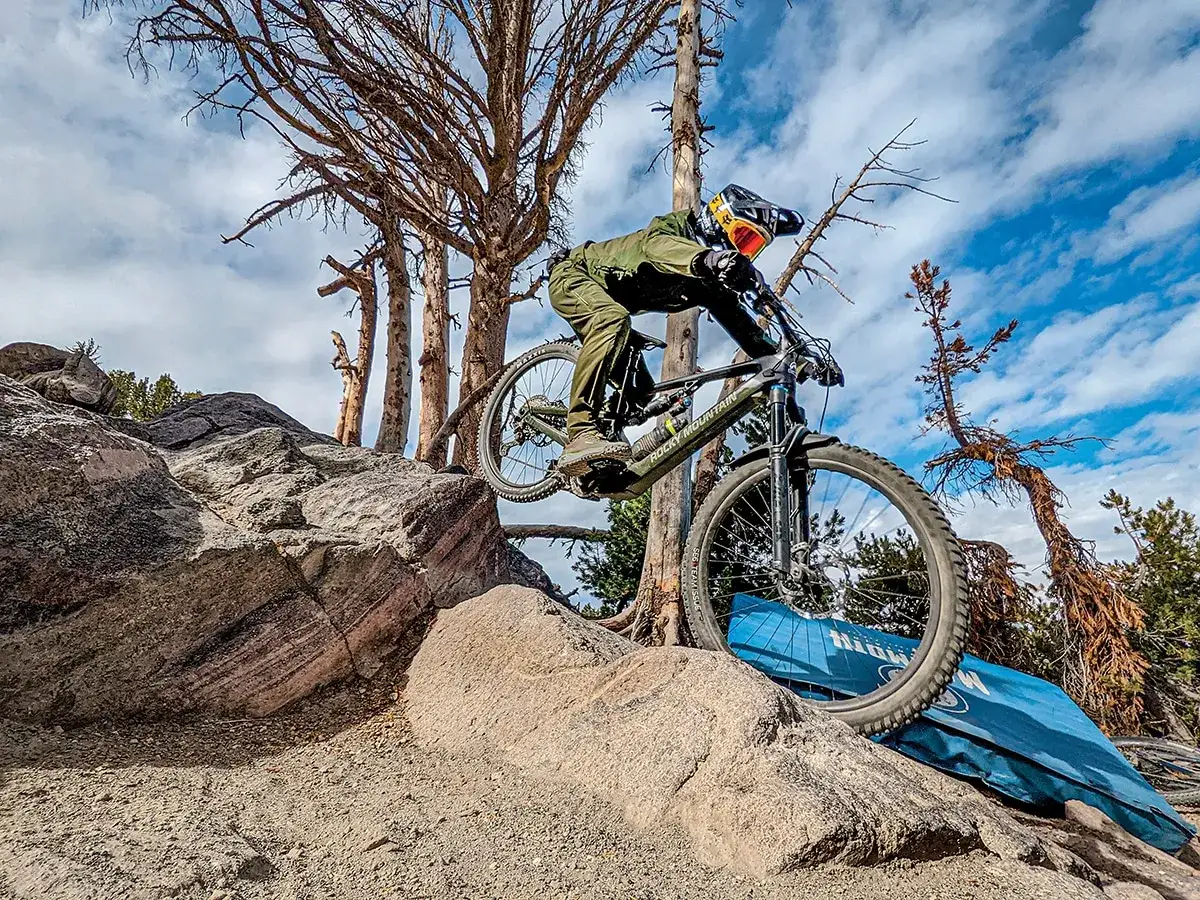
Why it feels quicker in corners and calmer in rough ground
On rough descents, the 29-inch front wheel gives me the kind of stability that matters when the trail is full of roots, square-edged rocks, and surprise compressions. The larger contact patch and better rollover help the front end stay composed, so I can keep my eyes up instead of bracing for every hit. The 27.5-inch rear wheel then does the opposite job: it is easier to unweight, easier to place, and less likely to feel like a long, stubborn lever when I snap the bike through a tight turn.
That combination is why mixed-wheel bikes often feel more playful than full 29ers without losing the front-end confidence that most riders want on modern trails. It also gives a little more room behind the saddle, which some riders appreciate on very steep pitches. The tradeoff is real, though: the rear tire may feel slightly less planted at speed, and the bike can give up a bit of climbing smoothness compared with a matched 29er. I see that as the price of a more eager, easier-to-flick rear end, and whether that is worth it depends on where you ride most.
Where it works best on the trail
This is where the setup earns its keep. I would reach for mixed wheels on aggressive trail bikes, enduro rigs, and downhill bikes that spend more time pointing downhill than grinding up fire roads. The setup suits riders who value cornering snap, front-end calm, and confidence when the terrain gets awkward. On bike-park laps, rocky chutes, and tight switchbacks, that combination can feel immediately useful rather than theoretical.
- Steep, technical descents where the rear wheel clearance matters.
- Tracks with repeated corner-to-corner direction changes.
- Rides where descending fun matters more than all-day climbing efficiency.
- Smaller riders who want a little more room behind the saddle on hard descents.
It is less compelling on smoother trail systems, long endurance rides, or cross-country-style routes where covering ground efficiently matters more than making the bike feel lively. If your usual ride is mostly flowing singletrack with sustained climbing, the mixed setup may be a solution in search of a problem. That naturally leads to the comparison most riders actually need before they buy.
How it stacks up against full 29 and full 27.5
The cleanest way to judge the format is to compare it with the two full-wheel options. I like doing this on paper first, because trail feel is easy to romanticize and easy to misunderstand.
| Setup | What it feels like | Best for | Main tradeoff |
|---|---|---|---|
| Full 29 | Calm, efficient, and strong over rough ground | XC, long trail rides, fast climbing | Slower to whip around in tight terrain |
| Mixed wheels | Stable in front, lively in back, easy to lean | Enduro, downhill, steep technical trails | Less universal than a pure 29er |
| Full 27.5 | Quick, playful, and easy to lift | Smaller riders, bike-park laps, very tight trails | Less rollover and less high-speed calm |
If I were choosing purely for speed on open terrain, full 29 would still be my default. If I wanted a bike to feel sharp and confidence-building in steep terrain, mixed wheels would move to the front of the line. Full 27.5 still has a place, but mostly as a choice for riders who want the most playful feel possible or a smaller fit solution. The important point is that wheel size now works as part of the geometry conversation, not apart from it.
How to decide if it fits your riding style
When I talk riders through this choice, I start with four questions:
- Do you spend more time descending than climbing?
- Do your local trails punish a long rear end with tight corners and abrupt drops?
- Do you want a bike that feels easier to move around in the air and in technical turns?
- Are you buying a frame that is actually designed to run mixed wheels?
If you answered yes to most of those, the setup is probably worth serious attention. If the answer is no, I would not force it just because mixed wheels sound modern. A well-balanced full 29er still makes more sense for a lot of riders, especially in the U.S. where many trail networks reward speed, climbing efficiency, and long mixed-surface days. The right choice should improve your real rides, not just your garage debate.
The setup details that make or break it
The biggest mistake I see is assuming the wheel split alone creates the handling. It does not. A frame built for mixed wheels usually uses a different rear-center length, a compatible suspension tune, or a flip chip to keep geometry in range. A flip chip is a small hardware insert that lets you change things like bottom-bracket height or head angle without rebuilding the bike.
Suspension details matter too. The leverage ratio, which is the relationship between rear-wheel movement and shock movement, can make the rear end feel supportive or mushy long before the average rider notices the wheel size. On some frames, the difference between “fast” and “awkward” is a couple of millimeters of geometry plus the wrong shock setting. That is why one mixed-wheel bike can feel dialed and another can feel like a compromise.
- Check rear tire clearance with your intended tire width and mud space.
- Ask whether the frame keeps the same geometry in both wheel configs or whether one setting is clearly preferred.
- Look at rear-wheel availability before you buy, because high-end 27.5 options are thinner than 29er options at the top end.
- Pay attention to suspension balance, especially if the bike was not designed around the mixed format.
- Confirm that brake and drivetrain parts give enough clearance for steep, rough riding.
That is the practical side of the decision: a good platform makes the wheel choice feel intentional, while a bad one makes the bike feel like a half-finished experiment. The final check is whether the purchase makes sense for the kind of riding you actually do.
The last checks I would make before spending the money
Before I buy one, I want the bike to prove itself on the kind of terrain I ride most, not on a parking lot roll-around. A short test ride on climbs, corners, and rough ground tells me more than a spec sheet ever will. I also want a clear answer on whether the frame was designed to run this way from day one, because that usually decides whether the result feels clean or compromised.
- Test the bike on a climb, a rough descent, and a tight corner if possible.
- Make sure the rear tire does not buzz the saddle or chainstay when the bike is compressed.
- Buy the version whose geometry chart already matches the wheel combo you want.
- Do not pay for conversion parts unless the frame was built to take them cleanly.
My short version is simple: mixed wheels are not the universal answer, but they are a very good answer for the rider who wants a calmer front end and a more agile rear end on steep, technical trails. If that sounds like the riding you actually do, the format is worth a serious look; if not, a full 29er will usually be the more efficient and less fussy choice.