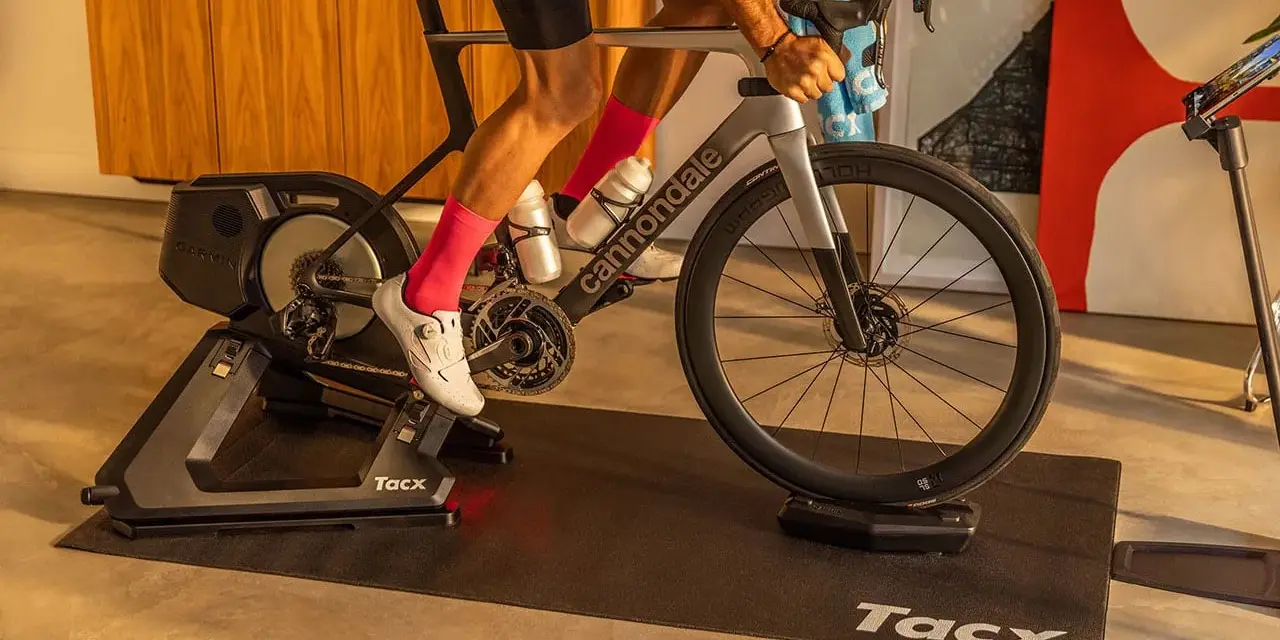
An indoor trainer lets you turn your own bike into a stationary workout setup without changing the fit you already trust outside. It gives you controlled resistance, a stable base, and a way to build fitness when weather, daylight, or traffic make outdoor riding inconvenient. The real decision is not whether a trainer works, but which kind fits your bike, your space, and the sessions you actually plan to do.
The short version for busy riders
- A bike trainer keeps your road, gravel, or mountain bike in place so you can pedal indoors with controlled resistance.
- Direct-drive smart trainers are the best all-round choice for most serious indoor cyclists because they are quieter, more accurate, and better for structured workouts.
- Wheel-on trainers are cheaper and simpler, but they are louder and wear rear tires faster.
- Rollers feel more natural for balance and pedal smoothness, but they have a learning curve and are less forgiving for beginners.
- In the US in 2026, rough pricing starts around $100-$300 for basic wheel-on trainers, climbs to about $300-$800 for many direct-drive smart trainers, and can pass $1,400 for premium models.
How a bike trainer works indoors
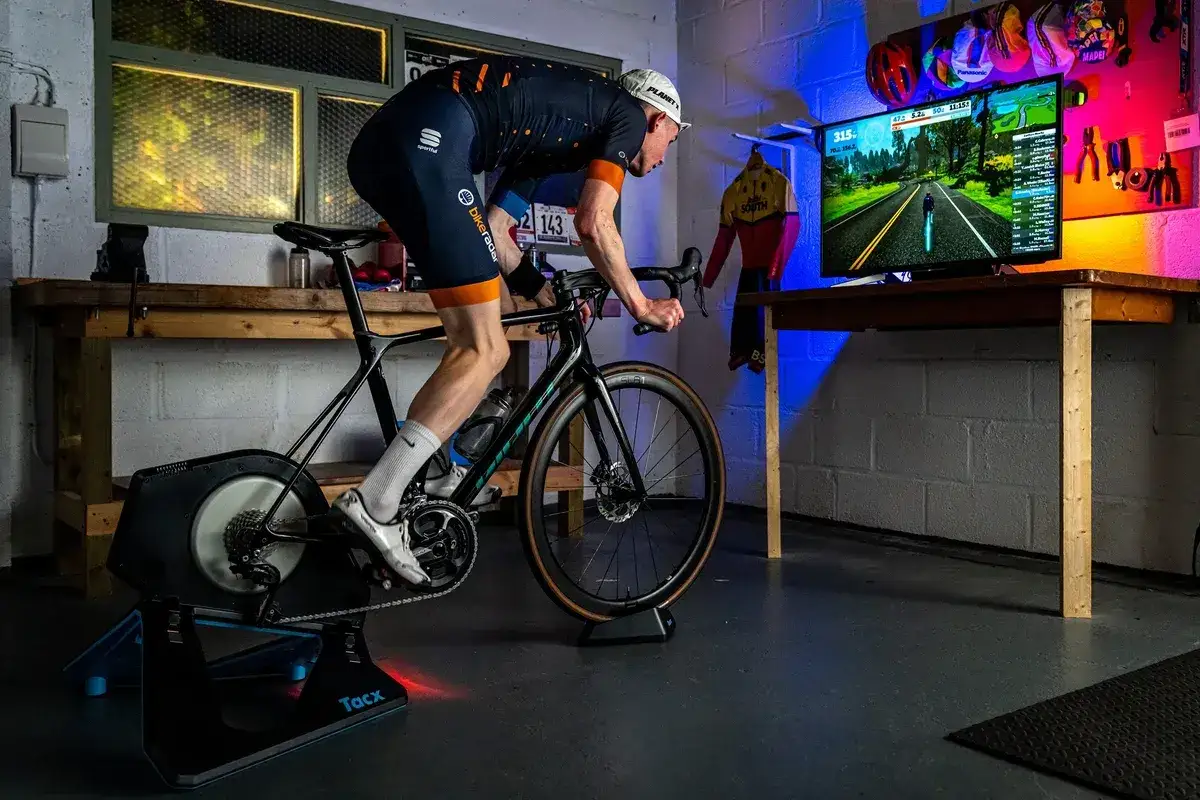
At a practical level, a trainer replaces outdoor momentum with controlled resistance. On a wheel-on setup, your rear tire spins against a roller; on a direct-drive setup, your rear wheel comes off and the bike chain drives a cassette mounted on the trainer; on rollers, the bike sits on cylinders and you stay balanced on top of them. Smart trainers add electronics that measure power and automatically change resistance, so indoor workouts can feel very close to structured outdoor efforts.
Why smart resistance matters
It turns indoor riding from “spin until tired” into something you can actually train with. ERG mode is the clearest example: the trainer holds a power target steady, which is excellent for tempo and threshold work, but less ideal when you want the bike to respond instantly for sprints or free-flowing efforts.That difference is why the hardware choice matters more than the marketing on the box, and it leads straight into the types that make the most sense today.
The main trainer types and how they feel
I usually divide trainers by how the bike mounts and how much realism you want from the ride. That split matters more than brand names, because two trainers with similar price tags can feel very different once you start using them three or four times a week.
| Type | What it feels like | Typical US price in 2026 | Best for | Main tradeoffs |
|---|---|---|---|---|
| Wheel-on trainer | Familiar and simple, but the rear tire is always part of the system | $100-$300 | Budget setups, occasional indoor rides, travelers who want a compact option | Louder, more tire wear, less accurate resistance control |
| Direct-drive smart trainer | Quieter, more stable, and closer to the feel of riding outside | $300-$2,000 | Structured training, app-based riding, frequent indoor sessions | Higher price, cassette or freehub compatibility, more setup upfront |
| Rollers | More dynamic and balance-focused, with a real pedaling feel | $150-$1,000 | Warmups, technique work, riders who want to smooth out their pedal stroke | Learning curve, less stable, not the easiest choice for all-out efforts |
For most cyclists I work with, direct-drive smart trainers are the sweet spot. Wheel-on models still make sense when budget is the main constraint, while rollers are the better choice if you care more about balance and skill work than plug-and-play convenience. Once you know which category fits you, the next step is making sure the trainer matches your bike and goals instead of fighting them.
How to choose the right trainer for your bike and goals
Start with your real use case
If your main goal is structured fitness work, a direct-drive smart trainer is usually the best buy. If you just need winter mileage or the occasional indoor spin, a wheel-on trainer is still perfectly usable. If you care about pedaling skill, balance, and smoother cadence, rollers deserve a look, but I would not buy them as a first trainer unless that skill work is the point.
Check compatibility before you fall in love with a model
Axle standards, cassette speed, and rear clearance matter. Zwift’s current Cog-and-Click style setup is designed to work with almost any 8- to 13-speed bike, which shows where the market is heading, but many trainers still need the right cassette and freehub body. If you swap bikes often, compatibility becomes more important than raw power numbers.
Decide how much noise you can live with
For apartment riders or anyone training before sunrise, noise is not a side note. Direct-drive units are typically much quieter because the tire-to-roller contact is gone, while wheel-on trainers can be loud enough to matter to roommates and neighbors. If that matters, budget for a mat and a strong fan at the same time.Read Also: Indoor Sprint Workout - Get Faster, Not Just Tired
Think about data, not just resistance
If you already own a power meter, you can get away with a simpler trainer and still keep training structured. If you do not, a smart trainer gives you cleaner indoor data and less setup friction. I usually tell riders to buy for the room they have, not the room they wish they had. A trainer that fits your bike but does not fit your space becomes a storage problem, not a training solution.
That is the point where a lot of indoor setups fail, because the trainer itself is only half the story. The rest is the environment around it, and that is where comfort is won or lost.
What you need besides the trainer
Most indoor discomfort comes from heat and sweat, not from the trainer itself. TrainerRoad notes that about 75% of your body’s energy expenditure during indoor work ends up as heat, which is why I treat cooling as non-negotiable.
- A powerful fan is the first accessory I would buy. A basic model can cost about $20-$60, and it matters more than many expensive upgrades.
- An indoor mat helps protect the floor and cuts noise transmission. Expect roughly $30-$100.
- A towel and sweat protection keep salt off your bars, stem, and top tube. Sweat is corrosive, and it adds up faster than most riders expect.
- Hydration within reach matters because you sweat more indoors than you think, especially in longer or harder sessions.
- A trainer tire makes sense if you use a wheel-on trainer regularly. It reduces wear and usually runs quieter than a normal road tire.
If you want one optional luxury, a rocker plate can make long sessions more comfortable by letting the bike move a little, but it is expensive and not essential. I would only add it after the basics are working well. Once the room is sorted, the remaining problems are usually self-inflicted, which means they are easy to fix.
The mistakes that make indoor riding harder than it should be
The biggest indoor training mistakes are usually boring ones, which is exactly why they get repeated. I see the same five problems over and over: poor airflow, no mat, bad compatibility checks, ignoring sweat, and trying to solve comfort with software instead of setup.
- No fan means the session feels harder, hotter, and shorter than it needs to.
- Uneven setup leaves the bike rocking or leaning, which makes steady work feel sloppy.
- Wrong tire pressure or poor calibration can make wheel-on sessions inconsistent from ride to ride.
- Overusing ERG mode can make riders lazy with cadence changes and less responsive when they return outside.
- Ignoring sweat damage can corrode handlebars, bolts, and cockpit parts if you train indoors often.
Those are fixable, and the payoff is immediate: the same trainer feels quieter, more stable, and easier to use. Once the basics stop getting in your way, the final question becomes which setup is worth buying in the first place.
The setup that makes indoor cycling stick
If I were buying today, I would make the decision in this order: room, noise, training style, then budget. For most riders in 2026, the practical answer is a direct-drive smart trainer paired with a strong fan and a mat. It is the cleanest mix of quiet operation, good ride feel, and useful training data.
- Best all-round choice: direct-drive smart trainer
- Best budget choice: wheel-on trainer with a speed sensor or basic power setup
- Best skill-focused choice: rollers
- Best convenience option: a smart bike if you want a dedicated indoor machine instead of moving your outdoor bike on and off the trainer