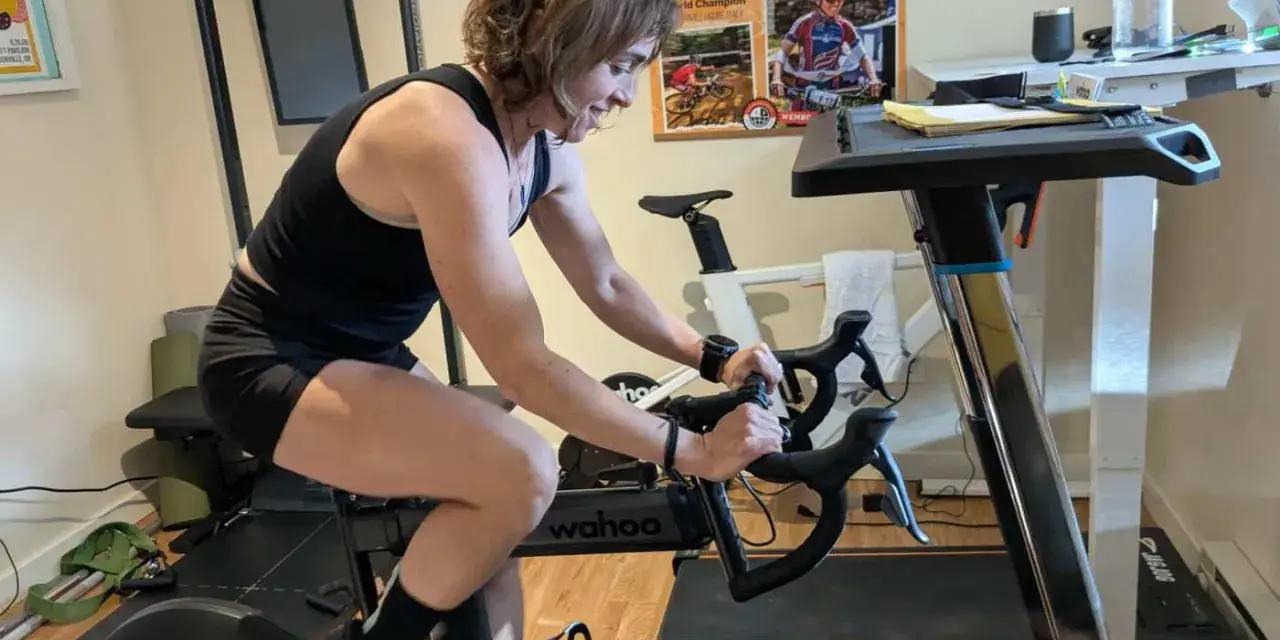
Choosing between a spin bike and a trainer is really about what kind of indoor riding you want to live with week after week. I focus on convenience, fit, noise, training control, and total cost, because those are the details that decide whether the machine gets used or becomes expensive furniture. If you already own a road or gravel bike, the difference is bigger than most product pages admit.
The fastest way to narrow the choice is to match the machine to your riding style
- If you care about road-specific training, a direct-drive trainer usually gives you the better experience.
- If you want a ready-to-ride machine for classes, cardio, or shared use, a spin bike is often the simpler buy.
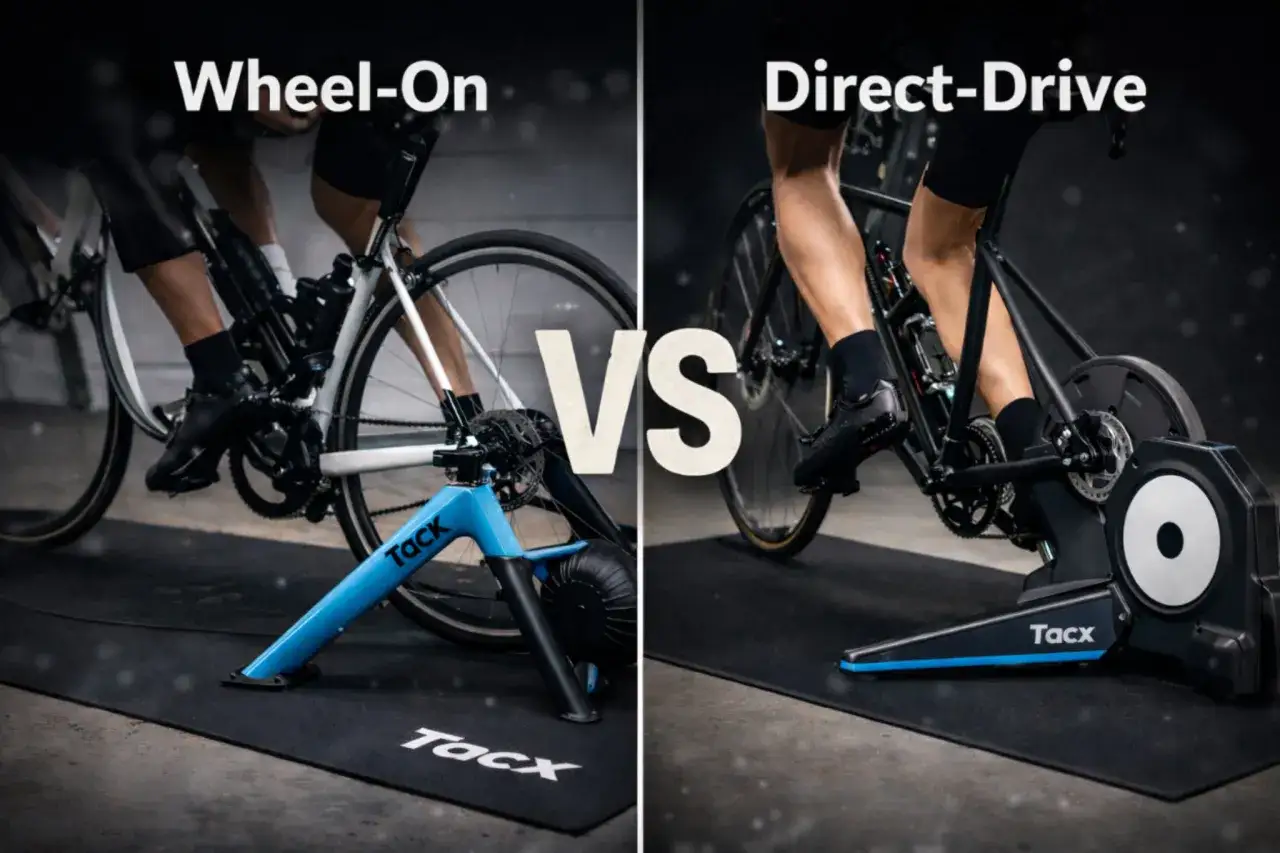
- Wheel-on trainers are cheaper, but they are noisier and less refined than direct-drive units.
- Magnetic spin bikes are usually quieter and lower-maintenance than friction-based models.
- The true budget includes more than the machine itself: fan, mat, cassette, sweat protection, and app fees can add up fast.
How a spin bike and a trainer differ in everyday use
A spin bike is its own self-contained indoor bike. A trainer turns the bike you already own into an indoor setup, which is why the experience can feel much closer to real cycling. That basic difference affects fit, ride feel, setup time, and how much control you have over training.
| Factor | Spin bike | Trainer | My take |
|---|---|---|---|
| What it is | A dedicated indoor bike with its own frame, saddle, bars, and resistance system | A device that holds your road, gravel, or mountain bike and adds resistance | If you already own a good bike, the trainer keeps your fit and drivetrain in play |
| Ride feel | Stable and predictable, but not always road-accurate | Closer to your outdoor bike, especially on direct-drive models | The trainer usually wins for realism |
| Training control | Depends heavily on model; many are basic, some are connected | Often better app integration, power data, and ERG mode | Structured workouts are easier on a smart trainer |
| Setup | Always ready once assembled | Requires your bike and some setup, especially if it is direct-drive | Spin bikes win on convenience |
| Maintenance | Low, unless resistance parts or pads wear out | Bike chain, cassette, tire wear, and sweat management all matter | The trainer has more moving parts in the overall system |
| Typical price in the U.S. | About $200 to $1,200 for most solid home models, with premium connected options higher | About $200 to $500 for wheel-on units and $500 to $1,300+ for direct-drive smart trainers | The middle of the trainer market has become much stronger lately |
That table is the shorthand version, but the real decision starts when you ask which setup actually supports the way you train. For that, the next question is training quality, not just hardware.
Which setup is better for serious training
For serious indoor cycling, I usually give the edge to the trainer. The reason is simple: it preserves your actual bike position, your usual contact points, and the same drivetrain you ride outside. That makes long sessions feel more natural and makes the indoor workout transfer better to the road.Smart trainers also give you tools that spin bikes often lack or only approximate. Power data tells you how many watts you are producing, and ERG mode automatically adjusts resistance to hold a target wattage. That is a big deal for interval work, because you can stay focused on cadence and breathing instead of constantly chasing resistance settings.
Spin bikes can still be excellent for cardio, sweat-heavy sessions, and cadence work. A heavy flywheel can make them feel smooth, and a good magnetic resistance system can be quiet and consistent. But flywheel weight alone is not the same as accurate training. I would trust a well-set-up trainer for threshold work, sweet spot sessions, and race prep before I would trust most spin bikes.There is one exception worth naming: premium connected indoor bikes have narrowed the gap. Once you get into that territory, though, you are no longer comparing a basic spin bike with a trainer; you are really comparing a higher-end indoor bike ecosystem with a trainer-based setup. That distinction matters when you start looking at cost and space.
Cost, noise, and space are where the decision gets real
Most people do not choose one of these setups because of an abstract feature list. They choose it because of what fits the room, the budget, and the noise tolerance of everyone else in the house. In the U.S. market, that usually means looking at both the sticker price and the hidden extras.
| Budget factor | Spin bike | Trainer |
|---|---|---|
| Entry price | Roughly $200 to $500 for basic home use | Roughly $200 to $500 for wheel-on, $500 to $1,300+ for direct-drive smart trainers |
| Hidden costs | Optional app subscriptions, mat, heart-rate strap, and a fan | Mat, fan, cassette or adapter, sweat guard, and often an app subscription |
| Noise | Magnetic models are usually quiet; friction-based bikes are louder | Direct-drive is usually the quietest; wheel-on units add tire noise |
| Space | One permanent machine that stays out in the room | The trainer itself is compact, but the bike still takes space while in use |
| Long-term wear | Mainly resistance parts, pedals, and general mechanical wear | Bike chain, cassette, and sometimes tires wear faster if the setup is used often |
My practical rule is this: if you already own a quality bike, the trainer often gives you better value because you are reusing a machine you trust. If you do not want to mess with wheel removal, tire wear, or fitting a bike each time, the spin bike is the cleaner everyday choice. That difference becomes even clearer once I look at the type of rider using it.
A spin bike makes sense when convenience matters most
I reach for a spin bike recommendation when the priority is frictionless use. That means one machine that is always ready, easy to share, and simple enough that nobody in the house has to think about tire pressure, axle standards, or whether the rear wheel needs to come off. For a lot of households, that is enough to make the choice for them.
- It works well for riders who want cardio, classes, or general fitness more than ultra-specific training.
- It is a strong option for shared homes where different people will hop on and ride without changing bikes.
- It is usually easier to live with if you do not want a setup that depends on your outdoor bike being available.
- It can be a better choice for short, intense sessions where convenience matters more than road feel.
- It is often the safer buy if you know you will not use training apps or power-based workouts consistently.
There is a trade-off, though. A spin bike can make you fit, but it does not automatically make you a better road cyclist. If your goal is specific performance on the bike you ride outside, the convenience advantage starts to matter less than fit and training precision. That is where the trainer pulls ahead.
A trainer is the better buy for most cyclists who train with a plan
If you train with intention, I usually think a trainer is the smarter long-term purchase. You keep your exact saddle height, reach, pedals, and cockpit position. You also keep the same touch points that matter for comfort on long rides, which is a bigger deal than most people realize until they spend two hours indoors and wonder why their body feels different.
- You already own a road, gravel, or tri bike that fits well.
- You follow structured workouts and care about watts, cadence, and repeatability.
- You want app-based training with realistic resistance changes.
- You value race specificity and want indoor work to transfer outdoors.
- You are willing to trade a little convenience for a much more precise training environment.
Within the trainer category, I would separate the cheap entry models from the serious ones. A wheel-on trainer is a fine way to start, especially if you want to keep the initial spend low. A direct-drive smart trainer is the better answer if you expect to ride indoors often, want less tire wear, and care about stability during hard efforts. Once you get into regular interval work, the direct-drive route usually feels like money well spent.
How I would choose in three common real-world scenarios
If you already own a good bike and want winter training
I would choose a direct-drive trainer. It gives you the cleanest path from outdoor riding to indoor training, and it supports the kind of structured work that actually moves fitness forward. If budget is tight, a wheel-on trainer is acceptable, but I would treat it as a stepping stone rather than the final answer.
If the machine will be used by several people
I would lean spin bike. A dedicated indoor bike is simply easier for mixed households because nobody has to swap their outdoor bike on and off the setup. For general cardio, classes, and quick sessions, that convenience usually matters more than the trainer’s performance advantage.
Read Also: Bike Trainer Guide - Choose Your Perfect Indoor Setup
If noise and apartment living are the main issues
I would compare a quiet magnetic spin bike with a direct-drive trainer, not a friction-heavy setup. Both can work, but the quieter choice depends on whether you want a permanent indoor bike or a setup that still uses your outdoor bike. If the room is small and the floor matters, a good mat and a decent fan are not optional extras; they are part of the purchase.
My final rule is simple: buy the setup you will use on your tired days, not the one that sounds most impressive on paper. If your priority is convenience, a spin bike is hard to beat. If your priority is performance and realism, a trainer usually wins. The best indoor cycling setup is the one that fits your bike, your space, and the way you actually train.