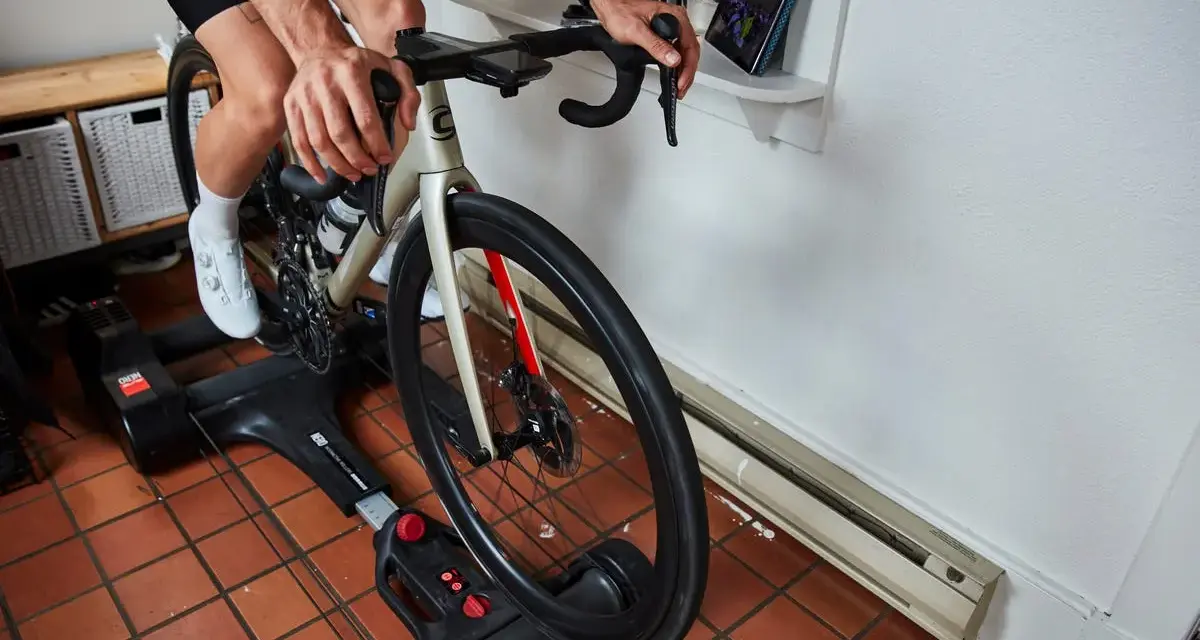
The right choice depends on whether you want a balance tool or a workout platform
- Rollers reward balance, cadence control, and smooth pedaling more than brute-force interval work.
- Trainers are better for structured sessions, power targets, and low-stress indoor consistency.
- Direct-drive trainers are usually the quietest and most stable option if you train indoors often.
- Wheel-on trainers cost less up front, but they are louder and usually create more tire wear.
- Smart rollers exist, but they are still a niche buy compared with smart trainers.
- The best choice is the one that fits the workouts you will repeat all winter, not the ride you imagine on day one.
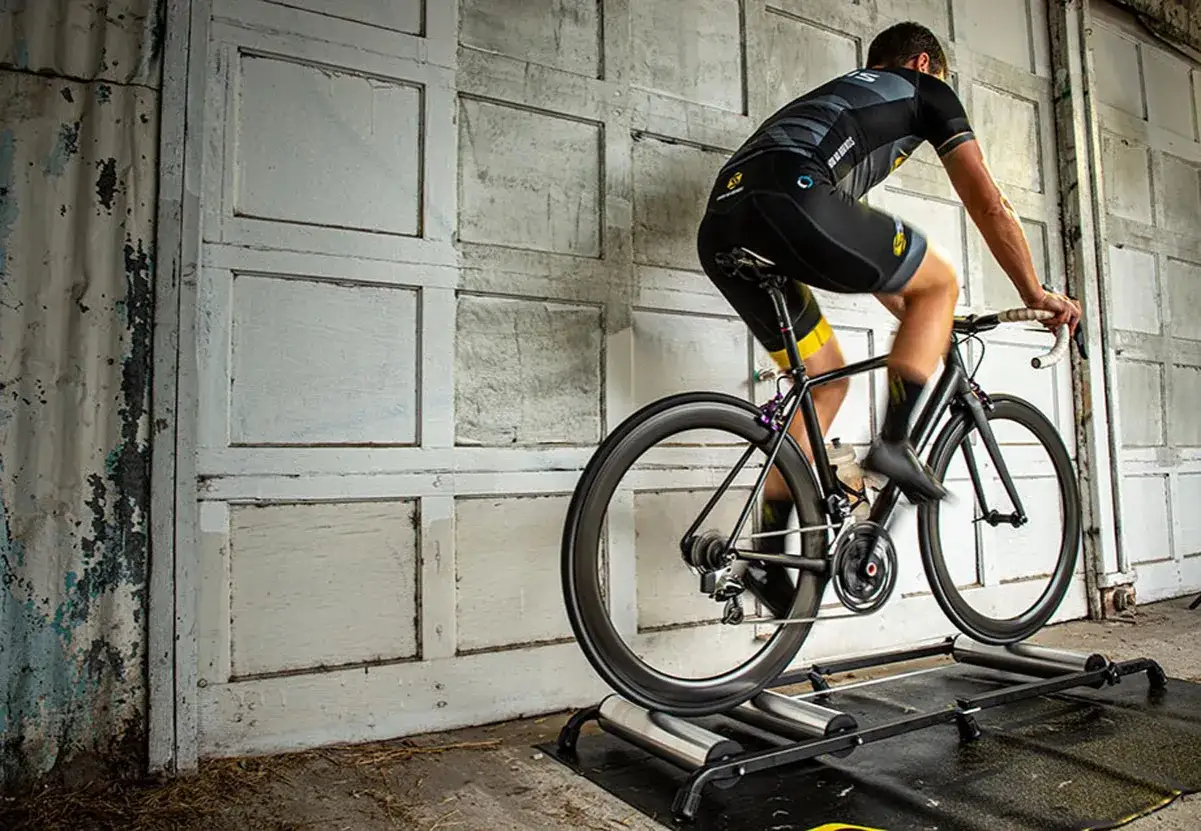
What each setup really changes on the bike
The core difference is simple: rollers let the bike move under you, while a trainer locks the bike in place. That one change affects balance, steering input, pedaling smoothness, and how much attention you have to give the bike instead of the workout.
| Factor | Rollers | Trainer |
|---|---|---|
| Bike movement | Free and dynamic | Fixed and stable |
| Skill demand | Higher, because balance matters | Lower, because the bike stays planted |
| Workout style | Best for cadence work, warm-ups, and smooth riding | Best for intervals, endurance blocks, and power targets |
| Data and control | Usually needs an external power meter for precise numbers | Often includes built-in power measurement and app control |
| Ride feel | More like riding on the road | More like training on a platform |
That distinction matters more than most buyers expect. If I want to sharpen control, stay light on the bars, and clean up a sloppy pedal stroke, rollers do that job well. If I want to hit 4 x 8 minutes at threshold without thinking about balance or steering, the trainer wins every time. Once you see the split that way, the rest of the comparison becomes much easier to judge.
Where rollers earn their place
I reach for rollers when the session is about movement quality, not just workload. They are a strong fit for riders who want to improve pedaling smoothness, cadence discipline, and the ability to stay relaxed on the bike. That is why many racers still use them for pre-race warm-ups: they wake the body up without feeling like a full mechanical commitment.
- Warm-ups and cool-downs work well because rollers get you riding quickly and keep the effort honest without a lot of setup.
- Cadence drills are natural on rollers, since bouncing or mashing the pedals feels obvious right away.
- Handling practice is the hidden value. You learn to stay centered, quiet, and smooth under light movement.
- Portable indoor use is a real advantage if you travel, share space, or need to store the setup fast.
- Lower entry cost often makes rollers the easiest way to get an indoor option without jumping straight into expensive tech.
The catch is that rollers are not forgiving. I would not call them beginner-proof, and I would not choose them if every indoor ride needs to be hard, structured, and measurable. They can absolutely support fitness, but they ask more from the rider. That tradeoff is exactly why some cyclists love them and others never adapt to them. From there, the trainer side of the comparison looks very different.
Where trainers win without much debate
A trainer is the better bet when the main goal is repeatable training. That includes threshold work, sweet spot sessions, recovery spins, and any workout where I want the resistance to stay where I set it. For that kind of riding, the bike staying fixed is not a drawback. It is the whole point.
- Structured workouts are easier because you can hold a power target instead of trying to balance and pace at the same time.
- ERG mode, which means the trainer automatically adjusts resistance to hold a chosen wattage, is excellent for steady intervals.
- Stable sprinting and standing efforts are much easier on a trainer than on rollers.
- App-based training works better because smart trainers integrate cleanly with platforms that control resistance.
- Beginners usually adapt faster because the learning curve is much gentler.
If I had to narrow the trainer category further, I would separate it into wheel-on and direct-drive models. Wheel-on trainers are the cheaper entry point, but the rear tire sits against a resistance unit, which usually means more noise and more tire wear. Direct-drive trainers remove the rear wheel entirely, and that is why they usually feel quieter, cleaner, and more stable. For serious indoor training, direct-drive is the version I consider first. With that in mind, cost and living conditions become the next real decision points.
Cost, noise, and space are not side issues
People often treat price as the main comparison, but the hidden costs show up later. Noise, tire wear, storage, and how much room the setup occupies can matter more than the sticker price once you start using the equipment every week.
| Setup | Typical U.S. price in 2026 | Noise and upkeep | Best fit |
|---|---|---|---|
| Basic rollers | $150-$300 | Usually low maintenance; no rear-tire wear | Warm-ups, skill work, occasional indoor rides |
| Resistance or smart rollers | $300-$900+ | Still compact, but you pay more for extra features | Riders who want rollers with added training control |
| Wheel-on trainer | $150-$350 | Typically louder; tire pressure and wear matter | Budget-minded structured training |
| Direct-drive smart trainer | $500-$1,200+ | Usually the quietest and most repeatable option | Frequent indoor training and app-based workouts |
The most important practical point is that the cheapest option is not always the cheapest over time. A wheel-on trainer may look attractive at checkout, but a trainer tire, extra wear, and more setup fuss can erode that advantage. Rollers are often the most compact and portable choice, but once you move into resistance rollers or smart rollers, the price gap closes fast. If you care about apartment noise or early-morning training, I would rank direct-drive trainers first, rollers second, and wheel-on trainers last. That naturally leads into how I would choose based on actual training goals.
How I would choose based on training goals
If I strip away marketing and just think about the job each tool has to do, the decision becomes pretty clean. I would match the equipment to the session type I plan to repeat most often, not to the rare ride I wish I would do.
- For structured fitness gains, I would choose a smart trainer, ideally direct-drive.
- For bike-handling practice and smooth pedaling, I would choose rollers.
- For Zwift or other app-driven workouts, I would choose a trainer because resistance control is part of the value.
- For travel, warm-ups, or small storage spaces, rollers usually make more sense.
- For riders who hate setup friction, a trainer is easier to live with because the bike stays mounted.
- For riders who already own a power meter, rollers become more useful, since that external data makes the workouts more precise.
There is one subtle point I think matters a lot: rollers reward consistency in a way that trainers do not. If you are sloppy, you feel it immediately. If you are smooth, the bike feels alive and efficient. That is a great training feedback loop, but only if your goals actually need it. If your goal is simply to survive a Tuesday threshold session after work, the trainer gives you less friction and more structure. From there, the biggest mistakes are usually not technical. They are expectation problems.
The mistakes that make people regret the purchase
Most regrets come from buying the wrong tool for the wrong reason. I see the same patterns over and over: someone wants one thing, buys another because it looked simpler or cheaper, and then blames the equipment instead of the mismatch.
- Buying rollers for hard interval training and then being annoyed that balance is still part of the session.
- Buying the cheapest wheel-on trainer and expecting the quiet, polished feel of a direct-drive unit.
- Ignoring axle and frame compatibility, which matters a lot on newer road and gravel bikes.
- Choosing a smart trainer without needing smart features, which can waste money if you only want basic indoor mileage.
- Expecting rollers to replace outdoor handling practice entirely. They help, but they are not the same as riding outside.
My blunt advice is to start with the workout problem, not the gear problem. If you know you will do short technical sessions, rollers are satisfying. If you know you will spend most of your winter chasing precise power numbers, a trainer is the safer buy. And if you only want one setup that covers the broadest range of indoor work, the trainer usually edges ahead. That is why the final decision looks simpler after a few weeks of honest use.
What the choice looks like once the novelty wears off
After the first few rides, the romance fades and the real questions show up: Did I use it twice last week? Did the setup make me want to ride, or did it get in the way? Did I improve the kind of fitness I actually care about? That is where the comparison becomes very practical.
- Choose rollers if you want the ride to feel active, compact, and technically rewarding.
- Choose a trainer if you want repeatable workouts, clearer data, and less mental effort during the session.
- Choose direct-drive over wheel-on if you train indoors regularly and care about noise, stability, and long-term convenience.
- Choose both only if you already know one tool will be used for structure and the other for skill work or warm-ups.
My shorthand is simple: choose rollers for skill, choose a trainer for structure, and choose both only if you have a clear reason for each one. That is the cleanest way I know to avoid buying the wrong kind of indoor cycling setup for the way you actually ride.