
The better machine depends on your joints, goals, and workout style
- Ellipticals give you more upper-body involvement and a more full-body cardio feel.
- Exercise bikes are more cycling-specific, simpler to use, and usually easier on the wallet.
- At similar effort, an elliptical often burns a little more energy, but a hard bike session can close the gap fast.
- If your knees, hips, or lower back need a seated option, the bike is usually the safer starting point.
- If your goal is indoor cycling performance, the bike is the more direct tool.
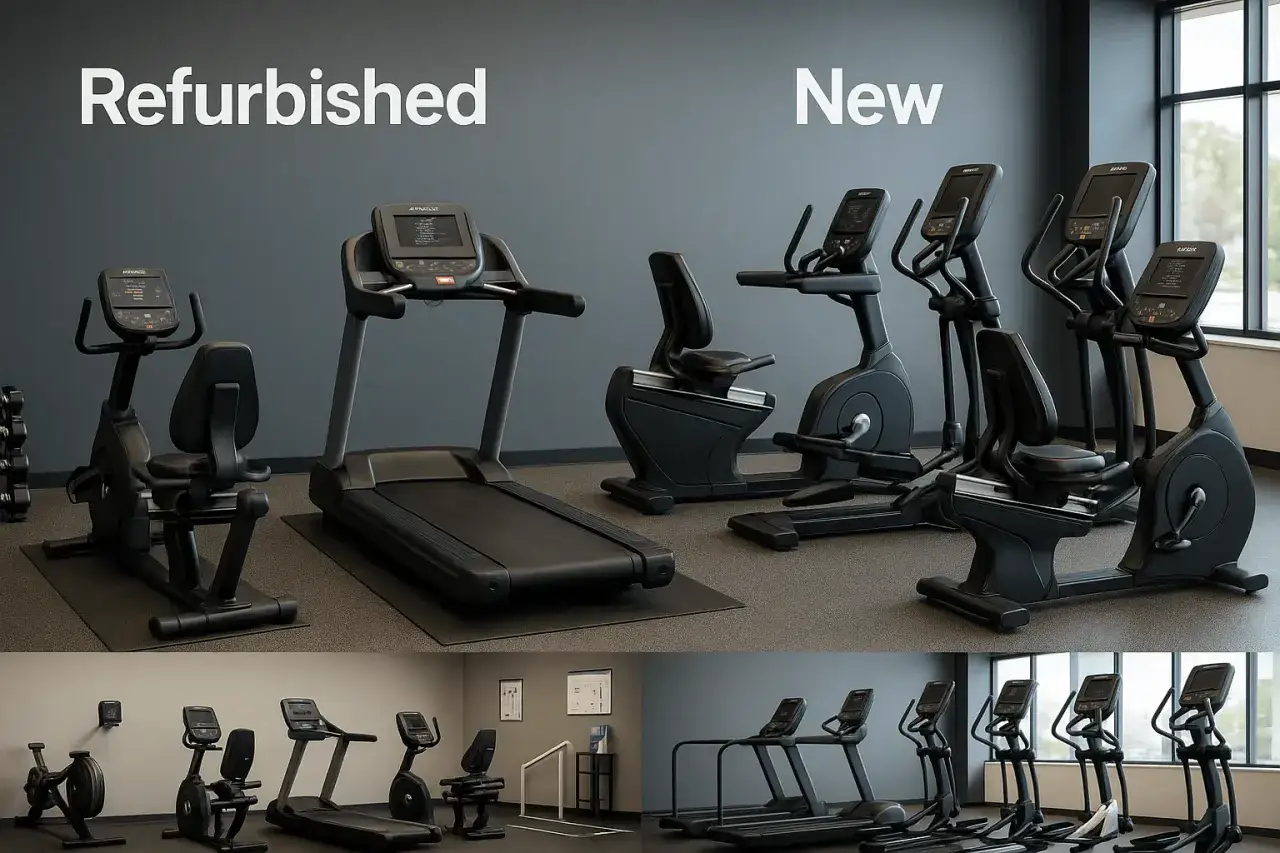
How the two machines differ in feel and mechanics
The first thing I look at is body position. On an elliptical, you are standing and moving through a gliding stride, usually with your hands on moving handles. On a bike, you are seated and turning the pedals in a much more fixed pattern. That changes everything: how much balance you need, which muscles stay active, and how long the session feels comfortable.
| Criterion | Elliptical trainer | Exercise bike | Practical takeaway |
|---|---|---|---|
| Body position | Standing, weight-bearing glide | Seated pedaling | The bike is easier if you want support; the elliptical feels more dynamic. |
| Upper-body involvement | Active, if you use the moving handles | Minimal | The elliptical gives you more of a full-body session. |
| Impact | Low impact, but still standing | Very low impact | Both are joint-friendlier than running, but the bike is usually easier to tolerate. |
| Learning curve | Slightly higher | Very low | Most people can sit and ride a bike with almost no instruction. |
| Cycling specificity | Moderate | High | If you ride outdoors, the bike transfers better to real cycling. |
| Workout feel | Smoother, more athletic, more varied | Rhythmic, controlled, endurance-focused | Choose based on whether you want variety or repeatable ride structure. |
That mechanical difference sounds small until you use the machine for more than ten minutes. The elliptical asks more of your whole body and your coordination; the bike asks less of your balance and gives you a cleaner pedaling pattern. Once that is clear, the calorie question becomes much easier to judge.
Which one usually burns more calories
This is where people often overstate the differences. The machine matters, but intensity matters more. Resistance, cadence, and interval structure decide a lot of the outcome. A relaxed ride on a high-end bike can burn less than a focused elliptical session, and a hard bike workout can absolutely outpace an easy glide.
Harvard Health’s calorie table gives a useful benchmark for a 155-pound person: about 324 calories in 30 minutes on a general elliptical, versus about 252 calories on a moderate stationary bike. That does not mean the bike is “worse”; it means the elliptical often keeps more of the body working at the same perceived effort. A bike session with heavier resistance or intervals can narrow that gap quickly.
If I am comparing them for weight loss, I do not just ask which one burns more on paper. I ask which one lets the user keep a strong effort for 20 to 45 minutes without joint irritation or boredom. The better calorie burner is usually the one you can actually repeat consistently, and that is why the next section matters so much. When comfort fails, consistency usually fails with it.Which is easier on knees, hips, and your lower back
Both machines are low impact, but they do not feel the same on the body. A stationary bike is generally easier if you want a seated option, if you are easing back into exercise, or if balance is a concern. A recumbent bike goes even further in that direction because it supports your back and keeps the hips in a more relaxed position.The elliptical can also be joint-friendly, but it still asks you to stand and move in a longer stride. That can be great for some people and annoying for others. If the stride length does not match your natural motion, or if you lean heavily on the handles, your hips or lower back may start complaining. I also see a lot of knee discomfort on bikes that are simply set up badly: a seat that is too low, too far forward, or too far back can turn a decent machine into a problem.
If your main concern is pain management, I usually think in this order: recumbent bike, upright bike, elliptical, then any option that feels unstable or awkward. The machine is only part of the story; fit is the part that people underestimate. That leads straight into what each one actually trains.
What each machine does best for muscle use and cycling fitness
The elliptical is the more complete cardio tool. If you use the handles properly, you get work through the quads, glutes, hamstrings, calves, core, shoulders, chest, and arms. It is not strength training in the gym-lifting sense, but it does ask more of the upper body than a bike does. For general fitness, that is a real advantage.
The bike is more focused. It heavily trains the quads, glutes, hamstrings, calves, and hip flexors, with the core stabilizing your posture. That narrower pattern is exactly why it is better for indoor cycling. If you want smoother pedal stroke mechanics, better cadence discipline, or interval work that carries over to outdoor riding, the bike is the more specific choice.
If I were helping a road cyclist choose one machine for home, I would usually start with the bike. It keeps the joint angles, muscle timing, and pacing closer to the real thing. The elliptical is excellent for cardio variety, but it is still a different movement. That difference becomes more important when you start thinking about space, noise, and budget.
What to expect on price, footprint, and noise in a home setup
For U.S. home gyms, I usually see exercise bikes start lower and ellipticals climb faster in price as build quality improves. A basic bike may land around $250 to $600, a solid home model around $700 to $1,500, and smart or commercial-style bikes can go much higher. Entry-level ellipticals often start around $400 to $900, with sturdier home units commonly sitting around $1,000 to $2,500 or more.| Factor | Exercise bike | Elliptical trainer | What I would note |
|---|---|---|---|
| Typical footprint | About 4 x 2 feet | About 6 x 2.5 feet or more | The bike is easier to fit into apartments and spare rooms. |
| Noise | Usually quieter, especially magnetic resistance models | Often a bit more mechanical noise | If you train early or late, the bike is usually the easier neighbor-friendly choice. |
| Maintenance | Simpler | More moving parts | The bike is usually easier to live with long term. |
| Setup complexity | Low | Moderate | The elliptical can take more tuning to feel natural. |
| Best budget value | Strong | Fair to strong | If you want the most training for the least money, the bike usually wins. |
There is a reason bikes are so common in home gyms: they are compact, quiet, and easy to use without much setup. Ellipticals make sense when you have the space and want the extra movement pattern, but they are harder to justify if your room is tight or your budget is limited. Once you factor in those practical constraints, the buying decision gets much less mysterious.
How I would choose based on your goal
If the goal is indoor cycling performance, I would choose an exercise bike. It is the closest match to outdoor riding, and it is the better platform for cadence work, threshold intervals, and long steady sessions.
If the goal is joint-friendly cardio with more upper-body involvement, I would lean elliptical. It gives you a broader movement pattern and can feel more engaging if you get bored on a bike.
If the goal is weight loss, I would not obsess over the machine label. I would choose the one that makes 30 to 45 minutes realistic, repeatable, and not miserable. Consistency beats theoretical superiority every time.
If the goal is a small, quiet home setup, the bike usually wins. If the goal is cross-training from running, the elliptical often feels more natural because it keeps you upright and moving without impact.
If the goal is comfort after an injury or during a return-to-fitness phase, I would usually start with a recumbent bike or a very gently set upright bike before I reached for an elliptical. That is not because the elliptical is bad; it is because seated support tends to be easier to tolerate when the body is still sensitive.
The simplest rule I use when the choice still feels close
My rule is simple: pick the bike for specificity, pick the elliptical for variety. If you want the workout to feel like cycling, buy the bike. If you want a more all-around cardio machine that spreads the load across more of the body, choose the cross trainer.
For most cyclists building a home setup, I would start with the bike first. It is smaller, usually cheaper, quieter, and more transferable to actual riding. I would choose the elliptical when I know I want a standing, low-impact cardio session that feels less like riding and more like a full-body gym workout.
The best final test is not a five-second impression in a showroom. It is a 15-minute ride or glide with proper posture, steady breathing, and no joint irritation. If a machine lets you do that today and come back to it tomorrow, it is the right one for your home and your training.