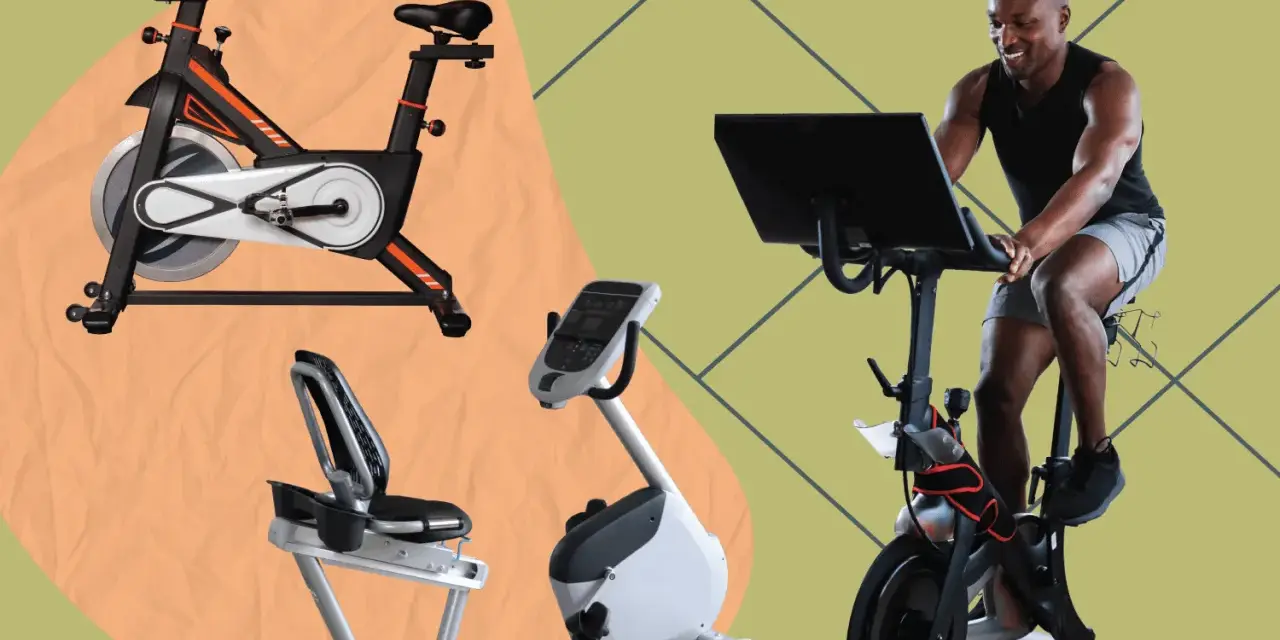
The fastest way to choose between them
- Pedal exercisers are best for light movement, desk use, rehab-style activity, and very small spaces.
- Stationary bikes are the better tool for endurance, weight loss, interval training, and anything that should feel like a real workout.
- Expect to pay about $50 to $200 for a basic pedal exerciser and roughly $150 to $1,000+ for most home stationary bikes.
- If comfort and joint support matter most, a recumbent bike usually beats a mini pedaler.
- If portability and convenience matter most, the compact unit is easier to live with.
- For serious indoor cycling, the bike wins almost every time.
How the two machines differ in practice
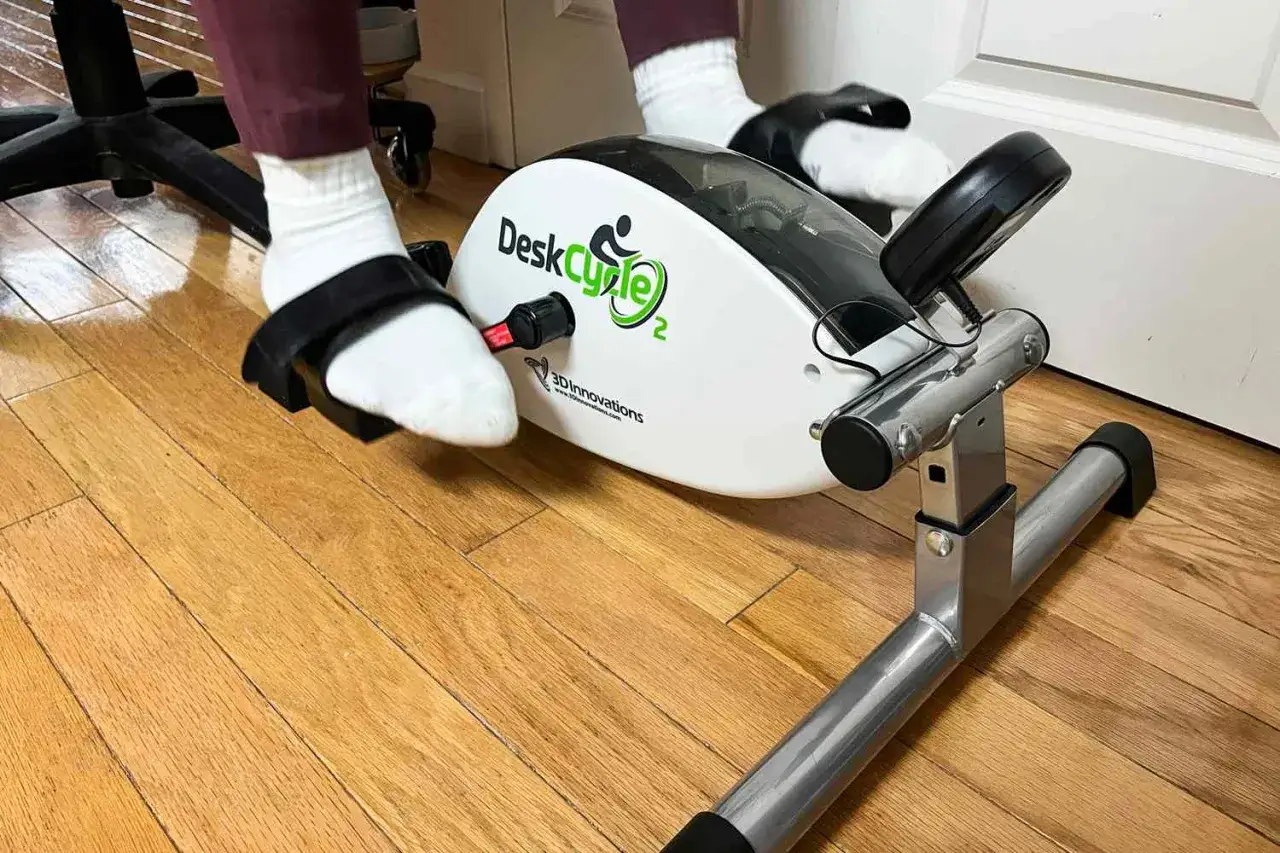
The simplest way to think about it is this: a pedal exerciser is a movement tool, while a stationary bike is a training tool. Mini pedal exercisers are compact, seatless, and easy to stash under a desk or couch; they let you pedal while working, reading, or watching TV. Stationary bikes are built around a saddle, handlebars, and a more stable frame, so you can actually load the legs, adjust resistance, and push the cardiovascular system.
| Factor | Pedal exerciser | Stationary bike |
|---|---|---|
| Primary use | Light movement, rehab, desk activity | Cardio, endurance, weight loss, structured training |
| Posture | Seated in a chair, on a sofa, or at a desk | Seated on a bike saddle, with a riding position |
| Intensity ceiling | Low to moderate | Moderate to very high, depending on the bike |
| Space needs | Very small; easy to store | Moderate to large; usually a permanent floor spot |
| Skill transfer | Minimal | Better carryover to real cycling and indoor training |
| Typical buyer | Someone who wants more movement, not a full workout | Someone who wants a true exercise session |
That difference matters because a machine that is easy to live with is not always the machine that changes your fitness the most. Next, I look at the part most people care about first: how hard you can actually work on each one.
Workout quality and calorie burn
If your goal is to burn more calories or improve endurance, the bike has a much higher ceiling. You can raise resistance, extend the session, and use interval structure in a way a mini pedaler rarely matches. A pedal exerciser can still be useful, but I treat it more like accumulated movement throughout the day than a dedicated workout.
| Session type | Pedal exerciser | Stationary bike |
|---|---|---|
| 15 minutes easy | About 20 to 50 calories | About 60 to 120 calories |
| 30 minutes moderate | About 50 to 120 calories | About 150 to 300 calories |
| 30 minutes hard | Rarely the best use of the machine | About 250 to 400+ calories |
Those ranges are rough and will shift with body weight, cadence, and resistance. I use them as planning numbers, not lab values. The practical point is more important than the math: the stationary bike can keep giving you more work, while the pedal exerciser usually tops out sooner.
For riders who like structure, the bike also supports intervals in a way that actually makes sense, such as 5 rounds of 3 minutes hard and 2 minutes easy. That kind of session is where indoor cycling starts to look like real training rather than background motion. From there, comfort and joint position become the next deciding factors.
Comfort, joints, and everyday usability
This is where the comparison gets more nuanced. A pedal exerciser can feel easy on the joints because you stay seated and avoid impact, but comfort depends heavily on chair height, desk clearance, and how well the unit stays put on the floor. If your knees hit the desk, your hips are cramped, or the machine slides under load, the low-impact promise disappears fast.
Stationary bikes give you more control. An upright bike lets you adjust the saddle and handlebars so the knee angle and hip angle make sense. A recumbent bike goes a step further by supporting your back and putting the pedals out front, which often feels better for older riders, beginners, or anyone who wants less stress on the lower back. A true indoor cycling bike usually adds a heavier flywheel, the weighted wheel that smooths each pedal stroke and makes resistance feel more like road riding. Consumer Reports describes those bikes as road-bike-like machines with that flywheel-driven feel, and that is a good shorthand for why they are better for training than for casual pedaling.
In practice, I usually see this rule hold: the more your body needs support, the more a real stationary bike helps. The mini pedaler is fine for gentle use, but it is not the machine I would pick if comfort is a primary buying criterion. That leads directly into space, noise, and the reality of living with the equipment every day.
How the two machines compare on space, noise, and upkeep
Space is where the pedal exerciser starts with a clear advantage. Many units are roughly the size of a small carry-on case, often around 16 to 24 inches long and light enough to move with one hand. A stationary bike is a different commitment: even a compact upright model usually wants a dedicated corner, while a recumbent bike or heavier indoor cycling bike can dominate a room.
| Factor | Pedal exerciser | Stationary bike |
|---|---|---|
| Typical footprint | About 16 to 24 inches long; easy to tuck away | Roughly 4 x 2 feet for an upright, more for recumbent models |
| Weight | About 10 to 25 pounds | About 35 to 150+ pounds depending on type |
| Noise | Usually quiet, but cheaper units can wobble or squeak | Magnetic bikes are quiet; friction-driven models are louder |
| Setup | Minimal assembly | More assembly, more adjustments, more parts |
| Upkeep | Low; mainly tightening and battery changes | Low to moderate; bolts, straps, seat hardware, drive system checks |
| Portability | High | Low to moderate |
For apartment living or travel-heavy schedules, that portability matters more than buyers expect. A pedal exerciser can move from office to living room in seconds, which makes it easier to use consistently. A bike gives you a better workout, but it also asks for more room and more intention. Once cost enters the conversation, the balance gets even clearer.
What your budget actually buys
Price is the point where many shoppers make the wrong comparison. A cheap pedal exerciser can look like a bargain, but it is not trying to do the same job as a bike. If your goal is real fitness, a better stationary bike often gives you more value than a very cheap pedaler that you stop using after a month.
On the bike side, I rarely tell people to stop at the cheapest tier. In the U.S. market, usable value usually starts closer to $300 than $150, especially if you want a frame that feels stable, a resistance system that is smooth, and a saddle that does not punish you after 10 minutes. Many budget models support 250 to 300 pounds, and heavy-duty recumbents often rise to 350 or 400 pounds.
| Budget | Pedal exerciser | Stationary bike |
|---|---|---|
| Under $100 | Basic friction-based models with minimal features | Very limited selection; usually flimsy or overly basic |
| $100 to $250 | Better stability, smoother resistance, simple displays | Entry-level upright or foldable bikes |
| $250 to $600 | Feature-rich compact units and quieter magnetic options | Solid home bikes with better resistance and fit |
| $600 to $1,200 | Usually more than you need for a mini pedaler | Better recumbent bikes and serious indoor cycling bikes |
| $1,200+ | Rare for this category | Premium connected bikes and heavy-duty models |
As a broad market rule, I would think of a pedal exerciser as a convenience purchase and a stationary bike as a fitness purchase. That distinction is useful because it keeps you from expecting too much from the wrong tool. If you want better cardio, better leg strength, and a machine you can progress on for months, the bike usually pays for itself in actual use. The last question is how to decide without overthinking it.
Which one fits your routine
I would choose a pedal exerciser if my real need were low-friction movement during a mostly seated day. It works well for remote workers, caregivers, older adults who want gentle activity, or anyone living in a very tight space. It is also the easier pick if you know you will only use the machine in short bursts of 10 to 20 minutes.
I would choose a stationary bike if I wanted to improve fitness in a way I could measure. That includes steady rides, interval sessions, and the kind of indoor cycling work that actually changes endurance over time. If space is tight but you still want a genuine workout, a compact upright or a foldable bike is usually a smarter compromise than a mini pedaler. If comfort is the main issue, a recumbent bike is often the best version of the idea.
My simplest rule is this: buy the pedal exerciser when convenience is the goal, and buy the bike when fitness is the goal. If you can only own one piece of equipment and you care about long-term training value, I would lean toward the bike almost every time. The only time I’d reverse that is when the machine has to disappear under a desk or in a closet between uses.
What keeps paying off after the first month
The compact unit is easier to ignore, but also easier to fit into a busy day. The stationary bike asks for more space and more money, yet it gives back a much wider range of workouts, from easy recovery spins to legitimate cardio sessions. If you want the machine that will shape fitness, the bike is the stronger buy; if you want the machine that will simply help you move more, the pedal exerciser is the more practical one.
If I were outfitting a small apartment or a home office for one purchase, I would default to the bike unless the footprint was truly non-negotiable. You can always make a bike session easier, but you cannot turn a compact pedaler into a real training platform. That is the cleanest way I know to separate convenience from conditioning.