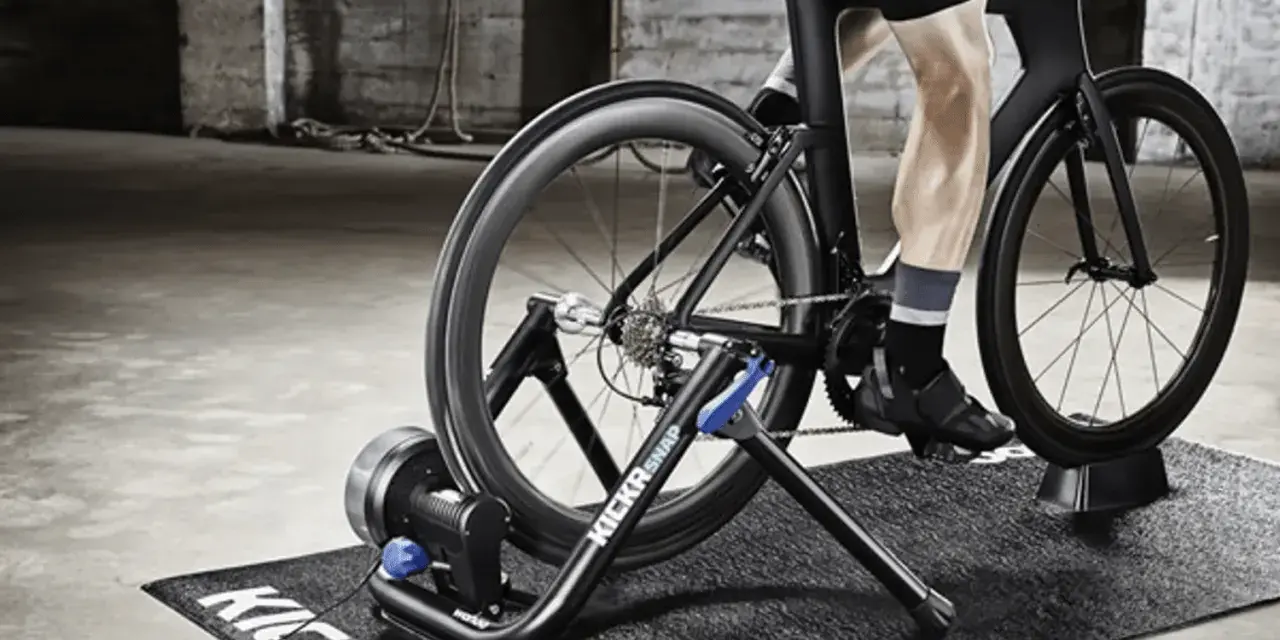
Indoor cycling works best when it is treated like a precision training tool, not just a weather backup. This guide breaks down indoor cycling training for riders who want measurable performance gains, a realistic weekly structure, and a setup that keeps hard workouts usable. I focus on what actually improves power, endurance, and repeatability, not on filler advice that sounds good but changes little.
The main things to get right before the first hard session
- Pick one primary goal. Base building, threshold work, VO2 max, and sprint power all need different session design.
- Use power if you can. It is the cleanest way to control effort indoors; heart rate and RPE are useful backups.
- Keep most rides easy. Two hard sessions a week is enough for many riders; the rest should support recovery and volume.
- Make the room work for you. A fan, fluids, and a stable position matter more indoors than outdoors.
- Re-test regularly. Updating zones every 4 to 8 weeks keeps the plan honest.
Why indoor riding can move performance faster than you expect
When I want a cyclist to make real progress in a limited amount of time, I like indoor work because it removes the noise. No traffic lights, no coasting, no messy pacing, no guessing whether a headwind or a descent changed the session. That control makes it easier to hit the exact stress you want, which is why a well-built trainer session can be more productive than a vague outdoor ride of the same duration.
The other reason it works is repeatability. If you do the same threshold set every two weeks, you can see whether your power, heart rate, cadence, and recovery are improving instead of wondering whether the route was harder. Recent research on trained cyclists supports the basic coaching idea here: both high-intensity interval work and sprint-interval work can improve performance, but no single interval style is universally best. The win comes from matching the session to the athlete, the goal, and the recovery budget.
There is a trade-off, of course. Indoor riding builds fitness efficiently, but it does not replace road handling, cornering, or the mental variability of outdoor riding. I usually treat the trainer as the place to sharpen physiology, then keep some outdoor time when skills and terrain matter. Once that distinction is clear, the next step is making the room and the bike support the work instead of fighting it.
Build a setup that keeps hard sessions usable
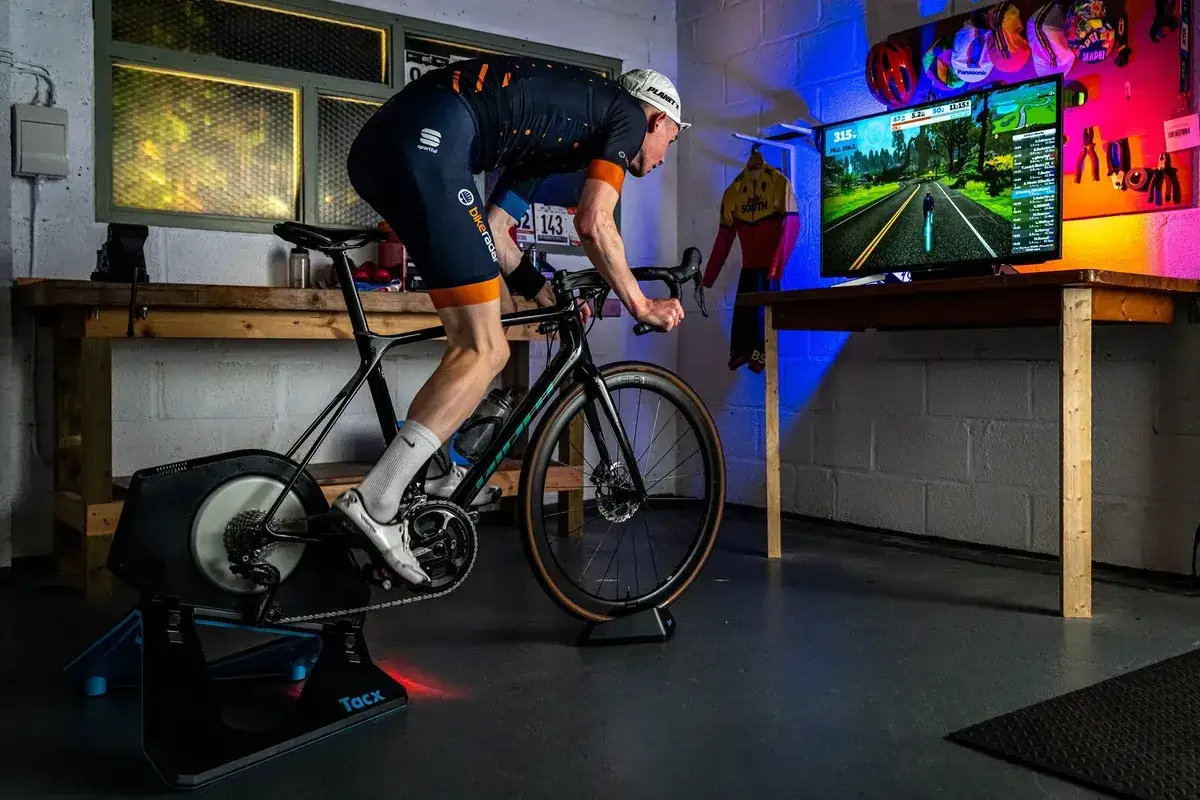
A bad setup can ruin a good program. If the bike is uncomfortable, the room is too hot, or the data is inconsistent, you end up solving hardware problems instead of training. I prefer a setup that is boring in the best possible way: stable, repeatable, and easy to start.
| Metric | Best use | Weak spot | My take |
|---|---|---|---|
| Power | Interval control, zone work, progress tracking | Does not reflect heat, fatigue, or poor fueling well | First choice for structured sessions |
| Heart rate | Aerobic pacing, endurance days, recovery checks | Lags behind effort, especially during short intervals | Best as a cross-check |
| RPE | How the ride feels on a tired or stressful day | Less precise when you are distracted or under-fueled | Always worth using |
For most riders, the essentials are simple: a reliable bike or trainer, a strong fan, a mat, at least one big bottle, a towel, and a way to see your numbers. If you can add a cadence sensor or a smart trainer, even better, because cadence and resistance control make the workout easier to repeat. I also like to match saddle height, reach, and pedal interface as closely as possible to the bike you actually ride outdoors, because an awkward fit makes every workout feel harder than it should.
One strong fan is not a luxury. Indoors, cooling affects how hard you can actually work, how quickly your heart rate drifts, and whether the last interval is useful or just ugly. With the setup stable, the real question becomes how to arrange the week.
Structure the week around adaptation, not motivation
I rarely schedule trainer work by mood. Motivation comes and goes, but adaptation comes from a pattern the body can repeat. For most cyclists, that means one to two high-quality sessions a week, enough easy volume to build fitness, and enough recovery to absorb the work.
| Weekly frequency | Typical mix | Who it suits |
|---|---|---|
| 3 rides | 1 endurance ride, 1 sweet spot session, 1 interval session | Beginners, busy riders, and anyone rebuilding consistency |
| 4 rides | 1 endurance ride, 1 hard session, 1 recovery spin, 1 longer aerobic ride | Riders building fitness without stacking too much fatigue |
| 5 rides | 2 quality sessions, 2 endurance rides, 1 recovery ride | Experienced riders with good sleep, nutrition, and recovery habits |
If you only have three rides a week, I would not turn all three into sufferfests. One endurance ride, one controlled tempo or sweet spot ride, and one genuinely hard interval day is usually enough to move the needle. Most riders also do better with at least 24 to 48 hours between hard sessions, because indoor work hides fatigue until it suddenly does not.
I also like to keep blocks simple. Build for 3 to 4 weeks, then back off for a lighter week before the next push. That does not mean doing nothing; it means cutting stress enough that the body can actually cash in the work you already did. The week is the container, and the workout type is the content.
Choose workouts that match the adaptation you want
This is where indoor training becomes useful instead of merely tiring. Each workout should have a job. If the goal is aerobic base, I do not waste the day with random all-out efforts. If the goal is top-end power, a long easy spin will not do the same job. Think in terms of adaptation, not punishment.
| Workout type | What it improves | Typical structure | Best use case |
|---|---|---|---|
| Endurance ride | Aerobic base, fatigue resistance, and pedaling economy | 45 to 120 minutes at easy, steady effort | Building volume without crushing recovery |
| Sweet spot | Sustainable power and muscular endurance | Examples like 2 x 15 minutes or 3 x 12 minutes just below threshold | Time-crunched riders who need the biggest return per minute |
| Threshold | Ability to hold high power for longer | Examples like 3 x 10 minutes or 4 x 8 minutes near threshold | Improving FTP and race pace control |
| VO2 max intervals | Aerobic ceiling and repeatability under strain | Short, hard repeats such as 5 x 3 minutes or 6 x 2 minutes | Lifting top-end performance and punch |
| Sprint work | Neuromuscular power and acceleration | 6 to 10 bursts of 10 to 15 seconds with full recovery | Race response, starts, and short surges |
Sweet spot is the quiet workhorse here. It sits just under threshold, so it is hard enough to drive adaptation but not so hard that it wrecks the next two days. Threshold work is more demanding and should be used carefully, while VO2 sessions are the kind of work that make you feel like you have borrowed fitness from the future. Sprint work is different again: if you shorten the recovery, it stops being true sprint work and becomes something else.
The practical lesson is simple. A recent review in trained cyclists found that interval type and duration matter, but no single pattern won the whole argument. I take that as permission to individualize. Use endurance when you need durability, sweet spot when time is tight, threshold when you want to push sustainable pace, and VO2 or sprints when the goal is top-end capacity. After that, progress tracking keeps the plan honest.
Track progress without lying to yourself
One of the easiest mistakes indoors is confusing fatigue with progress. A workout that feels harder every week is not automatically better. I want numbers and field signs that show the work is translating into useful fitness, not just accumulated tiredness.
- Retest every 4 to 8 weeks. Use the same protocol each time so you are comparing like with like.
- Watch power at a given heart rate. If the same aerobic wattage costs less effort over time, fitness is improving.
- Check interval completion. Finishing the final repeat with stable form matters more than one hero effort.
- Look at recovery speed. If your legs are still flat 48 hours later, the load may be too high.
- Notice cadence control. Better riders do not just push more watts; they can hold the right cadence more cleanly.
I prefer to use power first, heart rate second, and RPE third. Power tells me what happened, heart rate tells me how hard the body had to work to do it, and RPE tells me whether the session is sustainable in real life. If all three line up, the plan is probably working. If they fight each other, something in the load, the recovery, or the setup needs attention. A clean metric, though, still means nothing if the basics around it are broken.
Watch out for the mistakes that waste indoor work
Indoor riding is honest in a way outdoor riding is not. There is nowhere to coast, no hill to blame, and no group dynamics to hide behind. That is useful, but it also means small mistakes show up fast.
- Starting every session too hard. If the first 10 minutes become a test, the rest of the workout turns into damage control.
- Ignoring cooling. A hot room turns a manageable workout into an unnecessary stressor.
- Stacking too many hard days. Two quality sessions a week is plenty for many riders.
- Skipping warm-ups. Hard intervals without a proper ramp-up are less effective and feel worse.
- Chasing calories instead of training quality. Random sweat is not the same as targeted adaptation.
- Never taking a lighter week. Fitness gains often show up only after fatigue drops.
One more subtle problem is position. If you keep shifting on the saddle because the fit is off, the session becomes a comfort contest. I would rather adjust the setup than ask a rider to suffer through avoidable pain. The point is to make the work repeatable, not heroic. That is why recovery and support work deserve their own section, not a footnote.
Fuel, recovery, and strength work are not optional extras
Indoor work can be compact, but it still costs energy. For easy rides under an hour, water is often enough. Once the session gets harder or longer, I like to bring carbs into the picture early instead of waiting until the legs are already flat. A practical starting point for many riders is roughly 30 to 60 grams of carbohydrate per hour during harder sessions, then adjusting upward or downward based on body size, sweat rate, and total duration.
Recovery is more than rest days. It is sleep, lower-stress days, and enough separation between hard sessions that the next workout still has quality. The CDC and ACSM both recommend at least two strength sessions per week, and I think cyclists should treat that as a baseline, not a bonus. A simple strength block does not need to be long: squats or split squats, a hinge pattern, calf work, core stability, and a pulling movement are usually enough to cover the gaps that cycling leaves behind.
Strength work helps with more than injury prevention. It supports posture on the bike, improves force transfer, and makes it easier to hold form when the trainer session gets ugly. If the schedule is tight, I would rather see two short, focused strength sessions and one well-fueled quality ride than five sloppy workouts and no recovery. Once those pieces are in place, the simplest version of the plan is usually the best one.
The minimum week I would trust for a busy rider
If I had to strip the plan down to the smallest version that still builds real fitness, it would look like this:
- One endurance ride of 60 to 90 minutes at an easy, steady effort.
- One sweet spot or threshold session to push sustainable power.
- One VO2 max or sprint-focused workout to raise the ceiling.
- One to two easy spins if recovery and schedule allow.
- Two short strength sessions to support posture and force production.
That is the version I would trust for most riders who want measurable progress without turning every week into a survival exercise. Keep the setup simple, keep the easy rides truly easy, and let the hard sessions earn their place. If you can repeat that pattern long enough to retest honestly, the trainer becomes one of the most efficient tools in your cycling arsenal.