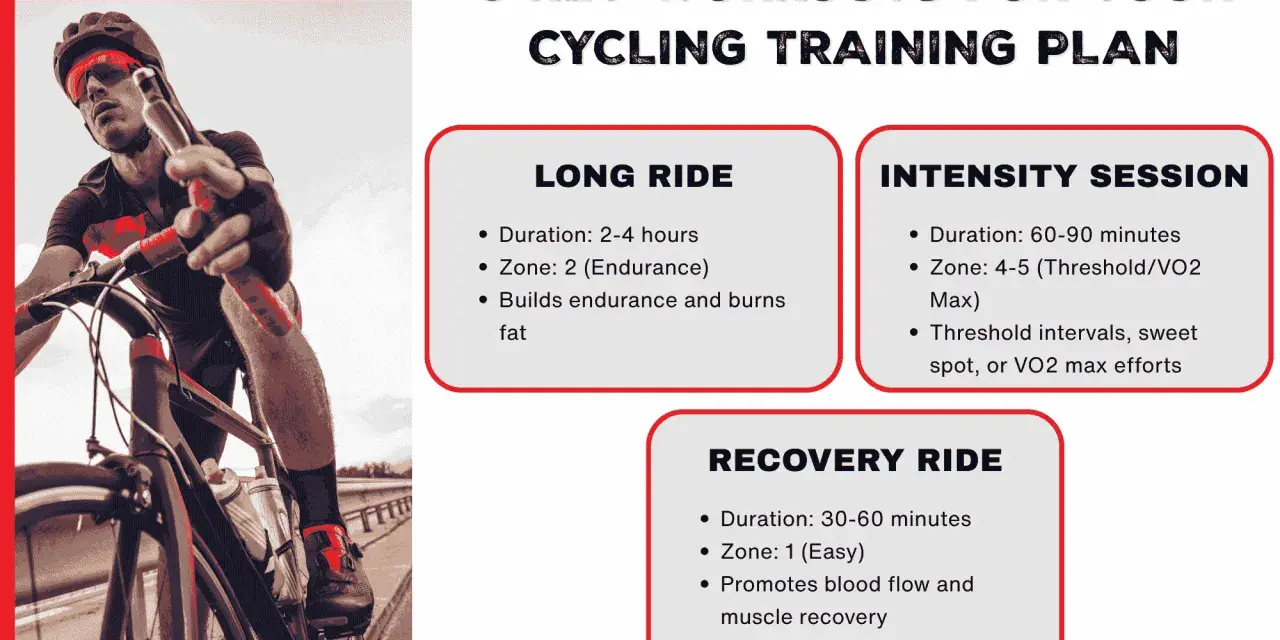
Indoor cycling works best when it is treated as a system, not a pile of random hard rides. Well-built indoor bicycle training programs turn the trainer into a controlled tool for building aerobic fitness, threshold power, and consistency, especially when weather, traffic, or a busy schedule makes outdoor riding harder to manage. In this guide I focus on how those plans are built, how to choose one that fits your goal, what a realistic week looks like, and which setup details matter enough to change the result.
What matters most before you start
- Choose the plan around your goal, not around the most exciting workout on paper.
- Most useful indoor plans combine 1 to 3 hard sessions with easy endurance and recovery.
- Two build weeks plus one lighter week is a safer rhythm for most riders than trying to go hard every week.
- Cooling, hydration, and bike fit matter more indoors than many riders expect.
- ERG mode is helpful for steady power work, but it is not the answer to every workout.
What a good indoor plan is actually trying to improve
I think of indoor training as precision work. Outside, a ride can turn into a mix of traffic lights, corners, coasting, and weather. Indoors, the best plans strip that noise away so the session targets a specific adaptation: more aerobic endurance, a better threshold, stronger repeat efforts, or simply the discipline to train consistently. The point is not to suffer more. The point is to create the right training stress and repeat it often enough for your body to adapt.
That is why structured indoor plans usually rely on intervals, planned recovery, and a clear progression from week to week. They are especially useful if you want to make the most of limited time, because a well-designed 60-minute session can do more than a vague 90-minute ride with no purpose. Once you know what the plan is trying to change, the next step is matching it to your actual goal and weekly availability.
| Plan type | Best for | Typical weekly time | Main focus | What to watch |
|---|---|---|---|---|
| Endurance base | New riders, winter foundation work, long-term fitness | 3 to 6 hours | Steady Zone 2 rides, cadence drills, easy progression | It can feel too easy if you are impatient |
| Sweet spot build | Busy riders who want strong fitness gains with limited time | 4 to 8 hours | Tempo, sweet spot, and threshold work | Fatigue builds quickly if recovery is ignored |
| VO2 max and race prep | Crit racers, punchier climbers, riders chasing top-end power | 5 to 9 hours | Short hard repeats with full recovery between efforts | Needs fresh legs and honest effort control |
| Maintenance | People who want to stay fit with the least friction | 2 to 5 hours | One or two quality sessions plus easy work | Easy to drift into “just enough” without real progression |
If you look closely, the difference between these plans is not the bike. It is the target. A base block asks for patience. A threshold block asks for focus. A race-prep block asks for sharper efforts and better recovery. That makes the choice less about style and more about what you need the next eight to twelve weeks to accomplish.
How to choose the right plan for your goal
I usually start with three questions: how much time do you really have, what do you want to improve, and how long can you keep the plan going without resentment? That order matters. A lot of riders pick a plan because it looks ambitious, then discover it is built for a different schedule and a different level of patience.
Start with the outcome you care about
If your main goal is general fitness, a shorter plan with regular endurance work may be enough. If you want a higher FTP, look for more sweet spot and threshold work. If you are preparing for hilly events or punchy races, the plan should include repeated high-intensity efforts, not just steady miles on a screen. And if you are coming back from time off, I would be conservative for the first few weeks and focus on consistency before intensity.
Match the plan to your calendar, not your ego
Most riders do better when the plan fits the shape of their week. Three to five sessions per week is realistic for many adults with jobs and family commitments. If you only have three rides, make sure each one has a distinct purpose. If you can train five or six times, keep most of those sessions easy enough that the hard days stay hard. More days do not automatically mean better training.
Pick a level you can repeat for a full block
There is no prize for choosing a plan that looks impressive and then falling apart in week two. I prefer the version that lets you finish, learn from it, and build from there. That is especially true indoors, where the lack of scenery can make the mental load feel higher than it looks on paper. Once the target is clear, the question becomes how to lay out the week so the work is repeatable.
A weekly structure that makes progress without burning you out
The most reliable indoor weeks are not random. They have anchors. I like a simple pattern: one or two key interval sessions, one longer aerobic ride, and enough easy or rest time to make the hard sessions actually productive. Most well-structured plans also work in blocks of roughly four weeks, because the body usually responds better to a few weeks of building followed by a lighter week than to endless pressure.
| Day | Session | Why it is there |
|---|---|---|
| Monday | Rest or mobility | Lets the previous week settle and keeps fatigue from snowballing |
| Tuesday | Threshold or VO2 intervals | One of the week’s main quality sessions |
| Wednesday | Easy endurance or recovery spin | Promotes adaptation without adding much stress |
| Thursday | Sweet spot or tempo work | Builds fitness efficiently without requiring a full race-level effort |
| Friday | Off or very easy | Creates room for the weekend session |
| Saturday | Longer aerobic ride | Extends endurance and helps hold form under fatigue |
| Sunday | Optional recovery spin or strength work | Keeps the week flexible without turning it into a grind |
How I would handle the build-and-recovery rhythm
- Weeks 1 to 2: Build volume and keep the intervals controlled.
- Week 3: Add a little more work, slightly reduce recoveries, or extend one interval set.
- Week 4: Reduce total volume by about 25 to 35 percent and keep a touch of intensity.
If you are newer to structured training, a 2:1 rhythm often works better than trying to force a 3:1 pattern. If you are experienced and recovering well, a 3:1 block can be fine, but only if sleep, stress, and fueling are all under control. That structure only works if the training space and equipment stop being friction points, which is where setup starts to matter.
The setup details that matter more than people expect
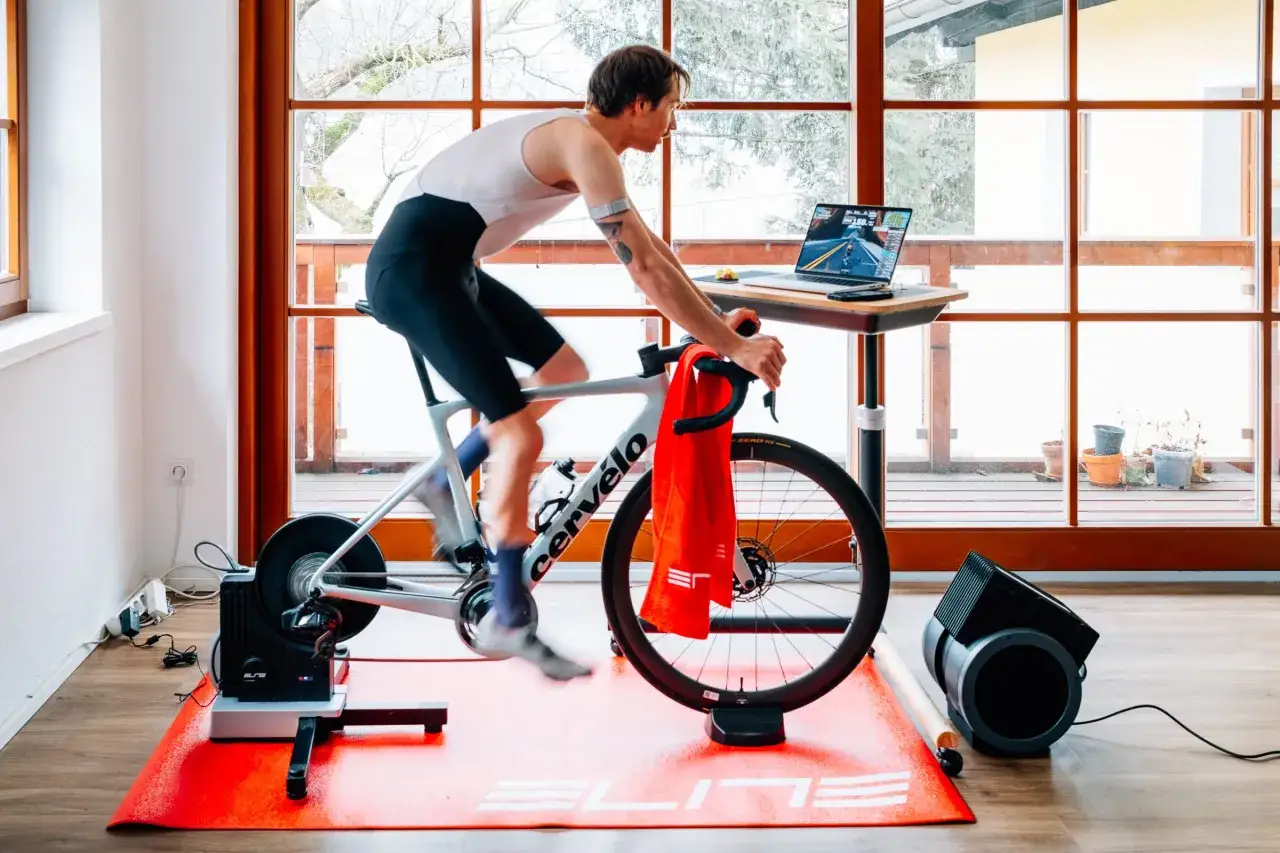
In 2026, indoor training is more convenient than it used to be, but the same basics still decide whether the session feels productive or miserable. I would put cooling at the top of the list. A fan is not optional in practice; it is part of the workout. Without airflow, heart rate drifts up, power drops off, and the session feels harder than it should.
| Setup item | Why it matters | Practical minimum |
|---|---|---|
| Strong fan or airflow | Prevents overheating and keeps power more stable | At least one dedicated fan aimed at the torso |
| Mat and towel | Protects the floor and keeps sweat from becoming a maintenance problem | One mat under the trainer and one towel within reach |
| Hydration | Indoor sessions often require more fluid than riders expect | Roughly 500 to 750 ml per hour, with electrolytes if you sweat heavily |
| Power or cadence feedback | Makes structured intervals measurable instead of guesswork | Smart trainer, power meter, or at least a reliable cadence sensor |
| Stable bike fit | Indoor riding exposes small fit issues quickly | Check saddle height, reach, and handlebar position before long blocks |
| Screen or app display | Makes the workout easier to follow and reduces mental friction | A clear view of the interval prompts and time remaining |
Read Also: Zwift Setup Guide - Build Your Perfect Indoor Cycling Experience
Why ERG mode is useful, and when it is not
ERG mode is one of the best things about indoor training because it lets the trainer hold the target power for you. That makes steady interval work much easier to execute, especially for Zone 2, sweet spot, and threshold sessions. The trick is to keep cadence steady, usually somewhere around 80 to 100 rpm unless the workout says otherwise. If you start chasing the target by shifting gears or letting cadence swing wildly, the trainer can feel awkward fast.
I also think riders overuse ERG mode for every session. It is excellent for prescribed work, but it is not ideal for all-out sprinting, handling practice, or sessions where you want a more natural outdoor feel. In those cases, resistance or level mode can be a better choice. The broader point is simple: use the mode that supports the workout, not the mode that seems most advanced.
Once the setup is sorted, the remaining problems are usually not technical. They are behavioral. That is where most plans break down, and it is why the next section matters so much.
Mistakes that quietly stall progress
The biggest indoor training mistakes are rarely dramatic. They are small, repeated, and easy to justify. I see the same pattern over and over: too much intensity, too little recovery, and a plan that looks tidy on paper but ignores how real life works.
| Mistake | Why it hurts | Better move |
|---|---|---|
| Making every ride hard | You never absorb the training, so fatigue builds faster than fitness | Keep easy rides truly easy and protect recovery days |
| Skipping warm-up and cool-down | The first intervals feel worse and the session ends with more stiffness | Use at least 5 to 10 minutes on both ends |
| Not retesting zones | Your workouts slowly become too easy or too hard | Retest every 6 to 8 weeks, or when the whole plan starts feeling off |
| Underestimating heat and sweat | Power drops, heart rate climbs, and you feel drained before the workout is truly hard | Use a fan, drink regularly, and add electrolytes if needed |
| Following a rigid plan with no flexibility | One bad week can wreck the whole block | Protect the anchor sessions and let the easy work flex |
| Forcing intensity on poor sleep or illness | Recovery suffers and the session becomes low-quality stress | If sleep was short or you are getting sick, switch to easy endurance or rest |
My blunt view is that consistency beats hero workouts. A rider who completes most of a sensible plan will usually improve more than a rider who keeps trying to “win” every session. That leads to the simplest version of an indoor plan I would start with from scratch.
The simplest indoor plan I would start with in 2026
If I were building a plan for a rider who wants real progress without turning the trainer into a second job, I would keep it straightforward. Two easy sessions, one or two focused workouts, one longer aerobic ride, and one true rest day is enough for a lot of people. The key is that each ride has a clear purpose.
- One threshold or sweet spot session: Builds sustainable power without needing race-level recovery.
- One shorter hard interval session: Useful for VO2 max, punch, or climbing-specific work.
- One longer endurance ride: Reinforces aerobic fitness and pedaling economy.
- One to two easy rides: Keeps the legs moving while protecting recovery.
- One rest day: Gives the adaptation time to show up.
If you only have three training days, make them count: one endurance ride, one structured interval session, and one ride that sits between the two. If you have five or six days, resist the temptation to stack intensity just because the trainer is right there. I would rather see a rider finish a modest plan feeling strong than abandon an aggressive one halfway through. The best indoor plan is usually the least dramatic one: enough structure to create progress, enough flexibility to survive a normal week, and enough recovery to let the work stick.