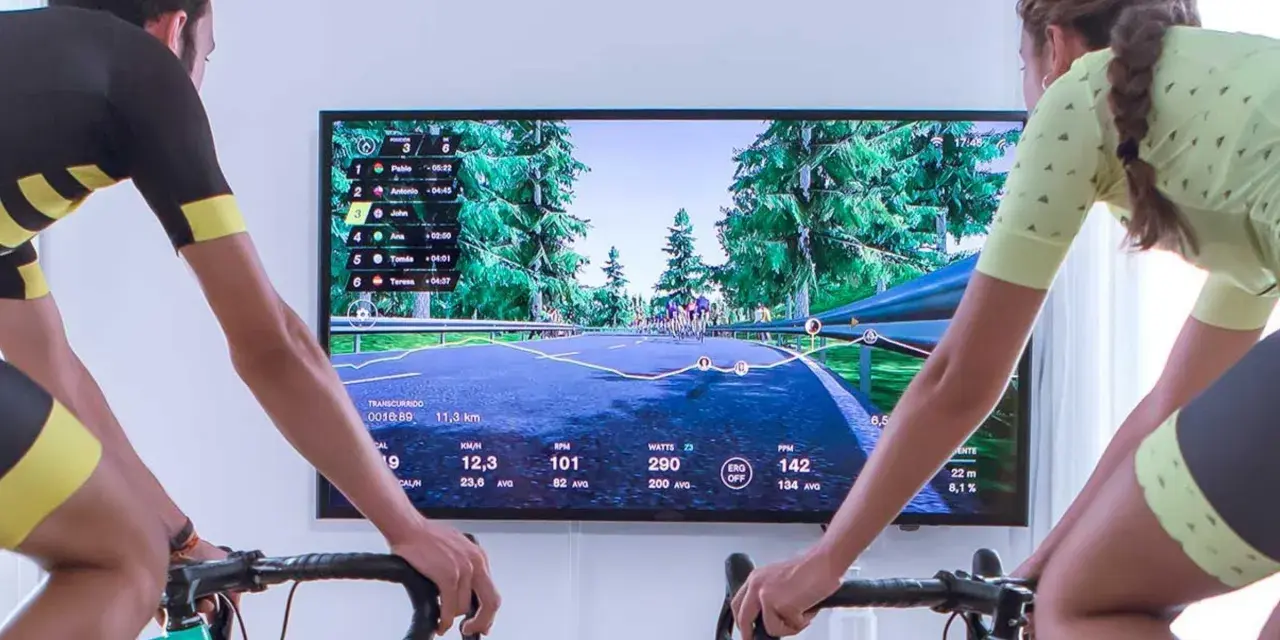
Indoor training works best when the software matches the kind of rider you are. The strongest indoor cycling apps do more than show speed and cadence: they can control resistance, shape workouts around your fitness, and make trainer time feel intentional instead of repetitive. In this guide, I break down what these platforms actually do, how to compare them, what they cost in the U.S., and which setup makes the most sense for different riding goals.
The fastest way to narrow the choice
- Zwift is the best-known option if you want racing, group rides, and a big social scene.
- TrainerRoad is the strongest pick if your main goal is getting faster through structured training.
- ROUVY and Kinomap are better if you want real-world routes and a more outdoor feel.
- MyWhoosh is the cleanest budget answer because it is currently free-to-play.
- Wahoo SYSTM works well for riders who want cycling, strength, yoga, and mental training in one place.
- The app matters, but so do your trainer, sensors, and connection type.
What these apps actually do during a workout
When I compare indoor cycling software, I start by separating the experience into four jobs: motivation, structure, realism, and feedback. Some platforms turn the ride into a game, some act like a coach, and some sit in the middle by giving you a route to follow while resistance changes with the terrain. The best choice depends on which of those jobs you want the app to do for you.There are a few terms worth knowing because they explain why one platform feels smooth and another feels clunky. ERG mode means the app controls resistance to hold a target power level, so you can focus on pedaling instead of constantly changing gears. FTP, or functional threshold power, is the number many apps use to set workout zones. In plain English, it is the reference point that helps the app decide whether a session should feel easy, moderate, or brutally hard.
- Game-style riding adds avatars, drafting, group rides, and races. It works best if you need social energy to stay consistent.
- Structured workouts give you interval sessions, progression, and training plans. This is the better route if you want measurable fitness gains.
- Video or route-based riding recreates roads, climbs, and real terrain. It is ideal if you get bored staring at a static screen.
- Adaptive coaching adjusts the plan based on your recent load, fatigue, or missed sessions. That reduces guesswork, but only if you actually keep the data honest.
Once you know which experience you prefer, the next question is whether you are paying for the right kind of motivation rather than just the loudest interface.
How I would choose the right platform for your goals
If I had to reduce the choice to one rule, it would be this: pick the app that solves your biggest training friction. If boredom is the problem, choose an immersive platform. If inconsistency is the problem, choose a plan-driven one. If your goal is to ride harder without overthinking, choose software that automates the boring parts.
| What you care about most | What to prioritize | Why it matters |
|---|---|---|
| Staying motivated | Racing, group rides, progression systems | Social pressure and visible progress keep many riders on the bike longer. |
| Getting faster | Structured plans, interval control, adaptive workouts | Clear progression usually beats random riding when performance is the target. |
| Riding real roads | Filmed routes, climb gradients, route libraries | Outdoor realism makes long sessions feel closer to actual cycling. |
| Saving money | Free tiers, bundled subscriptions, annual plans | A cheaper app you use every week is better than a premium one you avoid. |
| Keeping everything in one place | Training calendar integration, analytics, cross-training | If you already plan your season carefully, app fragmentation becomes a real annoyance. |
I also pay attention to how much friction the app adds before the ride starts. If opening it feels like work, you will use it less. That is why the comparison below is more useful than a generic “best apps” list.
The main platforms and what each one does best
In the U.S. market, pricing and emphasis fall into a few clear buckets. The numbers below reflect the current pricing and trial structures I checked from each platform’s own pages, and they are the kind of differences that actually matter when you are deciding where to spend money.
| App | Typical price | Best for | Main strength | Main trade-off |
|---|---|---|---|---|
| Zwift | $19.99/month or $199.99/year, with a 14-day trial on the monthly plan | Racing, group rides, social motivation | The biggest community and a polished game-like experience | Less focused than pure training platforms if you want strict coaching |
| TrainerRoad | $21.99/month or $209.99/year, with a 30-day money-back guarantee | Performance-focused riders | Strong structured plans, AI-driven guidance, and no entertainment clutter | It is intentionally less playful than route-heavy platforms |
| ROUVY | Monthly pricing starts around $19.99 in the U.S.; 7-day trial; annual, duo, and group plans are available | Real roads, climbs, and realistic riding feel | Video-based routes that make indoor riding feel closer to outdoor cycling | Not as social or game-like as Zwift |
| Wahoo SYSTM | $17.99/month or $179.99/year, with a 14-day trial on the Wahoo subscription | Riders who want cycling plus strength, yoga, and mental training | A broad training system instead of a single-purpose cycling app | It is best when you want the whole ecosystem, not just rides |
| MyWhoosh | Free-to-play | Budget-conscious riders and racers | No membership fee, plus routes, programs, and events | The experience can feel less premium than paid rivals, depending on your expectations |
| Kinomap | $11.99/month or $89.99/year, with a 14-day free trial | Video-led training and lower-cost variety | Large library of geolocated videos and connected workouts | It is more niche than the biggest all-purpose platforms |
| TrainingPeaks Virtual | Included with a TrainingPeaks Premium subscription | Riders already using TrainingPeaks for planning | Clean sync between the training calendar and the virtual ride environment | It makes the most sense if you are already in the TrainingPeaks ecosystem |
The pattern is pretty clear: the most expensive option is not always the best fit, and the cheapest option is not automatically limited. What matters is whether the platform matches how you train week after week, which is why hardware compatibility deserves the next look.
What hardware and connections matter more than brand names
Most indoor cycling software is only as good as the equipment feeding it data. If the trainer cannot transmit power cleanly, or if your sensors keep dropping signal, the app feels worse than it really is. In my experience, the jump from “good enough” to “pleasant to use” usually comes down to a stable connection and a setup you do not dread preparing.
| Setup | Best use case | What you gain | Where it falls short |
|---|---|---|---|
| Smart trainer or smart bike | Most realistic indoor training | Automatic resistance control, better power data, smoother intervals | Higher upfront cost and more setup variables |
| Power meter | Riders who train indoors and outdoors | Consistent power numbers across both environments | No automatic resistance unless paired with a controllable trainer |
| Speed and cadence sensors | Cheaper entry-level setups | Basic tracking and lower upfront cost | Less precise, less immersive, and usually weaker for serious interval work |
| Bluetooth or ANT+ connection | Most modern trainers and sensors | Broad compatibility across apps and devices | Pairing can still get messy if another app is connected in the background |
| Wi-Fi or direct-connect options | Advanced setups | Can improve stability in some environments | Not every platform supports it, and not every rider needs it |
One practical rule I follow: make sure the trainer is connected to only one app at a time before you start. That sounds obvious, but it is the source of more pairing frustration than most people admit, and fixing that one detail makes the rest of the experience feel much better.
How to get better sessions from the first week
The app can only do so much if the ride environment is chaotic. I always tell riders to treat indoor sessions like a small training room, not like a casual spin: the easier you make the setup, the more likely you are to repeat it. That matters more than chasing the fanciest training feature.
- Calibrate the trainer if your device requires spindowns or regular firmware updates.
- Use a strong fan, because overheating destroys interval quality faster than almost anything else.
- Keep water nearby and set your gear out before the ride starts.
- Start with 2 to 3 sessions a week if you are building the habit, not 5 or 6.
- Use ERG mode for interval days and free ride mode for endurance or recovery work.
- Be honest about FTP and zones, because inflated numbers make every workout feel oddly wrong.
- Keep entertainment separate from structure if you know you get distracted easily.
The biggest mistake I see is buying an app for its marketing style and then expecting it to behave like a different product. A race-heavy platform will not coach you like a performance app, and a performance app will not feel like a game. Once that is clear, the final choice becomes a lot easier.
The app that fits your habit will beat the app with the biggest feature list
If I were choosing for a rider in the U.S. right now, I would keep it simple. Zwift is the safer bet if you want community and competition. TrainerRoad is the smarter bet if your goal is to get faster with minimal noise. ROUVY or Kinomap make sense when realism and route variety matter more than racing. Wahoo SYSTM is a strong all-around choice if you want cycling plus complementary training, and MyWhoosh is hard to ignore if budget is a real constraint.
The right platform is the one you will use on hard days, not just the one that looks impressive in a demo. If I had to narrow the whole market down to one sentence, it would be this: choose the app that removes the biggest reason you skip indoor rides, and the rest of your training gets easier to sustain.