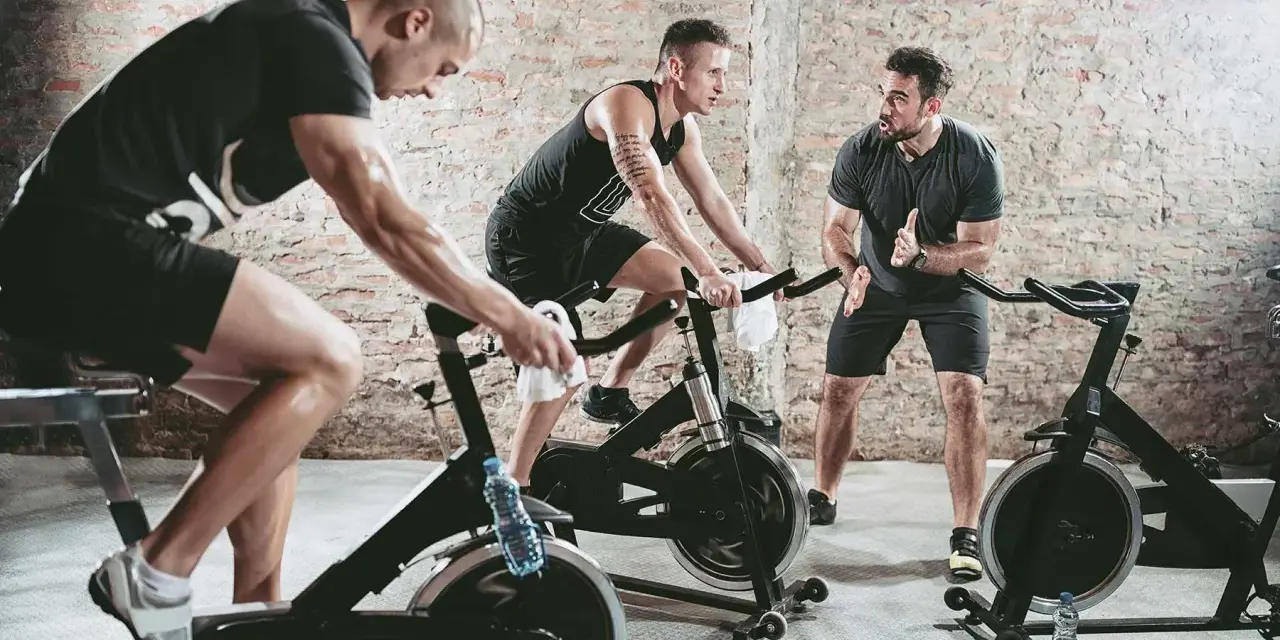
What matters most if you want the bike to support your running
- It is strongest as a low-impact way to build aerobic volume and recover between harder run days.
- It does not fully replace the stride mechanics, tendon loading, and race-specific stress of running.
- Easy rides, steady aerobic rides, and targeted intervals all have a place, but not all in the same week for every runner.
- A well-fit bike matters more than most people think, especially if knees or hips already get irritated.
- The biggest payoff comes when cycling makes you a more durable runner, not just a fitter cyclist.
Why a stationary bike can help running fitness
The first benefit is aerobic. If your heart and lungs can do more work for longer, your running ceiling usually rises too. Cycling lets you accumulate that work with less impact than another run, which is useful in base season, during injury rehab, or when you simply cannot tolerate more mileage.
The second benefit is muscular endurance. Pedaling repeatedly under moderate resistance trains the quads, glutes, and calves to keep producing force. That does not duplicate running, but it can support late-race stability and make recovery between hard sessions easier.
I also like cycling as a way to preserve consistency. A recent Frontiers review found no clear short- to moderate-term improvement or decline in running performance from cycling-based cross-training, which is exactly why I treat it as a volume-management tool: it can help you keep the engine on, but it is not a shortcut around running-specific work.
That distinction matters, because the next question is not whether cycling has value, but where that value actually transfers into better running.

Where the transfer is real and where it is limited
The important distinction is between fitness and specificity. Running economy is the energy cost of a given pace, and cycling improves it only indirectly. The bike can raise the aerobic ceiling, but the stride, ground contact time, and tissue loading still have to be trained on foot.
| What the bike improves | What that means for running | What it does not fully replace |
|---|---|---|
| Aerobic capacity | You can hold a higher heart rate and more work for longer | Run-specific pacing and mechanics |
| Muscular endurance | Legs may stay stronger deeper into long runs | Impact tolerance from repeated foot strikes |
| Recovery and load management | You can keep training while reducing pounding | The tissue stress that builds running durability |
| Cardiovascular stimulus | Useful for base building and aerobic maintenance | Race pace efficiency and neuromuscular timing |
| Lower joint impact | Often easier on knees, shins, and feet | The progressive loading runners need to stay resilient |
That is why I think of indoor cycling as a support act, not the headline. A bike session can keep you fit, but only running can teach your body how to express that fitness at running pace. If you understand that line, the rest of the programming becomes much easier.
How to structure bike sessions around run training
A useful benchmark is the CDC’s weekly target of 150 minutes of moderate-intensity aerobic activity, or 75 minutes vigorous. Runners do not need to chase that number exactly, but it shows how quickly a few structured rides can add meaningful aerobic work without adding a lot of impact.
| Ride type | Typical duration | How it should feel | Best use |
|---|---|---|---|
| Recovery spin | 20 to 40 minutes | Very easy, you should feel better when you finish | After long runs, intervals, or hard hill sessions |
| Easy aerobic ride | 40 to 60 minutes | Conversations should feel comfortable | Base building and off-days |
| Steady tempo ride | 30 to 50 minutes | Controlled effort, breathing deeper but not strained | Maintaining fitness when run volume is limited |
| Interval ride | 30 to 45 minutes | Hard work in blocks, with full recovery between efforts | Building aerobic power without extra impact |
| Long ride | 75 to 120 minutes | Mostly steady and economical | Injury rehab or heavy aerobic phases, not before key run days |
For most runners, I prefer moderate resistance and smooth cadence rather than grinding heavy gears. A cadence around 85 to 100 rpm is a sensible starting point for easy and steady rides; if your knees feel cranky, lighten the load rather than forcing power. The point is to finish fresher, not to turn every ride into a leg-burning contest.
That leads directly to the bigger programming question: who should lean on the bike the most, and who should treat it as a smaller tool in the kit?
Who gets the most out of this cross-training
I see the biggest payoff in four groups of runners. First are injured runners, especially people managing stress reactions, tendon irritation, or a flare-up that makes extra impact a bad trade. The bike lets them keep their aerobic system active while their tissues settle down.
Second are base-phase runners who want more aerobic work than their current run mileage can safely support. This is where the bike can be especially useful for marathoners and half-marathoners, because the goal is often not speed first, but more total work with less wear and tear.
Third are beginners who are still adapting to impact. A few cycling sessions can reduce the shock of going from low activity to a higher weekly workload. Fourth are time-crunched runners who need another way to hit meaningful cardio without adding another full run day.
If you already run five or six days a week, handle the mileage well, and stay healthy, the bike becomes more optional. In that case it is useful, but not a replacement for the run work that already fits your goals.
Once you know who benefits most, the next step is avoiding the mistakes that quietly erase the advantage.
Common mistakes that make the bike less useful
- Turning every ride into a race. If every session leaves you cooked, you are adding fatigue faster than fitness.
- Replacing too much running. The bike cannot fully build running economy, foot strength, or tissue tolerance.
- Grinding huge resistance at low cadence. That often feels productive, but it can irritate knees and hips without improving run quality.
- Ignoring bike fit. Saddle height, fore-aft position, and handlebar reach matter more than most runners expect.
- Stacking hard rides too close to key run sessions. If your interval pace or long-run rhythm drops, the bike load is too aggressive.
I would also watch for a more subtle problem: using cycling to hide from specific run work. The bike can preserve fitness, but it cannot teach your body to handle the actual impact pattern of running. If you want to race well, some of the training has to happen on your feet.
How to tell whether it is actually helping
The cleanest sign is simple: you keep your run quality while feeling less beat up. If easy runs stay easy, hard workouts stay sharp, and the weekly load does not trigger new aches, the bike is doing its job.
| Signal | Good sign | Warning sign |
|---|---|---|
| Easy-run feel | Your normal pace feels smoother or more controlled | Legs feel flat even on short runs |
| Recovery | You bounce back faster after long runs or intervals | You carry fatigue into multiple days |
| Workout quality | You can still hit target paces on key days | Your quality sessions fall apart after bike volume increases |
| Injury status | Soreness stays manageable and stable | New joint irritation or tendon pain appears |
| Training consistency | You can train more weeks in a row without interruption | You keep needing extra rest because the load is poorly balanced |
If you need the bike to be brutally hard before it feels worthwhile, you are probably overusing it. The best cross-training usually feels almost boring while you are doing it, then quietly shows up in better run freshness and more consistent weeks.
The smartest way I would use indoor cycling for a runner
- Keep most rides easy or steady.
- Use one quality bike session only when it supports a run goal.
- Protect at least some weekly run specificity.
- Increase bike volume in injury weeks or base phases, then scale it back when run training is the priority.