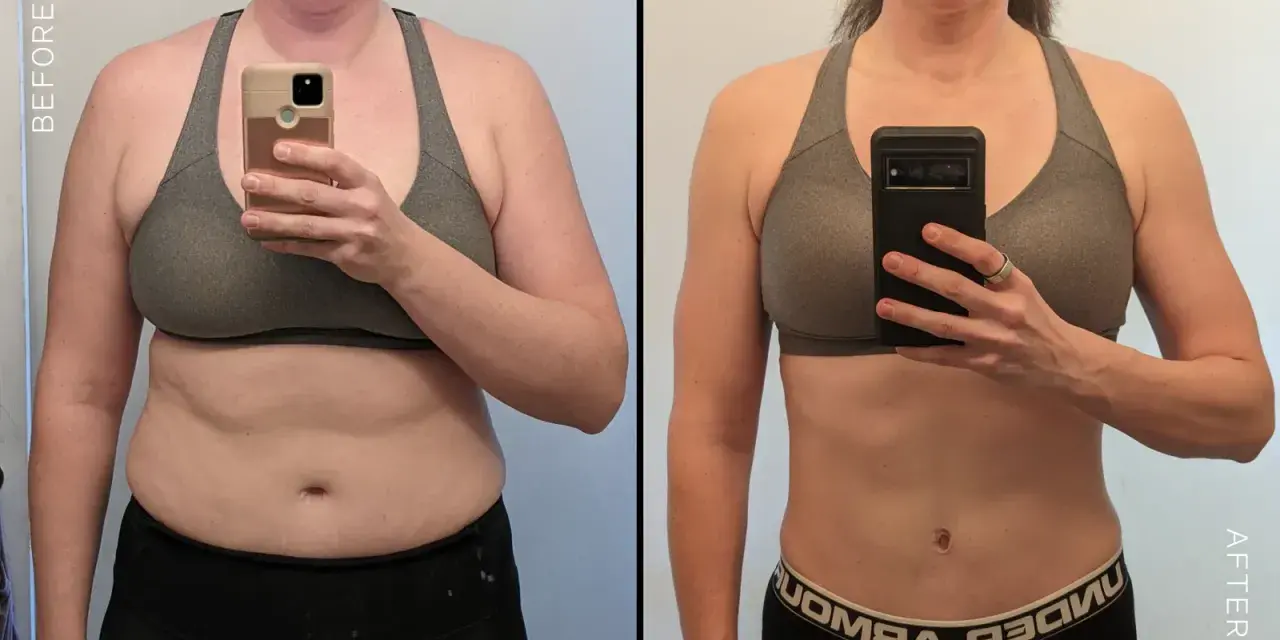
What matters most when indoor cycling is the goal
- Energy and endurance usually improve first; visible shape changes lag behind.
- Weekly consistency beats one hard ride, especially if you want a real body transformation.
- 150 minutes a week is a solid health baseline, but more volume or higher intensity is often needed for clearer fat-loss results.
- Intervals help when time is limited, while steady rides build the base that keeps you consistent.
- Photos, waist measurements, and repeat tests tell the truth better than daily scale noise.
What changes first and what takes longer
The first changes from a stationary bike are usually internal. You breathe a little easier, your legs stop feeling wrecked after every session, and you recover faster between efforts. That is the part people often miss when they focus only on the mirror.
The visual side takes longer. If you ride consistently, you may notice that your waistline tightens, your legs look firmer, and your clothes fit differently before anyone else points it out. But that happens only when the training load is steady enough and the eating pattern does not erase the work.
Here is the timeline I usually give readers as a practical reference, not a promise.
| Time frame | What many riders notice | What it usually means |
|---|---|---|
| Weeks 1-2 | Less gasping, less soreness, better mood after rides | Your cardiovascular system is starting to adapt |
| Weeks 3-4 | Longer rides feel manageable, recovery is faster | You are building a basic aerobic base |
| Weeks 6-8 | Stamina improves and workouts feel more controlled | Your body is handling repeated effort more efficiently |
| Weeks 8-12 | Clothes may fit better and the body starts looking different | Consistency, resistance, and nutrition are finally showing up visually |
That is why I tell people not to judge the bike by week one. The first changes are real, but the mirror usually lags behind them. Once you know that, the next question becomes what exactly changes on the body itself.
What a realistic body transformation looks like
Indoor cycling does not reshape every part of the body in the same way. The biggest early changes are usually in the legs and lower body because that is where the work happens most directly. Quads, hamstrings, calves, and glutes all get involved, especially if you use enough resistance instead of just spinning the pedals quickly.
For body fat, I want to be precise: the bike helps create the energy deficit, but it does not decide where fat comes off first. Some people see the waist lean out early, others see changes in the face or hips first, and others notice only performance improvements for a while. That variation is normal. Genetics and starting point matter more than most people admit.
If your rides are harder and your nutrition is under control, calorie burn can be substantial. On a tougher session, some riders burn well above 400 calories an hour, and intense work can go beyond 600, but the exact number depends on body size, resistance, and how hard you are really pushing. I would never treat the machine display as a laboratory reading.
- Leg definition usually improves first because the muscles are doing the work.
- Waist changes often become visible only after consistent weekly volume and smarter eating.
- Upper-body shape usually changes the least unless you add strength training.
- Posture and core control can improve because you are spending more time braced and upright on the bike.
If someone expects a bike alone to create a full-body makeover, I push back a little. It can produce a clear transformation, but the best version usually includes more than cycling. That leads directly to the numbers worth tracking.
The numbers worth tracking instead of guessing
I trust repeatable measurements more than motivation. If you want a real before-and-after comparison, use the same conditions every time: same bike, same resistance setting or workout template, same time of day, and similar clothing. Otherwise you are comparing noise to noise.
The scale can still be useful, but only as one data point. Water retention, sodium, sleep, and menstrual cycle changes can swing body weight enough to hide progress for days or even weeks. That is why I prefer a small dashboard of simple metrics.
| Metric | What to look for | Why it matters |
|---|---|---|
| Resting heart rate | A gradual downward trend over several weeks | Often reflects better aerobic fitness and recovery |
| Heart rate during a fixed ride | Lower effort for the same pace or resistance | Shows that your body is doing the same work more efficiently |
| Distance or power in a set time | More distance or watts in 20 to 30 minutes | Gives you a direct performance comparison |
| Waist measurement | A smaller number every 2 to 4 weeks | One of the clearest signs of body-composition change |
| Progress photos | Better fit, shape, and posture in the same lighting | Catches changes that the scale often misses |
I also like one simple test ride every two weeks. Pick a fixed 20-minute effort, note how hard it feels, and record the result. If the same ride becomes easier or faster, the program is working even if the mirror is slow to catch up. Once you can measure progress, the workout itself becomes much easier to manage.
How to ride if you want visible results
For general health, U.S. physical activity guidance still points to about 150 minutes of moderate-intensity activity a week, which is a useful baseline for indoor cycling too. If the goal is a visible body change, though, I usually prefer a little more structure than “hop on and sweat.” The mix matters.
A clean weekly setup for most beginners and intermediate riders looks like this:
| Session type | Example | Why it helps |
|---|---|---|
| Steady ride | 30 to 45 minutes at a pace you can hold without falling apart | Builds aerobic base and makes consistency easier |
| Interval ride | 5-minute warm-up, 6 rounds of 1 minute hard and 2 minutes easy, then cool-down | Improves conditioning in less time |
| Longer ride | 45 to 60 minutes at moderate effort | Increases total work and calorie burn |
| Strength work | 2 short sessions for legs, hips, back, core, and upper body | Helps with shape, posture, and overall muscle balance |
My rule is simple: do not turn every ride into a test. If every session feels like a race, you will usually get tired before you get fit. Two steady rides, one harder ride, and enough recovery to repeat that pattern is a better formula for most people than chasing exhaustion every day. That balance also helps avoid the mistakes that flatten progress.
The mistakes that erase progress
The biggest problem I see is not lack of effort. It is poorly directed effort. People pedal hard, sweat a lot, and still fail to create the adaptation they wanted because the training never settles into a repeatable pattern.
- Riding too hard every day leaves you tired and less likely to stay consistent.
- Using almost no resistance makes the session feel easy but limits the training stimulus.
- Eating back every calorie burned can cancel the fat-loss side of the equation fast.
- Ignoring bike fit can create knee, hip, or lower-back pain that ruins the habit.
- Comparing your first month to someone else’s polished transformation creates false expectations.
Fit matters more than most people think. A saddle that is too low or too far forward can make a routine ride feel awkward enough to stop progress before it starts. Likewise, sweat is not a measurement of success. Workload is. If the bike is hard in the right way, you are more likely to improve. If it is hard in the wrong way, you are just collecting fatigue. Once those mistakes are clear, it becomes easier to know when cycling is enough and when it is only part of the answer.
When a stationary bike is enough and when it is not
For cardio fitness, low-impact movement, and weight management, a stationary bike can absolutely do a lot of the job. For a more dramatic change in body shape, I would not stop there. Cycling is excellent for the heart and lungs, but it is not a complete strength program on its own.
| Goal | Can the bike do most of it? | What I would add |
|---|---|---|
| Better cardiovascular fitness | Yes | Consistent weekly rides and one harder session |
| Weight loss | Often, if food intake is managed | Calorie awareness and routine tracking |
| More visible muscle tone | Partly | Resistance training and enough protein |
| Stronger glutes, back, and upper body | No | Dedicated strength sessions |
| Low-impact training after a layoff | Yes, often | Careful progression and proper bike fit |
My honest take is that the best results come from using the bike as the engine, not the whole vehicle. It builds the cardio base and helps burn energy, while strength work rounds out the shape and keeps your body balanced. That is the combination that usually creates the cleanest before-and-after difference over time.
The 30-day reset I would use for a cleaner before-and-after
If I wanted to make progress visible in one month, I would keep the plan simple and repeatable. I would take a starting photo, a waist measurement, and one fixed test ride before week one begins. Then I would train with enough structure to make the next version of those numbers worth comparing.
- Week 1: three rides of 20 to 30 minutes, all controlled, plus one photo day and one measurement day.
- Week 2: add one interval session and keep the other rides moderate.
- Week 3: extend one steady ride by 10 to 15 minutes.
- Week 4: repeat the same test ride, same photo setup, same measurements, and compare the data.
If the numbers improve, keep going. If the mirror is slower than the performance, stay patient and let the trend do its work. That is the version of progress I trust: clearer fitness, better recovery, and a body that changes because the routine is consistent enough to hold up in real life.