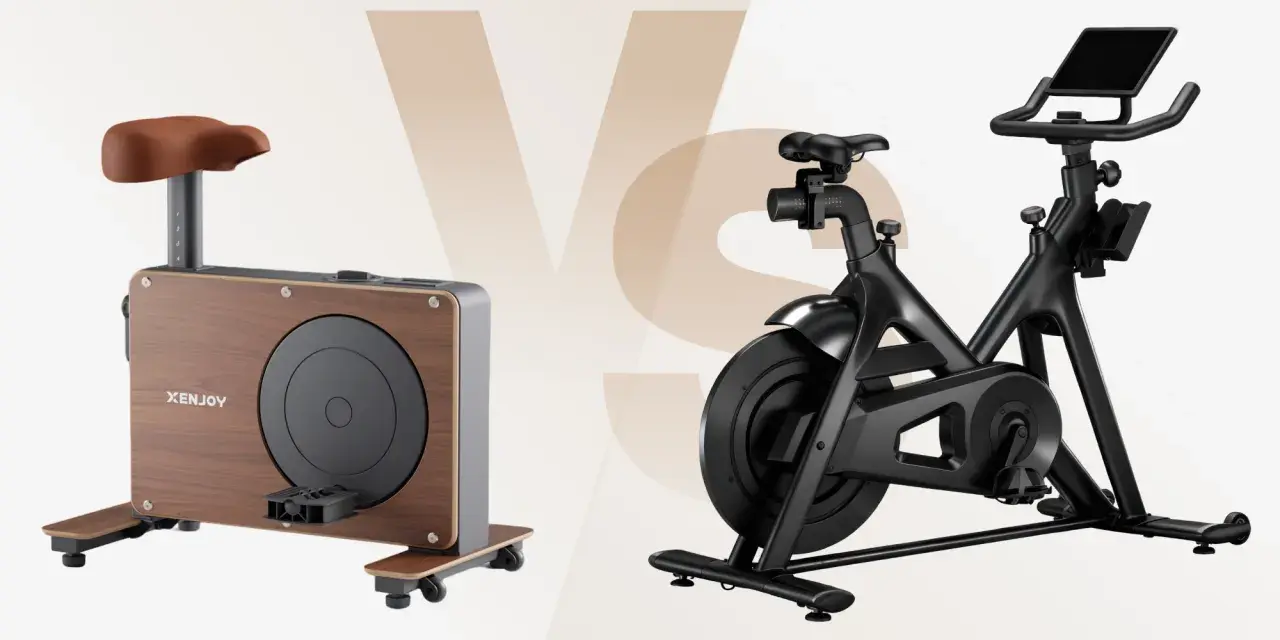
The main trade-offs in one glance
- Best for low-impact cardio: It is easier on the hips, knees, and feet than running, which makes it useful for beginners and people returning from joint irritation.
- Easy to scale: Resistance, cadence, and ride time can be adjusted minute by minute, so the same machine works for recovery spins and hard intervals.
- Convenient in real life: Indoor riding removes weather, traffic, and daylight barriers, which is why it is easier to keep consistent in a busy week.
- Not a full-body solution: It builds cardio and leg endurance, but it does not replace strength training, balance work, or weight-bearing exercise.
- Fit matters a lot: Poor seat height, too much resistance, or a harsh riding position can turn a good workout into sore knees or a tight lower back.
Where a stationary bike does its best work
The biggest advantage of indoor cycling is that it solves the consistency problem. You can ride before work, after dark, during a heat wave, or when roads are unsafe. That matters more than people admit, because the best workout plan is the one you can repeat.
| Advantage | Why it matters | Who benefits most |
|---|---|---|
| Low impact | It reduces stress on the joints compared with running or jumping. | Riders with knee irritation, arthritis, or a history of impact-related discomfort. |
| Precise intensity control | You can change resistance and effort instantly, which makes intervals and recovery work easy to manage. | People who like structured training and measurable progress. |
| Reliable cardio stimulus | Regular rides can improve aerobic capacity and support heart health over time. | Anyone building a fitness base or trying to meet weekly activity targets. |
| Indoor convenience | No weather, traffic, or route planning gets in the way. | Busy commuters, apartment dwellers, and riders in extreme climates. |
| Beginner-friendly | Balance and bike-handling skills are not a barrier the way they are outdoors. | New exercisers and people coming back after a long break. |
A recent review of indoor cycling found that it may improve aerobic capacity, blood pressure, lipid profile, and body composition. That does not mean every ride has to be an all-out effort; it means a stationary bike can cover a lot of ground if you use it consistently and progress it sensibly.
For many U.S. riders, that predictability is the real value. It is much easier to stack up 30-minute sessions on a home bike than to depend on perfect weather, daylight, and a clean route outside. That convenience is exactly why the drawbacks matter too, because a machine that is easy to use is also easy to misuse.
Where it falls short for real riders
The downsides are not dramatic, but they are real. A stationary bike is excellent for certain goals and only partial for others, so I like to be blunt about what it does not do well.
- It does not build much upper-body strength. Your legs and heart do the work, but your back, chest, shoulders, and arms are mostly passengers unless you add separate strength training.
- It is not weight-bearing in the same way walking or running is. If bone-loading is part of your goal, a bike should complement, not replace, other movement.
- It can irritate the lower back, neck, hands, or saddle area. That usually comes from poor setup, holding tension in the body, or staying in one position too long.
- It can become monotonous. Some riders love the simplicity, but others lose motivation fast when every session feels visually and mentally the same.
- Heavy resistance at low cadence can be rough on the knees. When riders “grind” instead of spin smoothly, joint stress climbs and the workout gets less forgiving.
That last point is easy to miss. If you are trying to protect your knees, pushing big resistance with a slow pedal stroke is usually the wrong move. A smoother cadence with more moderate resistance is often a better compromise, especially if your body is already talking back.
So the bike is not bad. It is just specialized. Once you understand those limits, the next question is how to set it up so the benefits show up without the nagging pain.

How to set it up so it feels better, not worse
I like to check the setup before I blame the workout. A surprising amount of discomfort on an exercise bike comes from a few fixable details rather than from the act of cycling itself.
- Set the saddle height first. At the bottom of the pedal stroke, your knee should stay slightly bent, not locked out. If you have to rock your hips to reach the pedals, the seat is too high.
- Adjust reach before chasing intensity. If the handlebars force you into a strained position, your neck, shoulders, and lower back will complain long before your lungs do.
- Use resistance with restraint. For most riders, a smooth spin is kinder than mashing through a heavy gear. If your knees feel cranky, reduce load before you reduce motivation.
- Warm up for five to ten minutes. A short easy start improves comfort and makes harder work feel less abrupt.
- Build time before chasing punishment. The Arthritis Foundation suggests starting with low-intensity riding and building gradually; one practical starting point is about 20 minutes a day, three to five days a week, then increasing speed and resistance as comfort improves.
- Use pain as feedback. Sharp pain, shooting pain, numbness, or pain that keeps climbing after the ride is a signal to stop and reassess the fit or the load.
If I am working with someone who gets knee discomfort, I usually look at two things first: seat height and riding style. Low cadence plus heavy resistance is often the fastest way to make the bike feel harder on the joints than it needs to be. The fix is usually boring, but boring works.
Once the setup is right, the next decision is which kind of stationary bike matches the rider, because not all indoor bikes ask the same thing from your body.
Which bike style fits which rider
The phrase “stationary bike” covers a few different setups, and the right one depends on comfort, training goals, and any existing aches. I would not choose the same bike for someone rehabbing a knee and someone training for a spirited indoor cycling class.
| Bike style | Best for | Main trade-off |
|---|---|---|
| Upright bike | General cardio, riders who want a position closer to an outdoor bicycle, and people who want a smaller footprint. | Can feel less forgiving on the back, shoulders, and wrists if the position is aggressive. |
| Recumbent bike | Riders who want a wider seat, back support, and a more stable position for long sessions or rehab. | Feels less like road cycling and gives you less of a standing, athletic riding posture. |
| Spin bike | Interval training, class-style workouts, and people who want a more performance-oriented feel. | Easy to overdo if the enthusiasm of the session outruns the rider’s current fitness level. |
For riders with back, shoulder, or wrist sensitivity, the more upright or supported option often wins. For someone who wants a hard, sweaty workout with tight cadence control, a spin bike makes more sense. In practice, comfort usually decides adherence, and adherence decides results.
When I would choose a bike over other indoor cardio
If your goal is simply to get moving, any cardio you can repeat is useful. But a bike has a few situations where it is the smartest option, and a few where another tool is better.
| Your main goal | Better fit | Why |
|---|---|---|
| Low-impact cardio | Stationary bike | It lets you train the heart and lungs without pounding the joints. |
| More weight-bearing stress | Walking or incline treadmill work | Those options load the skeleton more directly, which a bike does not do as well. |
| Upper-body involvement | Rowing or an elliptical with moving handles | The bike is mostly a lower-body and cardio tool. |
| Short interval sessions | Stationary bike or rower | Both are easy to control, but the bike is often simpler for beginners to pace. |
| Outdoor handling skill | Outdoor cycling | Indoor riding will not teach traffic awareness, cornering, or road balance. |
That last point matters for cyclists. A stationary bike is a training tool, not a substitute for every aspect of riding. It can build fitness efficiently, but it will not teach you to descend a hill, read road surfaces, or handle a crosswind.
At the same time, if your schedule is crowded and your joint tolerance is limited, the bike can be the difference between training and not training at all. For a lot of people, that is enough to make it the right choice.
A simple way to decide if it belongs in your routine
I usually boil the decision down to a few practical checks rather than abstract pros and cons.
- Choose it if you need repeatable cardio. If your week is chaotic, a bike is one of the easiest ways to keep aerobic work consistent.
- Choose it if your joints prefer low impact. It is especially useful when running feels too harsh or when you are easing back into exercise.
- Do not rely on it alone. Pair it with strength work, mobility, and some weight-bearing movement if you want a more complete program.
- Keep it if you recover well. A good sign is that you finish the ride worked, not wrecked, and feel normal again the next day.
- Reassess if pain keeps showing up. Persistent knee, saddle, or back discomfort usually means the setup or the workload needs to change.
My short version is this: the stationary bike is strongest when you want low-impact, controllable cardio you can actually stick with. It is weaker when you need full-body training, bone-loading, or outdoor riding skill, which is why the best routine usually combines cycling with strength work and at least a little variety.