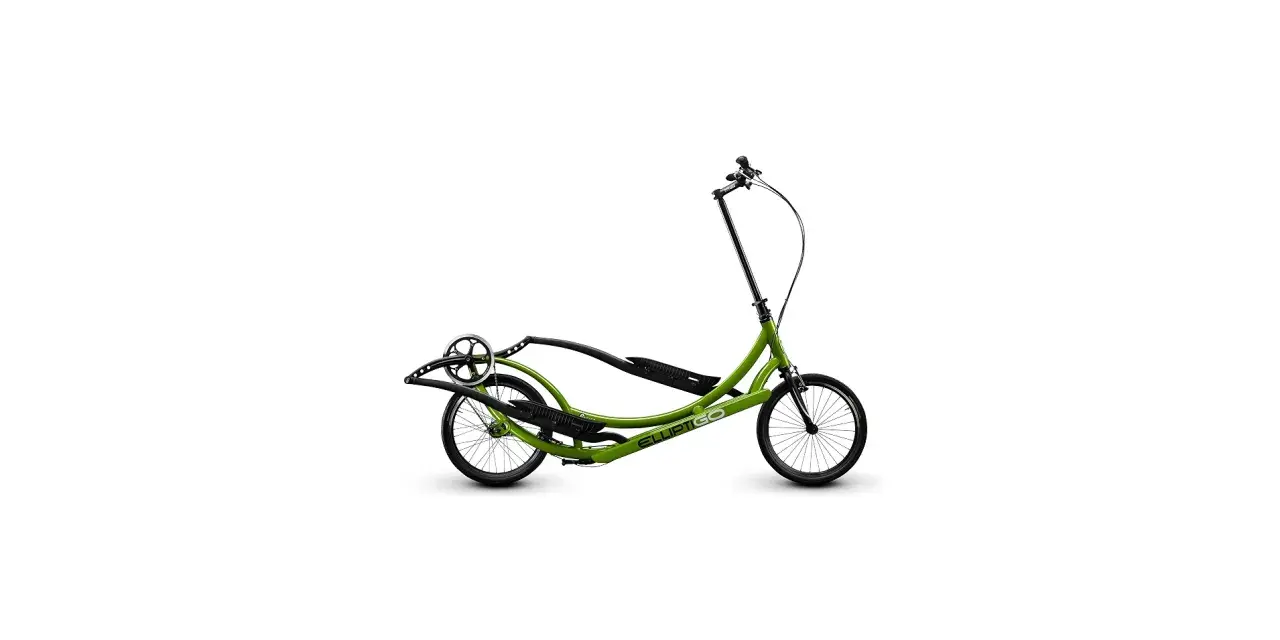
An eliptical bike makes sense when you want indoor cardio that is gentler on the joints than hard pedaling on a basic bike but less repetitive than a single-motion machine. I’m going to break down what this hybrid actually does, who benefits most from it, how I would compare models for a U.S. home gym, and how to use it for steady rides and interval work. The real question is not whether it can raise your heart rate; it is whether the motion, fit, and resistance match the way you want to train.
What matters most before you buy or train
- It blends cycling and elliptical motion, so the ride feels smoother and usually easier on the joints than more rigid cardio setups.
- It is most useful for low-impact conditioning, cross-training, and households that need one machine to serve different people.
- Fit, resistance, stability, and noise matter more than flashy screens or long feature lists.
- For training, it works best for steady rides, interval blocks, and recovery sessions rather than highly specific race prep.
- In the current U.S. market, prices usually range from a few hundred dollars to well over a thousand, depending on frame quality and features.
What an elliptical-bike hybrid actually does
This machine sits between a classic stationary bike and a full elliptical trainer. Depending on the design, you may sit in a more relaxed position or work through a longer, oval-style stride while the pedals and handles guide a smoother full-body rhythm. Some versions lean more recumbent, while others feel more upright, and that difference changes the whole workout feel.
The reason people keep buying these machines is simple: they want low-impact cardio without giving up variety. Harvard Health recently pointed out that ellipticals place less stress on the knee, hip, and ankle joints, and that is the main reason they often feel more approachable than treadmills or hard, repetitive cycling sessions. In practice, the value is not only joint comfort; it is that a smoother motion often makes consistency easier.
That distinction matters, because once you understand the movement, the next question is who actually gets the most out of it.
Who gets the most value from it
I think this setup works best for people who want cardio that feels less punishing without becoming boring. It is a strong fit for beginners, joint-conscious users, cyclists cross-training indoors, and households where one person prefers a bike position and another wants more of an elliptical motion.
- People with sensitive knees, hips, or ankles who still want regular cardio.
- Beginners who need a machine that feels forgiving enough to use three or four times a week.
- Cyclists who want indoor variety without adding more saddle time.
- Shared households where one machine needs to serve different body types and fitness levels.
- Users who get bored fast on a basic exercise bike and want a little more movement through the upper body and core.
I would not make it the centerpiece of a race-focused cycling plan unless I were using it as a support tool. If your main goal is pure power transfer, bike-specific posture, or performance work that mirrors outdoor riding, a dedicated indoor bike still wins. That trade-off is exactly why the buying checklist deserves real attention.
How I would choose the right model for a home gym
For a U.S. home setup, I usually sort these machines by three things before anything else: fit, noise, and frame quality. Price matters, but only after those basics. I would rather buy a sturdier midrange machine than a flashy console that feels loose after a few months.
| Feature | Why it matters | What I would look for |
|---|---|---|
| Resistance system | Determines how smooth, quiet, and progressive the workout feels | Magnetic resistance if possible, with enough levels to progress beyond beginner pace |
| Stride and pedal path | Controls whether the motion feels natural or awkward | A path that does not force your knees to flare or your hips to rock; around 15 inches is common on compact hybrids |
| Adjustability | Helps different users find a comfortable position | Seat, pedal, or handle adjustments that let you change posture without feeling cramped |
| Stability and weight capacity | Directly affects safety and ride quality | A solid frame with a comfortable margin above your body weight |
| Console and data | Useful for tracking effort and staying consistent | Time, distance, heart rate, and ideally cadence or watt feedback if you care about structured training |
| Noise and footprint | Important in apartments, shared spaces, and early-morning routines | Quiet operation, transport wheels if space is tight, and enough room to step on and off safely |
In current U.S. pricing, I would think of roughly $150 to $400 as budget territory, $400 to $900 as the range where the frame and resistance usually start feeling more serious, and $900+ as the zone where connected features, heavier construction, or bigger footprints become common. If two models look similar on paper, I would choose the one with the better warranty, clearer user-weight limit, and quieter ride. That usually tells you more about long-term satisfaction than an extra screen gimmick does.
Once the fit and build are sorted, the real payoff comes from how you train on it.
How I would train on it for better indoor cycling
The CDC still uses 150 minutes of moderate-intensity activity a week as the baseline for adults, and this machine makes that target easier when sessions feel repeatable rather than punishing. I like it most for consistency: if you can get on the machine four times a week without dreading the impact or the boredom, the fitness takes care of itself.
- Base ride - 30 to 45 minutes at RPE 5 to 6. You should breathe harder but still be able to speak in short sentences.
- Tempo blocks - 3 rounds of 8 minutes at RPE 7 with 3 minutes easy between rounds. This is useful when you want a stronger aerobic push without going all-out.
- Intervals - 6 rounds of 2 minutes hard and 2 minutes easy, with a 5-minute warm-up and cool-down. This is the simplest way to make a short session feel productive.
- Recovery ride - 15 to 20 minutes easy after strength training or on low-energy days. Keep it smooth, not heroic.
If your console shows cadence or heart rate, use it as feedback rather than a scorecard. RPE, or rate of perceived exertion, is often enough: 5 to 6 feels steady, 7 feels purposeful, and 8 to 9 should be hard to hold for long. I also like ending with a few minutes of very easy movement, because that makes the next session feel less like a restart.
With the training side clear, the next step is deciding whether this machine is actually better for you than a dedicated bike or a standalone elliptical.
How it compares with a regular bike and a standalone elliptical
The honest answer is that the hybrid is a compromise, and that is not a criticism. A good compromise can be the smartest purchase when it solves more problems than it creates.
| Machine | Best for | Trade-off | My take |
|---|---|---|---|
| Elliptical-bike hybrid | Low-impact variety, shared households, one machine for multiple training styles | Less specific than a true bike and less natural than a dedicated elliptical | The best all-rounder if you want flexibility and can accept a middle ground |
| Stationary bike | Pure cycling focus, spin-style classes, smaller learning curve | Seated only, narrower motion, less upper-body engagement | Better for bike-specific goals and the cleanest setup for regular indoor riding |
| Standalone elliptical | Total-body cardio, standing movement, low-impact conditioning | Larger footprint and less cycling specificity | Better if you want the most elliptical-like feel and a more continuous full-body rhythm |
If your main goal is road-race fitness, threshold work, or a Zwift-style routine, I would still steer you toward a dedicated indoor bike. If your main goal is to keep moving consistently without beating up your joints, the hybrid earns its place. That balance is useful, but only if you avoid the mistakes that make these machines feel awkward.
The mistakes that make it feel worse than it should
Most bad experiences with this kind of machine come from expectations, not engineering. The problem is usually that someone wanted one thing and bought a machine that does something slightly different.
- Choosing by screen size instead of motion quality.
- Ignoring seat, handle, or pedal adjustability and then wondering why the first ride feels cramped.
- Starting every workout too hard and turning a low-impact machine into a grind.
- Letting the frame wobble because the floor is uneven or the machine was assembled loosely.
- Expecting it to replace outdoor-specific cycling work instead of supporting it.
My practical rule is straightforward: if a machine feels awkward at easy effort, it will not magically feel better when you turn the resistance up. Comfort in the first ten minutes is a stronger predictor of long-term use than any marketing claim about calories.
That leads to the only question that really matters in the end: will you use it enough to justify the space and the money?
The simplest way I would test it before buying
I would test one the same way I test any home cardio purchase: five minutes easy, five minutes moderate, then a short hard effort. If your hips stay quiet, your shoulders stay relaxed, and the motion still feels smooth when the resistance climbs, the machine is probably a good match. If not, no spec sheet will rescue it.
For most readers, the right choice comes down to one simple filter: buy the hybrid when you want lower-impact indoor training with enough variety to stay interested; buy a regular bike when you care most about cycling specificity; buy a standard elliptical when you want the purest standing, full-body motion. I like the hybrid most for shared households, comeback training after a layoff, and riders who need their cardio to feel a little less repetitive.
In other words, this is not a machine for chasing the most impressive number on a console. It is a machine for making indoor sessions repeatable, and that is usually the smarter fitness bet.